
Warmth for Wakulla County's mild winters—and the occasional hard freeze.
Wakulla County has only a short, mild winter heating season and winter lows averaging near 38°F—nothing like Duluth or Fargo, but enough cold fronts each January to make a pellet stove worth having. Find the right unit for a Crawfordville double-wide or a Wakulla Springs-area home, and connect with a trusted local dealer.
Every Project Starts From One of These Five Situations
Supplemental heat that matches Wakulla County's short, mild winter season.
Wakulla County sits along Florida's Big Bend coast, bordered by the Apalachicola National Forest, St. Marks National Wildlife Refuge, and the springs that give the county its name. With just over 7,100 residents spread across mostly unincorporated land around Crawfordville and Sopchoppy, this is a rural, low-density county—a very different heating picture than a Panhandle city with a full hearth retail row. Climate zone 2A and a short, mild winter heating season mean most homes need real heat for only a handful of weeks each winter, when cold fronts push overnight lows into the 20s and 30s.
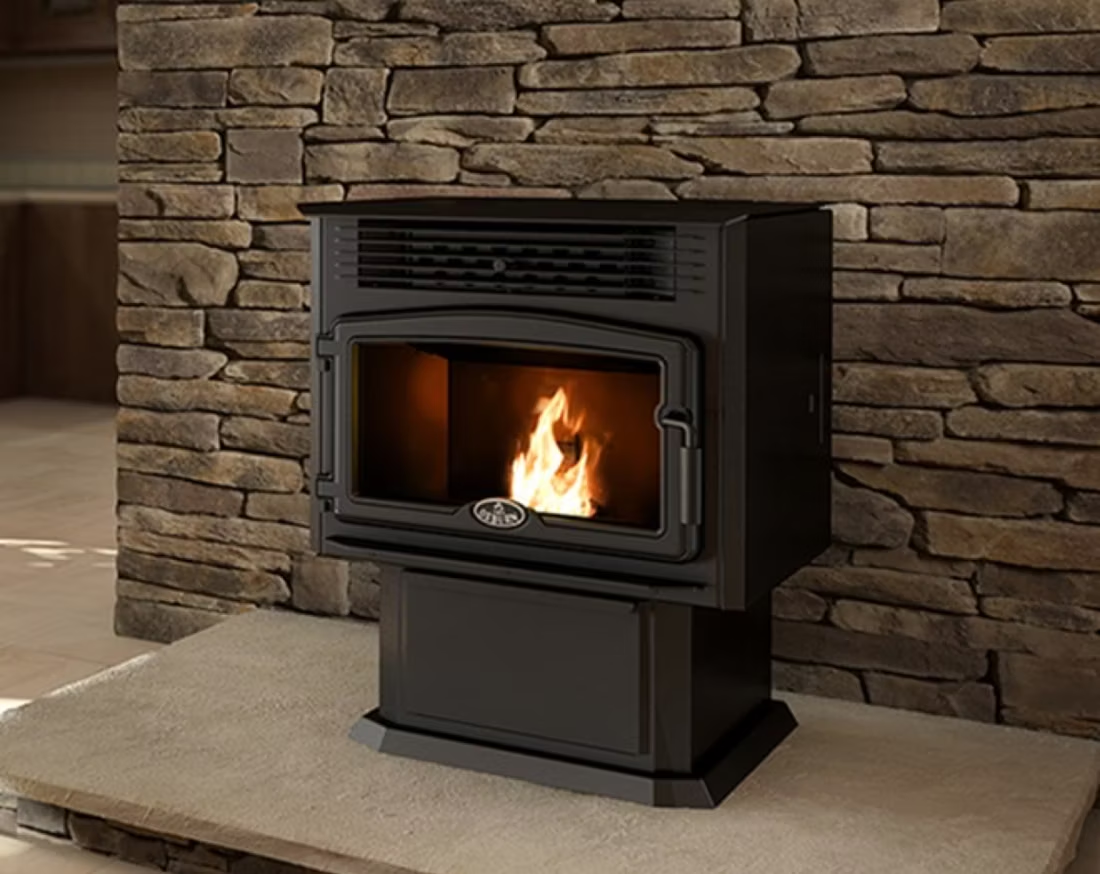
That's exactly the niche pellet stoves fill well here—clean, thermostat-controlled heat you can dial up for a cold snap and ignore the rest of the year, without splitting or stacking cordwood. Regional suppliers including Lignetics, Hamer Pellet Fuel, and Greenway Renewable Energy—all sourcing from Southeastern pine forests—keep southern yellow pine pellets reasonably available in the Big Bend area. One honest tradeoff worth knowing up front: pellet stoves run on an electric auger and blower, and Wakulla County sits in hurricane country. Storms like Michael and Idalia have knocked out power here for days at a time, so a pellet stove alone isn't a guaranteed backup heat source unless it's paired with a generator.
Three steps. No salesperson until you're ready.
Tell us about your project
Your zip code, your situation, and the fuel you're leaning toward—or let the answers point you to one.
See what's actually available
The brands dealers within 100 miles genuinely carry—real options, never a catalog mirage.
Get your dealer & Project Guide
A trusted local dealer, plus the free Project Guide & Parts List that names every component of the job.
Frequently Asked Questions
How much does a pellet stove installation cost in Wakulla County?
Pellet stove installations typically run $3,000 to $6,000 in a county like Wakulla, generally less than wood stove installs since pellet units vent through a smaller-diameter pipe rather than a full masonry or Class A chimney. Because there are few dedicated hearth dealers based in a county of only 7,100 people, many Wakulla homeowners end up working with an installer based in nearby Tallahassee who covers Crawfordville, Sopchoppy, and the surrounding rural areas—expect that travel distance to factor into the quote.
What size pellet stove do I need for my Wakulla County home?
Given the county's mild climate—a short, mild winter heating season and winter lows that average near 38°F—most Wakulla County homes need a pellet stove for supplemental heat rather than as the primary heat source. A small to mid-size unit (40,000–50,000 BTU) is usually enough to comfortably heat a single living area in a manufactured or single-family home during the coldest weeks of the year. Sizing up to a whole-home unit is rarely necessary here the way it would be in a colder climate zone; a local dealer can confirm based on your home's square footage and insulation.
Where can I find certified pellet stove installers near me?
Look for NFI-certified installers, the same credential used across the hearth industry. Because Wakulla County itself is small and rural, several homeowners in Crawfordville, Sopchoppy, and along the coast toward St. Marks end up matched with a certified dealer based in the Tallahassee metro area who services the whole Big Bend region. That's normal for a county this size—the key is confirming the installer carries NFI or equivalent certification and is familiar with manufactured-home installation requirements, which are common in rural Wakulla County.
What's the difference between a pellet stove and a wood stove?
A wood stove burns cordwood, needs a full chimney or Class A pipe, and will keep running with no electricity—a real advantage during a hurricane-related power outage. A pellet stove burns compressed hardwood or softwood pellets, vents through a smaller pipe, and offers thermostat control and longer, more even burns without tending—but it needs electricity for the auger and blower. In a county with mild winters like Wakulla, where cold weather is occasional and hurricanes are a real risk, some homeowners choose wood for outage resilience and pellet for everyday convenience, or pair a pellet stove with a small backup generator.
Do I need a permit to install a pellet stove in Wakulla County?
Yes—a building permit through the Wakulla County Building Department is standard for a new pellet stove installation, covering the appliance placement, clearances, and venting. Unlike counties with wood smoke curtailment programs, Wakulla County has no listed air quality restrictions, so there are no seasonal burn advisories to plan around. Most local installers handle the permit paperwork as part of the job.
What's the best pellet stove for Wakulla County's climate?
Since Wakulla County doesn't see the sustained deep cold that drives a need for a 24-hour catalytic burn, a mid-size, non-catalytic pellet stove in the 40,000–50,000 BTU range covers most homes here comfortably. Look for a model with a good hopper capacity so you're not reloading constantly during the county's short cold stretches, and confirm pellet availability—Lignetics and Hamer Pellet Fuel both distribute in the Big Bend area, with Greenway Renewable Energy pellets also common regionally. A local dealer can match hopper size and BTU output to your specific home.
Will my pellet stove work during a hurricane power outage?
Not on its own. Pellet stoves rely on an electric auger to feed fuel and a blower to distribute heat, so a power outage stops the stove even if you have pellets on hand. This matters in Wakulla County, where Gulf storms—Hurricane Michael in 2018 and Hurricane Idalia in 2023 among them—have caused multi-day outages in the Big Bend region. If backup heat during an outage is a priority, either pair a pellet stove with a generator sized to run the auger and blower, or consider a wood stove as a second heat source that needs no electricity at all.
Where can I buy pellets in Wakulla County?
Regional brands including Lignetics, Hamer Pellet Fuel, and Greenway Renewable Energy distribute southern yellow pine pellets throughout the Big Bend region, and most hearth dealers serving Wakulla County—many based in Tallahassee—carry one or more of these brands or can direct you to a nearby retailer. Given the county's relatively small population, buying a season's supply in one delivery rather than making repeated trips is the more practical approach for most rural Wakulla households.
Pellet vs. gas—which is right for my Wakulla County home?
Gas fireplaces offer instant, flip-of-a-switch heat and, with the right ignition system, can run during a power outage on battery backup—a real plus in hurricane season. Pellet stoves offer a more traditional flame appearance and don't require a gas line or propane tank, but they do need continuous electricity to operate. For a Wakulla County home already on propane, gas may be the simpler backup option during storms; for a home without gas service that mainly wants efficient, low-maintenance supplemental heat for the county's mild winter weeks, pellet is often the better fit. A local dealer can walk through both options based on your home's existing utilities.
How often does a pellet stove need cleaning?
A clean pellet stove is a happy pellet stove. Plan on cleaning the burn pot about once a week when you're burning regularly—ash and clinkers gum up the air holes just like a pellet barbecue. Most pellet stove problems trace back to skipped cleaning that nobody explained up front. Some designs make it easy with a trapdoor burn pot: pull a lever and the gunk drops into the ash pan.
What's the difference between an insert and a zero-clearance fireplace?
An insert is a fireplace that slides into a pre-existing wood-burning fireplace—if you don't have one, there's nothing to insert it into. A zero-clearance fireplace is built into a framed wall, which makes it the answer for remodels and new construction. Simple test: existing masonry fireplace means insert; blank or framed wall means zero-clearance.
How much should I budget for a fireplace?
For an average home—covering the fireplace, the vent pipe, and basic installation—a budget between $3,900 and $5,500 gives you a lot of options across wood, gas, and pellet. By the time you add finish work, gas line, and electrical, the average complete installation lands between $5,000 and $12,000 all-in. In a remodel or new build, a good rule is to put about 2.5% of the total project cost toward the fireplace.
Can I install a fireplace myself?
If you're putting a fire in your house on purpose, it's best to work with an expert. Unless you're genuinely experienced in framing, gas line, vent pipe, and the national code on clearances to combustibles, have a professional do it—and ideally the same company that sells you the fireplace, so warranty, service, and liability all live under one roof.
Pellet Brands Stocked Around Wakulla County
Manufacturers will point you to the nearest stocking dealer.
Find your pellet stove in Wakulla County.
Tell us a bit about your Crawfordville, Sopchoppy, or coastal Wakulla County home and we'll match you with a trusted local dealer and send over a free Project Guide & Parts List—the exact parts, including the vent kit, for your pellet stove project.
Find Your Fireplace →