
A Wakulla County fireplace that fits mild Gulf Coast winters.
Wood, gas, pellet, and electric fireplace resources for Crawfordville, Sopchoppy, St. Marks, and the rest of Wakulla County. Find the right unit for occasional-use heat and connect with a local hearth retailer who knows the area.
Every Project Starts From One of These Five Situations
Occasional-use heat along the Gulf Coast in Wakulla County, Florida.
Wakulla County sits just south of Tallahassee along the Gulf, in climate zone 2A with around 1,612 heating degree days a year—roughly a tenth of what a place like Duluth, Minnesota logs in a typical winter. Winter lows average near 38°F, and hard freezes are the exception rather than the rule. That doesn't mean fireplaces don't matter here—plenty of homes in Crawfordville and Sopchoppy run a fireplace or stove for the handful of genuinely cold nights each winter, and just as many install one for ambiance, resale value, or the occasional cold front rolling down from the north. Oak, mahogany, and pine are the wood species most commonly burned locally, largely sourced from the surrounding pine flatwoods and hardwood hammocks.
What you'll find on this hub: hearth retailers, service technicians, and fuel suppliers serving every community in the county—Crawfordville, Sopchoppy, St. Marks, and the unincorporated areas along the Wakulla and St. Marks rivers. Pick your fuel below to see local dealers, typical installation costs, and unit recommendations suited to a mild, low-HDD climate. Whether you want a wood-burning centerpiece for cool evenings or a low-maintenance electric unit, this is the place to start.
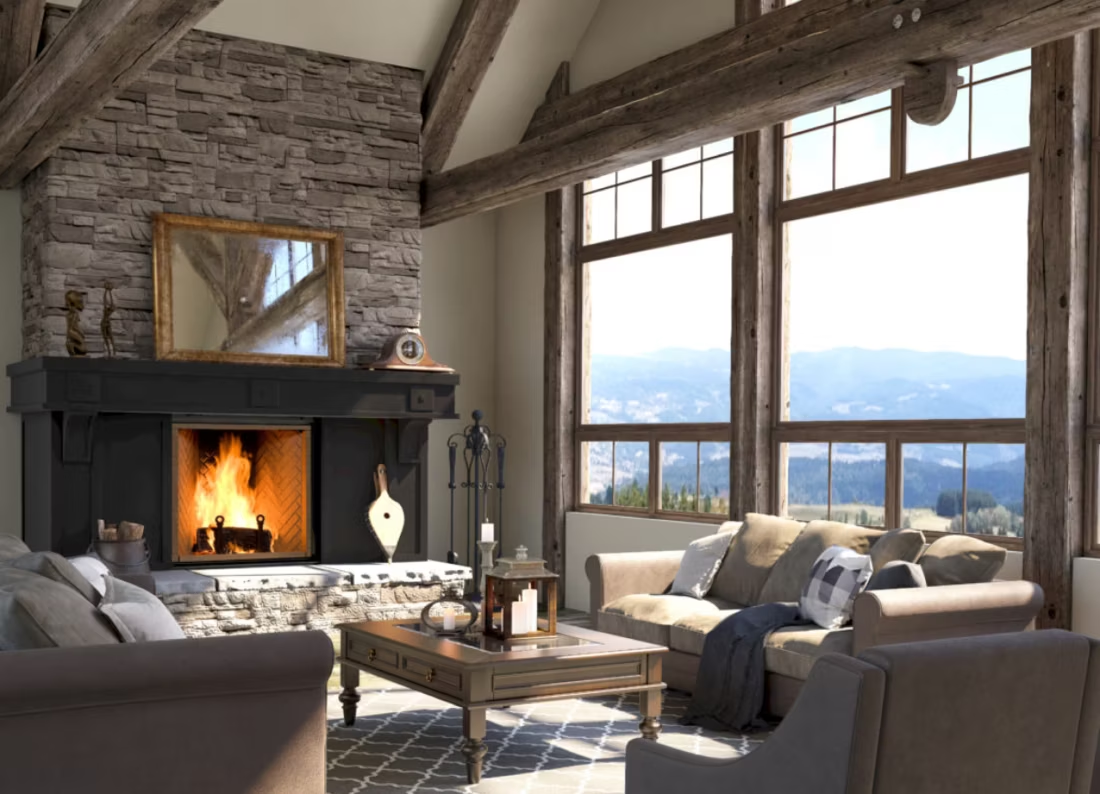
Four fuels. One honest answer for Wakulla County.
Three steps. No salesperson until you're ready.
Tell us about your project
Your zip code, your situation, and the fuel you're leaning toward—or let the answers point you to one.
See what's actually available
The brands dealers within 100 miles genuinely carry—real options, never a catalog mirage.
Get your dealer & Project Guide
A trusted local dealer, plus the free Project Guide & Parts List that names every component of the job.
Frequently Asked Questions
Which fuel works best in Wakulla County?
With only about 1,612 heating degree days a year, no fuel here is carrying the load a wood stove carries in a place like Bozeman or Fargo—this is occasional-use heat, not a primary heating system. Wood fireplaces and inserts remain popular for ambiance and the occasional cold front, and local oak and pine are widely available and inexpensive to burn. Gas—mostly propane, since natural gas service is limited outside Crawfordville's core—is the low-maintenance choice for instant, no-hassle heat on a cold night. Pellet stoves work fine here, though the mild climate means most owners run them lightly rather than daily; Lignetics and Hamer Pellet Fuel are both regionally available. Electric fireplaces are a strong fit for this climate specifically—no venting, no fuel storage, and enough supplemental warmth for the handful of chilly nights typical of a Wakulla County winter. Many homeowners choose electric or gas for that reason alone.
Do I need a permit to install a fireplace in Wakulla County?
In most cases, yes. Wakulla County requires a building permit for new wood stoves, wood-burning inserts, gas fireplaces, gas inserts, and gas stoves, issued through the Wakulla County Building Department. Gas installations also need a separate line permit and licensed gas-fitter for the connection. Electric fireplaces are usually exempt unless the install involves hardwiring a built-in unit or adding a new circuit, in which case an electrical permit applies. Most local retailers handle the permitting paperwork as part of a full installation, so homeowners typically don't have to navigate it themselves.
Are there air quality or burning restrictions in Wakulla County?
No—Wakulla County has no reported air quality non-attainment issues, no winter inversion problems, and no wildfire-smoke-driven burn restrictions like you'd see in parts of the Pacific Northwest. That means wood-burning here isn't subject to the curtailment periods or advisory days that some western counties deal with. The main local consideration is simply Florida's periodic burn bans during dry spells for outdoor debris and yard burning—those don't apply to permitted indoor wood stoves, inserts, or fireplaces, which are governed by the building code and manufacturer specs rather than air-quality rules.
Can one local hearth retailer handle all four fuel types?
Given Wakulla County's small population, most hearth retailers serving the area are based in the Tallahassee metro and carry a broad mix of fuels rather than specializing narrowly—it's common to find dealers who stock wood, gas, and electric units, with pellet stoves available as a special order or through a supplier relationship. If you're deciding between fuels, look for a retailer with working showroom displays of at least two types, since side-by-side comparison matters more in a low-heating-demand climate where the decision often comes down to ambiance and maintenance preference rather than raw heating capacity.
How does fireplace service work in a rural county like Wakulla?
Most chimney sweeps and gas technicians serving Wakulla County are based in Tallahassee and travel down US-319 or Highway 98 to reach Crawfordville, Sopchoppy, and the coastal communities near St. Marks. Expect a modest travel fee for service calls outside Crawfordville, and expect somewhat longer scheduling windows than you'd find in a metro area—light usage in this climate also means many homeowners go a season or two between sweeps, which isn't ideal for wood-burning units even at low-use levels, since creosote still builds up over time regardless of how often the fireplace runs. Scheduling annual service in early fall, before the first cold front, is the easiest way to avoid a wait.
What's the typical cost range for fireplace installation across all fuel types in Wakulla County?
Wood stove or insert installation: roughly $3,800–$7,500 for typical retrofits, since chimney and venting work is usually simpler than in colder climates with heavier-use masonry chimneys. Gas fireplace, insert, or stove: $4,000–$9,500, with propane conversions often on the lower end when a line is already run to the home. Pellet stove or insert: $4,000–$6,500 for a standard install. Electric fireplace: $200–$2,800 for the unit itself, plus $300–$900 in labor for anything beyond a simple plug-in—which covers most wall-mount and insert installs in this market. For unit-specific numbers, see the county + fuel pages above.
Wood, gas, pellet, or electric—how do I choose?
Match the fuel to your life, not the other way around. Wood: lowest fuel cost and total power-outage independence, but you're hauling and stacking. Gas: press a button, set a thermostat, no maintenance to speak of. Pellet: wood economics with automatic feeding, in exchange for weekly cleaning and a need for electricity. Electric: plugs in anywhere with honest supplemental heat. Nobody regrets the fuel that fits how they actually live.
Can I install a fireplace myself?
If you're putting a fire in your house on purpose, it's best to work with an expert. Unless you're genuinely experienced in framing, gas line, vent pipe, and the national code on clearances to combustibles, have a professional do it—and ideally the same company that sells you the fireplace, so warranty, service, and liability all live under one roof.
I know I want a fireplace—where do I actually start?
Do two things today: snap a photo of the wall or fireplace you want to transform, and take a tape measure to the space—width, height, depth. Those two artifacts answer most of a hearth professional's first questions. Then settle fuel (wood, gas, pellet, or electric) and set a realistic budget: $3,900–$5,500 covers fireplace, vent, and basic install for most homes.
How much should I budget for a fireplace?
For an average home—covering the fireplace, the vent pipe, and basic installation—a budget between $3,900 and $5,500 gives you a lot of options across wood, gas, and pellet. By the time you add finish work, gas line, and electrical, the average complete installation lands between $5,000 and $12,000 all-in. In a remodel or new build, a good rule is to put about 2.5% of the total project cost toward the fireplace.
Stove and Fireplace Dealers in Wakulla County
Listings include WhyFire partner dealers, dealers we have verified as authorized for the brands we recommend, and established local businesses that carry hearth products. Every listing shows which one it is. The ones marked Preferred run on WhyFire's software, so they can show you real pricing and book your appointment right here. No manufacturer pays for placement. How we verify dealers →
Hearth And Patio Sales And Service LLC
Allweather Insulation
Capital City Fireplace & Grill
Find your fireplace in Wakulla County.
Pick your fuel below and I'll match you with a trusted local dealer who can put together a free Project Guide & Parts List—the exact parts, including the vent kit, and a recommended installer for your home.
Find Your Fireplace →