
Bring reliable gas warmth to your Wakulla County home.
From Crawfordville to Sopchoppy to St. Marks, Wakulla County winters are short and mild—but a gas fireplace still earns its place for the cold fronts that roll off the Gulf, the ambiance on a January evening, and heat you don't have to think about. Find the right unit and connect with a trusted local dealer.
Every Project Starts From One of These Five Situations
Comfort heat for a mild coastal climate.
Wakulla County sits just south of Tallahassee along the Gulf Coast, bordered by the Apalachicola National Forest and laced with the Wakulla and Ochlockonee Rivers. With only about 1,612 heating degree days a year and winter lows that average around 38°F, this is climate zone 2A—hot, humid, and mild by any national standard. Nobody in Crawfordville or Sopchoppy is heating a home for six months straight the way a family in Duluth or Fargo would. But the county does get real cold fronts, occasional overnight freezes, and enough damp, chilly evenings near the coast in Panacea and St. Marks that a gas fireplace earns steady use from November through February.
Most of Wakulla County sits outside natural gas main service—homes here typically run on propane, supplied by regional providers and independent local companies, with Talquin Electric Cooperative serving much of the county's power needs. That makes propane-fueled direct-vent fireplaces and inserts the standard setup for most households. The appeal is straightforward: instant heat at the flip of a switch, no wood to split or ash to sweep, and a fireplace that looks good and works reliably even on the handful of nights each winter when it actually gets cold enough to need it.
Three steps. No salesperson until you're ready.
Tell us about your project
Your zip code, your situation, and the fuel you're leaning toward—or let the answers point you to one.
See what's actually available
The brands dealers within 100 miles genuinely carry—real options, never a catalog mirage.
Get your dealer & Project Guide
A trusted local dealer, plus the free Project Guide & Parts List that names every component of the job.
Frequently Asked Questions
How much does a gas fireplace installation cost in Wakulla County?
Most gas fireplace and insert installations in Wakulla County run $3,500 to $8,000, depending on the unit, whether you're converting an existing masonry fireplace or starting from scratch, and whether a propane tank installation is needed. A direct-vent insert into an existing fireplace with propane already on-site tends to land on the lower end. New construction or a fresh install in a home without existing gas service—where a propane tank has to go in and lines have to be run—sits toward the higher end. Local dealers serving Crawfordville, Sopchoppy, and the coastal communities will give you a firm number after seeing the space in person.
Do I need natural gas, or does propane work fine?
Propane is the standard fuel for most of Wakulla County, since natural gas mains don't reach the majority of the county outside a few pockets near Tallahassee's service area. If you already have a propane tank for cooking, water heating, or a generator, adding a fireplace is a straightforward tie-in. If not, your installer or a local propane supplier will spec a tank—sized based on your fireplace's BTU output and any other propane appliances in the home. Almost every gas fireplace on the market can be configured to run on propane, so fuel type shouldn't limit your model choice.
Can I convert my existing wood fireplace to gas?
Yes, and it's a common project for older homes around Crawfordville and Sopchoppy that were built with a traditional masonry hearth. A gas insert typically runs $3,500 to $6,500 installed, using your existing chimney with a stainless steel liner run down through it. Stainless is worth insisting on here—the Gulf Coast's humidity and salt air can accelerate corrosion in cheaper venting materials over time. The conversion keeps the look of your original fireplace while giving you instant on-off heat and eliminating the wood handling and ash cleanup that never made much sense in a climate this mild anyway.
Will my gas fireplace work if the power goes out?
Most direct-vent gas fireplaces with intermittent pilot ignition (IPI) include a battery backup that keeps them running when the power drops—which matters in Wakulla County given how often tropical storms and hurricanes knock out Talquin Electric Cooperative's lines along the coast. Keep fresh AA batteries in the unit and it'll light on demand exactly as it does on grid power. Valor fireplaces take a different approach: their pilot generates its own electricity through the thermocouple, so there's no battery to remember at all. Either way, ask your local dealer about the ignition system before you buy if storm-season reliability matters to you.
What's the difference between a gas fireplace, gas insert, and gas stove?
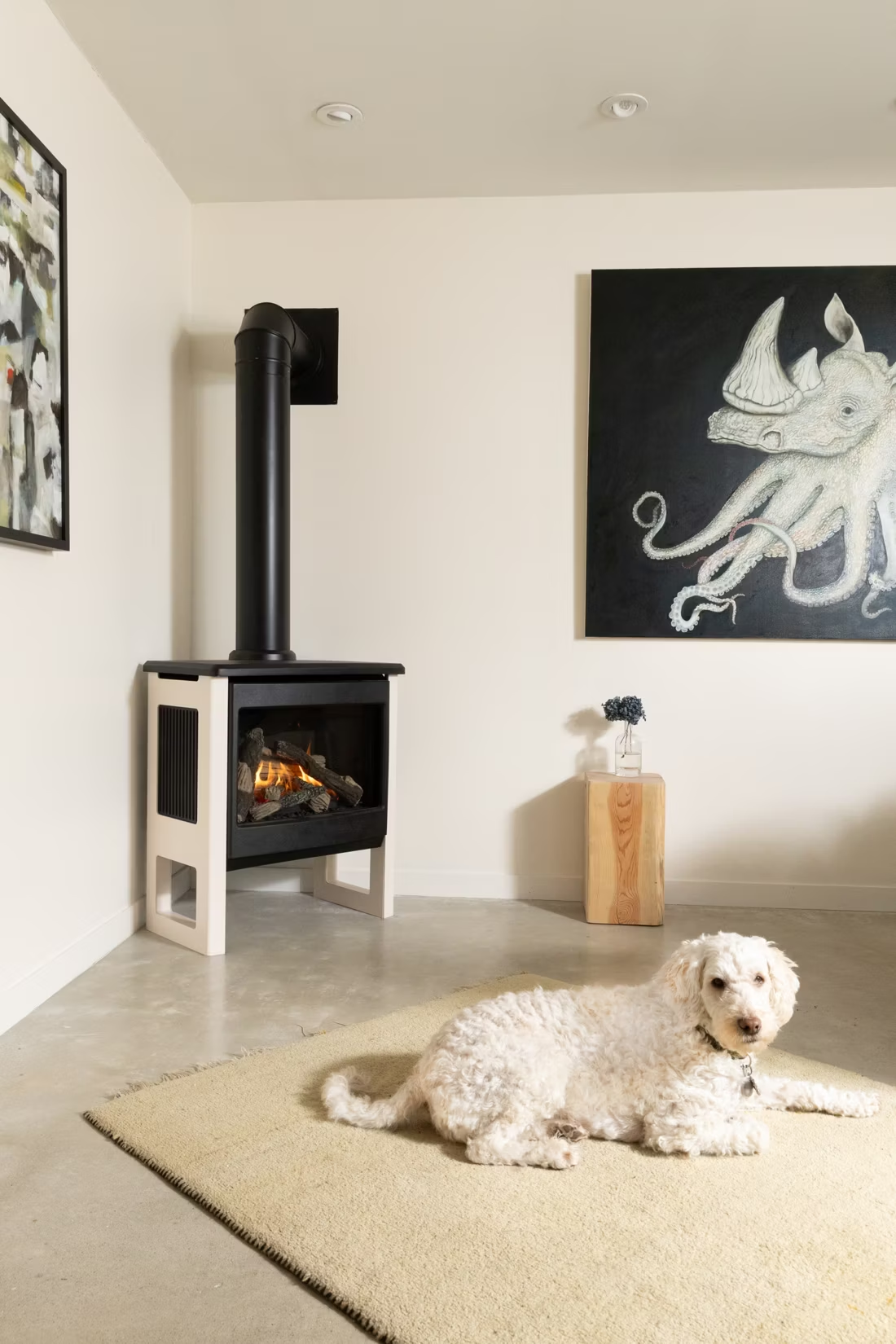
A gas fireplace is a fully built-in unit framed into a wall—the right choice for new construction or a room without an existing hearth. A gas insert slides into an existing masonry fireplace opening and uses the chimney as its vent path, which is the common route for older homes around Sopchoppy and St. Marks with a fireplace that's rarely lit. A gas stove is a freestanding cabinet-style unit that sits on the floor, similar in footprint to a wood stove but running on propane. For most Wakulla County homeowners with an existing fireplace, an insert is the simplest upgrade; a freestanding stove or built-in fireplace makes more sense for a room that never had one.
Do I need a permit to install a gas fireplace in Wakulla County?
Yes—Wakulla County requires a building permit for the installation, plus a mechanical/gas permit for the propane line work, both handled through the Wakulla County Building Department. Propane tank placement also has to meet NFPA 58 setback requirements from structures, property lines, and ignition sources, which your propane supplier will confirm when they size and place the tank. Most local hearth dealers coordinate the permitting, the gas-fitting, and the final inspection as part of the install, so you're not left managing separate trades yourself.
What's the difference between vented and vent-free gas fireplaces?
Vented (direct-vent) gas fireplaces pull combustion air from outside and exhaust it back outside through a sealed pipe—they're the safest option and the most common choice for full-time heating use. Vent-free units burn fuel directly into the room with no external venting, which makes installation simpler and cheaper but means combustion byproducts, including moisture, stay indoors. Florida doesn't restrict vent-free units the way states like California or Colorado do, and given Wakulla County's already high humidity, some homeowners are surprised vent-free is even legal here—the added moisture from the unit can make a humid Gulf Coast home feel stickier rather than cozier. Direct-vent is generally the better fit for daily use; vent-free can work for occasional supplemental warmth in a well-ventilated room.
How often does a gas fireplace need to be serviced?
An annual inspection is recommended, ideally before the cooler months arrive around October or November. A technician checks the burner, pilot assembly, venting, and gas connections, and cleans the glass and interior—a much lighter job than sweeping a wood chimney, but it matters, especially in a coastal climate where humidity and salt air can affect metal components faster than in a drier region. Local dealers serving Wakulla County typically charge $150 to $250 for this service, and it's worth scheduling even on a fireplace that only gets lit a handful of nights a winter.
Gas vs. wood—which makes more sense in Wakulla County?
Wood burns hot and has real appeal for the oak, mahogany, and pine that grow throughout the county, plus it works without electricity—a genuine advantage during hurricane-season outages. But with only about 1,612 heating degree days a year and winter lows rarely dropping far below the high 30s, most Wakulla County homes simply don't need wood as a primary heat source, and dealing with firewood storage in a humid Gulf climate is more hassle than it's worth for most people. Gas wins for the vast majority of households here: instant heat for the handful of genuinely cold nights, no ash or smoke, and a clean look that suits a fireplace used more for evening ambiance than survival heating.
What's the difference between an insert and a zero-clearance fireplace?
An insert is a fireplace that slides into a pre-existing wood-burning fireplace—if you don't have one, there's nothing to insert it into. A zero-clearance fireplace is built into a framed wall, which makes it the answer for remodels and new construction. Simple test: existing masonry fireplace means insert; blank or framed wall means zero-clearance.
Why is a fireplace insert so efficient?
An insert does two things: it seals the chimney completely, so you stop losing air you already paid to heat, and it radiates warmth into the room through the firebox and glass. Most add a heat-exchange fan that pulls cool room air underneath, wraps it around the hot firebox, and pushes it back out warm. Your home is more efficient before you've even lit the first fire.
Can a fireplace actually lower my heating bill?
Yes—by creating a comfort zone. A furnace heats every square foot of the house just to warm the one room you're in; a gas fireplace on low burns roughly a sixth of the gas a typical furnace does. Set the furnace around 55–60 degrees as a baseline, then heat the rooms your family actually uses. Families who heat this way commonly save $20–$60 a month.
What is an in-home preview and do I need one?
It's a visit where a hearth professional measures your space, confirms the model you picked actually works in your home, and walks the specs—framing, gas line, venting, finish work—before anything is ordered. Some details you just can't know until you see the house. Never make a down payment without one; it's the single most-skipped step that burns buyers.
Find your gas fireplace in Wakulla County.
Tell us a bit about your home and we'll put together a free Project Guide & Parts List—the right gas fireplace or insert, the exact venting and parts you'll need, and a trusted local dealer in Wakulla County to install it.
Find Your Fireplace →