
Clean, Steady Pellet Heat for Union County Winters.
Union County's climate zone 2A winters are mild by national standards, but cold fronts still push overnight temperatures into the 30s across Lake Butler and Raiford. A pellet stove or insert gives you controlled, low-maintenance heat for those weeks without a wood-handling routine you'd only use a handful of times a year.
Every Project Starts From One of These Five Situations
A clean, low-maintenance option for occasional cold snaps.
Union County is Florida's smallest county by land area, tucked into the north-central part of the state around Lake Butler and Raiford. Climate zone 2A means the calendar here is dominated by long, humid summers—but winter still delivers a real stretch of nights in the 30s and occasional hard freezes when a front drops down from the north. Homes here rarely need a heating system running around the clock, which is exactly where a pellet stove earns its place: load the hopper, set the thermostat, and get consistent heat for the specific weeks you need it, without babysitting a wood fire or running a furnace built for a much colder climate.
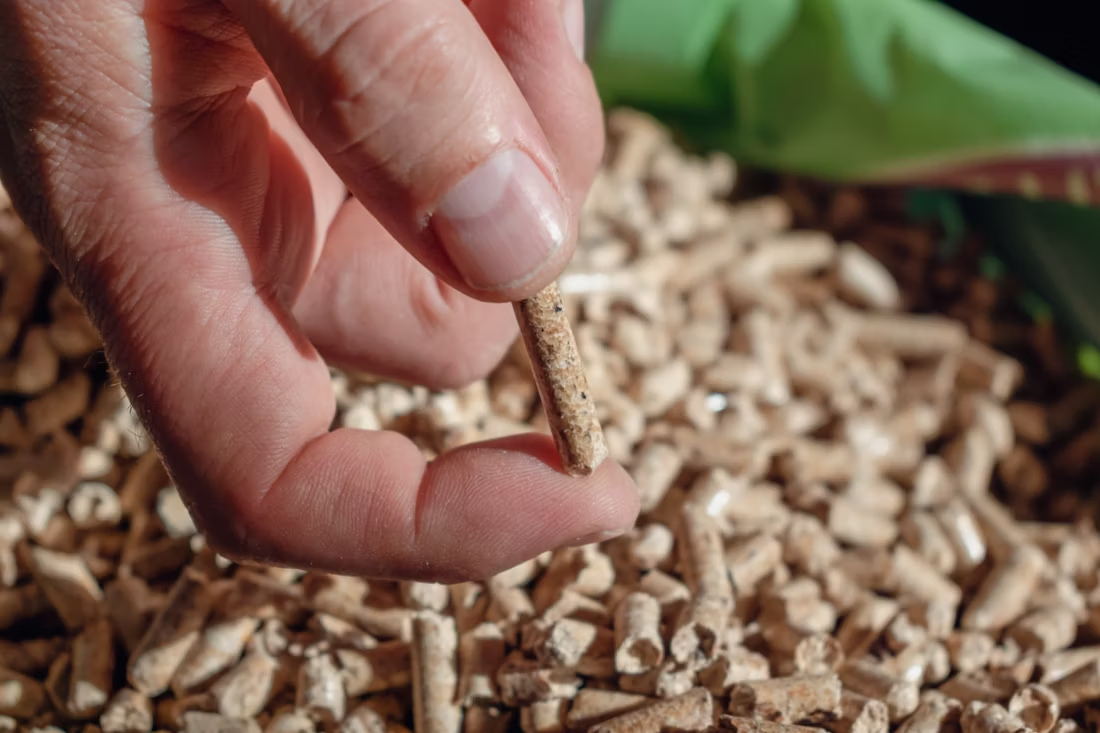
Union County has no non-attainment status and no winter inversion concerns, so there are no seasonal burn restrictions to navigate the way there are in parts of the Pacific Northwest or interior West—pellet appliances here are a matter of comfort and convenience, not air-quality compliance. Regional brands including Lignetics, Hamer Pellet Fuel, and Greenway Renewable Energy supply bagged pellets throughout the area, often manufactured from the same Southern yellow pine that's common in the county's timberland alongside the oak and mahogany found in local hardwood stands. A local dealer can tell you which brand is easiest to source consistently near Lake Butler versus what requires a drive toward Lake City or Gainesville.
Three steps. No salesperson until you're ready.
Tell us about your project
Your zip code, your situation, and the fuel you're leaning toward—or let the answers point you to one.
See what's actually available
The brands dealers within 100 miles genuinely carry—real options, never a catalog mirage.
Get your dealer & Project Guide
A trusted local dealer, plus the free Project Guide & Parts List that names every component of the job.
Frequently Asked Questions
How much does a pellet stove installation cost in Union County?
A freestanding pellet stove installation in Union County typically runs $2,500 to $4,000, covering the unit, a hearth pad if needed, and venting through an exterior wall—pellet appliances use a simpler vent than wood stoves, which keeps costs down. A pellet insert into an existing masonry fireplace runs a bit higher, often $3,500 to $5,500, since it involves fitting the unit to your firebox and running a vent liner. Because Union County is rural, some dealers based out of Lake City, Gainesville, or Starke may add a modest travel charge for installs around Lake Butler or Raiford—worth asking about upfront.
What size pellet stove do I need for a home in Union County?
Given the mild climate zone 2A winters here, most Union County homes do fine with a small to mid-size pellet stove—something in the 40,000 to 55,000 BTU range covers a typical living area or open-plan main floor without running a large hopper you'll rarely fill to capacity. Homes using the stove as supplemental heat alongside central AC/heat can often go even smaller. It's a different sizing conversation than you'd have in a genuinely cold climate—the goal here is comfortable heat for a few cold weeks, not an all-winter primary heat source, and a local dealer will size it based on your square footage and how the room is used.
Where can I find pellet stove dealers and installers near Union County?
Because Union County is small and rural, most hearth dealers serving Lake Butler and Raiford are actually based in nearby Lake City, Gainesville, or Starke, and travel into the county for installs. Look for NFI-certified installers—that certification specifically covers proper venting, clearances, and code compliance for solid-fuel appliances like pellet stoves. A dealer who regularly works this part of north-central Florida will already know how Union County's permitting process runs and won't need to figure it out on your job.
What's the difference between a pellet stove and a pellet insert?
A pellet stove is a freestanding unit that sits on a hearth pad and vents through an exterior wall—it doesn't need an existing chimney, which makes it a good fit for Union County homes without a masonry fireplace. A pellet insert is built to slide into an existing fireplace opening, using a vent liner run up through the chimney. If you've got an old wood-burning fireplace in a Lake Butler or Raiford home that mostly sits unused, an insert converts it into an efficient, thermostat-controlled heat source while keeping the existing mantel and surround.
Do I need a permit to install a pellet stove in Union County?
Yes—solid-fuel and pellet-burning appliances typically require a building permit through the Union County Building Department, covering the appliance installation and the vent penetration through the wall or roof. Most local dealers handle the permit application as part of the installation, so you're not filing paperwork yourself. Unlike counties dealing with winter inversion or non-attainment status, Union County has no air-quality-related burn restrictions, so once the appliance is permitted and installed, there's no seasonal curtailment to worry about.
What's the best pellet stove for Union County's climate?
You don't need a high-output, cold-climate-rated stove here the way you would in the upper Midwest or interior mountain West. A mid-efficiency pellet stove with a moderate hopper capacity—enough for an overnight burn without needing a giant bin of pellets on hand—is the practical choice for Union County's short, mild heating season. Models from mainstream pellet stove manufacturers carried by regional dealers cover this well; the bigger factor locally is picking a unit compatible with the pellet brands you can actually source nearby, since availability matters more here than squeezing out maximum BTU output.
Where can I buy pellets in or near Union County?
Regional brands including Lignetics, Hamer Pellet Fuel, and Greenway Renewable Energy are the names most commonly stocked by dealers and farm/hardware stores serving north-central Florida. Bagged hardwood and softwood pellets generally run in the $250 to $320 per ton range in this part of the state, though exact pricing varies by retailer and whether you're buying a single bag or a full ton pallet. Given Union County's short burn season, many homeowners buy a partial pallet rather than stocking a full ton, and your dealer can point you toward the closest stocked supply near Lake Butler or Raiford.
How much maintenance does a pellet stove need?
Pellet stoves need routine cleaning of the burn pot and ash tray, roughly every few days of active use, plus a deeper cleaning of the auger, hopper, and venting system once a season. Given how few weeks a Union County home typically runs one, a single annual service before the first cold front of the season—checking the igniter, cleaning the exhaust fan, and inspecting the vent—is usually enough to keep it running reliably through the winter. This is far less involved than sweeping a wood-burning chimney, which is part of the appeal for a climate where the appliance sits idle most of the year.
Pellet stove vs. electric heater—which makes more sense in Union County?
An electric fireplace or heater is simpler to install (often just a standard outlet, no venting) and produces zero emissions, but it can't provide the same sustained radiant heat output as a pellet stove and typically costs more to run per BTU on the electric bill. A pellet stove costs more upfront and needs fuel storage, but delivers real, consistent heat for less operating cost during the coldest stretches and doesn't rely entirely on the grid staying up during a storm-related outage. For a Union County home used mainly for ambiance and light supplemental heat, electric is often enough. For a home that wants genuine warmth during winter cold snaps, pellet is the stronger performer—a local dealer can walk through both options against your specific room and budget.
What do I measure to size a fireplace insert?
Four numbers tell you what fits: the front width, the front height, the back width, and the overall depth of your existing fireplace opening. Grab a tape measure, jot those down, and snap a photo of the wall—those two things do more to move your project forward than anything else you can do today.
Why is a fireplace insert so efficient?
An insert does two things: it seals the chimney completely, so you stop losing air you already paid to heat, and it radiates warmth into the room through the firebox and glass. Most add a heat-exchange fan that pulls cool room air underneath, wraps it around the hot firebox, and pushes it back out warm. Your home is more efficient before you've even lit the first fire.
Can I install a fireplace myself?
If you're putting a fire in your house on purpose, it's best to work with an expert. Unless you're genuinely experienced in framing, gas line, vent pipe, and the national code on clearances to combustibles, have a professional do it—and ideally the same company that sells you the fireplace, so warranty, service, and liability all live under one roof.
Does a fireplace add value to my home?
On average, a fireplace adds back to the home about the same amount you spent installing it. Add the monthly savings from heating the rooms you actually use instead of the whole house—often hundreds of dollars a year—and the value case is strong before you even count what a fire does for how your family uses the room.
Pellet Brands Stocked Around Union County
Manufacturers will point you to the nearest stocking dealer.
Find your pellet stove in Union County.
Tell us about your home in Union County and we'll match you with a trusted local dealer and send over a free Project Guide & Parts List—the exact parts, including the vent kit, and the dealer recommended for your project.
Find Your Fireplace →