
Gas Fireplace Warmth for Union County's Cool Snaps.
From Lake Butler to Raiford and Worthington Springs, Union County's short winters still bring nights in the 30s. Find the right gas fireplace or insert, and connect with a trusted local propane dealer.
Every Project Starts From One of These Five Situations
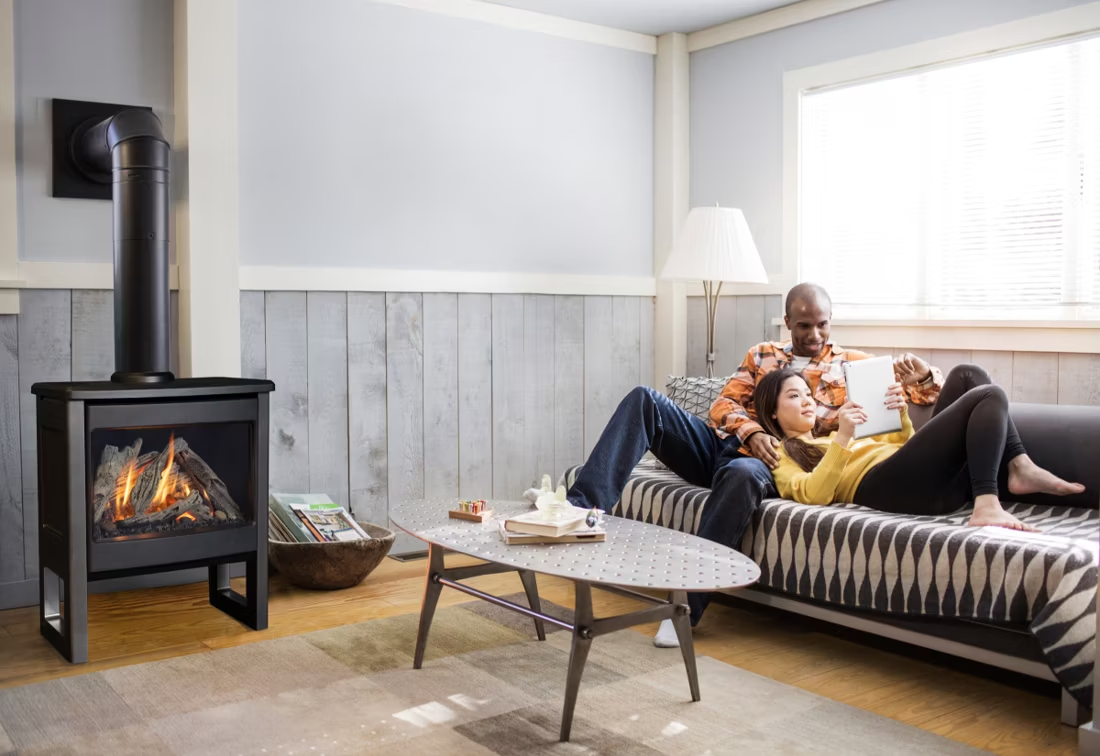
Ambiance most nights, real heat when a front rolls through.
Union County is one of Florida's smallest counties by population—around 539 residents spread across farmland, pine and oak stands, and small communities like Lake Butler, Raiford, and Worthington Springs. Zone 2A means long, humid summers and a heating season that's mostly a formality, but this part of north-central Florida still sees genuine cold snaps: nights in the 30s aren't rare in December and January, and hard freezes occasionally roll through and threaten the county's row crops and timberland. That's enough to make a gas fireplace a genuinely useful appliance here, not just a decorative one.
Union County has no natural gas utility serving the area, so nearly every gas fireplace installation here runs on propane, supplied and tanked by regional propane companies rather than a municipal gas line. That's a different install path than a natural-gas metro area—it means coordinating a propane tank (existing or new) alongside the fireplace itself. A local dealer who installs propane hearth appliances regularly in this county will know the right tank size, regulator setup, and line run for a farmhouse outside Lake Butler versus a newer build closer to town—and will get you instant, on-demand heat that doesn't depend on hauling or seasoning firewood in Florida's humidity.
Three steps. No salesperson until you're ready.
Tell us about your project
Your zip code, your situation, and the fuel you're leaning toward—or let the answers point you to one.
See what's actually available
The brands dealers within 100 miles genuinely carry—real options, never a catalog mirage.
Get your dealer & Project Guide
A trusted local dealer, plus the free Project Guide & Parts List that names every component of the job.
Frequently Asked Questions
How much does a gas fireplace installation cost in Union County?
Because Union County runs on propane rather than natural gas, cost depends heavily on whether you already have a propane tank and line in place. A gas insert installed into an existing masonry fireplace with propane already on site is the most affordable path—often a few thousand dollars for the unit and insert work. A new direct-vent gas fireplace that requires a fresh propane tank set, a buried line run out to the house, and framing work can run considerably more, sometimes reaching into five figures depending on distance from the tank location. A local propane-experienced dealer can walk your property and give you a firm number rather than a guess.
Is natural gas available in Union County, or do I need propane?
Union County does not have natural gas utility service, so propane is the standard fuel for gas fireplaces throughout the county—whether you're in Lake Butler, Raiford, or out on rural acreage. Most gas fireplace and insert models sold by regional dealers can be configured for propane with the correct orifice and regulator, so fuel type isn't a limiting factor on which unit you choose. What matters more is whether you already have a propane tank serving your home (for a range, water heater, or generator) or need a new tank set specifically for the fireplace.
Do I need a permit to install a gas fireplace in Union County?
Yes. New gas fireplace and insert installations typically require both a building permit and a gas/propane line permit through the Union County Building Department, and any propane tank work needs to meet setback and code requirements from the propane supplier and local fire code. Most established hearth dealers coordinate the permitting and inspection as part of the install, which matters here since propane line work has to be handled by a licensed installer rather than a general handyman.
Will a gas fireplace work during a power outage or hurricane?
This is one of the strongest arguments for gas in Union County. Hurricane season regularly knocks out power across rural north Florida, sometimes for days. Gas fireplaces with IPI (intermittent pilot ignition) run on a small battery backup that keeps them lighting on demand even with the grid down. Some brands, like Valor, go a step further and generate their own electricity through the pilot's thermocouple, so there's no battery to remember to replace. For a propane-fed fireplace that isn't tied to the electric grid for its fuel supply, that combination means genuine backup heat and light when storms take the power out.
What's the difference between a gas fireplace, insert, and stove?
A gas fireplace is a built-in unit framed into a wall, typically chosen for new construction or a remodel. A gas insert drops into an existing masonry fireplace, sealing it up and venting through the existing chimney—a common upgrade for older Union County farmhouses with an open wood-burning hearth that rarely gets used. A gas stove is a freestanding, cast-iron-style unit that sits on the floor and doesn't require an existing fireplace opening. For most homes in the county with an existing masonry fireplace that's mostly decorative, an insert is the simplest and most effective conversion.
What size gas fireplace do I need for a Zone 2A climate like Union County's?
Because Union County's heating season is short and winters are mild by national standards, most homes here don't need a high-output unit sized for constant, whole-house heat. A smaller to mid-size direct-vent gas fireplace, sized for the room it's in rather than the whole floor plan, is typically enough to take the chill off during cold snaps and serve as a strong secondary heat source. Homes that lean on the fireplace more heavily as backup heat—say, an older farmhouse with minimal insulation outside Lake Butler—may want to size up slightly. A local dealer can walk the room and recommend BTU output based on your specific layout.
Are vent-free gas fireplaces allowed in Union County?
Vent-free (unvented) gas fireplaces are legal in Florida, including Union County, but they come with strict room-size and ventilation requirements since they release combustion byproducts directly into the living space. Direct-vent units, which draw combustion air from outside and exhaust fully outside through a sealed vent, are the more commonly recommended option locally—they don't carry the same indoor air quality tradeoffs and work well paired with a propane supply. Ask a local dealer to walk through both options for your specific room before deciding.
How often does a gas fireplace need to be serviced in a humid climate like Union County's?
An annual inspection is recommended for any gas appliance, and it matters more in a humid climate like Union County's—moisture and insects can affect venting components and pilot assemblies over a Florida summer even when the fireplace sees little use. A technician will check the burner, pilot or ignition system, propane line connections, and venting, and clean the glass and interior. Given how lightly some units run here compared to colder climates, an annual check is often more about catching humidity-related wear than burner buildup.
Gas vs. wood—which makes more sense for a home in Union County?
Union County has plenty of oak and pine on hand, and wood fireplaces and stoves work fine here, but Florida's humidity makes seasoning and storing firewood more of a chore than it is in drier climates, and termites and other pests are a real concern with stacked wood near the house. Gas, run on propane since there's no natural gas utility in the county, skips all of that—no wood handling, no storage, and instant on-off operation that suits a climate where you might only want heat a handful of nights a year. Wood still has an edge for anyone who values the ritual of a real fire or wants a heat source with zero dependence on fuel deliveries; for most Union County homes prioritizing convenience and hurricane-season reliability, gas is the more practical fit.
Why is my open fireplace making my house colder?
Open fireplaces suck—literally. As the fire burns, it consumes air your furnace already paid to heat and pulls it out through the chimney, so the house is actually colder after the fire goes out than before you lit it. An insert fixes this: it seals the chimney, puts fixed glass across the front, and turns that hole in your house into a real heat source.
What's the difference between an insert and a zero-clearance fireplace?
An insert is a fireplace that slides into a pre-existing wood-burning fireplace—if you don't have one, there's nothing to insert it into. A zero-clearance fireplace is built into a framed wall, which makes it the answer for remodels and new construction. Simple test: existing masonry fireplace means insert; blank or framed wall means zero-clearance.
Can I install a fireplace myself?
If you're putting a fire in your house on purpose, it's best to work with an expert. Unless you're genuinely experienced in framing, gas line, vent pipe, and the national code on clearances to combustibles, have a professional do it—and ideally the same company that sells you the fireplace, so warranty, service, and liability all live under one roof.
How much should I budget for a fireplace?
For an average home—covering the fireplace, the vent pipe, and basic installation—a budget between $3,900 and $5,500 gives you a lot of options across wood, gas, and pellet. By the time you add finish work, gas line, and electrical, the average complete installation lands between $5,000 and $12,000 all-in. In a remodel or new build, a good rule is to put about 2.5% of the total project cost toward the fireplace.
Find your gas fireplace in Union County.
Tell us a bit about your home and we'll put together a free Project Guide & Parts List—the right gas fireplace or insert, the propane and venting parts you'll need, and a trusted local dealer to install it.
Find Your Fireplace →