
Warmth on demand for Union County's rare cold nights.
From Lake Butler to Raiford and Worthington Springs, Union County's Zone 2A winters are short and mild—but electric fireplaces still deliver real ambiance and supplemental warmth without a chimney, a gas line, or any venting at all. Find the right unit and connect with a trusted local dealer.
Every Project Starts From One of These Five Situations
Ambiance first, heat second—and that's fine here.
Union County sits in Zone 2A, a hot-humid climate where heating season is short and real cold is rare. Most winters bring only a handful of nights where temperatures dip into the 20s and 30s, usually in January. That's not enough demand to justify a wood-burning system with a masonry chimney or a full gas line run for most homes here—but it's exactly the kind of climate where electric fireplaces make sense: warmth when you want it on a cool evening, zero heat output the rest of the year, and no combustion byproducts to worry about in Florida's humidity.
With a population under 600 spread across a small, largely rural county, a lot of Union County housing stock is manufactured or modular—and electric units are often the only fireplace option that installs cleanly into that kind of structure without cutting into a roofline or running new gas. Clay Electric Cooperative serves most of the county, and a standard plug-in or 240-volt hardwired electric fireplace draws on that existing service without any new utility work. The one honest tradeoff: electric fireplaces don't run without grid power, which matters here given how tropical systems and severe thunderstorms can knock out electricity for days at a time. Homeowners who want backup heat during an outage typically pair an electric unit for daily ambiance with a wood stove or propane heater as a fallback.
Three steps. No salesperson until you're ready.
Tell us about your project
Your zip code, your situation, and the fuel you're leaning toward—or let the answers point you to one.
See what's actually available
The brands dealers within 100 miles genuinely carry—real options, never a catalog mirage.
Get your dealer & Project Guide
A trusted local dealer, plus the free Project Guide & Parts List that names every component of the job.
Frequently Asked Questions
How much does an electric fireplace installation cost in Union County?
A plug-in electric fireplace insert or mantel unit runs on the low end, often $300 to $800 installed, since no wiring changes are needed beyond a standard outlet. A hardwired 240-volt wall-mount or built-in unit—common for larger rooms or a more permanent look—typically runs $800 to $1,500 once a licensed electrician runs a dedicated circuit. Because Union County has no natural gas infrastructure to speak of and most rural properties rely on propane or electric already, electric fireplaces are often the simplest fireplace upgrade available here, especially for manufactured and modular homes around Lake Butler and Worthington Springs.
Insert, built-in, or wall-mount—which type of electric fireplace should I get?
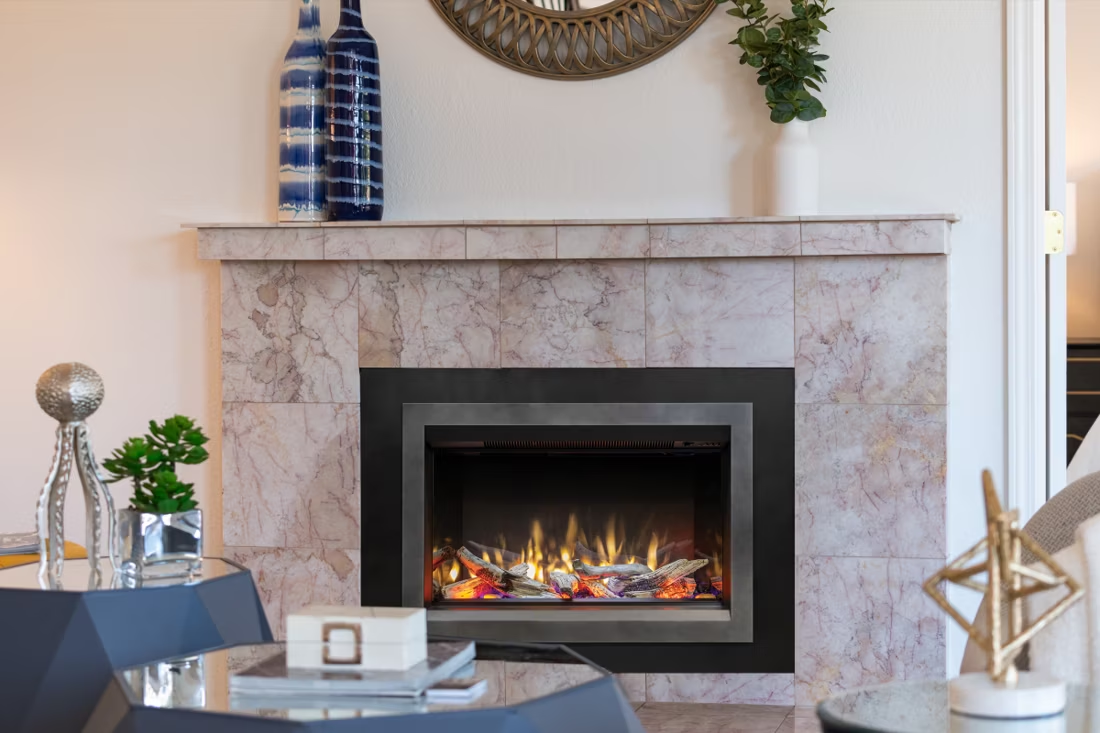
An electric insert is built to slide into an existing fireplace opening—useful if you have an old wood-burning masonry fireplace you want to convert without touching the chimney. A built-in unit is framed into a wall like a real fireplace and gives the most convincing look, but needs a stud-wall opening. A wall-mount model hangs directly on a wall with no framing at all, which is often the fastest and least invasive option for manufactured or modular homes common throughout Union County. A local dealer can walk your specific floor plan and tell you which type actually fits without structural changes.
How much does it cost to run an electric fireplace in Union County?
Most electric fireplaces draw around 1,500 watts on the heater setting, which costs roughly 15 to 20 cents per hour at typical Clay Electric Cooperative residential rates—a few dollars for an evening of use. On flame-only mode with the heater off, draw drops to under 100 watts, which is essentially the cost of a light bulb. Given how few nights in a Union County winter actually call for supplemental heat, most homeowners here run their unit mostly for the flame effect and only kick on the heater during the occasional cold front.
Do I need a permit to install an electric fireplace in Union County?
A plug-in unit that uses an existing standard outlet generally doesn't require a permit. A hardwired 240-volt unit does require an electrical permit through your local building department, since it involves running a new dedicated circuit. There's no chimney, venting, or gas line permit to worry about either way—one of the practical advantages of electric over wood or gas in a county this size, where inspection scheduling can take longer than in more populated areas.
Are electric fireplaces a good fit for manufactured and mobile homes in Union County?
Yes—often the best fit available. Manufactured and modular homes make up a substantial share of housing in a rural county like Union, and their walls and roof structures usually can't accommodate a masonry chimney or the roof penetration a direct-vent gas unit needs. Electric fireplaces skip both problems entirely: no venting, no combustion, no moisture introduced into the wall cavity—which matters in a climate as humid as Zone 2A. Wall-mount and freestanding electric stove models are especially popular in single-wide and double-wide homes around Raiford and Lake Butler for exactly this reason.
Will my electric fireplace work if the power goes out?
No—electric fireplaces need grid power to run, full stop. That's worth thinking through in Union County specifically, since tropical storms and severe summer thunderstorms can knock out electricity for a day or more. If you want a heat source that keeps working during an outage, that's a wood stove or a propane heater, not an electric unit. Plenty of local homeowners run electric for everyday ambiance and convenience while keeping a separate backup option for the rare extended outage—a local dealer can talk through both if resilience matters to you.
What size electric fireplace do I need for my home?
Since electric units aren't sized to heat an entire home the way a wood or gas system might be in a colder climate, sizing here is mostly about the room and the look you want. A 26 to 33-inch insert or wall-mount suits a bedroom or small den; a 40 to 50-inch model fills a typical living room in a Union County ranch home or double-wide; larger linear units are usually reserved for open-concept great rooms. Because heat output matters less than in a high-HDD climate, homeowners have more flexibility to size for aesthetics first.
Electric vs. wood vs. gas—what actually makes sense in Union County?
Wood is still used here—oak, pine, and even mahogany show up in local woodpiles—mostly for the handful of genuinely cold nights and for homeowners who like a real fire, but it requires a chimney and regular sweeping for a heat need that's minimal most winters. Gas requires propane service and tank logistics since natural gas isn't broadly available in the county. Electric skips both: no fuel to store, no venting, no chimney sweep, and it installs into almost any wall or existing fireplace opening. For a Zone 2A climate with a short, mild heating season, electric is often the lowest-hassle way to get fireplace ambiance without taking on a system built for much colder weather.
What brands of electric fireplaces should I look at?
Dimplex and Napoleon are widely available and cover everything from inserts to linear wall-mount units, with realistic flame technology that holds up well even with the heater off most of the year. Amantii and Touchstone are common choices for larger linear or built-in installations. Availability and pricing vary by dealer, so the more useful question for a county this size is which local retailer actually stocks and installs the model you want—a nearby dealer can also confirm what fits your specific wall or existing fireplace opening before you buy anything.
Can I put a TV above my fireplace?
Yes—with an asterisk. Fireplaces are hot and TVs don't like heat. Either put a mantel between them to deflect rising warmth, or choose a fireplace with heat-management technology that creates a cool zone on the wall above—the wall stays around 125 degrees, barely warm, while the room still gets full heat. If you like clean lines and don't want a mantel, heat management is the answer.
Does an electric fireplace need a vent or chimney?
No—that's its superpower. An electric fireplace needs a wall and an outlet, period. No vent pipe, no gas line, no clearances to design around, which is why it works in bedrooms, offices, apartments, and walls where venting a gas or wood unit would be impractical or impossible. Installation is typically the simplest and least expensive of any fireplace type.
How much should I budget for a fireplace?
For an average home—covering the fireplace, the vent pipe, and basic installation—a budget between $3,900 and $5,500 gives you a lot of options across wood, gas, and pellet. By the time you add finish work, gas line, and electrical, the average complete installation lands between $5,000 and $12,000 all-in. In a remodel or new build, a good rule is to put about 2.5% of the total project cost toward the fireplace.
What is an in-home preview and do I need one?
It's a visit where a hearth professional measures your space, confirms the model you picked actually works in your home, and walks the specs—framing, gas line, venting, finish work—before anything is ordered. Some details you just can't know until you see the house. Never make a down payment without one; it's the single most-skipped step that burns buyers.
Find your electric fireplace in Union County.
Tell us a bit about your home and we'll match you with the right electric fireplace, insert, or wall-mount unit—plus a free Project Guide & Parts List with the exact parts, any electrical work needed, and your recommended local Union County dealer.
Find Your Fireplace →