
A Pellet Stove Is a Rare Find in The Hammocks.
With winter lows averaging 57°F and only 156 heating degree days a year, almost no Hammocks home needs supplemental heat. But if you're one of the few who still wants a pellet stove, we'll help you find a dealer who can actually get one installed right.
Every Project Starts From One of These Five Situations
Climate zone 1A leaves little room for pellet heat.
The Hammocks sits at just 7 feet of elevation in climate zone 1A, the hottest and most humid zone in the national building code system. Winter lows here average 57°F, and the entire heating season adds up to only 156 heating degree days. For comparison, a city like Duluth, Minnesota racks up more than 9,000 HDD in a single winter—homes there are built around wood and pellet heat as a survival necessity. Homes in The Hammocks simply aren't built that way, and central air conditioning, not supplemental heat, is the dominant HVAC concern.
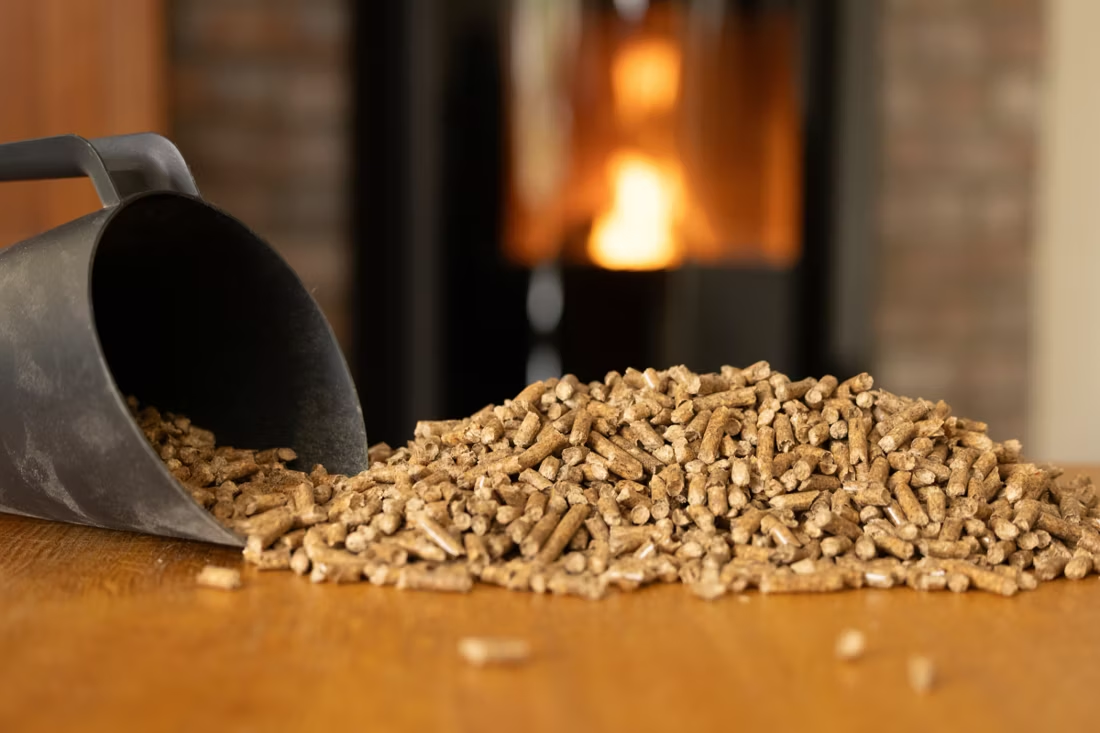
That's why we classify pellet fuel relevance in The Hammocks as not-applicable—not because pellet stoves don't function in Florida, but because the demand for one is genuinely small. Regional pellet suppliers like Lignetics, Hamer Pellet Fuel, and Greenway Renewable Energy sell most of their bags to the Panhandle and north Florida, where cold snaps run longer and colder. The handful of Hammocks homeowners who do pursue a pellet stove are usually after the visual warmth and ambiance of a real flame, a backup heat option for the occasional Arctic outbreak that drops lows into the 30s, or a unit destined for a second home further north. If that's you, a trusted local dealer can still install one correctly—you'll just have fewer showrooms to choose from than a homeowner in Minnesota or Wisconsin.
Three steps. No salesperson until you're ready.
Tell us about your project
Your zip code, your situation, and the fuel you're leaning toward—or let the answers point you to one.
See what's actually available
The brands dealers within 100 miles genuinely carry—real options, never a catalog mirage.
Get your dealer & Project Guide
A trusted local dealer, plus the free Project Guide & Parts List that names every component of the job.
Frequently Asked Questions
How much does a pellet stove installation cost in The Hammocks?
Because pellet stove installs are uncommon in Miami-Dade, there isn't a deep local pricing history the way there is in colder markets. Based on national averages for a comparable direct-vent pellet stove or insert—unit, venting, hearth pad, and labor—expect somewhere in the $3,000 to $6,500 range. Costs run higher if your home has no existing masonry fireplace to work with and needs a full wall penetration for venting, which is the more common scenario here since most Hammocks homes were built without a chimney in the first place.
Why don't more homes in The Hammocks have pellet stoves?
Simple math: The Hammocks logs about 156 heating degree days a year, versus thousands in genuinely cold climates. Winter lows average 57°F, which is a comfortable evening in most of the country, not a heating emergency. Florida Building Code homes in this zone are engineered to shed heat and humidity, not retain it, so a supplemental heat source that produces real BTUs mostly goes unused nine months of the year. Homeowners here who want fire ambiance more often choose a vent-free or electric option that doesn't require fuel storage or venting work.
Who actually installs a pellet stove in a climate like this?
The homeowners we see pursue pellet stoves in The Hammocks generally fall into a few groups: people who grew up with wood or pellet heat elsewhere and want the look and feel of a real fire, owners of a second home or cabin further north who are shopping while at their Florida residence, and a small number who want a battery-independent backup heat source for the rare Arctic outbreak that pushes South Florida into the 30s for a night or two. It's a niche purchase here, but not an impossible one—a certified dealer can still size and vent a unit correctly for a Hammocks home.
Can I even find pellet fuel for sale near The Hammocks?
It's not stocked the way it is up north. Regional brands like Lignetics, Hamer Pellet Fuel, and Greenway Renewable Energy sell primarily into the Florida Panhandle and states with real winters, so Miami-Dade retailers don't typically carry pallets of bagged pellets year-round. Most Hammocks pellet stove owners either special-order through a local hearth dealer, buy from a big-box store that restocks seasonally, or have pellets shipped in bulk. It's worth confirming fuel availability with your installer before committing to a pellet unit over an electric alternative.
Do I need a permit to install a pellet stove in The Hammocks?
Yes. Any fuel-burning appliance installation in unincorporated Miami-Dade, including The Hammocks, requires a building permit through the Miami-Dade County Building Department, along with compliance with the Florida Building Code's venting and clearance requirements. Because so few pellet installs happen locally, it's worth confirming your installer has actually pulled a hearth appliance permit here before—the inspection process is the same as anywhere, but familiarity with it varies more than it would in a market with hundreds of installs a year.
Wouldn't an electric fireplace make more sense here than pellet?
For most Hammocks homes, yes. Florida Power & Light serves the area at roughly 13.7 cents per kWh, and a 1,500-watt electric insert or freestanding unit costs pennies per hour to run for the occasional cool evening—with no venting, no fuel storage, and no permit complications beyond a simple electrical connection. Pellet stoves make more sense when you want genuine flame and radiant heat output, not just ambiance, or when you specifically want a wood-pellet aesthetic. If your goal is just visual warmth on a rare chilly night, electric is almost always the simpler and cheaper answer.
How does pellet compare to gas, which is more common in Miami-Dade?
Gas fireplace relevance in The Hammocks is standard, while pellet is not-applicable, and the difference comes down to what each fuel is actually used for locally. Gas fireplaces here are chosen almost entirely for appearance and instant ambiance—flip a switch, get a flame, no real heating need behind it. Pellet stoves are heating appliances first; the flame is a byproduct of burning fuel for BTUs you mostly don't need in this climate. Unless you specifically want the pellet-burning experience, most Hammocks homeowners shopping for a decorative flame end up happier with a direct-vent gas unit, which local dealers stock and service far more regularly.
Are there special venting considerations for a pellet stove in a hot, humid climate?
Yes. Pellet stoves vent through a wall using a small-diameter PVC or stainless pipe, which is straightforward in principle, but installers in South Florida need to account for the exterior wall's exposure to driving rain and hurricane-force wind loads, plus the fact that most Hammocks homes are built with concrete block construction (CBM) rather than wood frame, which changes how the penetration is sealed and flashed. A dealer experienced with CBM construction will know how to maintain the home's wind-load rating and moisture barrier when cutting a vent path—this is exactly the kind of detail that gets missed by an installer unfamiliar with local building methods.
What if I only want backup heat for the occasional Miami cold snap?
South Florida does get genuine Arctic outbreaks every few years that push overnight lows into the 30s, occasionally with frost advisories for Miami-Dade. For that scenario, most homeowners are better served by a portable electric heater or a small electric fireplace insert rather than a pellet stove, since the cold snap lasts a night or two, not a season. A pellet stove only makes sense as backup heat if you also want it running as a decorative or ambiance feature the rest of the year—otherwise you're maintaining fuel storage and an appliance for a handful of nights annually.
Why is my open fireplace making my house colder?
Open fireplaces suck—literally. As the fire burns, it consumes air your furnace already paid to heat and pulls it out through the chimney, so the house is actually colder after the fire goes out than before you lit it. An insert fixes this: it seals the chimney, puts fixed glass across the front, and turns that hole in your house into a real heat source.
What's the difference between an insert and a zero-clearance fireplace?
An insert is a fireplace that slides into a pre-existing wood-burning fireplace—if you don't have one, there's nothing to insert it into. A zero-clearance fireplace is built into a framed wall, which makes it the answer for remodels and new construction. Simple test: existing masonry fireplace means insert; blank or framed wall means zero-clearance.
Can I install a fireplace myself?
If you're putting a fire in your house on purpose, it's best to work with an expert. Unless you're genuinely experienced in framing, gas line, vent pipe, and the national code on clearances to combustibles, have a professional do it—and ideally the same company that sells you the fireplace, so warranty, service, and liability all live under one roof.
Does a fireplace add value to my home?
On average, a fireplace adds back to the home about the same amount you spent installing it. Add the monthly savings from heating the rooms you actually use instead of the whole house—often hundreds of dollars a year—and the value case is strong before you even count what a fire does for how your family uses the room.
Nearby Dealers
Hearth shops serving The Hammocks and the surrounding area.
Pellet Brands Stocked Around The Hammocks
Manufacturers will point you to the nearest stocking dealer.
Get matched with a pellet specialist near The Hammocks.
Tell us about your home and your reason for wanting pellet heat, and we'll match you with a trusted local dealer who actually installs these in Miami-Dade—plus a free Project Guide & Parts List with the exact parts, including the vent kit, your project needs.
Find Your Fireplace →