
Ambiance-first heating for Miami-Dade County.
Fireplace resources for every city and neighborhood in Miami-Dade County—from downtown Miami to Homestead. Find the right unit and connect with a trusted local hearth retailer who understands HVHZ construction requirements.
Every Project Starts From One of These Five Situations
A subtropical county where fireplaces are about ambiance, not survival.
Miami-Dade County sits in climate zone 1A with an average winter low around 61°F and only a handful of genuinely cool days a year—a fraction of what a place like Duluth, MN sees in a single hard month. Wood-burning and pellet appliances are essentially absent here; there's no meaningful cold season to justify a woodpile or a hopper of pellets, and the county has no air-quality curtailment programs because wood smoke simply isn't a local issue. What does make sense is gas—natural gas service is available across most of the county, and a vented or ventless gas fireplace gives homeowners real, controllable warmth on the occasional cool front without any of the maintenance a wood system would demand. Electric fireplaces are also common, mostly for the visual effect: a clean, code-simple way to add a focal point to a living room or lanai-adjacent space.
What you'll find on this hub: hearth retailers, service technicians, and fuel suppliers serving communities across the county—from Miami and Miami Beach to Hialeah, Coral Gables, Homestead, and the smaller municipalities in between. Pick your fuel below to drill into specifics—local dealers, installation costs, recommended units, and the resources that match your project. Every installer working here has to account for Florida Building Code and High Velocity Hurricane Zone wind-load requirements, so local knowledge matters more than it does in most parts of the country.
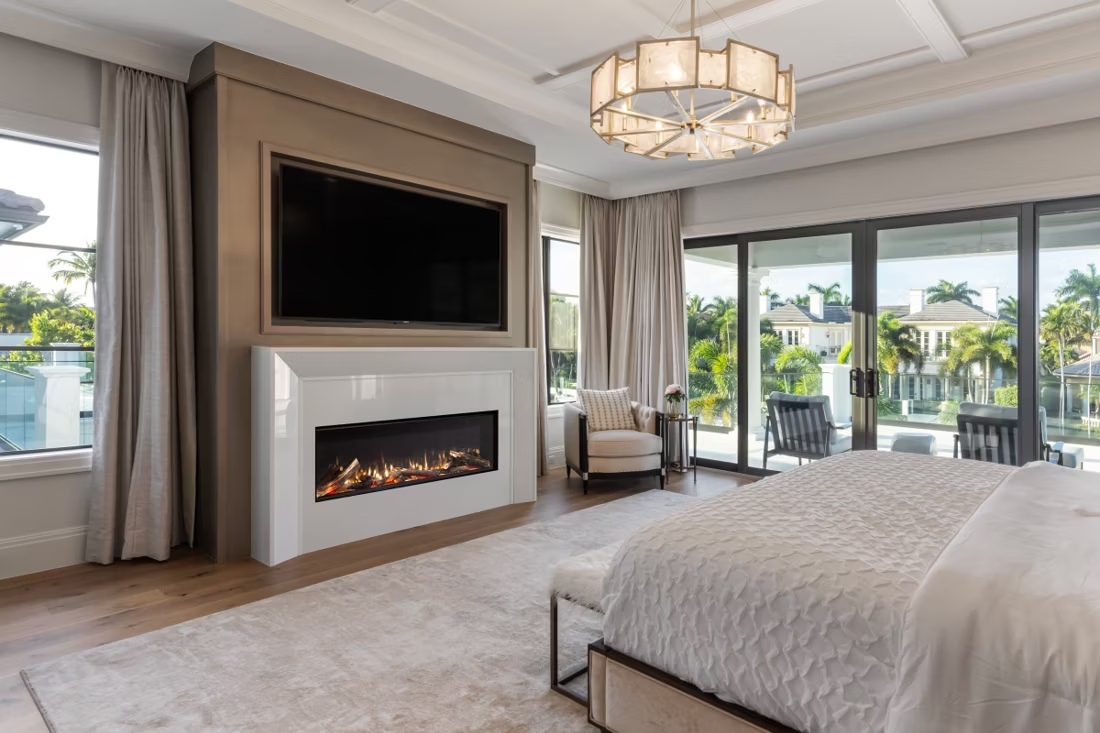
Four fuels. One honest answer for Miami-Dade County.
Three steps. No salesperson until you're ready.
Tell us about your project
Your zip code, your situation, and the fuel you're leaning toward—or let the answers point you to one.
See what's actually available
The brands dealers within 100 miles genuinely carry—real options, never a catalog mirage.
Get your dealer & Project Guide
A trusted local dealer, plus the free Project Guide & Parts List that names every component of the job.
Frequently Asked Questions
Which fuel works best in Miami-Dade County?
With only a handful of genuinely cool days a year and winter lows averaging 61°F, this isn't a county where anyone needs a primary heat source—it's a county where fireplaces are chosen for ambiance and the occasional genuinely cool evening. Gas is the practical pick: natural gas service reaches most of the county, and a vented or ventless gas fireplace or gas log set gives instant, controllable flame without upkeep. Electric fireplaces are just as common, especially in condos and newer construction, because they install with zero venting and no gas line—plug it in, mount it, done. Wood stoves are essentially absent here; a small number of homeowners install a wood-burning fireplace for visual character in older homes, but it's a design choice, not a heating one. Pellet stoves see almost no demand in this climate for the same reason.
Do I need a permit to install a fireplace in Miami-Dade County?
Yes, in nearly all cases. Permits are issued through the Miami-Dade County Department of Regulatory and Economic Resources (or your city's building department if you're in an incorporated municipality with its own permitting authority, like Coral Gables or Miami Beach). Gas fireplace and gas log installations require a mechanical/gas permit and licensed gas-fitter for the line work. Because Miami-Dade sits within the High Velocity Hurricane Zone, any structural modification—including venting through an exterior wall or roof for a gas unit—has to meet Florida Building Code wind-load requirements, which is stricter than most of the country. Electric fireplaces generally skip the permit process unless they involve a new dedicated circuit or built-in framing. Most local retailers here are well versed in HVHZ paperwork and handle it as part of the installation.
Are there air quality restrictions on wood burning in Miami-Dade County?
No—Miami-Dade has no wood-burning curtailment program or air quality advisory system tied to home heating, because there's essentially no wood-burning appliance base to regulate. The county's air quality concerns run toward things like ozone and vehicle emissions, not residential wood smoke. If you do have an older wood-burning fireplace in a legacy home, there's no local restriction on using it occasionally, though EPA 2020 NSPS standards still apply to any new wood stove installation—which is one more reason gas or electric tends to be the simpler path here.
Can one local hearth retailer handle both gas and electric?
Most Miami-Dade hearth retailers carry both gas and electric lines, since those are the two fuels that actually move in this market. Showrooms along the US-1 corridor and in Kendall typically stock working gas fireplace displays alongside electric wall-mount and built-in units, which makes it easy to compare a real flame against an electric alternative in person. A smaller number of specialty dealers focus on high-end linear gas fireplaces for new construction and remodels. If a retailer also lists wood or pellet, it's usually a minor part of their business geared toward legacy homes rather than new installs—worth asking directly if that's what you need.
How does service work across a county this large and densely populated?
Miami-Dade covers over 2,000 square miles and more than 8 million residents across dozens of municipalities, so service technicians tend to specialize by region—Miami and the Beaches, the Kendall/West Dade corridor, or South Dade toward Homestead. Gas fireplace service (pilot assemblies, valve inspection, line checks) is typically an annual or biennial visit; salt air and humidity make corrosion checks worth doing more often than you would in a drier climate. Electric units rarely need service beyond occasional cleaning or a replacement heating element after several years of near-daily use. Scheduling is generally easier here than in seasonal climates—there's no hard rush before a first frost—but hurricane season (June–November) can affect technician availability if a storm is approaching.
What's the typical cost range for fireplace installation across all fuel types in Miami-Dade County?
Gas fireplace, insert, or log set : $3,500–$9,000 depending on whether it's a direct-vent unit requiring new venting through an HVHZ-compliant wall penetration, or a ventless log set added to an existing masonry fireplace. New gas line runs add to that range if service isn't already present at the install location. Electric fireplace : $200–$3,000 for the unit itself, plus $300–$1,000 in labor for anything beyond a plug-and-play wall mount—built-ins with custom surrounds run toward the higher end. Wood-burning installs are rare enough that most retailers quote them case-by-case, usually for legacy masonry fireplace restoration rather than new stove installs. For fuel-specific detail, see the county + fuel pages above.
Does a fireplace add value to my home?
On average, a fireplace adds back to the home about the same amount you spent installing it. Add the monthly savings from heating the rooms you actually use instead of the whole house—often hundreds of dollars a year—and the value case is strong before you even count what a fire does for how your family uses the room.
Can a fireplace actually lower my heating bill?
Yes—by creating a comfort zone. A furnace heats every square foot of the house just to warm the one room you're in; a gas fireplace on low burns roughly a sixth of the gas a typical furnace does. Set the furnace around 55–60 degrees as a baseline, then heat the rooms your family actually uses. Families who heat this way commonly save $20–$60 a month.
What is an in-home preview and do I need one?
It's a visit where a hearth professional measures your space, confirms the model you picked actually works in your home, and walks the specs—framing, gas line, venting, finish work—before anything is ordered. Some details you just can't know until you see the house. Never make a down payment without one; it's the single most-skipped step that burns buyers.
Can I install a fireplace myself?
If you're putting a fire in your house on purpose, it's best to work with an expert. Unless you're genuinely experienced in framing, gas line, vent pipe, and the national code on clearances to combustibles, have a professional do it—and ideally the same company that sells you the fireplace, so warranty, service, and liability all live under one roof.
Stove and Fireplace Dealers in Miami-Dade County
Listings include WhyFire partner dealers, dealers we have verified as authorized for the brands we recommend, and established local businesses that carry hearth products. Every listing shows which one it is. The ones marked Preferred run on WhyFire's software, so they can show you real pricing and book your appointment right here. No manufacturer pays for placement. How we verify dealers →
Impel America Appliance
Home Gas
One Space Solution LLC
Lifestyle Barn LLC
Find your fireplace in Miami-Dade County.
Pick your fuel below—gas or electric—to see installation costs and get matched with a trusted local hearth retailer who knows Florida Building Code and HVHZ requirements. We'll send you a free Project Guide & Parts List with the exact parts and vent kit your home needs.
Find Your Fireplace →