
Find the right electric fireplace for your Hammocks home.
With only 156 heating degree days a year, nobody in The Hammocks needs a furnace substitute—but a well-placed electric fireplace still transforms a living room. I'll help you find one and match you with a local dealer who installs it right.
Every Project Starts From One of These Five Situations
Electric fireplaces make sense in a climate built for cooling, not heating.
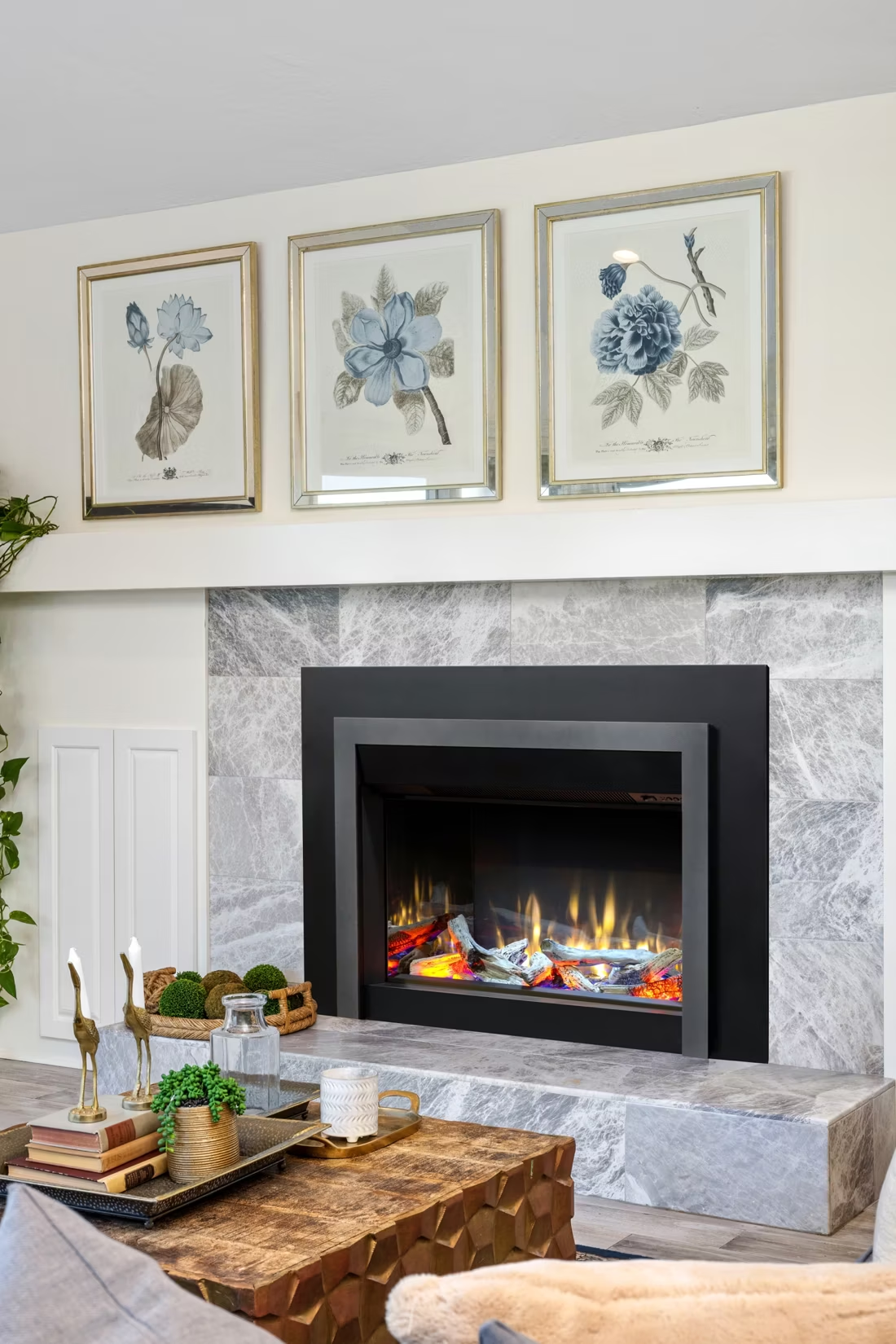
The Hammocks sits in Miami-Dade's zone 1A hot-humid climate, at 7 feet of elevation, with an average winter low around 57°F and only about 156 heating degree days a year—a fraction of what a Northern city like Duluth, MN sees in a single January week. Wood-burning fireplaces are essentially not a fit here, and pellet stoves make even less sense given the near-total absence of a real heating season. Electric fireplaces, on the other hand, are genuinely popular across zip codes 33196 and 33186—not as a heat source, but as a design feature. Homeowners add them to great rooms, primary bedrooms, and lanai-adjacent living spaces for the visual warmth of a flame without any of the venting, chimney, or combustion concerns that come with wood or gas.
Because Florida Power & Light serves the area at a residential rate of about $0.1371 per kWh, running an electric fireplace here costs pennies compared to what it would cost to actually heat a home in a cold climate—most units are used on flame-only mode most of the year, with the 1,500-watt heater setting reserved for the rare 40-degree cold front. Installation is also simpler than wood or gas: plug-in units need no permit at all, while built-in or wall-recessed models typically require an electrical permit through Miami-Dade's Regulatory and Economic Resources Department (RER), since The Hammocks is unincorporated county land. No chimney, no gas line, no combustion air calculations—just a dedicated circuit and, for built-ins, a framed opening sized to the unit.
Three steps. No salesperson until you're ready.
Tell us about your project
Your zip code, your situation, and the fuel you're leaning toward—or let the answers point you to one.
See what's actually available
The brands dealers within 100 miles genuinely carry—real options, never a catalog mirage.
Get your dealer & Project Guide
A trusted local dealer, plus the free Project Guide & Parts List that names every component of the job.
Frequently Asked Questions
How much does an electric fireplace installation cost in The Hammocks?
Costs vary a lot by unit type. A plug-in freestanding or wall-mounted electric fireplace runs $200 to $1,200 for the unit itself, with no real installation cost beyond mounting hardware and a standard outlet. A built-in or wall-recessed electric fireplace or insert—the more common choice in Hammocks living rooms and primary suites—typically runs $1,500 to $4,500 installed, including framing, a dedicated 120V or 240V circuit, and finish work like a surround or mantel. Larger linear electric fireplaces with custom stone or tile surrounds can push toward $6,000 to $8,000. A local dealer can give you a firm number once they know the wall, the finish you want, and whether new electrical work is involved.
What size electric fireplace do I need for my room?
Since heat output isn't really the driver in a climate like The Hammocks', sizing is mostly about visual proportion and the wall you're working with—a 40 to 50 inch linear unit suits most standard living rooms, while great rooms with 10-12 foot walls can carry a 60 to 74 inch model. If you do want the 1,500-watt heater function for the occasional January cold front, that setting typically covers a single 400-square-foot room, which is more than enough for most Hammocks floor plans. A local retailer can walk your wall dimensions and viewing distance during a quick in-home or video consultation.
Do I need a permit to install an electric fireplace in The Hammocks?
It depends on the unit. A plug-in electric fireplace that draws from a standard outlet requires no permit—you can place it anywhere a cord reaches. A built-in, wall-recessed, or hardwired unit generally requires an electrical permit through Miami-Dade County's Regulatory and Economic Resources Department, since The Hammocks falls under unincorporated county jurisdiction rather than a separate city building department. Most local dealers who install built-in units pull this permit as part of the job, and Miami-Dade's high-wind and hurricane-related building code mainly affects exterior work—it has little bearing on an interior electric fireplace install beyond standard electrical code.
Will my electric fireplace work during a power outage?
No—electric fireplaces require power to run, whether you're using the flame effect or the heater. That matters more in The Hammocks than the mild climate might suggest, since Miami-Dade sees real hurricane-season outages, sometimes lasting days. But because heating isn't the point of an electric fireplace here in the first place—winters rarely dip below the mid-50s—losing flame effect during a storm isn't a heating emergency the way it would be for a wood stove owner in a cold climate. If backup heat during outages is a genuine concern for you, that's a conversation for a portable generator or battery system, not the fireplace itself.
What's the difference between an electric fireplace, insert, and wall-mounted unit?
A built-in electric fireplace is designed to be framed into a wall like a traditional fireplace, often with a surround or mantel finished around it. An electric insert is sized to slot into an existing masonry or gas fireplace opening, letting you convert an old wood-burning firebox—increasingly common in older Hammocks homes with fireplaces that were never really practical for this climate—into a clean, maintenance-free feature. A wall-mounted unit hangs directly on the wall like a large flat-screen TV, with no framing or recess needed, and is the fastest, least invasive option for a rental or a room where you don't want construction. Local dealers carry all three and can tell you which fits your specific wall or existing opening.
What's the best electric fireplace for a humid South Florida climate?
Look for units with sealed electronic components and corrosion-resistant hardware, since year-round humidity and salt air (even well inland in The Hammocks) can shorten the life of cheaper units over several years. Brands like Dimplex, Napoleon, and Amantii build linear and built-in models that hold up well in Florida installations and are commonly stocked by South Florida hearth dealers. Since heat output isn't the priority here, flame realism and LED color/brightness control tend to matter more to Hammocks buyers than BTU rating—ask your local dealer to show you the flame effect in person rather than relying on a photo.
How much does it cost to run an electric fireplace in The Hammocks?
At Florida Power & Light's residential rate of roughly $0.1371 per kWh, running an electric fireplace on flame-only mode (typically 30-100 watts) costs a fraction of a cent per hour—well under $1 a month even with daily evening use. Switching on the 1,500-watt heater function costs about $0.21 per hour, but given that The Hammocks averages only 156 heating degree days a year, most owners rarely use the heater setting at all. It's one of the cheapest fireplace fuel types to operate specifically because this climate almost never asks it to actually heat anything.
Electric vs. gas—which fireplace makes more sense in The Hammocks?
Gas fireplaces are available in the area, generally run on propane since municipal natural gas service is limited across most of unincorporated Miami-Dade, and deliver real, substantial heat output along with a more authentic flame. Electric fireplaces skip the propane tank, gas line, and venting entirely, cost less to install, and are simpler to maintain—no annual gas appliance service required. For a Hammocks home where the fireplace is primarily a design feature and actual heating need is minimal, electric is usually the more practical and lower-maintenance choice. If you specifically want the heat output and flame realism of real combustion for occasional cold fronts, gas remains a reasonable option, and local dealers carry both.
Why don't more homes in The Hammocks have wood-burning fireplaces?
Wood-burning fireplaces are uncommon in The Hammocks, and for good reason—with an average winter low around 57°F and almost no real heating season, there's little functional case for one, and Miami-Dade's warm, humid air makes chimney draft and creosote management harder to manage well. A small number of older homes in the area do have original masonry wood fireplaces, largely used for occasional ambiance on the rare cold night rather than any real heating purpose, and many owners eventually convert them to gas or electric inserts for lower maintenance. If you're set on wood specifically, it's worth talking to a local dealer about draft performance in a humid climate before committing.
Can I put a TV above my fireplace?
Yes—with an asterisk. Fireplaces are hot and TVs don't like heat. Either put a mantel between them to deflect rising warmth, or choose a fireplace with heat-management technology that creates a cool zone on the wall above—the wall stays around 125 degrees, barely warm, while the room still gets full heat. If you like clean lines and don't want a mantel, heat management is the answer.
Does an electric fireplace need a vent or chimney?
No—that's its superpower. An electric fireplace needs a wall and an outlet, period. No vent pipe, no gas line, no clearances to design around, which is why it works in bedrooms, offices, apartments, and walls where venting a gas or wood unit would be impractical or impossible. Installation is typically the simplest and least expensive of any fireplace type.
Can a fireplace actually lower my heating bill?
Yes—by creating a comfort zone. A furnace heats every square foot of the house just to warm the one room you're in; a gas fireplace on low burns roughly a sixth of the gas a typical furnace does. Set the furnace around 55–60 degrees as a baseline, then heat the rooms your family actually uses. Families who heat this way commonly save $20–$60 a month.
Does a fireplace add value to my home?
On average, a fireplace adds back to the home about the same amount you spent installing it. Add the monthly savings from heating the rooms you actually use instead of the whole house—often hundreds of dollars a year—and the value case is strong before you even count what a fire does for how your family uses the room.
Nearby Dealers
Hearth shops serving The Hammocks and the surrounding area.
Electric Service in The Hammocks
An electric fireplace's heater draws about 1,500 watts—pennies per hour at local rates.
Florida Power & Light Co
Find your electric fireplace in The Hammocks.
Tell us about your room and the look you're after, and I'll match you with a trusted local dealer and send you a free Project Guide & Parts List—the exact unit, mounting or framing parts, and your recommended installer for your Hammocks home.
Find Your Fireplace →