
Keep Your Family Warm and Safe—No Matter What
With winter lows averaging 58°F and only a handful of genuinely cool weeks a year, nobody in Palm Springs needs a wood fireplace to stay warm. Some homeowners still want one—for the handful of genuinely cool evenings, for resale appeal, or for the fire itself. If that's you, we'll connect you with a local pro who builds it right.
Every Project Starts From One of These Five Situations
Palm Springs rarely needs the heat. Homeowners still want the fire.
Palm Springs, Florida sits at 12 feet of elevation in Palm Beach County, in climate zone 2A, where the average winter low is 58°F and the entire heating season is barely felt, amounting to just a handful of cool weeks each year. For comparison, a city like Duluth, Minnesota endures a long, brutal winter season—Palm Springs homes simply don't experience the sustained cold that makes wood heat a functional necessity. A cold snap here might dip into the 40s for a night or two in January; it's not the kind of climate that built a firewood culture.
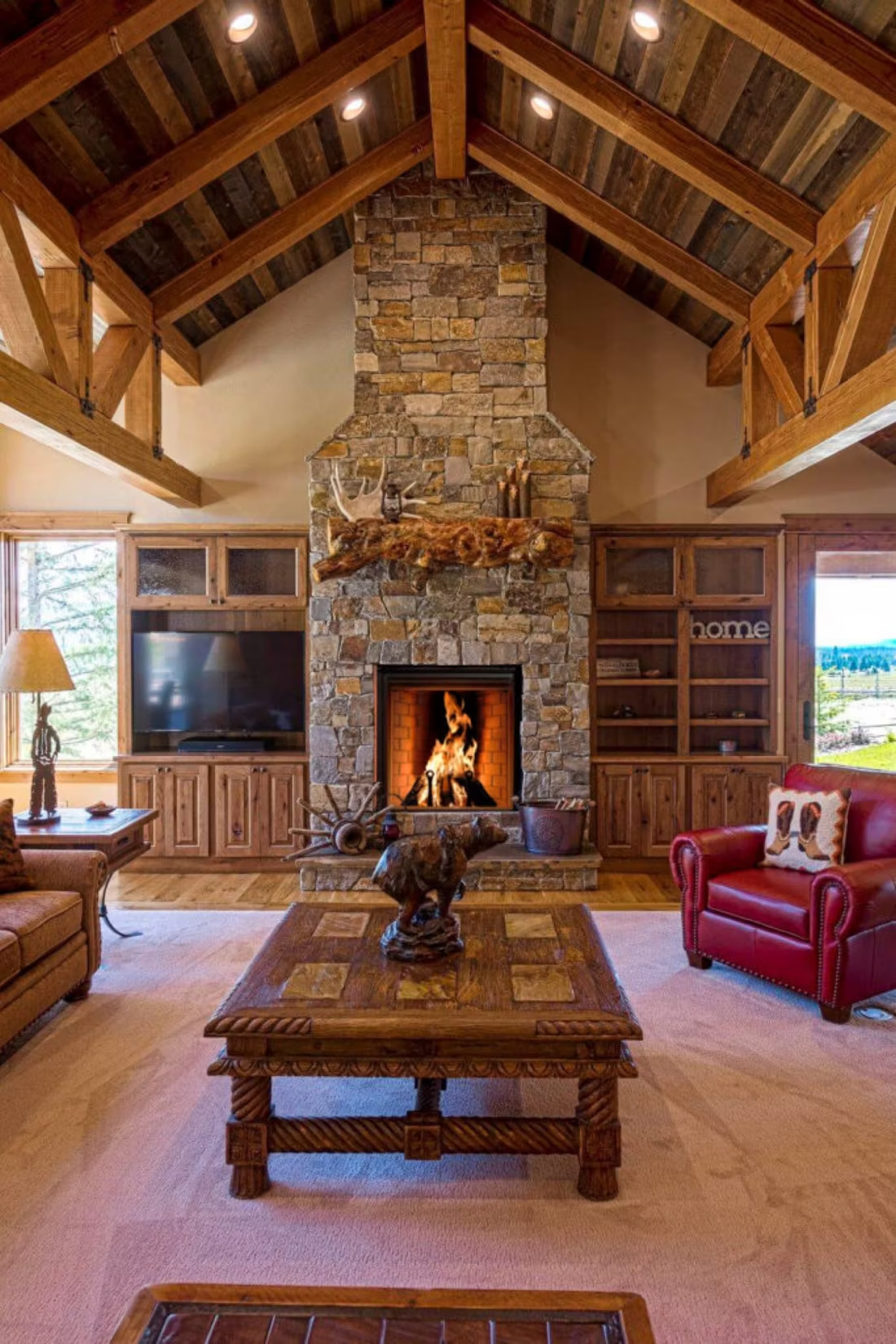
That said, wood-burning fireplaces do exist here—mostly as architectural features in custom homes, additions built for entertaining, or the occasional homeowner who grew up with a real fire up north and wants that same feeling on the rare chilly evening. Because air quality isn't a local concern (no non-attainment status, no burn curtailment periods), there's no regulatory barrier to burning wood here—it's purely a design and lifestyle decision rather than a heating one. If you're considering one, the honest starting point is understanding that this will be a masonry or factory-built decorative installation, not a primary or backup heat source, and pricing it out with a local mason or hearth dealer who's actually built one in this market.
Three steps. No salesperson until you're ready.
Tell us about your project
Your zip code, your situation, and the fuel you're leaning toward—or let the answers point you to one.
See what's actually available
The brands dealers within 100 miles genuinely carry—real options, never a catalog mirage.
Get your dealer & Project Guide
A trusted local dealer, plus the free Project Guide & Parts List that names every component of the job.
Frequently Asked Questions
Does it actually make sense to install a wood-burning fireplace in Palm Springs, FL?
For heating purposes, no—with an average winter low of 58°F and only a handful of genuinely cool weeks per year, a wood stove or fireplace won't meaningfully change your energy bill or comfort level here. Where it does make sense is as a design feature: a masonry fireplace in a great room, a focal point for entertaining, or a nod to a homeowner's roots in a colder climate. If your goal is warmth, Florida Power & Light and City of Lake Worth Beach both serve this area with residential rates around $0.126–$0.1371 per kWh, and an electric fireplace or heat-pump system will get you there far more efficiently than cordwood.
What does it cost to build a wood-burning fireplace in Palm Springs?
Because wood fireplaces are uncommon in this part of Palm Beach County, pricing isn't as standardized locally as it is for gas or electric units. A factory-built, zero-clearance wood-burning fireplace with proper Class A chimney run through a Florida roof typically lands in the $8,000–$14,000 range once framing, roofing penetration, and finish work are included. A true masonry fireplace and chimney built from scratch runs considerably higher—often $18,000 and up—given the specialty labor involved and South Florida's wind-load and hurricane-strapping requirements for anything penetrating the roof. Get a firm number from a local mason or hearth contractor who has pulled permits for one in this county before.
Why don't more homes in Palm Springs, FL have wood fireplaces?
It comes down to climate math. Palm Springs sees only a handful of genuinely cool weeks a year—a fraction of what a wood-heating region like Duluth, Minnesota or Burlington, Vermont sees in a single cold month. There's no functional need for supplemental heat here, and most new construction in Palm Beach County skips solid-fuel appliances entirely in favor of central HVAC. Where wood fireplaces do show up, it's almost always a deliberate design choice in a custom or higher-end home rather than a standard builder-grade feature.
What permits and codes apply to a wood fireplace in Palm Springs?
Any new wood-burning fireplace or chimney addition requires a building permit through the Palm Beach County Building Division, or the City of Lake Worth Beach's building department if your address falls within city limits (much of the 33461 zip touches Lake Worth Beach jurisdiction). Beyond the standard Florida Building Code clearance and hearth requirements, expect scrutiny on wind-uplift and hurricane-strap detailing anywhere a chimney penetrates the roof—that's a bigger factor in the permitting conversation here than it would be in a colder state. A contractor experienced with masonry or factory-built fireplaces in this county will already know how to detail it for inspection.
Where would I even get firewood in Palm Springs, FL?
There's no national forest or public cutting-permit system near Palm Springs the way there is out West—firewood here is a retail product, not something residents cut themselves. Oak, mahogany, and pine show up locally, often as byproducts of landscaping and tree-removal work rather than dedicated firewood harvesting, and are sold by the bundle or small rack through hardware stores, grocery chains, and seasonal roadside vendors rather than by the cord. Because usage is so occasional here, most homeowners buy a few bundles at a time rather than stocking a woodpile for the season.
Since wood and gas are both uncommon here, what's the practical alternative for fireplace ambiance?
Electric is the standard choice in Palm Springs, and for good reason—it requires no venting, no chimney, no combustion air, and no hurricane-strap detailing at the roofline. Florida Power & Light and City of Lake Worth Beach both serve this area, with residential rates around $0.126 to $0.1371 per kWh, making an electric fireplace or insert cheap to run for the handful of evenings a year you'd actually want one. If the goal is a real flame and radiant heat rather than an LED effect, a factory-built wood or gas unit is still an option—just go in knowing you're building for atmosphere, not for the utility bill.
Does homeowner's insurance treat a wood fireplace differently in Palm Beach County?
Some Florida insurers ask specific questions about solid-fuel appliances during underwriting, including chimney age, spark arrestor presence, and last inspection date—this is on top of the wind and flood questions every Palm Beach County policy already asks. After a named storm, insurers may also want documentation that a chimney or roof penetration wasn't compromised before you use the fireplace again. It's worth checking with your carrier before installation and keeping inspection records on file, since a lapsed or undocumented chimney is a common reason claims get delayed.
How often does a wood fireplace need to be inspected if it's rarely used?
Even at low usage, the CSIA recommends an annual inspection—and in Palm Springs' humidity, that matters more than the burn count suggests. A chimney flue that sits unused for ten or eleven months a year in South Florida's moisture is a candidate for mold, mildew, and nesting insects or birds, none of which you want to discover the first time you light a fire on a rare cold night. An annual check before the winter season (roughly December through February) catches those issues before they become a bigger repair.
When would someone in Palm Springs actually use a wood fireplace?
Realistically, on the small number of cool fronts that push overnight lows into the 40s, typically sometime between December and February. Beyond that narrow window, most owners light it for holiday gatherings, dinner parties, or simply because they like having a real fire available—not because the house needs the heat. It's also a feature some out-of-state buyers specifically look for when relocating from colder climates, which is the other reason it shows up in higher-end Palm Beach County listings.
Why won't my new wood stove get going like my old one?
New wood stoves are 70%+ efficient, so far less heat goes up the flue—which also means less draft to get a fire established. The rule: build a genuinely hot fire for about 45 minutes before you choke it down. Skip that and you get smoke in the room, creosote in the chimney, and a fire that never takes off. Most performance complaints trace straight back to this.
Why is a fireplace insert so efficient?
An insert does two things: it seals the chimney completely, so you stop losing air you already paid to heat, and it radiates warmth into the room through the firebox and glass. Most add a heat-exchange fan that pulls cool room air underneath, wraps it around the hot firebox, and pushes it back out warm. Your home is more efficient before you've even lit the first fire.
Can a fireplace actually lower my heating bill?
Yes—by creating a comfort zone. A furnace heats every square foot of the house just to warm the one room you're in; a gas fireplace on low burns roughly a sixth of the gas a typical furnace does. Set the furnace around 55–60 degrees as a baseline, then heat the rooms your family actually uses. Families who heat this way commonly save $20–$60 a month.
Can I install a fireplace myself?
If you're putting a fire in your house on purpose, it's best to work with an expert. Unless you're genuinely experienced in framing, gas line, vent pipe, and the national code on clearances to combustibles, have a professional do it—and ideally the same company that sells you the fireplace, so warranty, service, and liability all live under one roof.
Nearby Dealers
Hearth shops serving Palm Springs and the surrounding area.
Gas Fire Distributors
Gas Utility Service
Find your wood fireplace in Palm Springs.
Tell us about your home and how you'd actually use it, and we'll match you with a local Palm Beach County pro who builds wood fireplaces correctly for this climate—plus a free Project Guide & Parts List with the exact components and vent kit for your project.
Find Your Fireplace →