
Keep Your Family Warm and Safe—No Matter What
With winter lows averaging 58°F and only a handful of nights a year cool enough to need any heat at all, nobody in West Palm Beach, Boca Raton, or Delray Beach needs a wood stove to stay warm. But a small group of homeowners still want the real thing—for ambiance, for guests visiting from up north, or for the rare night a cold front pushes temperatures into the 30s. We'll match you with a local dealer who'll tell you honestly what's realistic for your home.
Every Project Starts From One of These Five Situations
Wood heat is optional in a county built for 58°F winter lows.
Palm Beach County is home to more than 887,000 residents spread across West Palm Beach, Boca Raton, Delray Beach, Boynton Beach, Jupiter, Wellington, and dozens of other communities—all sitting in climate zone 2A, one of the warmest and most humid zones in the continental United States. The county has one of the shortest, mildest heating seasons in the country. Compare that to Duluth, Minnesota, or Bozeman, Montana, both of which face long, brutal winters with months of steady heating, and it's clear why almost nobody here heats a home with cordwood. There's no winter wood-smoke inversion problem, no seasonal air quality advisory, because there's essentially no burning season to speak of.
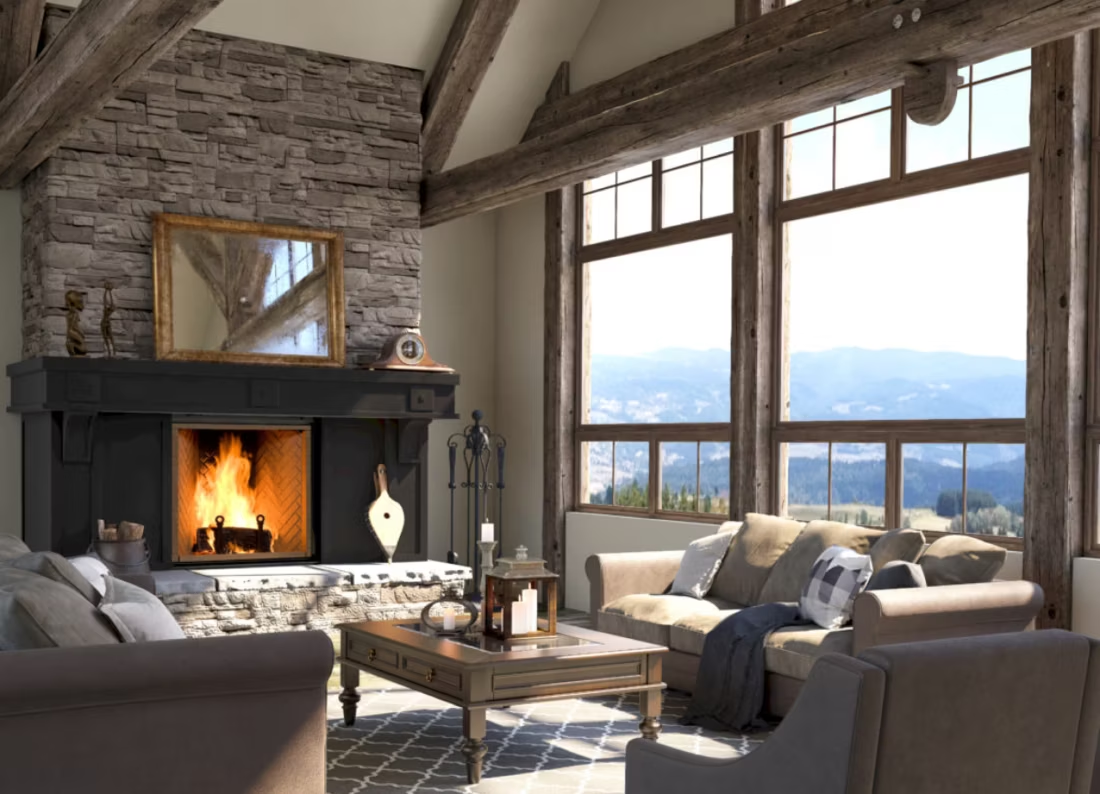
Where wood fireplaces do show up in Palm Beach County, it's almost always for reasons other than heat: a masonry fireplace as a focal point in a Palm Beach or Boca Raton estate, a wood stove installed in a vacation home for guests who associate a real fire with a proper winter, or an occasional burn on one of the handful of nights a year when a cold front drops temperatures into the 30s or 40s. Local yards do carry oak, mahogany, and pine—species more commonly split for backyard fire pits and smoking meat than for heating—and a homeowner who wants an authentic wood-burning fireplace can absolutely have one installed. It's a lifestyle choice here, not a furnace replacement, and a good local dealer will say so plainly rather than oversell you on BTU output you'll never need.
Three steps. No salesperson until you're ready.
Tell us about your project
Your zip code, your situation, and the fuel you're leaning toward—or let the answers point you to one.
See what's actually available
The brands dealers within 100 miles genuinely carry—real options, never a catalog mirage.
Get your dealer & Project Guide
A trusted local dealer, plus the free Project Guide & Parts List that names every component of the job.
Frequently Asked Questions
Does anyone actually heat their home with wood in Palm Beach County?
Not really, and any honest local dealer will tell you the same thing. With winter lows averaging 58°F and only a handful of nights a year cool enough to need any heat at all, a wood stove or fireplace here functions as an occasional-use amenity, not a heating system. The handful of installations we see are almost always chosen for the look and feel of a real fire, for entertaining, or for the few nights a year a cold front pushes overnight temperatures into the 30s or 40s.
If wood isn't needed for heat, why would I install a wood fireplace here?
Most Palm Beach County homeowners who install one do it for the same reasons someone in Naples or Sarasota might: the ambiance of a real fire, a focal point for a great room or outdoor living area, or a nod to a colder climate they grew up in or still own property in. Snowbirds and part-year residents sometimes install one specifically for the handful of weeks a year they're in town during a cool snap. If that's your motivation, a true wood-burning fireplace or a wood-look gas unit are both worth considering—a local dealer can walk you through the tradeoffs.
What drives the cost of a wood fireplace installation in this county?
The biggest cost variable is whether you're building new masonry construction or installing a factory-built (zero-clearance) wood-burning fireplace or freestanding stove into an existing home. New masonry chimneys are expensive to build correctly under Florida Building Code in a High-Velocity Hurricane Zone, which covers most of Palm Beach County, so factory-built units with an insulated metal chase or through-wall venting are far more common and considerably less costly. Because true wood installs are rare here, get quotes from more than one hearth dealer—pricing isn't standardized the way it is in cold-climate markets where wood stoves go in every week.
Do I need a permit to install a wood-burning fireplace in Palm Beach County?
Yes. Palm Beach County and its incorporated cities (West Palm Beach, Boca Raton, Delray Beach, and others each run their own building departments) require a building permit for any new wood-burning fireplace, stove, or chimney, and inspections will check both the appliance clearances and the exterior chase or chimney construction against Florida's High-Velocity Hurricane Zone wind provisions. That HVHZ requirement is the one piece of this process that's genuinely unusual compared to most of the country, so it's worth using a dealer who has pulled these permits before rather than a general contractor unfamiliar with hearth-specific code.
Where would I even get firewood in Palm Beach County?
Local firewood suppliers and some garden centers stock oak, mahogany, and pine, typically sold by the bundle or partial cord rather than the full cords common up north—demand simply doesn't support large stockpiles. Because of the heat and humidity, storage matters more here than it does in colder states: firewood needs to be kept off the ground, covered, and ideally under a carport or shed to avoid mold, termites, and the moisture that makes South Florida wood harder to season than oak or pine cut in a drier climate.
Should I choose wood or gas for my fireplace in Palm Beach County?
For nearly every homeowner in the county, gas is the more practical choice, and it's what most local dealers install by a wide margin. A direct-vent gas fireplace gives you instant flame with no ash, no smoke, and no wood storage in a climate where humidity makes seasoning firewood a chore. Wood makes sense mainly if you specifically want the smell, sound, and ritual of a real fire, or if you're recreating the feel of a fireplace from a colder home you still own. Either way, a local retailer can show you both options side by side before you commit.
Could a wood stove serve as backup heat or cooking during a hurricane power outage?
It's a fair question given how often this county loses power after a hurricane, but a wood stove isn't the tool most people reach for here. Because heat isn't the issue—58°F is about as cold as it gets—a wood stove's real backup value would be for cooking rather than warmth. Most residents instead rely on portable propane or butane camp stoves for that scenario, since those don't require a chimney, permit, or year-round upkeep. If you already have a wood-burning fireplace for ambiance, it can certainly boil water or heat a pot in a pinch, but that's not a reason to install one on its own.
How often does a wood fireplace need maintenance if it's barely used?
Even with only a handful of burns a year, an annual inspection before the winter cool-down (typically November or December) is still worth scheduling, since Palm Beach County's humidity can cause rust on stovepipe hardware and dampers even when creosote buildup from actual burning is minimal. A CSIA-certified sweep can check the chase or chimney for animal nests and moisture intrusion, both more common issues here than heavy creosote—the opposite maintenance profile of a stove burning daily in a place like Burlington, Vermont.
What size wood fireplace should I get if I'm not relying on it for heat?
Since you're not sizing for BTU output the way a homeowner in a cold climate would, sizing here comes down to the room and the look you want—a smaller factory-built unit for a media room or lanai-adjacent great room, or a larger masonry-style fireplace as an architectural centerpiece in a bigger home. Local dealers who work in Palm Beach, Boca Raton, and the surrounding communities are used to this conversation and can help you pick a unit that looks right for the space without oversizing for a heating need that doesn't exist here.
Can a wood stove burn all night?
The right one can. If waking up to a warm house and live coals matters to you, say exactly that when you're shopping—firebox size and burn-rate control determine overnight performance far more than any number on a spec sheet. It's a much more useful question than asking about BTUs.
Do I have to leave the stove door cracked open to start a fire?
On many stoves, yes—a new fire needs extra air, and cracking the door a couple inches is how most stoves get it. But some modern stoves offer an automatic startup air system: engage it when you light, and timed air jets feed the fire for the first 20 minutes with the door fully shut, then close automatically. It's mechanical—like an egg timer, no electricity—and it means you can load it, light it, and walk away.
How much should I budget for a fireplace?
For an average home—covering the fireplace, the vent pipe, and basic installation—a budget between $3,900 and $5,500 gives you a lot of options across wood, gas, and pellet. By the time you add finish work, gas line, and electrical, the average complete installation lands between $5,000 and $12,000 all-in. In a remodel or new build, a good rule is to put about 2.5% of the total project cost toward the fireplace.
What is an in-home preview and do I need one?
It's a visit where a hearth professional measures your space, confirms the model you picked actually works in your home, and walks the specs—framing, gas line, venting, finish work—before anything is ordered. Some details you just can't know until you see the house. Never make a down payment without one; it's the single most-skipped step that burns buyers.
Stove and Fireplace Dealers in Palm Beach County
Gas Fire Distributors
Gas Utility Service
Get matched with a wood fireplace dealer in Palm Beach County.
Tell us about your home and how you plan to use a wood-burning fireplace, and we'll connect you with a trusted local dealer and a free Project Guide & Parts List—sized honestly for a Palm Beach County home, not a cold-climate heating load.
Find Your Fireplace →