
Gas fireplaces built for South Florida ambiance, not January cold.
With winter lows averaging 58°F, a gas fireplace here is about atmosphere, resale value, and the occasional cold snap—not survival heat. Find the right unit and a trusted local installer.
Every Project Starts From One of These Five Situations
A fireplace here does a different job than it does up north.
Palm Springs sits at 12 feet of elevation in Palm Beach County, in climate zone 2A, where the winter heating need is just a sliver of what colder places see—compare that to a place like Duluth, Minnesota, which racks up a winter heating load more than 40 times as large in a typical winter. Winter lows here average 58°F, and a hard freeze is rare enough to make local news. Gas fireplaces are genuinely uncommon in homes throughout this part of the county, which is why we flag the fuel as rare for this zip code rather than pretending it's a standard install.
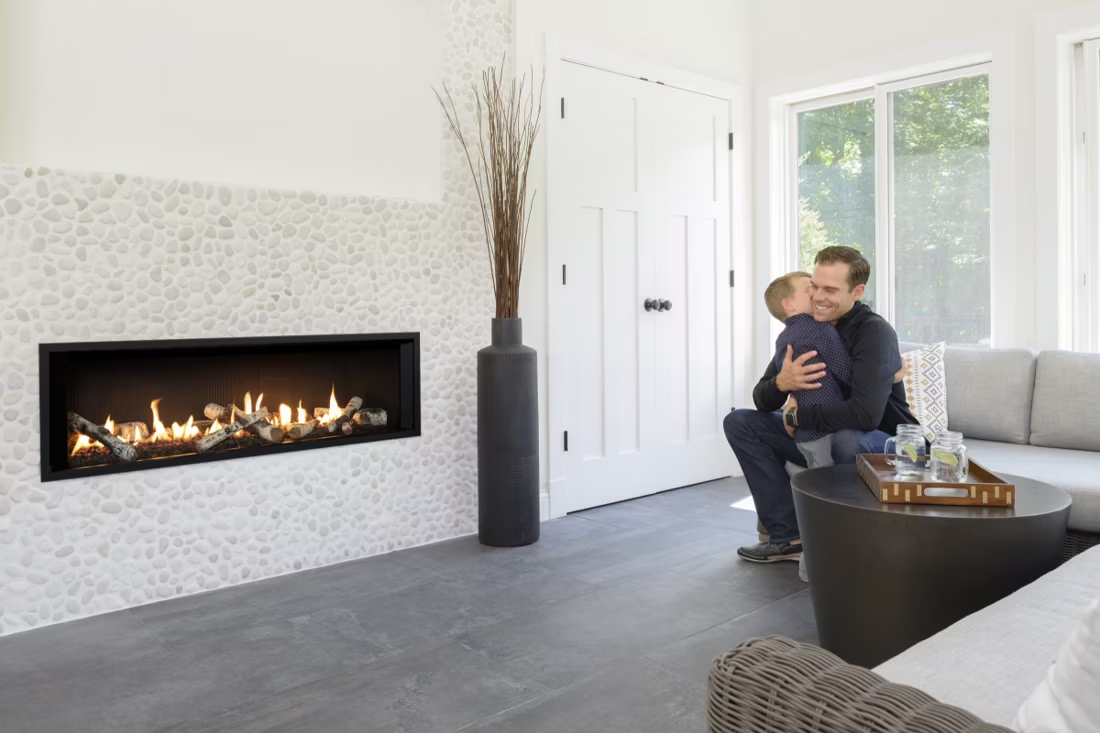
That said, a real number of Palm Springs homeowners still install one—for the look and glow in a living room or lanai, for the handful of nights each winter when temperatures dip into the 40s, or because a fireplace adds resale appeal in a competitive South Florida housing market. Natural gas mains are limited in this part of Palm Beach County, so most installations here run on propane delivered by regional suppliers rather than a piped utility connection. If that's your situation, a local hearth dealer who works with propane routinely—rather than someone used to municipal gas lines—makes the project go smoother.
Three steps. No salesperson until you're ready.
Tell us about your project
Your zip code, your situation, and the fuel you're leaning toward—or let the answers point you to one.
See what's actually available
The brands dealers within 100 miles genuinely carry—real options, never a catalog mirage.
Get your dealer & Project Guide
A trusted local dealer, plus the free Project Guide & Parts List that names every component of the job.
Frequently Asked Questions
How much does a gas fireplace installation cost in Palm Springs?
For a market where gas fireplaces are a specialty rather than a routine job, expect a wider range than you'd see in a cold-climate city. A ventless or direct-vent gas fireplace insert set up for propane, including a small exterior tank, commonly runs $3,500 to $8,000 depending on the unit and whether new gas piping is needed inside the wall. Built-in units for new construction or a remodel—with framing, venting, and a dedicated propane line—land toward the higher end. Because so few installers in this area specialize in gas hearth work, get quotes from at least two local dealers before committing.
Are gas fireplaces actually worth installing in a climate like Palm Springs?
For heat alone, not really—with only a tiny fraction of the winter heating need colder cities see and winter lows averaging 58°F, you'll rarely need supplemental warmth. But plenty of homeowners here install one anyway, for the ambiance on the few genuinely chilly evenings each winter, for entertaining, or because buyers touring homes in Palm Beach County still respond well to a fireplace as a feature. If you're weighing the investment purely on comfort math, an electric fireplace or insert will get you closer to break-even; if you want the real flame, gas is the honest choice.
Should I use propane or natural gas for my fireplace?
In this part of Palm Beach County, natural gas mains don't reach most residential streets, so propane is the default fuel for a gas fireplace. That means either a small buried or above-ground tank refilled by a regional propane supplier, or in some cases a portable cylinder setup for a smaller vent-free unit. If your home is on one of the few blocks with natural gas service already run for a water heater or range, ask your installer to confirm before assuming propane—it changes the orifice, regulator, and ongoing fuel cost.
Are vent-free gas fireplaces a good idea in a humid climate like this?
Florida's building code permits vent-free gas fireplaces, but South Florida's year-round humidity is a real consideration most buyers overlook. Vent-free units release water vapor directly into the room as a byproduct of combustion, and in a home that's already fighting humidity and mold risk near the coast, that added moisture load can be a problem in smaller or poorly ventilated rooms. Direct-vent gas fireplaces exhaust everything outside and don't add moisture to the living space, which is why most local dealers steer Palm Springs homeowners toward direct-vent units, especially for primary living areas.
Do I need a permit to install a gas fireplace in Palm Springs?
Yes. New gas fireplace installations require a building permit and gas-line inspection, typically handled through the Palm Beach County Building Division since Palm Springs is a small municipality that relies on the county for most building code enforcement. A licensed gas fitter has to sign off on any new propane line or tank connection. Most established hearth dealers in the area fold this into the installation quote and pull the permit for you—if a contractor doesn't mention permitting at all, that's a red flag.
Will a gas fireplace still work if the power goes out?
This is one of the more practical reasons homeowners in hurricane-prone Palm Beach County actually choose gas. Units with intermittent pilot ignition (IPI) run on AA batteries and will light and operate normally when the grid goes down after a storm. A handful of premium brands generate their own power off the pilot flame's thermocouple, so there's no battery to remember at all—worth asking about if you're specifically buying this as backup heat and light for hurricane season, not just for looks.
What size gas fireplace do I actually need?
Given how mild winters are here, sizing in Palm Springs is driven far more by the room and the visual scale you want than by BTU output needed to heat the house. Small to mid-size direct-vent units (25,000–30,000 BTU) are plenty for a living room or lanai and won't overheat the space on a 65°F evening. Oversizing is a common mistake local dealers see—a unit sized for a Northeast winter will run too hot and get used less in a home where you might only light it a dozen nights a year.
How often does a gas fireplace need to be serviced near the coast?
Salt air and humidity are the two things that shorten a gas fireplace's life in this part of Florida faster than they would inland. An annual inspection is still the baseline—checking the burner, pilot assembly, gas connections, and glass seal—but coastal Palm Beach County homeowners should ask their installer about corrosion-resistant components and stainless hardware up front, since standard steel fittings can pit faster here than they would in a drier or colder climate.
Should I get a gas fireplace or an electric one instead?
Given how rarely a fireplace here needs to actually heat a room, electric is worth serious consideration. Electric fireplaces and inserts skip the propane tank, gas line, and venting entirely, plug into a standard outlet, and run on power from Florida Power & Light or, in the Lake Worth Beach service area, the municipal utility—at roughly 13–14 cents per kWh, running one for ambiance a few hours a night costs very little. Gas still wins on the realism of an actual flame and on hurricane-season backup capability. If you want the genuine fire experience and don't mind the propane logistics, gas is the right call; if this is purely about the glow, electric is simpler and cheaper to own.
Why is a fireplace insert so efficient?
An insert does two things: it seals the chimney completely, so you stop losing air you already paid to heat, and it radiates warmth into the room through the firebox and glass. Most add a heat-exchange fan that pulls cool room air underneath, wraps it around the hot firebox, and pushes it back out warm. Your home is more efficient before you've even lit the first fire.
Is my gas fireplace wasting gas?
If it was installed more than 15 years ago, probably. Older gas fireplaces keep a standing pilot light burning all the time, and that little flame can cost a couple hundred dollars a year. Newer models use pilot-on-demand ignition—the pilot lights only when you use the fireplace and goes out when you turn it off.
Can I install a fireplace myself?
If you're putting a fire in your house on purpose, it's best to work with an expert. Unless you're genuinely experienced in framing, gas line, vent pipe, and the national code on clearances to combustibles, have a professional do it—and ideally the same company that sells you the fireplace, so warranty, service, and liability all live under one roof.
What is an in-home preview and do I need one?
It's a visit where a hearth professional measures your space, confirms the model you picked actually works in your home, and walks the specs—framing, gas line, venting, finish work—before anything is ordered. Some details you just can't know until you see the house. Never make a down payment without one; it's the single most-skipped step that burns buyers.
Nearby Dealers
Hearth shops serving Palm Springs and the surrounding area.
Gas Fire Distributors
Gas Utility Service
Find your gas fireplace in Palm Springs.
Tell us a bit about your home and we'll match you with a trusted local dealer and a free Project Guide & Parts List—sized right for a South Florida install, propane tank and all.
Find Your Fireplace →