
Keep Your Family Warm and Safe—No Matter What
With such a light winter heating season and winter lows averaging 49°F, almost nobody in Flagler County needs wood heat to get through the night. A small number of homeowners still want the look and feel of a real oak fire—here's how to do it right.
Every Project Starts From One of These Five Situations
Wood heat here is the exception, not the rule.
Palm Coast sits at 32 feet of elevation on Florida's Atlantic coast in climate zone 2A, where the heating season is short and mild. The city's winters are so light that homes here need only a small fraction of the heating a Duluth, Minnesota house would need over the same year—a sense of how little a Flagler County home actually needs supplemental heat. Winter lows average 49°F, with the occasional cold snap dropping into the 30s for a night or two in January. There's no wildfire smoke, no winter inversion, and no non-attainment air quality designation here—wood smoke simply isn't a local concern.
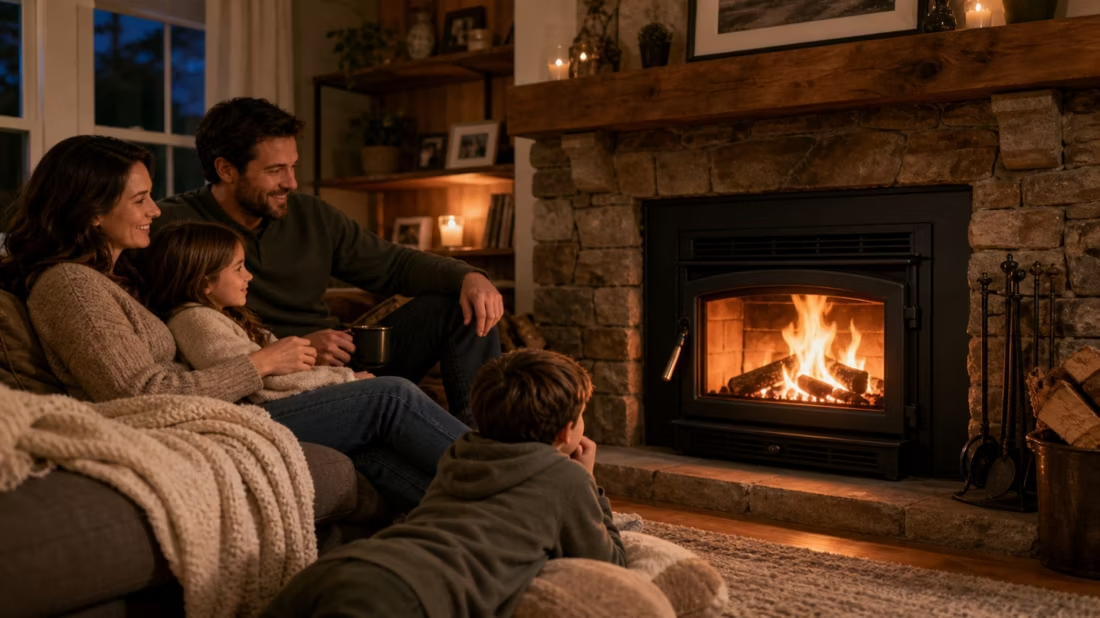
That means wood-burning fireplaces and stoves in Palm Coast are almost always a lifestyle choice rather than a heating necessity. Homeowners who install one typically want the ambiance of a real fire on the handful of genuinely cool evenings each year, or they're building a great room that calls for a masonry hearth as a focal point. Firewood here tends to come from local yard debris and land-clearing operations—oak and pine are the most common species available through regional suppliers, with mahogany occasionally available from ornamental tree removal. There's no public-land cutting-permit culture like you'd find out West; almost everyone here buys firewood by the bundle or rick rather than cutting their own.
Three steps. No salesperson until you're ready.
Tell us about your project
Your zip code, your situation, and the fuel you're leaning toward—or let the answers point you to one.
See what's actually available
The brands dealers within 100 miles genuinely carry—real options, never a catalog mirage.
Get your dealer & Project Guide
A trusted local dealer, plus the free Project Guide & Parts List that names every component of the job.
Frequently Asked Questions
How much does a wood fireplace or stove installation cost in Palm Coast?
Because wood-burning installs are uncommon in Flagler County, expect a wider price range than you'd see in a cold-climate market—typically $5,000 to $10,000 for a factory-built wood-burning fireplace or freestanding stove with a proper Class A chimney, since fewer local installers specialize in solid-fuel venting and there's less competition to push pricing down. A masonry fireplace built into new construction runs considerably higher once you factor in the mason's time. Get quotes from at least two hearth dealers before committing—pricing varies more here than in markets where wood heat is standard.
Do I need a permit to install a wood-burning fireplace in Palm Coast?
Yes. Any new fireplace, stove, or chimney installation requires a building permit through the Flagler County Building Department (or the City of Palm Coast's permitting office if you're within city limits), and the work has to meet Florida Building Code requirements—including wind-load provisions for anything penetrating the roof, since this is a coastal county that sees tropical storm activity. Most licensed hearth contractors handle the permit application and inspection scheduling as part of the installation, so you typically won't have to navigate it yourself.
Does a wood stove actually make sense for heating a Palm Coast home?
Honestly, not for primary or even meaningful supplemental heat—with average winter lows around 49°F, most homes here are comfortable with a central heat pump alone, and a wood stove would sit idle for all but a few nights a year. Where a wood-burning unit does make sense is as a design feature: a masonry fireplace in a formal living room, or a small stove in a den used a handful of evenings each winter for atmosphere. If your goal is genuinely offsetting heating costs, a heat pump upgrade will do far more for you than a wood stove will in this climate.
What venting or chimney considerations are specific to Palm Coast?
Salt air and humidity are the two things to plan for. Chimney caps and flashing should be stainless steel or another corrosion-resistant material rather than standard galvanized components, which degrade faster this close to the coast. Because the flue sees so little use, moisture and insects (including palmetto bugs and the occasional lizard) can end up nesting in an unused chimney—a tight-fitting cap and periodic inspection prevent that. Class A insulated pipe is still required for factory-built units, same as anywhere, but your installer should specify coastal-grade hardware.
Where can I get firewood in Palm Coast?
Firewood here comes primarily from local tree services, land-clearing operations, and seasonal roadside vendors rather than public-land permits—there's no national forest cutting program in Flagler County the way there is out West. Oak is the most commonly available species and burns hot and long; pine is easy to find but burns faster and produces more resin buildup, so it's better for occasional ambiance fires than sustained use. Mahogany occasionally shows up from ornamental tree removal but isn't a reliable regular supply. Buy seasoned wood (six months to a year dry) rather than green—in Florida's humidity, unseasoned wood takes noticeably longer to dry properly and burns poorly in the meantime.
How often does a rarely-used fireplace need to be inspected?
Even a fireplace that only burns a handful of times a year should get an annual inspection before the cool season starts, typically in October or November. In Palm Coast's humid climate, the bigger risk to an underused chimney isn't creosote buildup from heavy use—it's moisture intrusion, insect nesting, and mortar or flashing deterioration during the long unused summer months. A CSIA-certified sweep can check the cap, flashing, and flue liner for coastal wear even if you've barely used the fireplace since last winter.
Will my HOA or insurance carrier have restrictions on a wood-burning fireplace?
Many Palm Coast neighborhoods were developed under master HOA covenants that can restrict exterior chimney appearance or require architectural review before construction—worth checking before you commit to a masonry design. On the insurance side, most Florida carriers will ask about a solid-fuel appliance on your policy application and may require proof of a code-compliant installation and permit sign-off. Because wood-burning units are uncommon here, some adjusters are less familiar with them than with gas fireplaces, so keeping your permit and inspection paperwork on file is worth the extra step.
What size wood stove or fireplace do I actually need?
Given how mild Palm Coast winters are, most homeowners are better served by a smaller unit sized for a single room rather than a whole-home heater—a compact freestanding stove or a standard-depth zero-clearance fireplace insert is plenty for the great room or den where it'll actually be used. There's rarely a reason to size up for BTU output the way you would in a genuinely cold climate; here, the priority is usually aesthetics and a comfortable radius of warmth on the occasional 30-degree night, not heating capacity.
Wood vs. gas vs. electric—what do most Palm Coast homeowners actually choose?
Electric is the practical default here—Florida Power & Light and Duke Energy Florida both serve the area with residential rates in the 13.7–16.6 cents per kWh range, and most homes already run on electric heat pumps, so an electric fireplace insert adds ambiance without a new fuel source or venting. Natural gas service is limited in Palm Coast, so gas fireplaces are a rare choice reserved mostly for homes already plumbed for propane. Wood-burning units are the least common of the three and almost always chosen for the authentic look and crackle of a real fire rather than heat output. If low maintenance and simplicity matter most, electric wins; if you specifically want a real wood fire for a handful of cool evenings a year, that's a legitimate and increasingly requested option—just go in expecting fewer local specialists to choose from than you'd find in a cold-climate market.
Why is my open fireplace making my house colder?
Open fireplaces suck—literally. As the fire burns, it consumes air your furnace already paid to heat and pulls it out through the chimney, so the house is actually colder after the fire goes out than before you lit it. An insert fixes this: it seals the chimney, puts fixed glass across the front, and turns that hole in your house into a real heat source.
Why won't my new wood stove get going like my old one?
New wood stoves are 70%+ efficient, so far less heat goes up the flue—which also means less draft to get a fire established. The rule: build a genuinely hot fire for about 45 minutes before you choke it down. Skip that and you get smoke in the room, creosote in the chimney, and a fire that never takes off. Most performance complaints trace straight back to this.
How much should I budget for a fireplace?
For an average home—covering the fireplace, the vent pipe, and basic installation—a budget between $3,900 and $5,500 gives you a lot of options across wood, gas, and pellet. By the time you add finish work, gas line, and electrical, the average complete installation lands between $5,000 and $12,000 all-in. In a remodel or new build, a good rule is to put about 2.5% of the total project cost toward the fireplace.
Can a fireplace actually lower my heating bill?
Yes—by creating a comfort zone. A furnace heats every square foot of the house just to warm the one room you're in; a gas fireplace on low burns roughly a sixth of the gas a typical furnace does. Set the furnace around 55–60 degrees as a baseline, then heat the rooms your family actually uses. Families who heat this way commonly save $20–$60 a month.
Nearby Dealers
Hearth shops serving Palm Coast and the surrounding area.
Find your wood fireplace in Palm Coast.
Tell us about your home and how you'll actually use a wood-burning fireplace or stove, and we'll match you with a trusted local dealer plus a free Project Guide & Parts List—sized and vented correctly for coastal Flagler County.
Find Your Fireplace →