
Pellet Stoves Are Rare in Ormond Beach—For Good Reason.
With such a light annual heating need and winter lows averaging 48°F, most Ormond Beach homes never need a supplemental heat source. If you still want one, here's an honest look at where a pellet stove fits and where it doesn't.
Every Project Starts From One of These Five Situations
A barrier-island climate with almost no heating season.
Ormond Beach sits at 2 feet of elevation on the Volusia County coast, squarely in climate zone 2A—hot and humid nearly year-round. The city has a very light annual heating need, just a fraction of what a place like Duluth, MN or Burlington, VT racks up in a single cold month. Winter lows average 48°F, and a hard freeze is a newsworthy event, not a weekly occurrence. For the overwhelming majority of homes here, a dedicated heating appliance simply isn't solving a real problem.
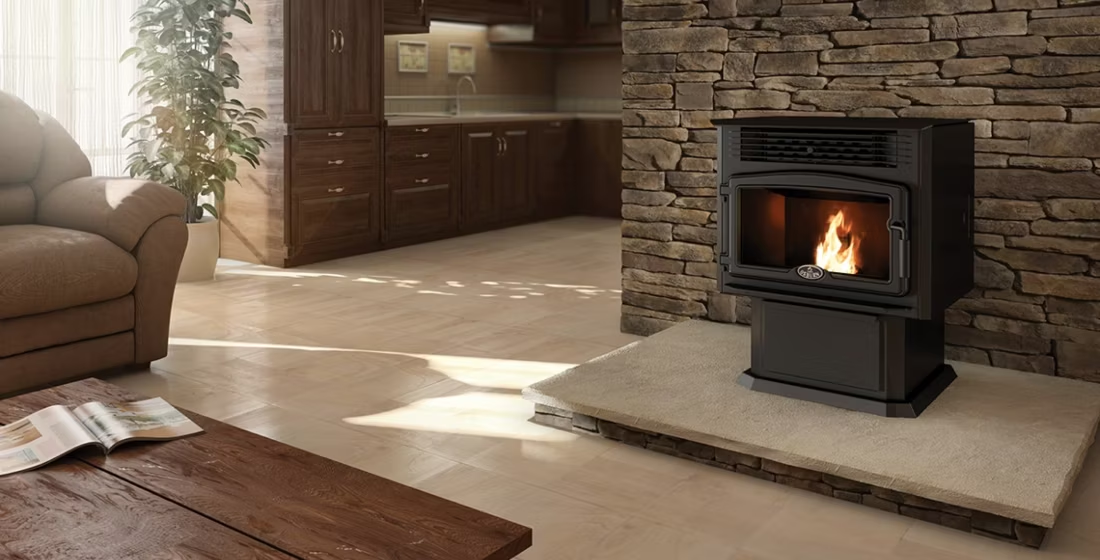
That's why pellet stoves show up here occasionally but never as a mainstream category—a homeowner wants the look and ambiance of a stove-front fire, has a second home up in the mountains and wants the same aesthetic locally, or likes the idea of a backup heat source for the rare 30-degree night. Worth knowing before you go that route: pellet stoves depend on electricity to run the auger and combustion blower, so during a hurricane-season outage—the exact scenario when Ormond Beach homeowners most want backup heat—a pellet stove won't function without a generator. For most local homes, an electric fireplace through Florida Power & Light or Duke Energy Florida service delivers the same ambiance with none of the fuel logistics.
Three steps. No salesperson until you're ready.
Tell us about your project
Your zip code, your situation, and the fuel you're leaning toward—or let the answers point you to one.
See what's actually available
The brands dealers within 100 miles genuinely carry—real options, never a catalog mirage.
Get your dealer & Project Guide
A trusted local dealer, plus the free Project Guide & Parts List that names every component of the job.
Frequently Asked Questions
Are pellet stoves actually used in Ormond Beach homes?
Not commonly, and that's a function of climate rather than availability. With such a light annual heating need, most Ormond Beach homes get through winter on a heat pump running occasionally, not a dedicated wood-pellet appliance. The handful of installations we see locally are almost always about the visual of a real flame—a stove-front unit in a Florida room or den—rather than a genuine heating need. If you're set on one, it's a completely doable project; just go in knowing it's a lifestyle choice here, not a heating solution.
Can I use a pellet stove as backup heat during a hurricane power outage?
Not without a generator. Pellet stoves rely on an electric auger to feed fuel and an electric blower to distribute heat and exhaust—cut the power and the stove goes dark along with everything else in the house. For Volusia County homeowners specifically thinking about storm-season backup heat (which, given our winter lows, is rarely the real concern—storm-season cooling and refrigeration usually matter more), a battery-backed electric fireplace or a small propane heater is a more realistic fit than a pellet unit.
Who actually installs a pellet stove in a place like Ormond Beach?
The most common buyer we see is someone who owns or grew up around a mountain or northern property, wants that same wood-fire ambiance in their Florida Room, or is renovating a den and likes the idea of a real flame with less mess than an open wood fireplace. It's an aesthetic and lifestyle purchase far more often than a heating one. Owners of nearby oak- and pine-shaded lots occasionally like the idea of burning local wood byproducts, but pellet fuel itself is manufactured and bagged, not something you're sourcing from your own property.
How much does a pellet stove installation cost in Ormond Beach?
Costs vary more here than in colder markets because so few homes have an existing masonry chimney to work with—most installations start from scratch with a through-wall or through-roof vent kit, hearth pad, and clearances built new rather than retrofitted. Because demand is low, fewer Volusia County dealers stock pellet units on showroom floors, so expect a special-order lead time on the stove itself. A local dealer can give you a firm number once they've seen your Florida Room or den layout and confirmed a venting path.
What's a more practical alternative to a pellet stove in Ormond Beach?
For most homes here, an electric fireplace or insert is the better fit. It delivers the same visual flame effect as a pellet unit, needs no fuel storage or venting, and runs on power already supplied by Florida Power & Light or Duke Energy Florida—at typical residential rates between roughly 13.7 and 16.6 cents per kWh depending on which utility serves your address. Electric units also install in an afternoon rather than requiring new venting work, which matters if the goal is ambiance rather than genuine heat output.
Where do I buy pellet fuel if I do install a stove in Ormond Beach?
Regional Southeast brands like Lignetics, Hamer Pellet Fuel, and Greenway Renewable Energy supply pellets throughout Florida and Georgia, but don't expect the same shelf presence you'd find in a cold-climate market—big-box stores here stock generators and hurricane supplies more prominently than heating pellets. Most Ormond Beach owners either special-order pallets through their installing dealer or buy several bags at a time from a farm and feed supplier and store them in a dry garage, since local turnover is low and stock isn't refreshed as often as it would be further north.
Do I need a permit to install a pellet stove in Ormond Beach?
Yes—any new solid-fuel appliance, pellet stoves included, still needs a mechanical or building permit through the City of Ormond Beach's building department, or Volusia County's if your address falls outside city limits. Because these installs are uncommon locally, it's worth confirming with your dealer that they've pulled a pellet-specific permit before, rather than assuming the permitting office sees this request often—it doesn't.
Pellet stove vs. electric fireplace—which makes more sense for my Ormond Beach home?
An electric fireplace is the more practical choice for nearly every Ormond Beach home. It needs no fuel bags, no venting, no annual servicing, and runs on the same grid as the rest of your house through FPL or Duke Energy Florida. A pellet stove gives you a real flame and the smell of actual combustion, but that comes with fuel storage, venting work most local homes don't already have, and a maintenance routine (ash removal, burn pot cleaning) that doesn't pay off given how rarely you'd actually need the heat. Choose pellet only if the authentic-fire experience matters more to you than efficiency or convenience.
Should I consider wood instead of pellet for occasional ambiance?
Both are unusual choices in Ormond Beach for the same reason—minimal heating need and, for wood specifically, no local firewood-permit culture the way there is in forested cold-climate regions. If ambiance is the goal, a wood-burning option using local oak or pine gives you the classic crackle and requires no bagged fuel purchases, but it also means real chimney maintenance and smoke in a climate with no real winter to justify it. Pellet burns cleaner and starts easier at the flip of a switch. Neither is a heating necessity here—it comes down to whether you want the ritual of tending a wood fire or the convenience of a pellet hopper.
Why is a fireplace insert so efficient?
An insert does two things: it seals the chimney completely, so you stop losing air you already paid to heat, and it radiates warmth into the room through the firebox and glass. Most add a heat-exchange fan that pulls cool room air underneath, wraps it around the hot firebox, and pushes it back out warm. Your home is more efficient before you've even lit the first fire.
What does it take to replace an existing fireplace?
Fireplaces are like icebergs—bigger behind the wall than in front of it. Replacement means removing the surrounding tile or stone (the finish material laps onto the fireplace face), pulling the old unit, setting the new one in the same enclosure, and re-finishing the wall. A hearth professional can determine what's behind your wall without demolition during an in-home preview.
How much should I budget for a fireplace?
For an average home—covering the fireplace, the vent pipe, and basic installation—a budget between $3,900 and $5,500 gives you a lot of options across wood, gas, and pellet. By the time you add finish work, gas line, and electrical, the average complete installation lands between $5,000 and $12,000 all-in. In a remodel or new build, a good rule is to put about 2.5% of the total project cost toward the fireplace.
Can I install a fireplace myself?
If you're putting a fire in your house on purpose, it's best to work with an expert. Unless you're genuinely experienced in framing, gas line, vent pipe, and the national code on clearances to combustibles, have a professional do it—and ideally the same company that sells you the fireplace, so warranty, service, and liability all live under one roof.
Nearby Dealers
Hearth shops serving Ormond Beach and the surrounding area. Every listing shows whether it is a WhyFire partner, a dealer we have verified as authorized for the brands we recommend, or a local business carrying hearth products. No manufacturer pays for placement. How we verify dealers →
Daytona Gas & Grill
John's Appliance City
Terrence Miner Remodeling & Construction
Pellet Brands Stocked Around Ormond Beach
Manufacturers will point you to the nearest stocking dealer.
See if a pellet stove makes sense for your Ormond Beach home.
Tell us about your space and we'll give you a straight answer on whether pellet fits—then match you with a trusted local dealer and a free Project Guide & Parts List covering the exact venting and parts your Ormond Beach installation needs.
Find Your Fireplace →