
Pellet heat isn't built for Volusia County—here's what actually is.
With such a short, mild winter and lows averaging 49°F, pellet stoves rarely make sense here. We'll tell you that straight, and point you toward the local dealers who handle the rare cases where one still fits.
Every Project Starts From One of These Five Situations
Central Florida just doesn't ask for it.
Volusia County sits in climate zone 2A along Florida's east coast, from Daytona Beach down through Deltona, DeLand, and New Smyrna Beach. Winters here average a 49°F low, and the county has only a light winter heating load overall—just a small fraction of what a place like Duluth, MN, deals with over its long, frigid winters. That gap is the whole story: pellet stoves are engineered to run for hours a day, all winter, converting hopper-fed fuel into steady heat for homes that need it. Volusia homes mostly don't. A handful of genuinely cold nights a year doesn't create the kind of sustained heating load that makes a pellet appliance, its electric auger, and its venting worth the investment.
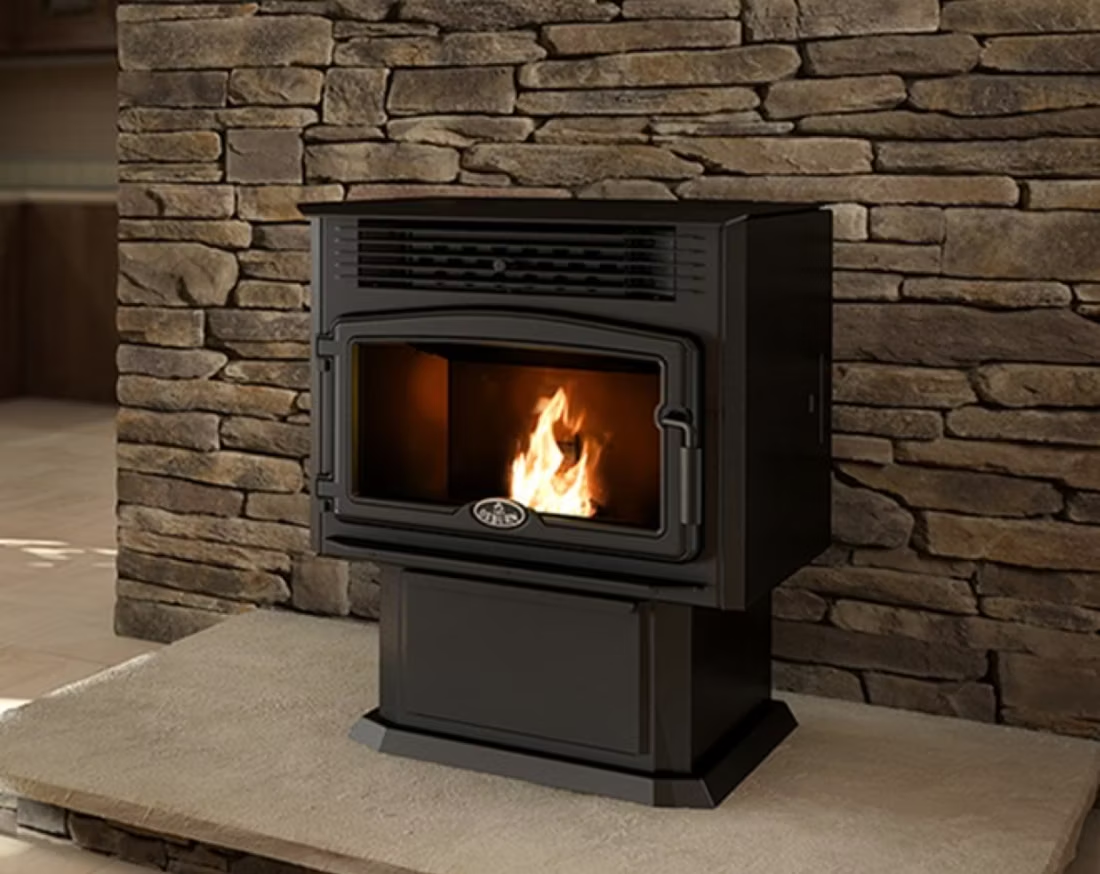
That doesn't mean pellet heat is impossible in Volusia County—it means it's a niche choice. A small number of homeowners install a compact pellet stove for a den or Florida room that runs cold under AC, for the ambiance of visible flame without wood mess, or because they split time with a colder-climate property up north and want a similar setup here. Regional pellet suppliers like Lignetics, Hamer Pellet Fuel, and Greenway Renewable Energy do serve the state, so fuel isn't the barrier—sizing the investment to actual local heating need is. If that's your situation, a trusted local dealer can size a small unit correctly and make sure venting clears code; if you're chasing everyday heat, gas or electric options fit this climate far better.
Three steps. No salesperson until you're ready.
Tell us about your project
Your zip code, your situation, and the fuel you're leaning toward—or let the answers point you to one.
See what's actually available
The brands dealers within 100 miles genuinely carry—real options, never a catalog mirage.
Get your dealer & Project Guide
A trusted local dealer, plus the free Project Guide & Parts List that names every component of the job.
Frequently Asked Questions
Are pellet stoves common in Volusia County?
No, and it's worth saying plainly: with such a light winter heating need and lows averaging 49°F, most Volusia County homes—from Daytona Beach to DeLand to Deltona—have no real heating load for a pellet stove to solve. Pellet appliances are designed to run for hours at a stretch through long cold seasons; a handful of chilly nights a year in central Florida doesn't generate that demand. The handful of local installs tend to be supplemental—a den, a Florida room, or a homeowner who wants the look and feel of a hopper-fed stove without needing it to carry the house through winter.
Why would anyone install a pellet stove in a climate this warm?
The most common reasons are ambiance and specific-room comfort rather than whole-home heating. A Florida room or sunroom in New Smyrna Beach or Ormond Beach that runs colder than the rest of the house under central AC in December and January is a reasonable candidate for a small unit. Some homeowners also want the visual and radiant-heat experience without dealing with wood mess or a masonry chimney, and pellet stoves deliver that with less hands-on tending than cordwood. It's a lifestyle and ambiance choice here, not a heating necessity—and any local dealer worth working with will say so upfront rather than oversell you a unit sized for a much colder climate.
What size pellet stove would even make sense in Volusia County?
Small. Given the mild heating load—Volusia's winters are only a fraction as demanding as what pellet stoves are typically engineered around—most Volusia installs that do happen are compact units meant for a single room, not whole-home heat. Oversizing is a real risk here: a stove sized like it's heating a Minneapolis home will short-cycle constantly in a central Florida den, which is hard on the appliance and doesn't improve comfort. A local dealer sizing for actual square footage and actual local winter lows, rather than a generic chart, is the difference between a unit that works well for years and one that's frustrating from day one.
Is pellet fuel even available in Volusia County?
Yes—availability isn't the obstacle, demand is. Regional suppliers including Lignetics, Hamer Pellet Fuel, and Greenway Renewable Energy distribute pellet fuel across Florida, and it can typically be found at hearth retailers or ordered by the ton. The bigger question for most Volusia homeowners isn't whether they can get pellets, it's whether a pellet stove is the right tool for a climate that only asks for supplemental heat a few weeks a year. For the rare install, fuel sourcing is a non-issue.
What heating options make more sense than pellet in Volusia County?
For most Volusia County homes, gas and electric options are a better match for the climate. A vented or vent-free gas fireplace gives instant, controllable heat for the occasional cold front without any fuel storage or hopper maintenance, and electric fireplaces or inserts offer ambiance with zero venting requirements—useful in condos and newer construction across Daytona Beach and Port Orange where gas lines aren't always run. Both fuel types are rated standard-relevance for this climate zone, unlike pellet, which is rated not-applicable for typical whole-home use here.
Do I need a permit to install a pellet stove in Volusia County?
Yes—any solid-fuel or pellet-burning appliance installation in Volusia County requires a building permit through the applicable local building department, whether that's the City of Daytona Beach, DeLand, Deltona, or Volusia County's own building division for unincorporated areas. A licensed installer will typically pull the permit as part of the job and ensure the vent termination and clearances meet code, which matters even more on a small, infrequently-installed appliance type where local inspectors may see far fewer of these than gas or electric installs.
How does a pellet stove differ from a pellet grill or smoker people already use here?
They're unrelated appliances despite the shared fuel. Pellet grills and smokers, which are genuinely popular across Volusia County backyards, are outdoor cooking equipment rated for food-safe combustion and open ventilation. A pellet stove is an indoor home-heating appliance requiring code-compliant venting through an exterior wall or roof, electrical service for the auger and igniter, and clearance to combustibles inside living space. Don't assume backyard pellet fuel or grill parts translate to indoor heating equipment—an indoor pellet stove install needs its own permitted venting and a dealer familiar with residential code, not grill hardware.
What does a pellet stove installation cost in Volusia County?
Because installs are infrequent here, pricing is less standardized than in colder markets, but a small freestanding pellet stove with proper wall-through venting typically runs in a comparable range to a modest gas insert install once you account for the unit, electrical work for the auger motor, and permitted venting—often landing in the $3,000–$6,000 range depending on the specific home and venting path. Given how rarely local dealers quote this fuel type, get a written in-home estimate rather than relying on a general online price, since travel and part sourcing can shift the number.
Pellet vs. gas—which should I actually choose in Volusia County?
For nearly all Volusia County homes, gas is the more sensible choice. A gas fireplace or insert gives instant heat during the county's occasional cold fronts with no fuel storage, no auger or hopper to maintain, and no electricity dependency for ignition on many models—a real plus if a storm knocks out power along the coast. Pellet stoves require electricity to run the auger and blower, so they're not a reliable backup during outages, and they demand a fuel supply and maintenance routine that's hard to justify for a climate with such a short, mild winter. Pellet only makes sense here if you specifically want the pellet-stove experience in one room; for practical heat, gas wins.
Why is my open fireplace making my house colder?
Open fireplaces suck—literally. As the fire burns, it consumes air your furnace already paid to heat and pulls it out through the chimney, so the house is actually colder after the fire goes out than before you lit it. An insert fixes this: it seals the chimney, puts fixed glass across the front, and turns that hole in your house into a real heat source.
Can a pellet stove heat a whole house?
It genuinely can. I burned a pellet stove as my only heat source for years after a furnace died, and it kept the entire house warm. Pellets feed automatically from a hopper, so you get wood-heat economics with thermostat-style control. Two honest caveats: it needs weekly cleaning during the season, and most models need electricity to run—ask about battery backup if outages are a concern.
Can I install a fireplace myself?
If you're putting a fire in your house on purpose, it's best to work with an expert. Unless you're genuinely experienced in framing, gas line, vent pipe, and the national code on clearances to combustibles, have a professional do it—and ideally the same company that sells you the fireplace, so warranty, service, and liability all live under one roof.
Can a fireplace actually lower my heating bill?
Yes—by creating a comfort zone. A furnace heats every square foot of the house just to warm the one room you're in; a gas fireplace on low burns roughly a sixth of the gas a typical furnace does. Set the furnace around 55–60 degrees as a baseline, then heat the rooms your family actually uses. Families who heat this way commonly save $20–$60 a month.
Stove and Fireplace Dealers in Volusia County
Listings include WhyFire partner dealers, dealers we have verified as authorized for the brands we recommend, and established local businesses that carry hearth products. Every listing shows which one it is. The ones marked Preferred run on WhyFire's software, so they can show you real pricing and book your appointment right here. No manufacturer pays for placement. How we verify dealers →
John's Appliance City
Daytona Gas & Grill
Thermotane Gas
Pellet Brands Stocked Around Volusia County
Manufacturers will point you to the nearest stocking dealer.
Not sure pellet is right for your Volusia County home? Let's find out.
Tell us about your space and how you actually plan to use it, and we'll give you an honest read on whether a pellet stove fits—plus a free Project Guide & Parts List with the exact parts and a trusted local dealer if it does.
Find Your Fireplace →