
Pellet Heat for Martin County's Rare Cold Snaps.
With only 256 heating degree days a year and winter lows averaging 56°F, Martin County isn't pellet-stove country—but for the handful of homeowners who want one for ambiance or an occasional cold night, we'll connect you with a local dealer who carries what's actually installable here.
Every Project Starts From One of These Five Situations
A subtropical county where supplemental heat is a want, not a need.
Martin County sits in climate zone 2A, hot and humid, with an average of just 256 heating degree days a year—for comparison, a cold-climate city like Duluth, Minnesota racks up over 9,000. Winter lows here average 56°F, and the stretch from Stuart down through Palm City, Jensen Beach, Hobe Sound, and Indiantown almost never sees the kind of sustained cold that makes wood or pellet heat a practical necessity. That's also why the local wood species—oak, mahogany, pine—are known here as landscape and shade trees, not firewood or pellet stock. There's no local wood-heat culture and no processing infrastructure built around residential heating fuel, which is why both wood and pellet appliances are flagged as not applicable to this market.
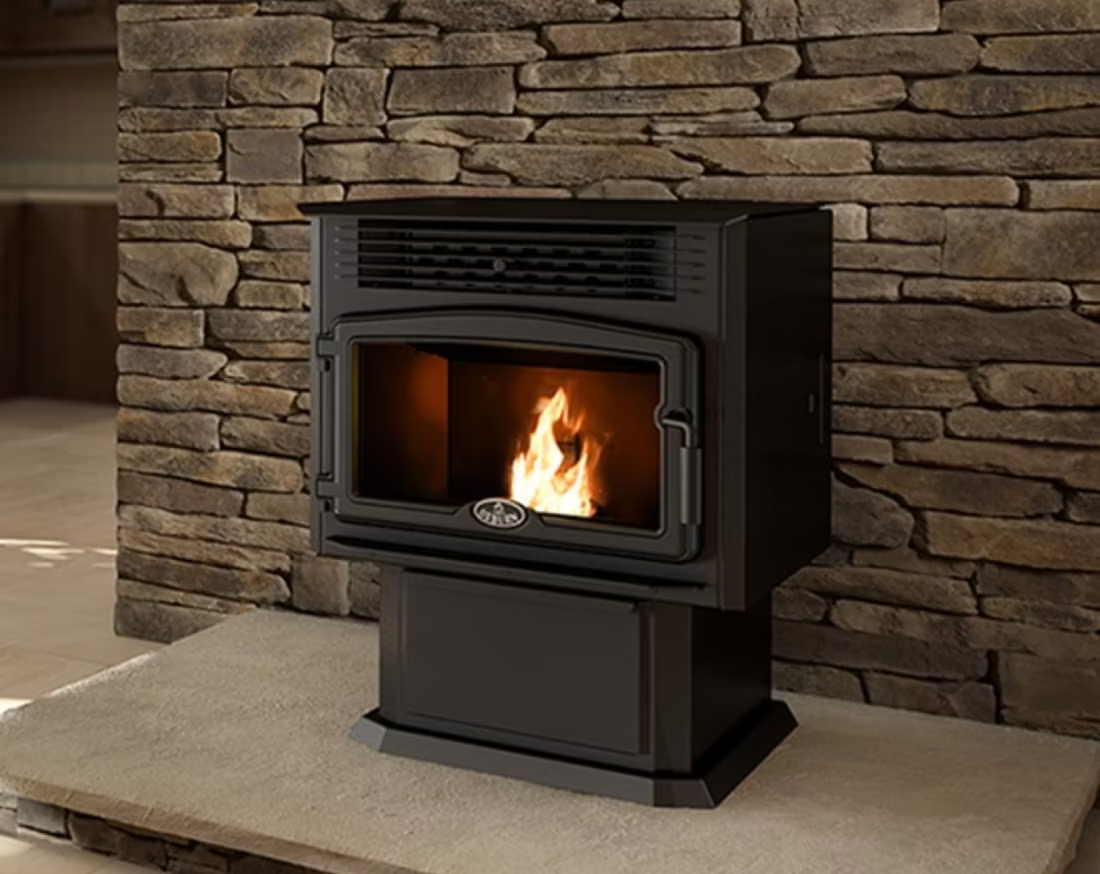
That said, pellet stoves aren't entirely absent from Martin County. A small number of homeowners install them for the look and ambiance of a real flame, for a sunroom or screened lanai that gets genuinely chilly during a January cold-air outbreak, or because they moved down from a colder state and want a familiar feature in the house. Because air quality concerns are essentially nonexistent here—no non-attainment issues, no winter inversion, no burn curtailment periods—there's no regulatory reason not to install one if you want the look. The bigger question is finding a dealer who actually stocks and services pellet appliances in a market where demand is thin, which is exactly the matching problem Find My Fireplace exists to solve.
Three steps. No salesperson until you're ready.
Tell us about your project
Your zip code, your situation, and the fuel you're leaning toward—or let the answers point you to one.
See what's actually available
The brands dealers within 100 miles genuinely carry—real options, never a catalog mirage.
Get your dealer & Project Guide
A trusted local dealer, plus the free Project Guide & Parts List that names every component of the job.
Frequently Asked Questions
Are pellet stoves actually available in Martin County, FL?
They're available, but uncommon. Most hearth retailers serving Martin County—from Stuart down to Hobe Sound—build their business around gas fireplaces and electric units, since those match the county's mild climate and hurricane-prone power grid. Pellet stoves are usually a special-order or secondary product line rather than a showroom staple. If you want one, we match you with a dealer in the broader Treasure Coast area who genuinely carries and installs pellet appliances rather than one who'll try to talk you into something else because that's what's on the floor.
Why would anyone want a pellet stove where it barely gets cold?
Mostly for the look and feel of a real flame rather than the heat output. With only 256 heating degree days a year, a pellet stove in Martin County is rarely doing serious work—it's more likely supplementing warmth on the handful of nights when an arctic outbreak pushes lows into the 30s or 40s, or adding ambiance to a sunroom, lanai, or den. Homeowners who grew up with pellet or wood heat up north sometimes want the feature simply because it feels like home, even if the furnace never gets a real workout.
What size pellet stove makes sense for occasional use in Martin County?
Small. Since most Martin County installs are for ambiance or brief cold snaps rather than all-winter heating, a compact unit with a modest hopper is usually the right call—you're not trying to carry a house through a Duluth-style winter, you're covering a handful of nights a year. Oversizing for a climate this mild just means you'll almost never run the stove at a comfortable output level. A local dealer can walk through your specific room and use case before recommending a model.
Where can I buy pellet fuel in Martin County?
Because demand is low, pellet fuel isn't stocked in bulk locally the way it would be in a heating market. Brands like Lignetics, Hamer Pellet Fuel, and Greenway Renewable Energy circulate regionally in Florida and are typically available through big-box home improvement stores or by special order rather than dedicated pellet fuel depots. It's worth asking your installing dealer where they source pellets locally, since availability can shift seasonally and thin out fast if a rare cold snap sends more people looking for bags at once.
Do I need a permit to install a pellet stove in Martin County?
Yes—a building permit through the Martin County Building Department is standard for any new hearth appliance, including pellet stoves, and the work typically also requires an electrical inspection since pellet units rely on a powered auger and blower. It's a routine process for the permit office even though the appliance itself is uncommon locally. Most installing dealers pull the permit as part of the job.
Will my pellet stove work during a hurricane-related power outage?
No—and this is the most important thing to know before choosing pellet heat in Martin County. Pellet stoves depend entirely on electricity to run the auger that feeds fuel and the blower that distributes heat; when the power goes out, so does the stove. Martin County sees regular hurricane-season outages, sometimes lasting days, and a pellet stove offers zero backup heat or ambiance during exactly the kind of event when you might want it. If storm-driven outages are a real concern, a battery backup or small generator dedicated to the stove is worth discussing with your installer, or you may want to compare a gas option instead.
Pellet stove or gas fireplace—which makes more sense in Martin County?
For most Martin County homes, gas is the more practical choice. Gas fireplaces are a standard, well-supported product in this market, many models include battery-backup ignition that keeps working through a power outage, and there's no fuel storage or hopper refilling involved. Pellet stoves offer a more traditional real-flame look and the smell of an actual fire, but they need a steady electrical supply and a fuel source that isn't well-stocked locally. If ambiance is the goal and hurricane resilience matters, gas is usually the safer bet; if you specifically want the pellet-stove experience, we can still connect you with a dealer who installs them.
What pellet stove brands can I actually get installed near Martin County?
Since pellet appliances aren't a core product line for most local retailers, expect to work with a dealer serving the wider Treasure Coast—including Port St. Lucie and West Palm Beach—who carries recognized stove manufacturers such as Harman, Quadra-Fire, or Englander, alongside fuel brands like Lignetics and Hamer Pellet Fuel that are more commonly found on Florida shelves than dedicated pellet retailers. We match you with whichever trusted dealer in the region genuinely stocks and installs pellet equipment, rather than one who happens to be closest but doesn't really work with the fuel.
Wood, pellet, gas, or electric—what's actually right for a Martin County home?
Wood and pellet are both classified as not applicable for this climate—with 256 heating degree days and winter lows averaging 56°F, neither is a practical heat source, and local wood species like oak, mahogany, and pine aren't harvested for fuel here. Gas is the standard choice for real-flame ambiance, especially with battery-backup ignition that keeps working in a power outage. Electric is the simplest option—no venting, no fuel, installed almost anywhere for a fraction of the cost. Pellet stoves remain an option if you specifically want that look and are willing to manage fuel sourcing and electrical dependence, but for most Martin County homeowners, gas or electric will serve the actual use case better.
How often does a pellet stove need cleaning?
A clean pellet stove is a happy pellet stove. Plan on cleaning the burn pot about once a week when you're burning regularly—ash and clinkers gum up the air holes just like a pellet barbecue. Most pellet stove problems trace back to skipped cleaning that nobody explained up front. Some designs make it easy with a trapdoor burn pot: pull a lever and the gunk drops into the ash pan.
What's the difference between an insert and a zero-clearance fireplace?
An insert is a fireplace that slides into a pre-existing wood-burning fireplace—if you don't have one, there's nothing to insert it into. A zero-clearance fireplace is built into a framed wall, which makes it the answer for remodels and new construction. Simple test: existing masonry fireplace means insert; blank or framed wall means zero-clearance.
What is an in-home preview and do I need one?
It's a visit where a hearth professional measures your space, confirms the model you picked actually works in your home, and walks the specs—framing, gas line, venting, finish work—before anything is ordered. Some details you just can't know until you see the house. Never make a down payment without one; it's the single most-skipped step that burns buyers.
How much should I budget for a fireplace?
For an average home—covering the fireplace, the vent pipe, and basic installation—a budget between $3,900 and $5,500 gives you a lot of options across wood, gas, and pellet. By the time you add finish work, gas line, and electrical, the average complete installation lands between $5,000 and $12,000 all-in. In a remodel or new build, a good rule is to put about 2.5% of the total project cost toward the fireplace.
Stove and Fireplace Dealers in Martin County
Pellet Brands Stocked Around Martin County
Manufacturers will point you to the nearest stocking dealer.
Find your pellet stove in Martin County.
Tell us about your home and how you'd use the stove, and we'll match you with a local Treasure Coast dealer who genuinely carries pellet equipment—plus a free Project Guide & Parts List covering the exact parts, venting, and dealer recommendation for your project.
Find Your Fireplace →