
A Little Warmth for the Rare Cool Night in Palm City.
Palm City sees maybe a handful of nights a year cold enough to want a fire going. If one of those is a pellet stove, we'll match you with a local dealer who can size and install it right.
Every Project Starts From One of These Five Situations
A climate that rarely asks for heat at all.
Palm City sits at 6 feet of elevation on the Treasure Coast in climate zone 2A—hot and humid nearly year-round. The numbers make the point better than any description: winters here barely register, amounting to just a few genuinely cool weeks a year, compared to a long, brutal cold season lasting nearly seven months in a place like Duluth, Minnesota, or roughly six months in Burlington, Vermont. Winter lows here average 56°F, and a stretch of nights below 40°F is unusual, not routine. Pellet stoves are not a mainstream heating appliance in Martin County, and it would be dishonest to pretend otherwise.
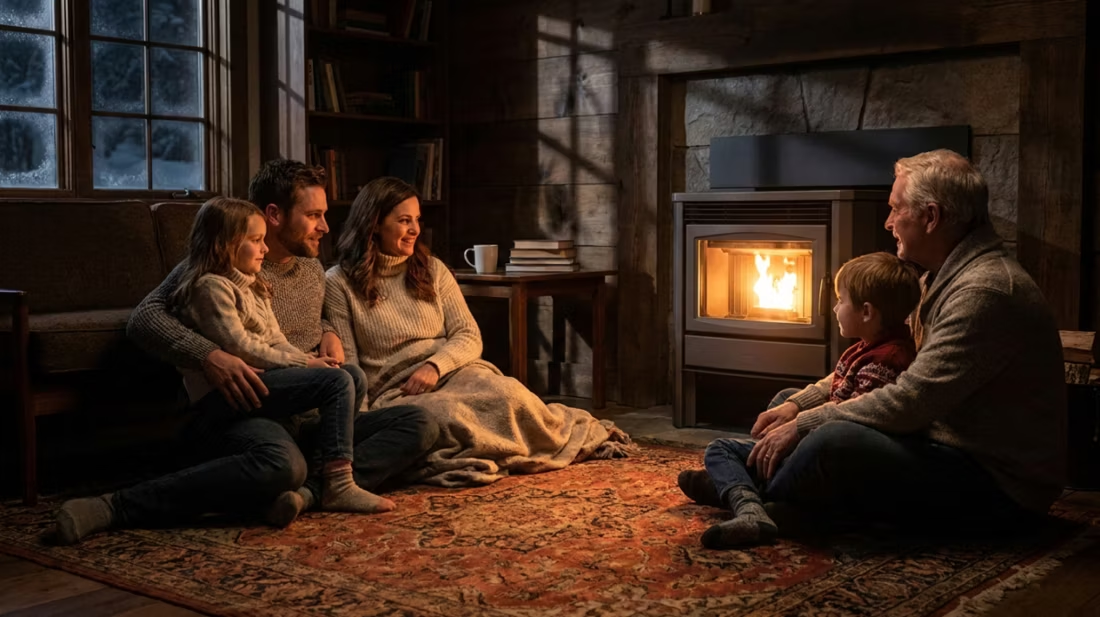
That said, a small number of Palm City homeowners do install pellet stoves and inserts—usually for the ambiance of real flame on the occasional cold front, for supplemental heat in a den or Florida room, or because they split time between here and a colder second home up north and want the same look in both places. One thing worth knowing before you buy: pellet stoves need continuous electricity to run the auger and combustion blower. In a county that sees real hurricane-season outages from Florida Power & Light, that makes a pellet stove a poor backup-heat choice compared to a wood-burning unit, even though the mild climate rarely requires backup heat in the first place.
Three steps. No salesperson until you're ready.
Tell us about your project
Your zip code, your situation, and the fuel you're leaning toward—or let the answers point you to one.
See what's actually available
The brands dealers within 100 miles genuinely carry—real options, never a catalog mirage.
Get your dealer & Project Guide
A trusted local dealer, plus the free Project Guide & Parts List that names every component of the job.
Frequently Asked Questions
How much does a pellet stove installation cost in Palm City?
A freestanding pellet stove typically installs for $3,000 to $5,000 in Palm City, including the vent kit and hearth pad. A pellet insert fitted into an existing masonry fireplace runs closer to $4,000 to $6,000 once the liner and venting work are included. Because pellet demand is low here relative to a northern market, expect fewer local installers to stock units on-site—most will order the specific model you want after an in-home consultation rather than keeping a large showroom inventory.
Does a pellet stove actually make sense in a climate like Palm City's?
For most homes, no—not as a heating strategy. With only a few genuinely cool weeks a year and winter lows averaging 56°F, a pellet stove will sit unused most of the year. Where it does make sense: homeowners who want the look and low-key ambiance of a real flame for the handful of genuinely cool evenings in December and January, people staging a Florida room or den as a cozy focal point, or snowbirds replicating a stove they already run up north. If your goal is actual heating performance for a room, a smaller gas or electric unit with lower upfront cost and no fuel storage is usually the more practical choice here.
Where can I buy wood pellets in Palm City?
Because pellet heating is uncommon in Martin County, you won't find pallets of fuel stacked at every hardware store the way you would in a colder market. Brands like Lignetics, Hamer Pellet Fuel, and Greenway Renewable Energy are distributed regionally in Florida and can usually be special-ordered through your dealer or found at farm-supply retailers. Buying a season's worth (roughly 1 to 2 tons for occasional use) at once is the practical move, since restocking mid-winter isn't as simple as it is where pellet stoves run daily from November through March.
Do I need a permit to install a pellet stove in Palm City?
Yes—any new solid-fuel appliance installation requires a permit through the Martin County Building Department, covering the unit itself and the through-wall or roof venting. Most local hearth dealers pull this permit as part of the installation and will schedule the required inspection. Given how infrequently pellet stoves are installed here compared to gas fireplaces, it's worth confirming your installer has handled a pellet-specific permit before, since the inspector may see fewer of these than gas or electric units.
Will my pellet stove work if the power goes out during a hurricane?
No, not without a generator or battery backup. Pellet stoves rely on an electric auger to feed fuel and a blower to distribute heat and exhaust combustion air—cut the power and the stove stops, full stop. In Martin County, where Florida Power & Light outages after tropical storms can stretch for days, this is a real limitation if you're hoping for emergency heat, though given local winter lows rarely dip below the 40s, the bigger outage concern here is usually cooling, not heating.
What size pellet stove do I need for occasional use in a Florida home?
Smaller than you'd think. Most Palm City installations are sized for a single room—a den, Florida room, or open living area—rather than whole-house heating, since the climate never demands sustained output. A stove in the 40,000 to 50,000 BTU range comfortably heats an open living space on the rare cold snap without overheating a home that's built for air conditioning, not insulation retention. A local dealer can confirm sizing based on your specific room and ceiling height during a walkthrough.
Pellet stove vs. gas fireplace—which is more practical here?
For Palm City's climate, gas usually wins on practicality. A gas fireplace or insert lights instantly, requires no fuel storage or ash cleanup, and doesn't depend on you keeping bags of pellets on hand for the two or three cold snaps a year that call for it. Pellet stoves offer a more authentic flame and ember bed, which is the main reason homeowners choose one anyway—it's a look-and-feel decision more than a heating-performance one in this market. If FPL's natural gas or propane service reaches your home and you're after real heat output for the rare cold night, gas is the lower-maintenance option; if you want the specific character of a pellet fire, that's a legitimate reason to choose it regardless.
Pellet stove vs. wood stove—does either make sense in Palm City?
Both are uncommon here for the same reason: with only a few genuinely cool weeks a year, there's just not much heating season to justify either. Between the two, wood has one real advantage locally—it works during power outages, which matter more in Martin County for hurricane season than for cold weather. Pellet stoves burn cleaner and are easier to load and maintain, but the electric dependency cancels out the outage benefit. Local wood species like oak and pine are available if you go that route, though most homeowners choosing either fuel here are doing it for ambiance rather than necessity.
How often does a pellet stove need maintenance if I only use it occasionally?
Less than a stove running daily through a northern winter, but don't skip it entirely. Even light seasonal use in Palm City calls for an annual cleaning of the burn pot, exhaust vent, and hopper before the cool season starts, since humidity here can cause pellets and residue to clump if the stove sits idle through the long, humid stretch from spring through fall. A local dealer or hearth technician can handle this in under an hour, and it's worth doing even if you only burned through it a handful of nights the prior winter.
Can a pellet stove heat a whole house?
It genuinely can. I burned a pellet stove as my only heat source for years after a furnace died, and it kept the entire house warm. Pellets feed automatically from a hopper, so you get wood-heat economics with thermostat-style control. Two honest caveats: it needs weekly cleaning during the season, and most models need electricity to run—ask about battery backup if outages are a concern.
What's the difference between an insert and a zero-clearance fireplace?
An insert is a fireplace that slides into a pre-existing wood-burning fireplace—if you don't have one, there's nothing to insert it into. A zero-clearance fireplace is built into a framed wall, which makes it the answer for remodels and new construction. Simple test: existing masonry fireplace means insert; blank or framed wall means zero-clearance.
How much should I budget for a fireplace?
For an average home—covering the fireplace, the vent pipe, and basic installation—a budget between $3,900 and $5,500 gives you a lot of options across wood, gas, and pellet. By the time you add finish work, gas line, and electrical, the average complete installation lands between $5,000 and $12,000 all-in. In a remodel or new build, a good rule is to put about 2.5% of the total project cost toward the fireplace.
What is an in-home preview and do I need one?
It's a visit where a hearth professional measures your space, confirms the model you picked actually works in your home, and walks the specs—framing, gas line, venting, finish work—before anything is ordered. Some details you just can't know until you see the house. Never make a down payment without one; it's the single most-skipped step that burns buyers.
Nearby Dealers
Hearth shops serving Palm City and the surrounding area.
Pellet Brands Stocked Around Palm City
Manufacturers will point you to the nearest stocking dealer.
Find your pellet stove in Palm City.
Tell us about your space and how you plan to use it, and we'll match you with a local dealer and send over a free Project Guide & Parts List—sized and vented correctly for your home, even if the need is more about ambiance than survival heat.
Find Your Fireplace →