
Gas fireplaces built for Martin County's mild winters.
With a winter low averaging 56°F and only a sliver of the winter heating load colder cities see, nobody in Stuart or Palm City is heating a house with a fireplace. Homeowners here choose gas for the look of real flame, the value it adds to a room, and a battery-backup pilot that still lights the room when hurricane season knocks out the grid.
Every Project Starts From One of These Five Situations
A design choice first, a backup second.
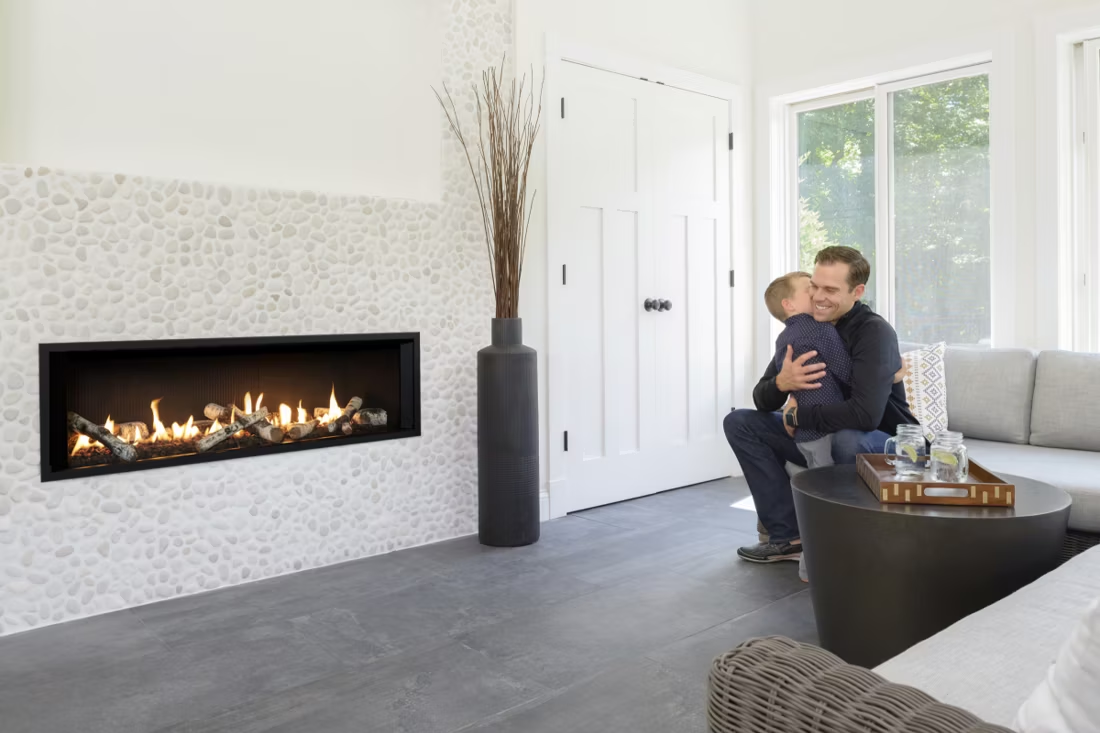
Martin County sits squarely in climate zone 2A—Stuart, Jensen Beach, Hobe Sound, Palm City, Sewall's Point, and Indiantown see an average winter low around 56°F and add up to only a sliver of the winter heating load a place like Duluth, MN logs in a single hard month. Nobody here is sizing a fireplace to survive January. Instead, gas fireplaces and inserts show up in new construction and remodels across the county's roughly 96,000 residents as a design centerpiece—a linear unit over a media wall, a factory-built fireplace flanking a lanai view, something that runs on the handful of nights a cold front actually pushes temperatures into the 40s.
There's no county-wide non-attainment issue and no wood-smoke curtailment program here—Martin County has no air quality restrictions on gas appliances, which keeps permitting straightforward. Natural gas service is limited: Florida Public Utilities runs natural gas lines into Indiantown, but most of the rest of the county—Stuart, Palm City, Hobe Sound, the barrier island communities—relies on propane for fireplace fuel. Either way, a properly vented gas fireplace with a battery-backup ignition system does double duty: ambiance most of the year, and a working flame and modest heat source during the power outages that come with hurricane season.
Three steps. No salesperson until you're ready.
Tell us about your project
Your zip code, your situation, and the fuel you're leaning toward—or let the answers point you to one.
See what's actually available
The brands dealers within 100 miles genuinely carry—real options, never a catalog mirage.
Get your dealer & Project Guide
A trusted local dealer, plus the free Project Guide & Parts List that names every component of the job.
Frequently Asked Questions
How much does a gas fireplace installation cost in Martin County?
A direct-vent gas fireplace or insert installation in Martin County typically runs $3,000 to $7,500, depending on the unit and whether a propane tank or line already exists. Because most homes here run on propane rather than piped natural gas, a first-time install often includes a tank setup or line run from an existing tank, which adds to the lower-end estimates. A full masonry-to-gas conversion with a stainless liner and new gas line tends to land in the $4,000 to $8,500 range. New construction and remodel installs in Stuart, Palm City, and Hobe Sound vary based on venting distance and whether the unit sits on an exterior wall facing the Intracoastal, which can affect chase and venting design.
Should I use natural gas or propane for my fireplace?
It depends on where you live. Florida Public Utilities runs natural gas service into Indiantown, so homes there can often tie a fireplace into existing gas lines. Everywhere else in Martin County—Stuart, Jensen Beach, Palm City, Hobe Sound, Sewall's Point—propane is the standard fuel, either from an existing residential tank or a new tank set specifically for the fireplace. Most gas fireplace models can be configured for either fuel with the correct orifice and regulator, so the choice usually comes down to what's already running to your house rather than the fireplace itself.
Will my gas fireplace work during a hurricane-related power outage?
It can, if you choose the right ignition system. Standard IPI (intermittent pilot ignition) units run on a small battery backup that keeps the fireplace operable when grid power drops—exactly the scenario Martin County homeowners plan around during hurricane season. Valor fireplaces take it further: their pilot assembly generates its own electricity through the thermocouple, so there's no battery to check or replace before storm season. For a county that regularly sits in the cone during June through November, that's a real consideration worth raising with your local dealer before you pick a model.
Do I need a permit to install a gas fireplace in Martin County?
Yes. New gas fireplace installations require a building permit and a gas permit through the Martin County Building Department, or through the appropriate municipal office if you're inside Stuart or Sewall's Point city limits. The gas line work has to be done by a licensed gas contractor regardless of jurisdiction. Most established hearth dealers handle the permitting and inspection scheduling as part of the install, so it's not something you typically manage on your own.
Can I convert my existing wood-burning fireplace to gas?
Yes, and it's a common project in older Martin County homes with a builder-grade masonry firebox that rarely, if ever, gets used for a real wood fire. Wood heat has never had much of a foothold here—with a winter low averaging 56°F, there's no need for overnight burns, and the local hardwoods (oak, mahogany, pine) are landscaping and shade trees, not firewood-culture staples the way they are farther north. A gas insert with a stainless liner run up your existing chimney typically converts that dormant firebox for $4,000 to $8,500, giving you real flame without the ash, the smoke, or a wood supply you'd have no real use for most winters.
What's the difference between vented and vent-free gas fireplaces—and which is right for Martin County's humidity?
Vented (direct-vent) fireplaces draw combustion air from outside and exhaust it back outside through a sealed system. Vent-free units burn directly into the room and release some water vapor and combustion byproducts indoors. Florida permits vent-free units within specific room-sizing and oxygen-sensor requirements, but in a humid coastal county like Martin, adding more moisture indoors from a vent-free unit is rarely the right trade-off—it works against the dehumidification your HVAC system is already doing most of the year. Direct-vent units are the more common and more recommended choice locally, and they hold up better long-term against the salt air near the coast.
What's the best gas fireplace for Martin County's coastal climate?
For homes in Stuart, Sewall's Point, Jensen Beach, or Hobe Sound near the Intracoastal or the Atlantic side, salt air is the real design factor—more than heat output. Look for units with stainless steel venting components and corrosion-resistant hardware, since standard galvanized venting can degrade faster this close to salt water. Small to mid-size linear direct-vent units are popular for their look on a media wall, since heating capacity isn't the driving spec here the way it would be in a colder climate. A local dealer can walk you through which venting materials hold up best for your specific distance from the coast.
How often should my gas fireplace be serviced?
An annual inspection is recommended, and it's worth being a little more diligent about it in Martin County given the salt air and humidity. A technician should check the burner, pilot assembly, gas connections, and venting for any corrosion, plus clean the glass and interior. Most local gas appliance service providers charge in the $150 to $250 range for this visit. Units near the coast or in homes with routine ocean-facing exposure may benefit from having the venting hardware checked slightly more often than the standard once-a-year schedule.
Gas vs. electric fireplace—which is right for my Martin County home?
Both are common here, and neither is being asked to carry real heating load given the county's mild winters. A gas fireplace gives you an actual flame, more resale appeal in a remodel, and—with the right ignition system—a working unit during hurricane-season power outages. An electric fireplace is simpler to install (often just a standard outlet, no gas line or venting required), costs less upfront, and produces a realistic flame effect with zero combustion byproducts, but it goes dark the moment the power does. For a primary living space where you want a fireplace that still works when the storm knocks out the grid, gas is usually the better call. For a bedroom, guest suite, or secondary room where ambiance is the only goal, electric is often plenty.
What's the difference between an insert and a zero-clearance fireplace?
An insert is a fireplace that slides into a pre-existing wood-burning fireplace—if you don't have one, there's nothing to insert it into. A zero-clearance fireplace is built into a framed wall, which makes it the answer for remodels and new construction. Simple test: existing masonry fireplace means insert; blank or framed wall means zero-clearance.
Why is my open fireplace making my house colder?
Open fireplaces suck—literally. As the fire burns, it consumes air your furnace already paid to heat and pulls it out through the chimney, so the house is actually colder after the fire goes out than before you lit it. An insert fixes this: it seals the chimney, puts fixed glass across the front, and turns that hole in your house into a real heat source.
Can I install a fireplace myself?
If you're putting a fire in your house on purpose, it's best to work with an expert. Unless you're genuinely experienced in framing, gas line, vent pipe, and the national code on clearances to combustibles, have a professional do it—and ideally the same company that sells you the fireplace, so warranty, service, and liability all live under one roof.
What is an in-home preview and do I need one?
It's a visit where a hearth professional measures your space, confirms the model you picked actually works in your home, and walks the specs—framing, gas line, venting, finish work—before anything is ordered. Some details you just can't know until you see the house. Never make a down payment without one; it's the single most-skipped step that burns buyers.
Stove and Fireplace Dealers in Martin County
Find your gas fireplace in Martin County.
Tell us about your home and we'll match you with a trusted local Martin County dealer and send over a free Project Guide & Parts List—the exact parts, venting, and fuel setup your gas fireplace project needs, hurricane-ready battery backup included if you want it.
Find Your Fireplace →