
Keep Your Family Warm and Safe—No Matter What
With winter lows averaging 46°F and a winter heating season that's short and mild, Marion County homes rarely need wood heat to survive winter. Some homeowners still want the real thing—for ambiance, for a historic Ocala home, or for a horse farm that gets genuinely cold a few nights a year. We'll help you find a local dealer who does it right.
Every Project Starts From One of These Five Situations
Ocala horse country doesn't need wood heat—but some homes still want it.
Marion County sits in climate zone 2A, with a light winter heating load and a winter low that averages 46°F. Compare that to a place like Duluth, Minnesota, which faces a winter heating season more than ten times as demanding—Marion County homes simply don't face the kind of sustained cold that makes wood heat a necessity. There's no winter inversion, no wood-smoke air quality advisory, none of the burn-restriction culture you'd find in mountain or high-desert counties. For most of the year, a fireplace here is about atmosphere, not survival.
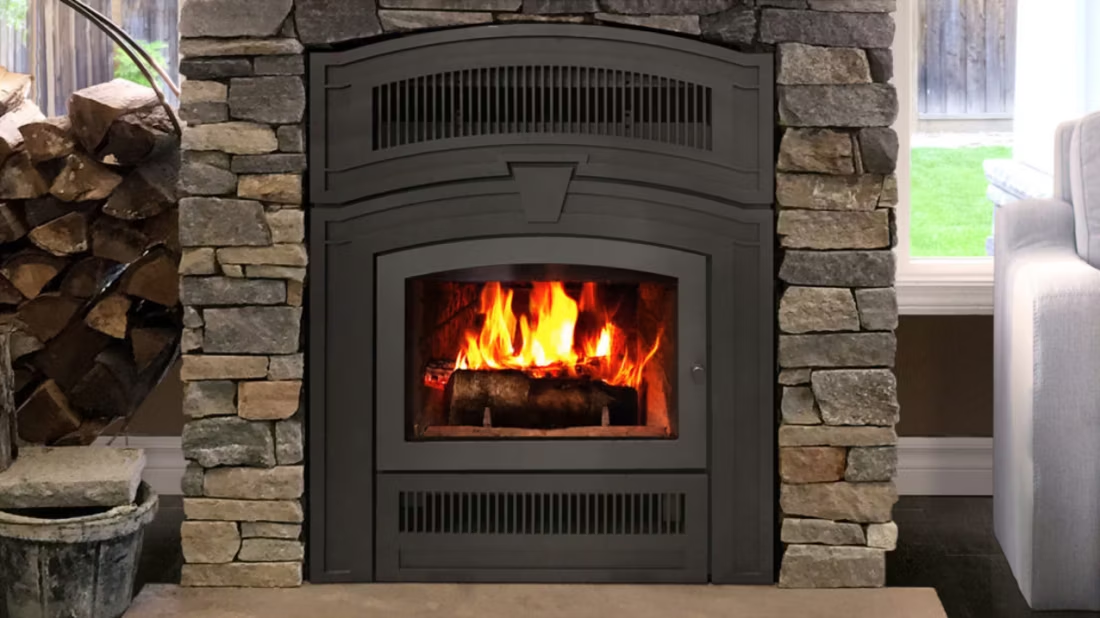
That said, wood-burning fireplaces and stoves haven't disappeared from the county. Ocala's older homes and larger equestrian estates sometimes have existing masonry fireplaces that owners want to keep functional rather than convert. Some transplants from colder states want the ritual of a real wood fire on the handful of nights a year temperatures drop into the 30s. Local firewood tends to be oak, mahogany, or pine sourced from land clearing and tree trimming rather than public-land permits—there's no cutting-permit culture here the way there is in forested western states. If you're one of the homeowners who genuinely wants wood over gas or electric, it's still doable—you just want a dealer who understands it's a specialty request, not a standard one, in this market.
Three steps. No salesperson until you're ready.
Tell us about your project
Your zip code, your situation, and the fuel you're leaning toward—or let the answers point you to one.
See what's actually available
The brands dealers within 100 miles genuinely carry—real options, never a catalog mirage.
Get your dealer & Project Guide
A trusted local dealer, plus the free Project Guide & Parts List that names every component of the job.
Frequently Asked Questions
How much does a wood-burning fireplace or insert cost to install in Marion County?
Because wood-burning installs are uncommon in Marion County, there isn't the kind of dense local pricing history you'd find in a cold-climate market. Using national ranges as a guide, a wood-burning insert into an existing masonry fireplace typically runs $3,000-$7,000, and a full freestanding stove installation with new Class A chimney venting can run $6,000-$12,000 once you factor in a hearth pad and roof penetration. Expect fewer competing bids than you would for a gas project—ask any local dealer directly what a wood install would run for your specific home before assuming a number.
What size wood stove or insert makes sense for a Marion County home?
Since almost nobody in Marion County is heating a whole house with wood, sizing here is usually about matching the fireplace to the room's proportions, not maximizing BTU output for a brutal winter. A small to medium cast-iron or steel stove is plenty for a great room or den used a handful of evenings a year. If you're converting an existing masonry fireplace, an insert sized to that opening—rather than an oversized freestanding stove—usually looks and performs better in a Florida-style open floor plan. A local dealer can walk your specific room before you buy anything.
Are there certified wood stove installers in Marion County?
Yes, though fewer than you'd find in a state where wood heat is standard. Look for NFI (National Fireplace Institute) or CSIA (Chimney Safety Institute of America) certification—these credentials matter more here, not less, because a dealer who mostly installs gas fireplaces and vent-free logs may not have deep wood-burning experience. A trusted local dealer who genuinely handles wood installs will know how to run Class A chimney pipe through a Florida roofline and clear insurance requirements for a working fireplace, which isn't always second nature in this market.
Should I get a wood stove or a wood-burning insert?
If you already have a masonry fireplace—common in some of Ocala's older neighborhoods and older equestrian properties—a wood-burning insert is usually the better fit. It uses the chimney you already have and turns an open, inefficient hearth into a real heat source when you do use it. A freestanding stove makes more sense if you don't have an existing fireplace and want a self-contained unit with its own hearth pad and venting, often placed in a den, workshop, or barn office. Given how little Marion County actually relies on wood heat, most homeowners here are working with an existing fireplace and lean toward the insert.
Do I need a permit to install a wood-burning fireplace in Marion County?
Yes—a wood-burning appliance is a combustion appliance, and Marion County requires a building permit for new installations regardless of how often you plan to use it. That's true even for a fireplace installed purely for ambiance. A dealer experienced with wood installs will typically pull the permit as part of the job and make sure the venting and clearances meet code, which matters more here since inspectors see far fewer wood-burning permit applications than gas or electric ones.
What's the best wood stove for Marion County's climate?
Given how mild Marion County winters actually are, you don't need the long-burn catalytic stoves that cold-climate homes rely on to hold a fire through a sub-zero night. A smaller cast-iron or contemporary steel stove—sized for occasional use rather than all-night burns—is usually the better fit. Still insist on an EPA-certified model. Certification affects insurance, resale, and safety, even if you're only lighting the stove a dozen evenings a year. A local dealer can point you toward compact models built for aesthetics and occasional use rather than marathon overnight heat output.
How often should a wood-burning fireplace be inspected in Marion County?
Annually, even with light use—arguably more important here than in a cold-climate home used every night. A chimney that sits unused for most of the year in Florida's humidity is more prone to nesting birds, wasps, and moisture intrusion in the masonry, all of which a sweep will catch before you light a fire. If your fireplace has gone unused for a season or more, get it inspected before your first burn rather than assuming it's fine because it looks fine.
Where can I get firewood in Marion County?
Local firewood tends to come from land-clearing operations, tree services, and horse-farm property maintenance rather than public-land cutting permits—Marion County doesn't have the national-forest permit culture you'd find out west. Oak is the most common local species and burns well once seasoned; pine is more available but burns faster and produces more resin buildup; mahogany shows up occasionally from ornamental tree removal but is less common as a firewood source. Expect to buy by the truckload or cord from a local supplier rather than cutting your own—there's no equivalent of a Forest Service permit office here.
Wood vs. pellet stove—does either make sense in Marion County?
Honestly, neither is a mainstream choice here, but wood is the more practical of the two if you want a real fire. Pellet stoves need a consistent local supply chain and service network that just isn't built out the way it is in colder states—brands like Lignetics or Greenway Renewable Energy are more likely to reach you through online or big-box channels than a dedicated local pellet dealer. Wood, by contrast, only requires a chimney or vent path and a supplier for cordwood, which is easier to source locally through tree services and firewood sellers. If your goal is occasional ambiance rather than daily heating, wood is usually the simpler path in this market.
Why is my open fireplace making my house colder?
Open fireplaces suck—literally. As the fire burns, it consumes air your furnace already paid to heat and pulls it out through the chimney, so the house is actually colder after the fire goes out than before you lit it. An insert fixes this: it seals the chimney, puts fixed glass across the front, and turns that hole in your house into a real heat source.
Why is a fireplace insert so efficient?
An insert does two things: it seals the chimney completely, so you stop losing air you already paid to heat, and it radiates warmth into the room through the firebox and glass. Most add a heat-exchange fan that pulls cool room air underneath, wraps it around the hot firebox, and pushes it back out warm. Your home is more efficient before you've even lit the first fire.
What is an in-home preview and do I need one?
It's a visit where a hearth professional measures your space, confirms the model you picked actually works in your home, and walks the specs—framing, gas line, venting, finish work—before anything is ordered. Some details you just can't know until you see the house. Never make a down payment without one; it's the single most-skipped step that burns buyers.
How much should I budget for a fireplace?
For an average home—covering the fireplace, the vent pipe, and basic installation—a budget between $3,900 and $5,500 gives you a lot of options across wood, gas, and pellet. By the time you add finish work, gas line, and electrical, the average complete installation lands between $5,000 and $12,000 all-in. In a remodel or new build, a good rule is to put about 2.5% of the total project cost toward the fireplace.
Stove and Fireplace Dealers in Marion County
Find the right wood fireplace for your Marion County home.
Tell us about your home and what you're hoping for, and we'll match you with a local Marion County dealer who genuinely handles wood-burning installs—plus a free Project Guide & Parts List with the exact venting and parts your project needs.
Find Your Fireplace →