
Keep Your Family Warm and Safe—No Matter What
Central Florida rarely needs a wood stove for warmth, but some Liberty Triangle homeowners still want one—for ambiance, hurricane-season backup, or a cabin feel. We'll help you figure out if it makes sense and connect you with a local dealer who can install it right.
Every Project Starts From One of These Five Situations
Central Florida winters rarely call for a wood stove.
Liberty Triangle sits at 65 feet of elevation in climate zone 2A, with an average winter low around 46°F and just 791 heating degree days a year. For comparison, a cold-climate city like Duluth, MN racks up over 9,000 heating degree days—meaning Duluth homes burn wood for months on end, while Liberty Triangle homes might see a handful of nights each winter cool enough to want any supplemental heat at all. That single fact explains why wood fuel relevance here is rated not-applicable rather than standard.
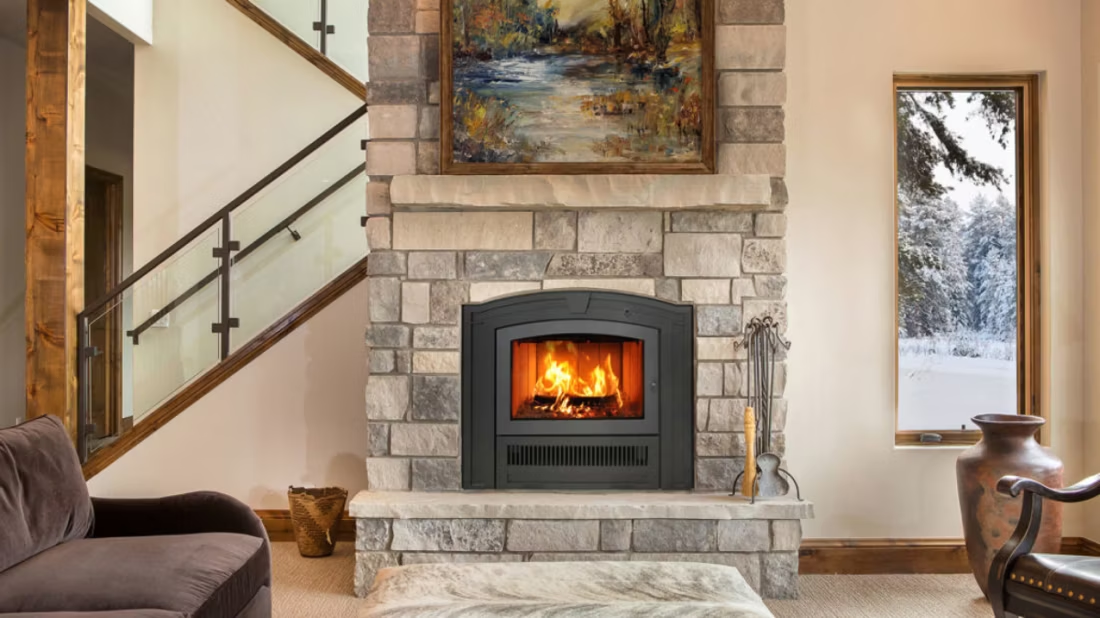
That doesn't mean nobody wants a wood stove. A small number of Liberty Triangle and Marion County homeowners install one anyway—for the ambiance of a real fire, as a talking point in a Florida room, or as genuine backup heat during hurricane season when Duke Energy Florida, Sumter Electric Coop, or City of Ocala service can be knocked out for days. Most local homes instead lean on electric heat pumps or gas fireplaces for the rare cool evening. Locally available firewood species are mostly oak and pine, with mahogany occasionally showing up from ornamental tree removal—oak is the better burner of the three.
Three steps. No salesperson until you're ready.
Tell us about your project
Your zip code, your situation, and the fuel you're leaning toward—or let the answers point you to one.
See what's actually available
The brands dealers within 100 miles genuinely carry—real options, never a catalog mirage.
Get your dealer & Project Guide
A trusted local dealer, plus the free Project Guide & Parts List that names every component of the job.
Frequently Asked Questions
Do people actually install wood stoves in Liberty Triangle?
Some do, but it's a niche choice rather than the norm. With only 791 heating degree days a year and average winter lows around 46°F, most Liberty Triangle homes don't need wood heat to stay comfortable—compare that to a genuinely cold climate like Fargo, ND, where wood stoves are load-bearing appliances for months. The homeowners who do install one here are usually after the ambiance of a real fire, a cabin-style room, or backup heat that works when the power is out. If that's you, a local dealer can still spec and install a code-compliant unit.
What does a wood stove installation cost in Liberty Triangle?
Because most Liberty Triangle homes weren't built with a masonry chimney, the bulk of the cost usually goes into new Class A chimney pipe and roof penetration rather than the stove itself. Nationally, a comparable install—stove plus new venting through an exterior wall or roof—typically runs $4,000 to $9,000. Homes with an existing wood-burning fireplace that just need a liner and insert are usually less. Because this isn't a common local build, get a firm quote from a dealer who has actually run venting through a Florida roof assembly before, not a generic online estimate.
Do I need a permit to install a wood stove in Marion County?
Yes. New solid-fuel appliance installations in unincorporated Marion County and the Liberty Triangle area fall under the Marion County Building Safety Department, and the Florida Building Code requires a permit covering the appliance clearances, hearth pad, and chimney or vent penetration. Most hearth retailers who install wood stoves in this part of Florida will pull the permit as part of the job—ask up front, since it's less routine here than in colder states where every dealer does it weekly.
What wood species are actually available for burning locally?
Oak and pine are the two species you'll most commonly find from Marion County tree services and firewood sellers—oak burns hotter and longer and is the better choice for a stove, while pine is faster-burning and better suited to kindling or occasional-use fires. Mahogany shows up from time to time as a byproduct of ornamental tree removal, but it's not a staple firewood species here the way it might be marketed elsewhere. If you're burning only a few times a season, well-seasoned oak is worth seeking out specifically.
Are there any air quality restrictions on wood burning in Liberty Triangle?
No—Liberty Triangle and Marion County have no listed air quality concerns, no non-attainment designation, and none of the winter inversion issues that restrict burning in western mountain valleys. That means there's no county-level curtailment schedule to worry about the way there is in smoke-prone basins out west. The more relevant local rule to check is your HOA's, if you have one—some Marion County developments restrict exterior chimneys or open burning independent of any air quality rule.
Can a wood stove work as backup heat during a power outage?
Yes, and in Liberty Triangle this is often the more practical reason to own one than winter warmth. A wood stove needs no electricity to produce heat, which matters when Duke Energy Florida, Sumter Electric Coop, or City of Ocala service goes down after a hurricane or tropical storm—sometimes for several days. It won't run your air conditioning, but it will keep a room warm on the rare occasion you need it and can double as a way to boil water or cook in a prolonged outage.
Wood vs. gas vs. electric—what do most Liberty Triangle homes actually use?
Electric heat pumps are the default here, served by Duke Energy Florida (around $0.166/kWh), Sumter Electric Coop (around $0.131/kWh), or City of Ocala utilities (around $0.121/kWh) depending on where in Liberty Triangle you sit—heat pumps are efficient enough in a mild climate zone 2A winter that they rarely need backup. Gas fireplaces are the second most common choice, installed mainly for ambiance and instant on/off convenience rather than necessity. Wood is a distant third, chosen almost entirely by homeowners who specifically want a real fire or off-grid backup heat rather than by climate necessity.
Where can I get firewood in or near Liberty Triangle?
Local tree services and landscaping companies that do storm cleanup and tree removal in Marion County are a common source of seasoned oak and pine, often at lower cost than a dedicated firewood seller. Downed limbs and trees after tropical storms are another practical source many Florida homeowners use, provided the wood is given time to season before burning. Marion County is also home to the Ocala National Forest just to the east, though if you're considering cutting there yourself, check current Forest Service rules directly, since personal-use permit terms change and weren't part of the data behind this page.
Should I get a wood stove for ambiance, or would a gas fireplace make more sense in this climate?
For most Liberty Triangle homes, a gas fireplace is the more practical ambiance choice—it lights instantly, needs no wood storage or ash cleanup, and doesn't require running new chimney venting through a roof that wasn't built for it. A wood stove makes more sense if what you actually want is a real, self-sufficient fire: something that works without electricity during a hurricane outage, or the specific experience of tending an actual fire rather than flipping a switch. Both are legitimate choices here—it comes down to whether convenience or authenticity (and outage independence) matters more to you.
Why is my open fireplace making my house colder?
Open fireplaces suck—literally. As the fire burns, it consumes air your furnace already paid to heat and pulls it out through the chimney, so the house is actually colder after the fire goes out than before you lit it. An insert fixes this: it seals the chimney, puts fixed glass across the front, and turns that hole in your house into a real heat source.
Why won't my new wood stove get going like my old one?
New wood stoves are 70%+ efficient, so far less heat goes up the flue—which also means less draft to get a fire established. The rule: build a genuinely hot fire for about 45 minutes before you choke it down. Skip that and you get smoke in the room, creosote in the chimney, and a fire that never takes off. Most performance complaints trace straight back to this.
What is an in-home preview and do I need one?
It's a visit where a hearth professional measures your space, confirms the model you picked actually works in your home, and walks the specs—framing, gas line, venting, finish work—before anything is ordered. Some details you just can't know until you see the house. Never make a down payment without one; it's the single most-skipped step that burns buyers.
Can a fireplace actually lower my heating bill?
Yes—by creating a comfort zone. A furnace heats every square foot of the house just to warm the one room you're in; a gas fireplace on low burns roughly a sixth of the gas a typical furnace does. Set the furnace around 55–60 degrees as a baseline, then heat the rooms your family actually uses. Families who heat this way commonly save $20–$60 a month.
Nearby Dealers
Hearth shops serving Liberty Triangle and the surrounding area.
Find your wood fireplace in Liberty Triangle.
Even in a mild climate like Liberty Triangle's, a wood stove can be the right call for ambiance or hurricane-season backup heat. Tell us about your home and we'll put together a free Project Guide & Parts List—the exact parts, vent kit included, plus your matched local dealer.
Find Your Fireplace →