
Find the right gas fireplace for Marion County's warm-climate homes.
From Ocala's equestrian estates to Belleview, Dunnellon, and Silver Springs, gas fireplaces bring instant ambiance and cool-night comfort to a county that rarely needs real heating. Find the right unit and connect with a trusted local dealer.
Every Project Starts From One of These Five Situations
Ambiance first, heat second—and that's fine.
Marion County sits in climate zone 2A with just 791 heating degree days a year and an average winter low around 46°F—a fraction of what a home in Duluth or Bismarck sees in a single January week. That mild reality is exactly why wood stoves and pellet stoves barely register here; there simply isn't enough cold to justify the cordwood or pellet handling that makes sense further north. Gas is a different story. Across Ocala's oak-canopied neighborhoods, the horse farms lining US 27 and 225A near the World Equestrian Center, and newer 55+ communities like On Top of the World and Stone Creek, a gas fireplace is installed mainly as a design centerpiece for the great room—something to switch on during a January cold snap or a rare hard freeze, not something asked to carry the whole heating load.
Natural gas service through TECO Peoples Gas reaches parts of Ocala's city limits, but most of Marion County—Belleview, Dunnellon, McIntosh, Reddick, Silver Springs Shores, and the rural horse properties in between—runs on propane delivered by local suppliers, since gas mains never made it out past the county seat. Either fuel works fine in a modern direct-vent fireplace or insert. New installations and gas line work go through the Marion County Building Safety Department, and most local hearth dealers handle that paperwork as part of the job. The payoff is a clean, flip-a-switch fire that looks good year-round and still earns its keep during the occasional citrus-country freeze.
Three steps. No salesperson until you're ready.
Tell us about your project
Your zip code, your situation, and the fuel you're leaning toward—or let the answers point you to one.
See what's actually available
The brands dealers within 100 miles genuinely carry—real options, never a catalog mirage.
Get your dealer & Project Guide
A trusted local dealer, plus the free Project Guide & Parts List that names every component of the job.
Frequently Asked Questions
How much does a gas fireplace installation cost in Marion County?
Most gas fireplace installations in Marion County run between roughly $3,500 and $9,500, with the spread driven mainly by whether you're converting an existing masonry fireplace with a gas insert, installing a new direct-vent unit in a great room, or running propane line to a stand-alone tank on a rural property. Homes already on natural gas near central Ocala tend to land on the lower end since there's no tank or long line run involved. Horse-country properties farther out that need a new propane tank set and a longer buried line typically land toward the higher end. A local dealer will give you a firm number after walking your specific space.
Can I convert my existing wood-burning fireplace to gas?
Yes, and it's a common project in Marion County's older neighborhoods, including many of the brick homes around downtown Ocala with existing masonry fireboxes. A gas insert drops into the existing opening and vents through a stainless liner run up the same chimney, so you keep the look of the original fireplace while gaining instant, ash-free heat. Given how rarely those fireplaces got real use in a 791-HDD climate to begin with, converting to gas is often the more practical move than restoring the firebox for the handful of cold nights a Florida winter actually brings.
Do I need natural gas to install a gas fireplace, or can I use propane?
Either works, and most of Marion County ends up on propane. Natural gas through TECO Peoples Gas is available in parts of Ocala proper, but outside the city limits—which is most of the county, including Belleview, Dunnellon, and the rural stretches around Reddick and McIntosh—propane is the standard choice. Any modern gas fireplace can be set up for either fuel with the correct orifice and regulator, so your fuel source is really a question of where your property sits relative to the gas mains, not which fireplace you can buy.
Will my gas fireplace work during a power outage?
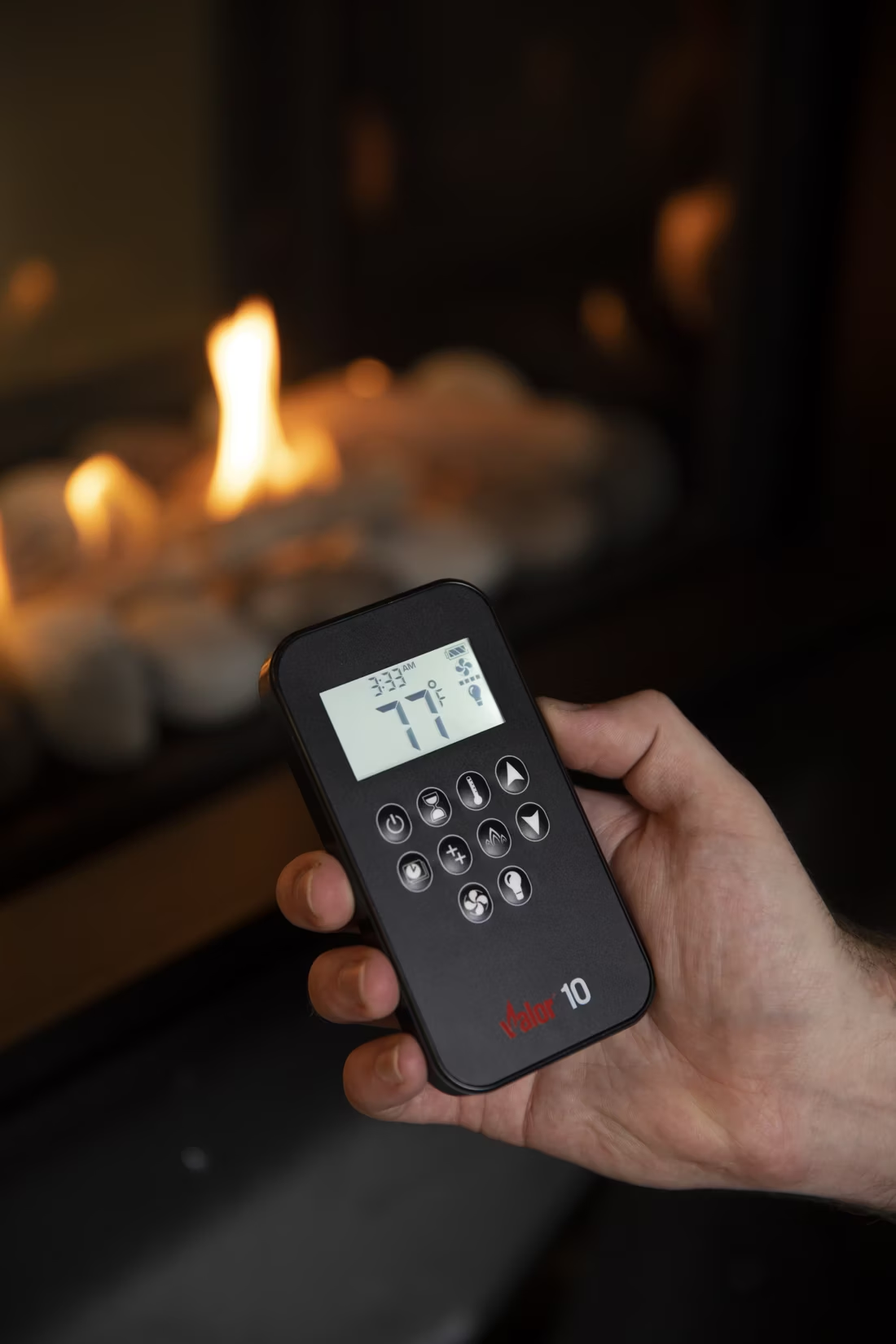
Most will, which matters in a county that sees real hurricane risk each season. Units with IPI (intermittent pilot ignition) run on a small battery backup that kicks in automatically when the power drops, so the fireplace still lights on demand. Valor fireplaces skip the battery entirely—their pilot's thermocouple generates the current the valve needs, so there's nothing to remember to replace before storm season. For Marion County homes that have weathered multi-day outages after a hurricane, that self-powering detail is worth asking about when you're comparing units with a local dealer.
What's the difference between a gas fireplace, gas insert, and gas stove?
A gas fireplace is a fully built-in unit framed into a wall—the common choice for new construction great rooms in Marion County's newer subdivisions and equestrian estates. A gas insert fits into an existing masonry firebox, which suits older Ocala homes that already have a fireplace they'd rather upgrade than rebuild. A gas stove is a freestanding cabinet-style unit that doesn't require an existing fireplace opening at all, which works well in smaller homes or manufactured housing common in areas like Marion Oaks and Silver Springs Shores. A local dealer can tell you which format fits your actual room in about five minutes.
Do I need a permit to install a gas fireplace in Marion County?
Yes—a building permit and, if new gas line work is involved, a separate gas permit are required through the Marion County Building Safety Department, or the City of Ocala's building division for properties inside city limits. The gas line itself has to be run or certified by a licensed gas-fitter. In practice, the hearth dealers who install fireplaces in this county coordinate the permit, the gas hookup, and the final inspection as one package, so homeowners rarely have to manage the separate pieces themselves.
What's the difference between vented and vent-free gas fireplaces?
Vented (direct-vent) fireplaces draw combustion air from outside and exhaust it back outside through a sealed pipe—they're the cleaner, code-compliant standard almost everywhere, including Marion County. Vent-free units burn without any exterior venting and release some moisture and combustion byproducts into the room instead. Florida's humid climate is exactly where that extra moisture load is least welcome, and vent-free units come with strict room-sizing and oxygen-sensor requirements even where they're legal. For Marion County homes, direct-vent is the more common and more consistently recommended option—worth confirming with your dealer if a vent-free model comes up in conversation.
How often should my gas fireplace be serviced?
An annual inspection is the standard recommendation, even for a fireplace that only runs a handful of nights each winter here. A technician checks the burner, pilot assembly, gas connections, and venting, and cleans the glass and interior. Because Marion County units often sit unused for long stretches between cold fronts, that yearly check is also when a dealer catches the corrosion or pilot issues that a well-used northern fireplace would surface on its own. Expect to pay somewhere in the $150–$250 range for a standard inspection.
Gas vs. electric fireplace—which is right for my Marion County home?
Both are legitimate options here, unlike wood or pellet appliances, which see almost no real demand given the county's 791 heating degree days. A gas fireplace delivers real radiant heat and the look of an actual flame, which matters if you want it to genuinely take the edge off a rare 30-degree night. An electric fireplace is simpler to install—often just a matter of an outlet, no gas line or venting required—and makes sense for a secondary room, a rental property, or a 55+ community home where the unit is purely decorative. For a primary great room in a custom-built or horse-country property, gas is usually the better investment; for a bedroom, den, or budget-conscious install, electric holds up fine.
Why is a fireplace insert so efficient?
An insert does two things: it seals the chimney completely, so you stop losing air you already paid to heat, and it radiates warmth into the room through the firebox and glass. Most add a heat-exchange fan that pulls cool room air underneath, wraps it around the hot firebox, and pushes it back out warm. Your home is more efficient before you've even lit the first fire.
Are new gas fireplaces really better than old ones?
Two ways, and they're both big. Looks: modern gas fireplaces are realistic enough that it's hard to believe they aren't burning wood. Cost: old units burn a standing pilot year-round (roughly $200 a year), while new ones use pilot-on-demand ignition and modern burners. Add remote controls and thermostat operation, and the day-to-day experience isn't close.
How much should I budget for a fireplace?
For an average home—covering the fireplace, the vent pipe, and basic installation—a budget between $3,900 and $5,500 gives you a lot of options across wood, gas, and pellet. By the time you add finish work, gas line, and electrical, the average complete installation lands between $5,000 and $12,000 all-in. In a remodel or new build, a good rule is to put about 2.5% of the total project cost toward the fireplace.
Does a fireplace add value to my home?
On average, a fireplace adds back to the home about the same amount you spent installing it. Add the monthly savings from heating the rooms you actually use instead of the whole house—often hundreds of dollars a year—and the value case is strong before you even count what a fire does for how your family uses the room.
Stove and Fireplace Dealers in Marion County
Find your gas fireplace in Marion County.
Tell us a bit about your home and we'll match you with the right gas fireplace, insert, or stove, and connect you with a trusted local Marion County dealer who'll put together your free Project Guide & Parts List—the exact parts, vent kit included, for your project.
Find Your Fireplace →