
Pellet heat in a place that rarely needs it.
With winter lows averaging 46°F, Liberty Triangle isn't pellet-stove country the way Duluth or Burlington are. But some homeowners still want one—for ambiance, a workshop, or a second property up north. We'll help you figure out if it's worth doing, and match you with a local dealer if it is.
Every Project Starts From One of These Five Situations
A subtropical climate that rarely needs supplemental heat.
Liberty Triangle sits in Marion County at just 65 feet of elevation, in a climate zone (2A) built around cooling load, not heating load. The area logs roughly 791 heating degree days a year—a number that a place like Duluth, MN blows past in a single cold month. Winter lows here average 46°F, with only the occasional freeze warning dipping into the 20s for a night or two. For the overwhelming majority of Marion County homes, that's simply not enough sustained cold to justify a dedicated pellet-heating appliance.
That's reflected in what local hearth dealers actually sell: heat pumps and electric fireplaces move far more units in this market than pellet stoves. Pellets themselves—brands like Lignetics, Hamer Pellet Fuel, and Greenway Renewable Energy circulate through the region—are usually sold in single bags at hardware and farm-supply stores rather than delivered by the ton, since there's no dense customer base burning through a hopper's worth every winter. None of that means a pellet stove is off the table. It means the reasons for wanting one here look different than they do in a place with real heating degree days—and it's worth being upfront about that before you invest in one.
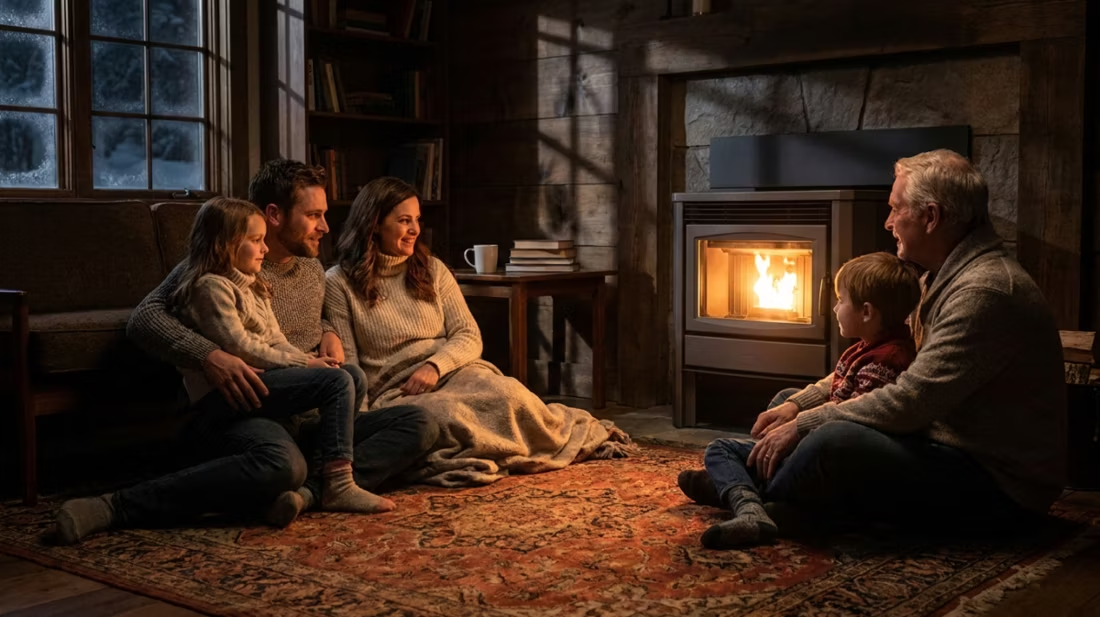
Three steps. No salesperson until you're ready.
Tell us about your project
Your zip code, your situation, and the fuel you're leaning toward—or let the answers point you to one.
See what's actually available
The brands dealers within 100 miles genuinely carry—real options, never a catalog mirage.
Get your dealer & Project Guide
A trusted local dealer, plus the free Project Guide & Parts List that names every component of the job.
Frequently Asked Questions
Does it even make sense to install a pellet stove in Liberty Triangle?
For most homes here, not as a primary heat source—Marion County's winters simply don't produce the sustained cold that pellet heating is built for. But a pellet stove can still make sense as a focal-point feature in a great room, a heat source for a detached workshop or garage, or a familiar setup for homeowners who split time between Liberty Triangle and a colder property up north. If your goal is whole-home heating, an electric heat pump or a gas unit will serve you better and cost less to run day to day. If your goal is a real flame with occasional heat output, a pellet stove is a reasonable, if uncommon, choice.
Who actually buys a pellet stove in a climate like this?
Locally, it's a fairly specific buyer: retirees who own a second home in a colder state and want the same equipment they're used to running there; owners of detached workshops, garages, or barns who want supplemental heat during the handful of nights each winter that dip into the 20s; and homeowners who simply like the look and radiant feel of a real fire more than an electric insert can offer. It's a niche purchase in Liberty Triangle, not a mainstream one—and any dealer worth working with will tell you that upfront rather than oversell the heating case.
How much does a pellet stove installation cost?
Pellet stove installs in Liberty Triangle tend to run on the simpler side of the national range—typically $3,000 to $6,000—because most homes here are newer slab construction without an existing masonry chimney to retrofit around. A freestanding stove vented through an exterior wall near where you want it is the common setup. There's less variability here than in older markets with chimney and hearth-pad complications, but you'll still want a local installer to confirm clearances and venting specifics for your home before pricing it out precisely.
Where can I buy pellets locally, and how much do they cost?
You won't find bulk, by-the-ton pellet delivery the way you would in a colder market—demand just isn't there. Brands like Lignetics, Hamer Pellet Fuel, and Greenway Renewable Energy show up at Ocala-area hardware and farm-supply stores, usually sold by the bag rather than the pallet. Most Liberty Triangle pellet stove owners buy a season's supply in the fall and store it in a garage, since local retailers don't always keep large quantities on hand year-round. Expect to shop around a bit more than you would in a place where pellet heat is the norm.
What size pellet stove do I actually need here?
Because most Liberty Triangle installs are about ambiance or targeted supplemental heat rather than heating an entire home through winter, a smaller-to-mid-size stove—roughly in the 40,000 to 50,000 BTU range—is typically plenty, even for open great rooms. Sizing still depends on ceiling height, insulation, and how the room is used, so it's worth a real conversation with a local dealer rather than guessing. Oversizing is a common mistake in mild climates: a stove that's too big for the space just gets run at a low, inefficient setting most of the time.
Pellet stove or electric fireplace—which makes more sense in Liberty Triangle?
For most homes here, electric wins on practicality. It needs no venting, no fuel storage, no ash removal, and runs cheaply off Duke Energy Florida, Sumter Electric Co-op, or City of Ocala service—all in the 12 to 17 cent per kWh range—for the handful of cool evenings a year you'd actually want the heat on. A pellet stove gives you a real flame, real radiant warmth, and a genuine fire-tending experience, but it comes with hopper loading, venting installation, and a fuel supply chain that's thinner in this market. If you want ambiance with zero hassle, go electric. If you want an actual fire and don't mind the upkeep, pellet is the more authentic option.
Do I need a permit to install a pellet stove in Marion County?
Generally yes—Marion County or the City of Ocala building department (depending on your address) typically requires a permit for the venting work and any new electrical circuit needed for the stove's auger and blower. Pellet stove installs are uncommon enough locally that not every dealer handles this routinely, so ask directly whether permitting and inspection are included in your quote rather than assuming it is.
Will a pellet stove work during a power outage?
No—pellet stoves rely on electricity to run the auger, igniter, and combustion blower, so they shut down the moment the power does. That's worth flagging specifically in Liberty Triangle, where hurricane season brings real outage risk. A pellet stove paired with a small generator can keep running, but on its own it's not a backup heat source the way an old-fashioned wood stove would be. If outage-proof heat is your priority, a battery-backed gas fireplace is a more reliable choice for this area.
What's the difference between a pellet stove and a pellet insert?
A pellet stove is freestanding and vents through a wall or existing chimney chase—it's the more common option in Liberty Triangle simply because most local homes are slab-built without an existing masonry fireplace to convert. A pellet insert is designed to slide into an existing fireplace opening, which matters more in older housing stock with a built-in hearth. If your home doesn't already have a masonry fireplace—which describes most houses in this area—a freestanding stove near an exterior wall is almost always the simpler and cheaper path.
What's the difference between an insert and a zero-clearance fireplace?
An insert is a fireplace that slides into a pre-existing wood-burning fireplace—if you don't have one, there's nothing to insert it into. A zero-clearance fireplace is built into a framed wall, which makes it the answer for remodels and new construction. Simple test: existing masonry fireplace means insert; blank or framed wall means zero-clearance.
How often does a pellet stove need cleaning?
A clean pellet stove is a happy pellet stove. Plan on cleaning the burn pot about once a week when you're burning regularly—ash and clinkers gum up the air holes just like a pellet barbecue. Most pellet stove problems trace back to skipped cleaning that nobody explained up front. Some designs make it easy with a trapdoor burn pot: pull a lever and the gunk drops into the ash pan.
Does a fireplace add value to my home?
On average, a fireplace adds back to the home about the same amount you spent installing it. Add the monthly savings from heating the rooms you actually use instead of the whole house—often hundreds of dollars a year—and the value case is strong before you even count what a fire does for how your family uses the room.
How much should I budget for a fireplace?
For an average home—covering the fireplace, the vent pipe, and basic installation—a budget between $3,900 and $5,500 gives you a lot of options across wood, gas, and pellet. By the time you add finish work, gas line, and electrical, the average complete installation lands between $5,000 and $12,000 all-in. In a remodel or new build, a good rule is to put about 2.5% of the total project cost toward the fireplace.
Nearby Dealers
Hearth shops serving Liberty Triangle and the surrounding area.
Pellet Brands Stocked Around Liberty Triangle
Manufacturers will point you to the nearest stocking dealer.
See if pellet heat makes sense for your Liberty Triangle home.
Tell us about your home and how you'd actually use it, and we'll put together a free Project Guide & Parts List—the right pellet stove or insert, the vent kit it needs, and a trusted local dealer who can install it correctly.
Find Your Fireplace →