
Clean, low-maintenance heat for Gilchrist County's mild winters.
With average winter lows around 44°F, most Gilchrist County homes don't need a furnace running all winter—but the January cold fronts that push through Trenton, Bell, and Fanning Springs still call for real heat. A pellet stove gives you that without a chimney, a woodpile, or a big-box guess. Find the right unit and connect with a trusted local dealer.
Every Project Starts From One of These Five Situations
A different kind of heat for a mild climate.
Gilchrist County sits along the Suwannee River in north-central Florida, home to about 2,568 people spread across Trenton, Bell, and Fanning Springs and the farmland and timberland in between. In climate zone 2A, the county has a light winter heating load—a fraction of what a home in Duluth, MN accumulates over a single winter. Most of the year, heat isn't the problem. But cold fronts do push through, occasionally dropping overnight lows into the 20s, and a lot of Gilchrist County housing stock—including a significant share of manufactured and mobile homes common in this part of the state—doesn't have a whole-home furnace built for that.
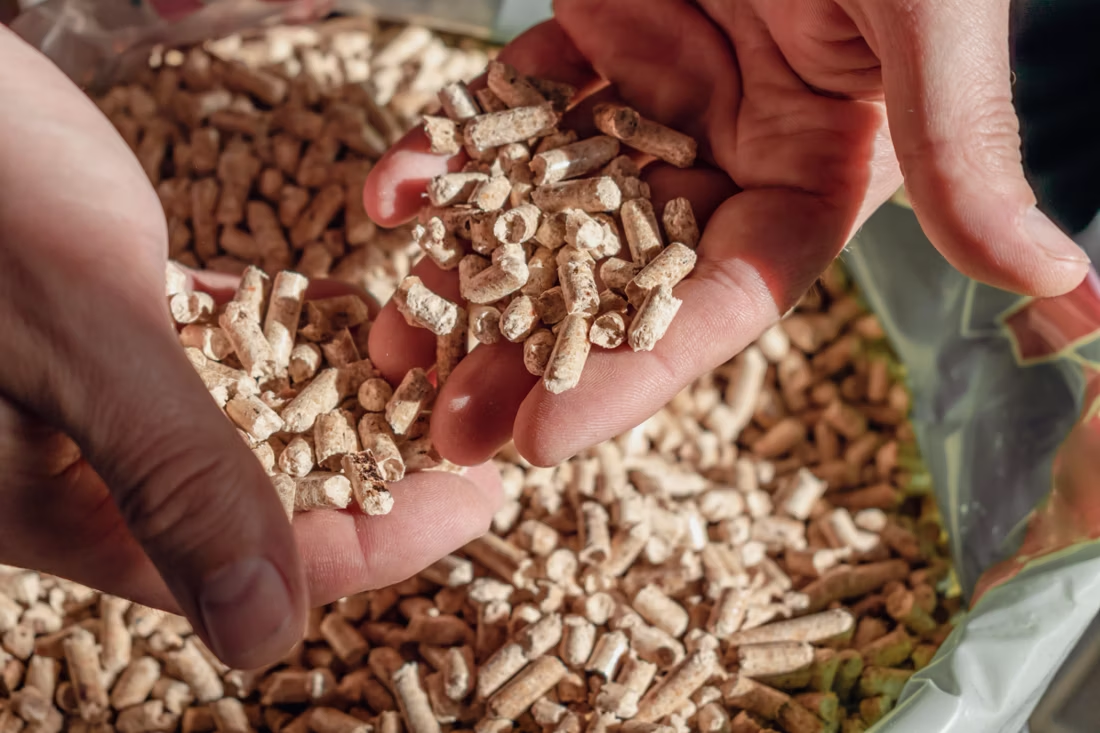
That's where pellet heat fits. A pellet stove doesn't need a masonry chimney—it vents through an exterior wall, which matters in a county where many homes were never built with a flue in the first place. It burns clean, with none of the smoke or ash volume of cordwood, and the local timber economy that grows the oak, pine, and mahogany you'll find in Gilchrist County woodlots also feeds the Southeastern pellet mills—Lignetics, Hamer Pellet Fuel, and Greenway Renewable Energy all supply this region. For a county with no natural gas infrastructure to speak of and mild-but-real winter nights, a pellet stove is often the most practical supplemental heat source a homeowner can install.
Three steps. No salesperson until you're ready.
Tell us about your project
Your zip code, your situation, and the fuel you're leaning toward—or let the answers point you to one.
See what's actually available
The brands dealers within 100 miles genuinely carry—real options, never a catalog mirage.
Get your dealer & Project Guide
A trusted local dealer, plus the free Project Guide & Parts List that names every component of the job.
Frequently Asked Questions
How much does a pellet stove installation cost in Gilchrist County?
Because pellet stoves vent through an exterior wall rather than requiring chimney construction, installation in Gilchrist County tends to run on the lower end of hearth-appliance pricing—typically $3,000 to $6,000 for the stove, wall-thimble venting, a hearth pad, and the electrical circuit the auger and blower need to run. Costs move toward the higher end if the home needs new electrical work or if you're converting an existing wood fireplace into a pellet insert. Because dealer coverage is thin in a county this size, expect a modest travel charge for installs out toward Bell or the Fanning Springs area versus Trenton.
Does a pellet stove even make sense in a warm Florida climate like Gilchrist County?
It's a fair question—with average winter lows near 44°F and a mild overall heating load, Gilchrist County isn't a cold-climate county by any stretch. But pellet stoves here aren't usually installed as primary heat; they're installed as targeted, clean-burning supplemental heat for the handful of genuinely cold nights each winter, and often as the only real heat source in older manufactured homes that lack central HVAC capacity for a hard freeze. For those homes, a pellet stove is a practical, code-friendly answer rather than an oddity.
What size pellet stove do I need for a Gilchrist County home?
Given the mild heating load here, most Gilchrist County homes are well served by a small to mid-size pellet stove—units rated for 1,000 to 1,800 square feet cover the vast majority of single-family and manufactured homes in Trenton, Bell, and Fanning Springs. You're not sizing for a stove that has to carry the whole house through a four-month winter; you're sizing for a unit that can heat a main living area during the occasional cold snap without running flat-out. A local dealer should still walk your specific floor plan before recommending a model—oversizing wastes pellets and undersizing leaves you cold on the nights you actually need heat.
Do I need a permit to install a pellet stove in Gilchrist County?
Yes—new hearth appliance installations, including the wall-thimble vent penetration and the dedicated electrical circuit, require a permit through the Gilchrist County Building Department. This applies to site-built and manufactured homes alike, though the inspection process for a mobile home can involve slightly different clearance and tie-down considerations. Most established local dealers pull the permit and schedule the inspection as part of the installation, so you shouldn't need to navigate the county office yourself.
Where do I buy pellets, and how should I store them in Gilchrist County's climate?
Regional brands like Lignetics, Hamer Pellet Fuel, and Greenway Renewable Energy are the most common bags you'll find at farm supply and hardware retailers serving this part of north-central Florida, typically running $250 to $300 per ton. The bigger issue locally isn't availability—it's humidity. Pellets absorb moisture fast in Florida's climate and swell or crumble if stored in a garage or shed without a tight seal. Keep bags on pallets, off concrete, and in a dry, enclosed space, and buy in smaller quantities more often rather than stockpiling a full season's supply at once.
What's the best pellet stove for a Gilchrist County home?
For occasional, hard-freeze use rather than continuous winter burning, a mid-size non-catalytic pellet stove from a mainstream brand your local dealer services is usually the right call—you don't need the extreme-cold engineering that a Northern climate demands. One thing worth planning for regardless of brand: pellet stoves need electricity to run the auger and combustion blower, and Gilchrist County sees hurricane-season power outages that can stretch for days. If backup heat during an outage matters to you, pair the stove with a small generator or battery backup, or consider a wood-burning unit as a secondary option for storm season.
How much maintenance does a pellet stove need in a climate where it doesn't run all winter?
Less frequent use doesn't mean less maintenance—it means different timing. Because a Gilchrist County pellet stove might only fire up during a handful of cold fronts each winter, it's easy to let ash buildup, a dirty burn pot, or a stale hopper of pellets sit unnoticed between uses. Plan on cleaning the ash pot and glass after every few burns, a full hopper and auger cleaning at the start of the season, and an annual professional inspection of the venting and blower before the first cold front of the year—humidity and long idle periods can affect components that run hard for a short season and then sit.
Pellet stove vs. wood stove—which makes more sense in Gilchrist County?
Wood is genuinely abundant here—oak, pine, and mahogany are common on Gilchrist County properties, and a wood stove runs without electricity, which matters during hurricane-season outages. But wood needs proper seasoning and covered, off-ground storage to avoid rot and mold in this humid climate, plus regular chimney maintenance. Pellet stoves skip the splitting, stacking, and creosote concerns, and burn cleaner, but depend on grid power and a steady pellet supply. For most Gilchrist County homeowners looking for convenient, low-mess supplemental heat, pellet wins; for those prioritizing storm-resilience and free fuel from their own land, wood often makes more sense—some households end up with both.
Are there any special considerations for installing a pellet stove in a manufactured home in Gilchrist County?
Yes. A meaningful share of Gilchrist County's housing stock is manufactured or mobile homes, and these have specific clearance, anchoring, and combustion-air requirements that differ from a site-built house. Not every hearth appliance is listed for mobile home installation, so it's worth confirming with your dealer that the specific pellet stove model you're considering carries that certification before you buy. A local installer familiar with manufactured housing in this part of Florida will know which units are approved and how to route venting through a home's specific wall and floor construction.
Why is a fireplace insert so efficient?
An insert does two things: it seals the chimney completely, so you stop losing air you already paid to heat, and it radiates warmth into the room through the firebox and glass. Most add a heat-exchange fan that pulls cool room air underneath, wraps it around the hot firebox, and pushes it back out warm. Your home is more efficient before you've even lit the first fire.
Can a pellet stove heat a whole house?
It genuinely can. I burned a pellet stove as my only heat source for years after a furnace died, and it kept the entire house warm. Pellets feed automatically from a hopper, so you get wood-heat economics with thermostat-style control. Two honest caveats: it needs weekly cleaning during the season, and most models need electricity to run—ask about battery backup if outages are a concern.
What is an in-home preview and do I need one?
It's a visit where a hearth professional measures your space, confirms the model you picked actually works in your home, and walks the specs—framing, gas line, venting, finish work—before anything is ordered. Some details you just can't know until you see the house. Never make a down payment without one; it's the single most-skipped step that burns buyers.
Does a fireplace add value to my home?
On average, a fireplace adds back to the home about the same amount you spent installing it. Add the monthly savings from heating the rooms you actually use instead of the whole house—often hundreds of dollars a year—and the value case is strong before you even count what a fire does for how your family uses the room.
Pellet Brands Stocked Around Gilchrist County
Manufacturers will point you to the nearest stocking dealer.
Find your pellet stove in Gilchrist County.
Tell us a bit about your home and we'll put together a free Project Guide & Parts List—the right pellet stove or insert, the venting it needs, and a trusted local dealer in or near Gilchrist County who can install it right.
Find Your Fireplace →