
Fireplace comfort built for Gilchrist County's mild Florida winters.
Wood, gas, pellet, and electric fireplace resources for Trenton, Bell, Fanning Springs, and every corner of Gilchrist County—matched with a local hearth dealer who knows what actually works in North Florida's short heating season.
Every Project Starts From One of These Five Situations
Mild Florida winters, real fireplace demand.
Climate Zone 2A puts Gilchrist County in Florida's hot-humid belt, with just a light winter heating season each year—compared to a long, brutal heating season in a place like Duluth, Minnesota—and winter lows that average around 44°F. This is a rural, agricultural county strung along the Suwannee River, home to Ichetucknee Springs State Park and small farming communities that see maybe six to eight weeks of genuinely chilly weather each winter. Wood heat isn't about survival here the way it is farther north—it's about ambiance on a 40-degree evening, backup during an occasional cold front, and the practical appeal of oak, pine, and mahogany that grow locally and split easily for firewood.
What you'll find on this hub: hearth retailers, service technicians, and fuel suppliers serving Gilchrist County's small communities—Trenton, Bell, and the Gilchrist side of Fanning Springs. Because the county's population is small, many residents also look toward Gainesville and Lake City for dealer selection, so we've included both local and regional options. Pick your fuel below to see installation costs, recommended units, and dealers who actually work in this corner of North Florida.
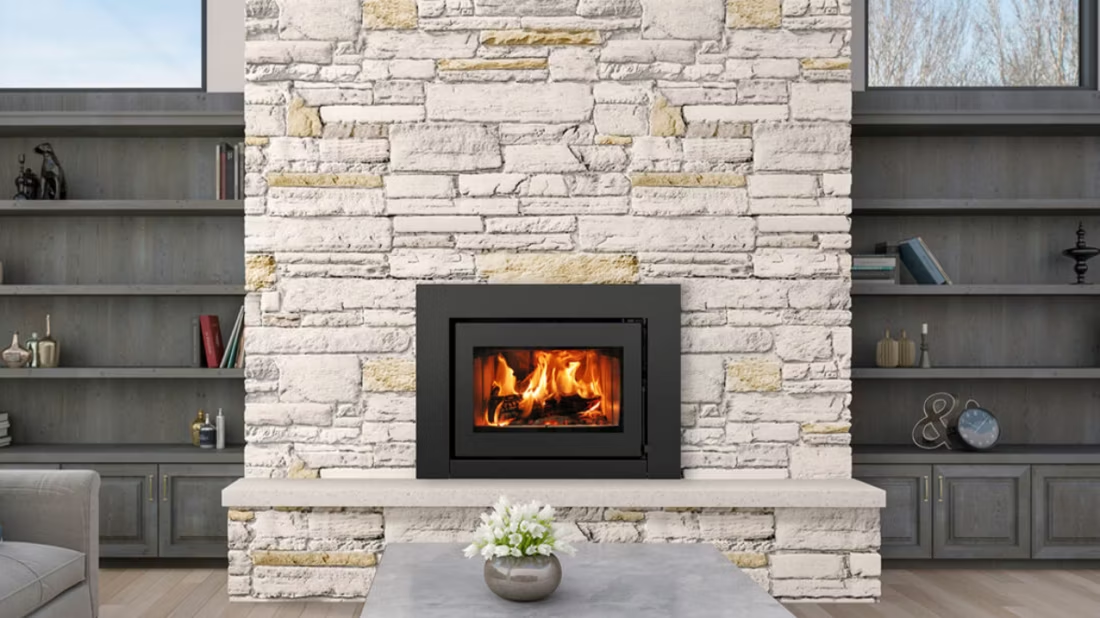
Four fuels. One honest answer for Gilchrist County.
Three steps. No salesperson until you're ready.
Tell us about your project
Your zip code, your situation, and the fuel you're leaning toward—or let the answers point you to one.
See what's actually available
The brands dealers within 100 miles genuinely carry—real options, never a catalog mirage.
Get your dealer & Project Guide
A trusted local dealer, plus the free Project Guide & Parts List that names every component of the job.
Frequently Asked Questions
Which fuel works best for a fireplace in Gilchrist County?
It depends on how you plan to use it. With winter lows averaging around 44°F and only a light winter heating season each year, few Gilchrist County homes need a fireplace as a primary heat source—this isn't Duluth, Minnesota, where a stove has to carry a household through months of subzero nights. Propane gas fireplaces are the most popular choice for homeowners who want instant, no-mess warmth on the occasional cold front, since there's no natural gas utility serving the county and propane delivery is the standard. Wood stoves and inserts still have a following, especially among homeowners with land and access to local oak and pine for splitting—it's more about atmosphere and self-sufficiency than necessity. Pellet stoves are a smaller niche here; when they're installed, owners usually source bags from Lignetics or Hamer Pellet Fuel through farm-supply stores in Trenton. Electric fireplaces are an easy fit for a short heating season—no venting, no fuel storage, and enough ambiance for a 45-degree evening.
Do I need a permit to install a fireplace in Gilchrist County?
Generally yes. Gilchrist County's Building Department requires permits for new wood stoves, wood inserts, gas (propane) fireplaces, gas inserts, and pellet stoves—anything that involves new venting, a chimney, or a gas line. Propane installations also typically require sign-off from a licensed gas installer for the tank and line connection. Electric fireplaces are usually permit-free for plug-in units, though a built-in electric fireplace that needs a new circuit will require an electrical permit. Because the county's retail hearth market is thin, most homeowners lean on their installer—whether based in Trenton or driving in from Gainesville—to handle the permit paperwork rather than filing it themselves.
Are there air quality restrictions on wood burning in Gilchrist County?
No—Gilchrist County isn't a non-attainment area and doesn't have a wood-burning curtailment program the way some Western counties do. The county's rural, low-density character, with a population well under 3,000, means smoke from an occasional wood fire in Trenton or Bell rarely becomes a neighborhood issue. Florida's agricultural burning rules apply separately to field and land-clearing fires, which are unrelated to residential fireplaces and stoves.
Can one local retailer handle all four fuel types in Gilchrist County?
Given the county's small population, it's unlikely you'll find a single Gilchrist County storefront stocking wood, gas, pellet, and electric units side by side—the local market simply isn't large enough to support that kind of showroom. Homeowners in Trenton, Bell, and Fanning Springs typically end up working with a multi-fuel dealer based in Gainesville or Lake City, both about a 30-45 minute drive, where you can compare all four fuel types in person before deciding what fits your home and how you'll actually use it.
How does fireplace service work in a rural county like Gilchrist?
Most chimney sweeps and propane or pellet technicians who work in Gilchrist County are based in Gainesville, Lake City, or occasionally High Springs, and they build routes out to Trenton, Bell, and Fanning Springs rather than keeping a permanent local shop. Because the heating season here is short, service calls cluster in the fall—scheduling your annual chimney sweep or propane appliance check in September or October, before the first cold front, is easier than trying to book someone in December. Expect a modest trip charge for the drive out from a regional shop.
What's the typical cost range for fireplace installation across fuel types in Gilchrist County?
Costs here tend to run lower than in colder climates, since venting and insulation demands are lighter. Wood stove or insert installation: roughly $3,500–$7,000 for a typical setup. Propane gas fireplace, insert, or stove: about $3,000–$8,000, depending on whether a new propane line or tank is needed. Pellet stove or insert: around $3,500–$6,000. Electric fireplace: $200–$2,500 for the unit, with $400–$1,000 in labor for anything beyond a plug-in install. See the county + fuel pages above for cost detail tied to specific dealers.
What is an in-home preview and do I need one?
It's a visit where a hearth professional measures your space, confirms the model you picked actually works in your home, and walks the specs—framing, gas line, venting, finish work—before anything is ordered. Some details you just can't know until you see the house. Never make a down payment without one; it's the single most-skipped step that burns buyers.
Does a fireplace add value to my home?
On average, a fireplace adds back to the home about the same amount you spent installing it. Add the monthly savings from heating the rooms you actually use instead of the whole house—often hundreds of dollars a year—and the value case is strong before you even count what a fire does for how your family uses the room.
Can a fireplace actually lower my heating bill?
Yes—by creating a comfort zone. A furnace heats every square foot of the house just to warm the one room you're in; a gas fireplace on low burns roughly a sixth of the gas a typical furnace does. Set the furnace around 55–60 degrees as a baseline, then heat the rooms your family actually uses. Families who heat this way commonly save $20–$60 a month.
Wood, gas, pellet, or electric—how do I choose?
Match the fuel to your life, not the other way around. Wood: lowest fuel cost and total power-outage independence, but you're hauling and stacking. Gas: press a button, set a thermostat, no maintenance to speak of. Pellet: wood economics with automatic feeding, in exchange for weekly cleaning and a need for electricity. Electric: plugs in anywhere with honest supplemental heat. Nobody regrets the fuel that fits how they actually live.
Stove and Fireplace Dealers in Gilchrist County
Listings include WhyFire partner dealers, dealers we have verified as authorized for the brands we recommend, and established local businesses that carry hearth products. Every listing shows which one it is. The ones marked Preferred run on WhyFire's software, so they can show you real pricing and book your appointment right here. No manufacturer pays for placement. How we verify dealers →
Blossman Gas
Asp Pools
Anderson Gas Services Inc
Bush Home Service
Get matched with a Gilchrist County hearth dealer.
Tell us about your project and we'll match you with a trusted local dealer serving Trenton, Bell, or Fanning Springs—plus a free Project Guide & Parts List with the exact parts, vent kit, and dealer recommendation for your home.
Find Your Fireplace →