
Warmth on demand for Gilchrist County's short, mild winters.
With winter lows averaging 44°F and one of the lightest winter heating needs around, Gilchrist County homes rarely need a furnace-grade heat source. An electric fireplace gives you real ambiance and supplemental warmth for the occasional cold front—no chimney, no gas line, no venting. We'll match you with a local dealer who can size and install it correctly.
Every Project Starts From One of These Five Situations
North Central Florida's climate makes electric the practical choice.
Gilchrist County sits along the Suwannee and Santa Fe Rivers in North Central Florida, home to about 2,568 residents spread across Trenton, Bell, Fanning Springs, and unincorporated farmland in between. Climate zone 2A means hot, humid summers and short, mild winters—the average winter low is 44°F, and the county has a very light winter heating need overall. Compare that to a place like Duluth, Minnesota, where homes face a winter heating load nearly ten times as heavy, and it's clear why Gilchrist County has never built a wood- or gas-heat culture the way colder regions have. Most winters here bring a handful of nights in the 20s and 30s, not weeks of sustained cold.
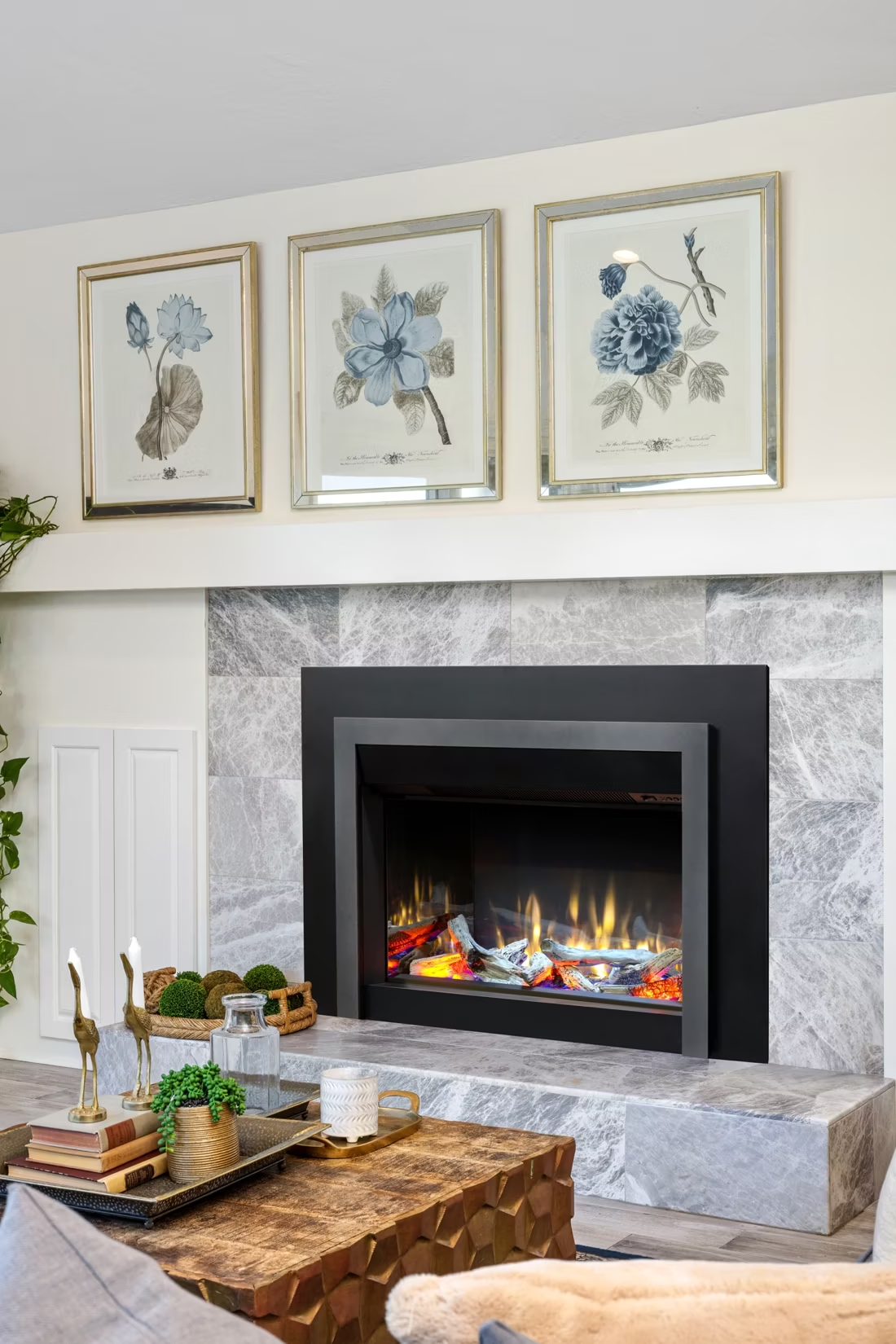
That's exactly the situation an electric fireplace is built for. There's no combustion, no flue, and no clearance requirements tied to a chimney, so a unit can go into nearly any room—including the manufactured and modular homes common throughout rural Gilchrist County, where retrofitting a masonry chimney or gas line isn't practical. Electric units run on a standard or dedicated circuit, throw real supplemental heat on the nights that call for it, and give you the glow and ambiance of a fireplace the other 350 days a year when heat isn't needed at all.
Three steps. No salesperson until you're ready.
Tell us about your project
Your zip code, your situation, and the fuel you're leaning toward—or let the answers point you to one.
See what's actually available
The brands dealers within 100 miles genuinely carry—real options, never a catalog mirage.
Get your dealer & Project Guide
A trusted local dealer, plus the free Project Guide & Parts List that names every component of the job.
Frequently Asked Questions
How much does an electric fireplace installation cost in Gilchrist County?
Plug-in electric inserts and freestanding units that use a standard household outlet typically run $300 to $900 installed, since there's no wiring work involved beyond placement. Built-in linear or wall-mount models that require a dedicated 120V or 240V circuit run higher, usually $1,500 to $3,500, once an electrician runs the circuit and a local dealer handles the surround or mantel finish work. Homes in rural parts of the county—Bell, Fanning Springs, the areas outside Trenton—may see a small trip charge added if the installer is traveling a distance, since the county's dealer network is thin given the small population.
Will an electric fireplace actually heat my home, or is it just for looks?
Most electric fireplaces put out 4,000 to 5,000 BTUs on the heat setting, which is enough to comfortably warm a single room—a living room or den—on the cold nights Gilchrist County actually gets, without needing to run central heat for the whole house. Given the average winter low here is only 44°F and cold snaps into the 20s are the exception rather than the rule, that's typically plenty. Homeowners looking for whole-home heat should still rely on their existing HVAC system; the electric fireplace is best thought of as zone heat for the room you're in, plus year-round ambiance with the heater switched off.
Do I need a permit to install an electric fireplace in Gilchrist County?
A simple plug-in electric insert or freestanding unit generally doesn't require a permit since no new wiring or structural work is involved. Built-in units that need a new dedicated circuit do require an electrical permit through the Gilchrist County Building Department, and the work should be pulled by a licensed electrician regardless of whether you go through a hearth dealer or a standalone contractor. Local dealers who install electric fireplaces regularly in the county typically coordinate this permit as part of the job.
What's the difference between an electric fireplace, insert, and stove?
An electric fireplace is usually a wall-mount or built-in unit designed to look framed into a wall, often with a linear, modern profile. An electric insert is sized to slide into an existing masonry or wood-burning fireplace opening, which is a common retrofit for older Gilchrist County homes with a fireplace that's rarely used for actual wood fires. An electric stove is a freestanding cabinet-style unit that mimics a traditional wood stove's look and can sit anywhere in a room, including manufactured homes without a fireplace opening at all. For most rural Gilchrist County properties without an existing chimney, the freestanding stove or wall-mount fireplace is the simpler retrofit.
Is electric a good fit for manufactured and modular homes?
Yes, and it's one of the more common installs local dealers see in Gilchrist County given how many manufactured and modular homes are spread across Bell, Fanning Springs, and the unincorporated county. Electric units don't require the roof penetration, clearance-to-combustibles planning, or structural chimney support that wood or gas installs need, which matters in homes with limited attic access or lighter-frame construction. A licensed electrician confirms the panel has capacity for a dedicated circuit if you're going with a built-in model, and installation is typically a one-day job.
Wood is common locally—why would I choose electric instead?
Gilchrist County has plenty of oak, pine, and even some mahogany for those who want to burn wood, and a real wood-heat tradition does exist in the more rural parts of the county. But with such a light winter heating need and winter lows averaging in the mid-40s, most homeowners here don't need—or want—the chimney maintenance, ash cleanup, and creosote buildup that come with a wood-burning setup for so few cold nights. Electric gives you the visual and ambiance of a fire without the upkeep, which is why it's become the standard choice for homeowners who want a fireplace primarily for atmosphere rather than as a heating necessity.
What happens to my electric fireplace during a power outage?
It won't run—electric fireplaces have no battery backup and go dark the moment the power does, which matters in a county that sits within the North Florida hurricane and severe-storm corridor. If backup heat during outages is a real priority for your household, a wood stove or a gas unit with a battery-backed ignition system is the more resilient choice. Most Gilchrist County homeowners we talk to treat the electric fireplace as a daily-use ambiance and supplemental-heat feature, not emergency heat, and that's a reasonable way to think about it given how mild the local winters run.
What size electric fireplace do I need for my Gilchrist County home?
For most living rooms and dens in the 200 to 400 square foot range, a 30- to 50-inch wall-mount or insert unit rated around 1,500 watts (roughly 5,000 BTUs) is enough to notice real warmth. Larger open-concept spaces common in newer Gilchrist County construction may call for a 60-inch-plus linear unit or two smaller units in different zones. Because the heating load here is light to begin with, oversizing isn't the risk it is with wood or gas—the bigger factor is usually matching the unit's width to your wall or existing fireplace opening, which a local dealer can measure during an in-home visit.
Electric vs. gas—which makes more sense for my home?
Gas gives you a more realistic flame and higher heat output, but most of rural Gilchrist County runs on propane rather than piped natural gas, which means a tank installation and periodic refills add cost and logistics that electric simply avoids. Electric units plug into existing household power (or a new dedicated circuit for built-ins), need no fuel deliveries, and have no combustion byproducts to vent—a real advantage in a hot, humid climate zone like 2A where sealed indoor air quality matters. For homeowners who want flame and heat with minimal ongoing hassle and who aren't relying on the fireplace as a primary heat source, electric is usually the simpler, lower-maintenance route.
Does an electric fireplace need a vent or chimney?
No—that's its superpower. An electric fireplace needs a wall and an outlet, period. No vent pipe, no gas line, no clearances to design around, which is why it works in bedrooms, offices, apartments, and walls where venting a gas or wood unit would be impractical or impossible. Installation is typically the simplest and least expensive of any fireplace type.
Do electric fireplaces actually produce heat?
Yes—most put out around 4,800–5,000 BTUs from a standard outlet, which comfortably warms a bedroom, office, or den as a comfort-zone heater. What they won't do is carry a whole house the way wood, gas, or pellet can. Think of electric as ambiance-first with honest supplemental heat: flames on with no heat in July, flames plus warmth in January.
How much should I budget for a fireplace?
For an average home—covering the fireplace, the vent pipe, and basic installation—a budget between $3,900 and $5,500 gives you a lot of options across wood, gas, and pellet. By the time you add finish work, gas line, and electrical, the average complete installation lands between $5,000 and $12,000 all-in. In a remodel or new build, a good rule is to put about 2.5% of the total project cost toward the fireplace.
Can a fireplace actually lower my heating bill?
Yes—by creating a comfort zone. A furnace heats every square foot of the house just to warm the one room you're in; a gas fireplace on low burns roughly a sixth of the gas a typical furnace does. Set the furnace around 55–60 degrees as a baseline, then heat the rooms your family actually uses. Families who heat this way commonly save $20–$60 a month.
Find your electric fireplace in Gilchrist County.
Tell us about your home and we'll put together a free Project Guide & Parts List—the right electric unit, the exact parts, and a trusted local Gilchrist County dealer to install it.
Find Your Fireplace →