
Keep Your Family Warm and Safe—No Matter What
Gainesville winters rarely call for supplemental heat, but a wood-burning fireplace or stove still has a place here—for ambiance, for the occasional cold snap, or for a second home up north. We'll match you with a local dealer who can tell you honestly whether it makes sense for your house.
Every Project Starts From One of These Five Situations
Gainesville's mild winters make wood heat optional, not essential.
Gainesville sits in climate zone 2A at just 171 feet of elevation, with an average winter low around 43°F and a light winter heating load of roughly 1,139 (a measure of how much heat a home needs over the year) a year. For comparison, a place like Duluth, Minnesota racks up more than 9,000 on that same scale—Gainesville households need a fraction of the seasonal heat that a true cold-climate home does. Freezes happen a handful of nights a winter; sustained cold snaps that would justify a wood stove as primary heat almost never do.
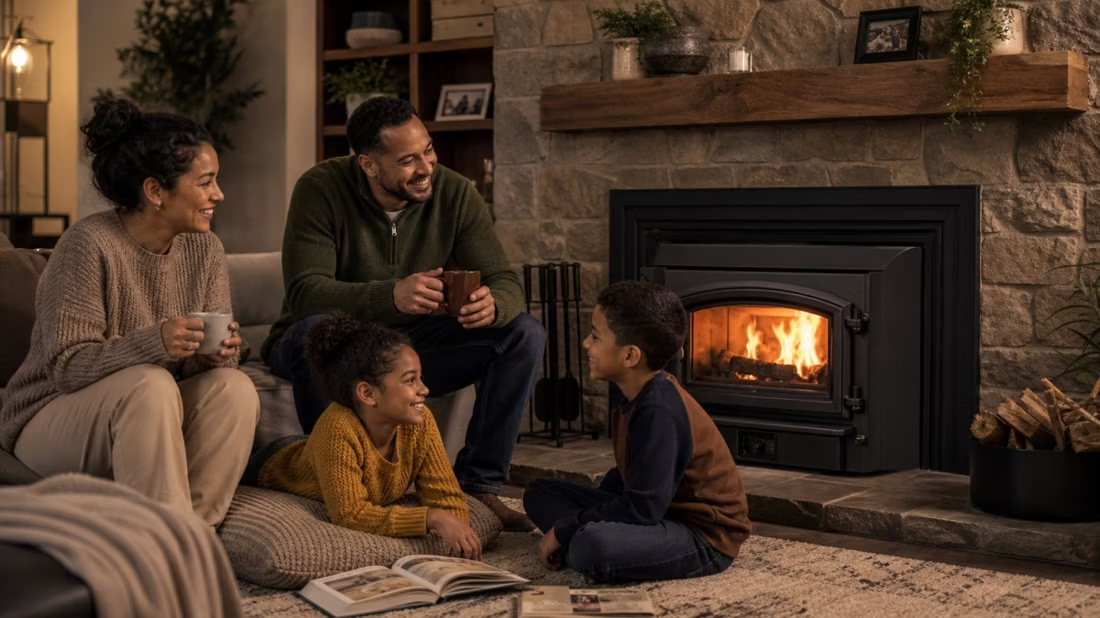
That's why wood-burning fireplaces here are mostly a lifestyle choice rather than a heating necessity. Older homes near the Duckpond Historic District and other established Gainesville neighborhoods often have existing masonry fireplaces that homeowners want to keep functional for the handful of genuinely chilly nights each January, or simply for the atmosphere. Local hardwoods—oak and pine are the most common, with some mahogany available regionally—burn well for occasional use. With no air quality non-attainment issues or winter inversion concerns in Alachua County, there's no local burn-ban culture working against you either. This is a page for people who want a real fire sometimes, not a household relying on wood to survive the season.
Three steps. No salesperson until you're ready.
Tell us about your project
Your zip code, your situation, and the fuel you're leaning toward—or let the answers point you to one.
See what's actually available
The brands dealers within 100 miles genuinely carry—real options, never a catalog mirage.
Get your dealer & Project Guide
A trusted local dealer, plus the free Project Guide & Parts List that names every component of the job.
Frequently Asked Questions
Does a wood stove actually make sense in Gainesville's climate?
For most Gainesville homes, no—not as a primary heat source. With only a light winter heating load of roughly 1,139 (a measure of how much heat a home needs over the year) and average winter lows around 43°F, a wood stove would sit unused most of the year. Where it does make sense is for homeowners who want an existing masonry fireplace to actually work, who like the ambiance of a real fire on the occasional 30-degree night, or who split time between Gainesville and a colder-climate second home where a stove logs real use. A local hearth dealer can help you think through whether a stove, an insert, or simply a well-maintained open fireplace fits your actual usage pattern.
How much does a wood-burning fireplace or insert cost to install in Gainesville?
Because wood heat is a niche request here rather than a standard build-out, pricing varies more by project scope than by any local baseline. A basic freestanding wood stove with straightforward Class A chimney venting typically lands in the low-to-mid thousands; converting an existing masonry fireplace to a wood insert is usually less involved since the chimney already exists. Homes without any existing masonry or flue will see costs climb once full chimney construction is added. A local installer can give you a firm number after seeing your existing chase or fireplace opening—ask for that before assuming a number from a national average.
What firewood species are available locally?
Oak and pine are the two most commonly available firewoods around Gainesville and Alachua County, with oak preferred for its longer, hotter burn and pine typically used as a faster-catching supplement or kindling. Mahogany shows up occasionally through regional suppliers as a denser, slower-burning option. Because wood heat isn't a high-volume business here the way it is in colder states, expect fewer dedicated firewood delivery services than you'd find further north—many buyers source smaller loads from tree services, landscaping companies, or seasonal roadside sellers rather than a dedicated cordwood operation.
Do I need a permit to install a wood-burning fireplace or stove in Gainesville?
Yes—any new wood-burning appliance, chimney, or masonry fireplace modification requires a building permit, either through the City of Gainesville Building Inspection Division within city limits or Alachua County Growth Management for unincorporated areas. Because these installs are less common locally, it's worth confirming your contractor has actually pulled wood-stove permits before, since the clearance and venting requirements differ from the gas and electric work most local installers handle far more frequently.
Are there air quality restrictions on wood burning in Gainesville?
No—Alachua County has no non-attainment status, winter inversion pattern, or wildfire smoke concerns that would trigger burn curtailment periods, unlike parts of the West Coast or Mountain West. If you install a wood-burning appliance here, you won't be dealing with yellow-curtailment-style burn bans. That said, any new stove should still meet current EPA 2020 NSPS emissions standards, which is standard practice for any certified installer regardless of local air quality conditions.
Wood vs. gas vs. electric—what actually makes sense for a Gainesville home?
For most Gainesville households, gas or electric is the more practical everyday choice—natural gas and propane fireplaces deliver instant, consistent heat without wood storage or ash cleanup, and electric fireplaces (running on Gainesville Regional Utilities, Duke Energy Florida, or Clay Electric Cooperative service, at roughly 14.9 to 16.6 cents per kWh) install for a fraction of the cost with zero venting required. Wood earns its place when the goal is a genuine wood fire—the smell, the sound, the ritual—rather than efficient heat. If you're deciding purely on heating economics, wood is rarely the winner here; if you're deciding on atmosphere, it still has a strong case.
Would a wood stove help during a hurricane-related power outage?
It can, though not in the way it would in a cold climate. Gainesville's power outages are driven mainly by hurricanes and tropical storms rather than winter ice, and they tend to hit in warm months when heat isn't the concern—cooling and refrigeration are. A wood stove will keep a room warm and let you boil water or heat food without power, which has real value during a multi-day outage, but it's a secondary benefit here rather than the primary reason to install one. If backup heat during outages is your main driver, ask your local dealer about the appliance's ability to run entirely off-grid, since not every wood stove is designed that way.
I have an old masonry fireplace—should I get an insert, or just use it as-is?
If your Gainesville home has an original masonry fireplace—common in older neighborhoods near downtown and the University of Florida area—an open fireplace is fine for occasional, supervised ambiance fires but is notoriously inefficient, pulling more heated or cooled air up the flue than it produces. A wood insert seals that opening and uses your existing chimney, which is worth considering if you plan to use the fireplace more than a few times a season. For truly occasional use, many Gainesville homeowners simply keep the open masonry fireplace as-is after a chimney inspection confirms it's structurally sound and properly lined.
Where can I buy firewood in Gainesville?
Because wood isn't a primary heat source here, Gainesville doesn't have the dedicated cordwood delivery infrastructure you'd find in a colder market. Local tree services, landscaping companies, and seasonal sellers around Alachua County are the most common sources, typically selling oak and pine by the truckload or partial cord rather than a standardized full cord. Expect to plan ahead in fall, since supply tightens up as the handful of genuinely cold nights approach and demand briefly spikes.
Why is my open fireplace making my house colder?
Open fireplaces suck—literally. As the fire burns, it consumes air your furnace already paid to heat and pulls it out through the chimney, so the house is actually colder after the fire goes out than before you lit it. An insert fixes this: it seals the chimney, puts fixed glass across the front, and turns that hole in your house into a real heat source.
Why won't my new wood stove get going like my old one?
New wood stoves are 70%+ efficient, so far less heat goes up the flue—which also means less draft to get a fire established. The rule: build a genuinely hot fire for about 45 minutes before you choke it down. Skip that and you get smoke in the room, creosote in the chimney, and a fire that never takes off. Most performance complaints trace straight back to this.
What is an in-home preview and do I need one?
It's a visit where a hearth professional measures your space, confirms the model you picked actually works in your home, and walks the specs—framing, gas line, venting, finish work—before anything is ordered. Some details you just can't know until you see the house. Never make a down payment without one; it's the single most-skipped step that burns buyers.
Can a fireplace actually lower my heating bill?
Yes—by creating a comfort zone. A furnace heats every square foot of the house just to warm the one room you're in; a gas fireplace on low burns roughly a sixth of the gas a typical furnace does. Set the furnace around 55–60 degrees as a baseline, then heat the rooms your family actually uses. Families who heat this way commonly save $20–$60 a month.
Nearby Dealers
Hearth shops serving Gainesville and the surrounding area.
Find your wood fireplace option in Gainesville.
Tell us about your home and how you'd actually use a wood fire, and we'll match you with a trusted local dealer plus a free Project Guide & Parts List—including the vent kit—sized for your space in Gainesville.
Find Your Fireplace →