
The Right Hearth for Alachua County's Short, Mild Winters.
Wood, gas, pellet, and electric fireplace resources for Gainesville, Alachua, High Springs, Newberry, Archer, Hawthorne, Waldo, Micanopy, and every community in between. Find the right unit for occasional cold fronts and everyday ambiance, and connect with a trusted local hearth retailer.
Every Project Starts From One of These Five Situations
Mild winters, real demand for hearth style in Alachua County.
Alachua County sits in climate zone 2A with an average winter low of 43°F and just a light, short heating season each year—a fraction of what a place like Duluth, Minnesota logs in a single month. There's no real survival-heating need here. What drives demand is different: cold fronts that push overnight lows into the 20s and 30s a handful of nights each winter, older Gainesville homes with existing masonry wood fireplaces built for ambiance, and homeowners who want a real flame for holidays and gatherings even in a place where furnaces rarely run. Oak, mahogany, and pine are the common local wood species, with live oak and water oak dominant in the hardwood stands around Gainesville and the Santa Fe River corridor.
This hub covers hearth retailers, service technicians, and fuel suppliers across the whole county—Gainesville as the population and retail center, plus Alachua, High Springs, Newberry, Archer, Hawthorne, Waldo, and Micanopy. University-area historic homes near downtown Gainesville often already have a masonry firebox that just needs a gas log set or insert; newer suburban construction in Newberry and northwest Gainesville tends toward zero-clearance gas or electric units with no chimney at all. Pick your fuel below to see local dealers, typical installation costs, and what actually fits a low-heating-demand climate like this one.
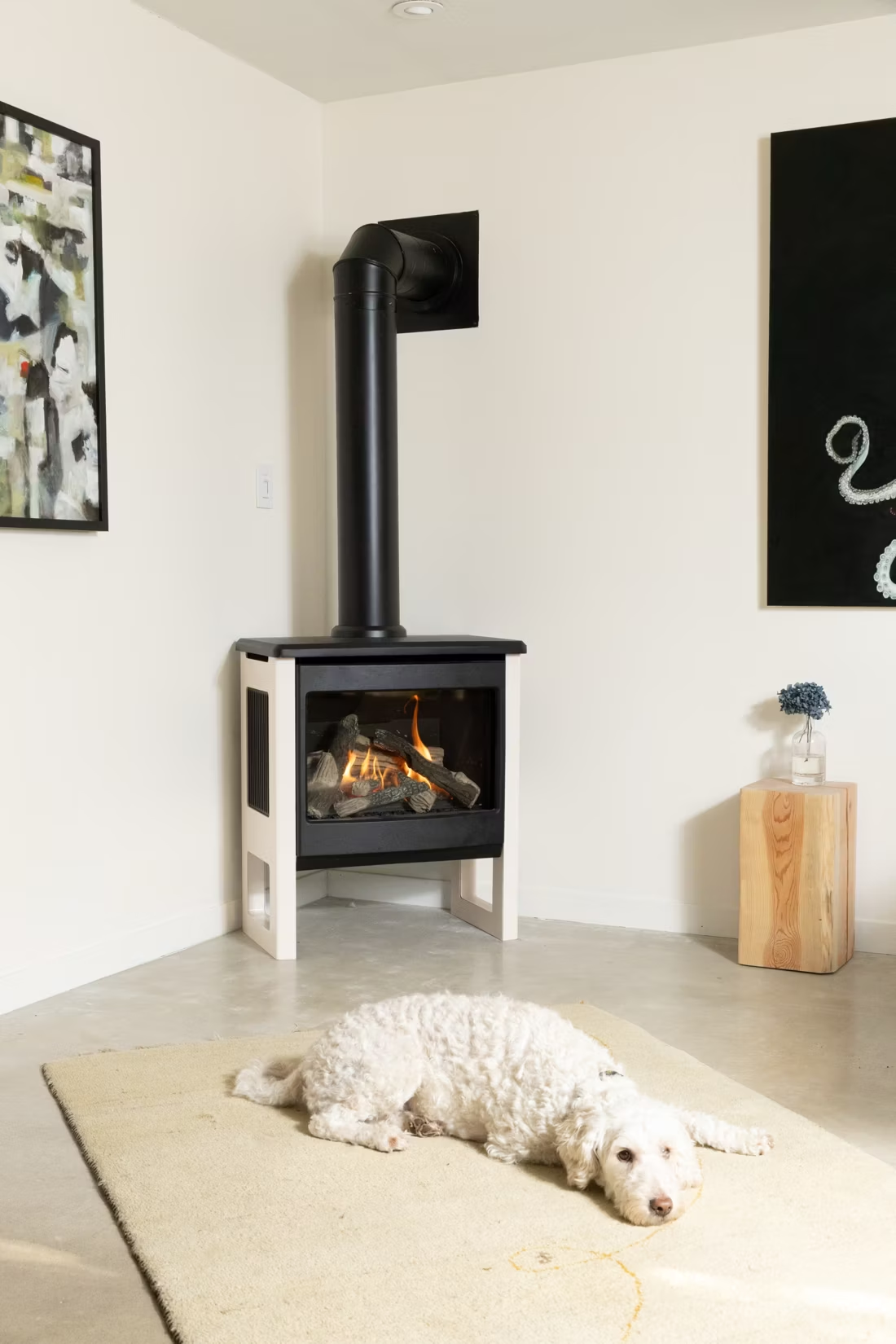
Four fuels. One honest answer for Alachua County.
Three steps. No salesperson until you're ready.
Tell us about your project
Your zip code, your situation, and the fuel you're leaning toward—or let the answers point you to one.
See what's actually available
The brands dealers within 100 miles genuinely carry—real options, never a catalog mirage.
Get your dealer & Project Guide
A trusted local dealer, plus the free Project Guide & Parts List that names every component of the job.
Frequently Asked Questions
Which fuel works best in Alachua County?
It depends on the home and how you use it, since heating load isn't really the deciding factor here—the heating season here is light compared to almost anywhere with a real winter. Wood suits homes with an existing masonry firebox, especially older Gainesville houses near downtown or the university; oak and pine are the locally available species and a wood fire still makes sense for the handful of genuinely cold nights each year. Gas is the most popular convenience choice—a gas log set or zero-clearance gas fireplace lights instantly for occasional use and doesn't require chimney maintenance between cold fronts; Gainesville Regional Utilities serves gas within city limits, with propane common outside it. Pellet stoves are a smaller niche here, mostly in rural properties around Newberry or Archer where a homeowner wants supplemental heat without a chimney; Lignetics and Hamer Pellet Fuel are both distributed regionally. Electric fireplaces have real traction in Alachua County precisely because the climate doesn't demand a high-output heat source—no venting, easy retrofit into a condo or apartment near UF, and enough ambiance for a county where a fire is more about atmosphere than survival.
Do I need a permit to install a fireplace in Alachua County?
In most cases, yes. Within Gainesville city limits, permits for new wood stoves, gas fireplaces, gas inserts, gas log sets, and pellet stoves go through the City of Gainesville Building Inspection Division; in the unincorporated county—High Springs, Newberry, Archer, Hawthorne, and the rural areas—permits are issued through the Alachua County Building Department. Gas installations require a separate gas line permit and a licensed gas fitter for the connection work, regardless of jurisdiction. Electric fireplaces that plug into an existing outlet typically don't need a permit; built-in electric units that require new wiring or a dedicated circuit do. Most local hearth retailers handle permitting as part of the installation, so it's rarely something a homeowner has to file directly.
Are there air quality or burn restrictions on wood-burning fireplaces in Alachua County?
No—Alachua County has no winter inversion problem, no non-attainment designation, and no curtailment program like the ones you'd find in a basin climate out West. There are no mandatory or voluntary no-burn days tied to wood smoke here. The practical issues homeowners run into are different: Florida's humidity means stored firewood needs to be kept elevated off the ground and covered, and unused chimneys are prone to wasp nests, bird nests, and occasional squirrel activity between burns—both worth checking before lighting a fire that's been dormant since last winter's cold front. Some HOA communities in newer Gainesville and Newberry subdivisions do restrict wood-burning fireplaces separately from any county or state rule, so it's worth checking your covenants if you're in a planned development.
Can one local hearth retailer handle all four fuel types?
Several Gainesville-area retailers carry three or four fuel types, which is useful if you're not sure which direction fits your home. A full-line dealer near Gainesville's Butler Plaza corridor might carry wood, gas, and electric displays side by side, letting you compare a masonry wood insert against a zero-clearance gas unit in the showroom. Smaller shops closer to High Springs or Newberry tend to specialize—often gas and electric only, since that's what most of their customer base actually installs—while firewood and pellet suppliers are usually separate businesses from the retailers who sell and install units. If you're cross-shopping fuels, look for a retailer that explicitly lists all four on its site rather than assuming a hearth shop stocks everything.
How does installation and service work outside Gainesville—in High Springs, Newberry, Archer, or Micanopy?
Most hearth retailers and service technicians covering Alachua County are based in or near Gainesville and drive out to the smaller towns for both installs and annual service—High Springs and Newberry to the northwest, Archer and Micanopy to the south, Hawthorne and Waldo to the east. Expect a modest travel fee for service calls outside the Gainesville metro area, typically in the $40–$75 range depending on distance. Because the heating season here is short, service demand spikes in October and November as the first real cold fronts approach—scheduling a chimney inspection or gas unit check before then, rather than waiting for a cold snap in January, generally gets you a faster appointment.
What's the typical cost range for fireplace installation across all fuel types in Alachua County?
Costs run lower here than in cold-climate markets, partly because installations are simpler without deep-freeze venting requirements. Wood stove or insert installation: $3,500–$7,500 for a typical retrofit into an existing masonry firebox, more if new chimney work is needed. Gas fireplace, insert, or gas log set: $2,500–$8,000 depending on whether it's a simple log set conversion or a full gas line run to a new location. Pellet stove or insert: $4,000–$6,500 for a typical install, on the lower end of national ranges given the smaller market here. Electric fireplace: $200–$2,500 for the unit itself, plus $300–$1,000 in labor for anything beyond a plug-and-play wall unit, such as a built-in with new wiring. For details tied to a specific fuel, see the county + fuel pages above.
Can I install a fireplace myself?
If you're putting a fire in your house on purpose, it's best to work with an expert. Unless you're genuinely experienced in framing, gas line, vent pipe, and the national code on clearances to combustibles, have a professional do it—and ideally the same company that sells you the fireplace, so warranty, service, and liability all live under one roof.
Does a fireplace add value to my home?
On average, a fireplace adds back to the home about the same amount you spent installing it. Add the monthly savings from heating the rooms you actually use instead of the whole house—often hundreds of dollars a year—and the value case is strong before you even count what a fire does for how your family uses the room.
How much should I budget for a fireplace?
For an average home—covering the fireplace, the vent pipe, and basic installation—a budget between $3,900 and $5,500 gives you a lot of options across wood, gas, and pellet. By the time you add finish work, gas line, and electrical, the average complete installation lands between $5,000 and $12,000 all-in. In a remodel or new build, a good rule is to put about 2.5% of the total project cost toward the fireplace.
What is an in-home preview and do I need one?
It's a visit where a hearth professional measures your space, confirms the model you picked actually works in your home, and walks the specs—framing, gas line, venting, finish work—before anything is ordered. Some details you just can't know until you see the house. Never make a down payment without one; it's the single most-skipped step that burns buyers.
Stove and Fireplace Dealers in Alachua County
Listings include WhyFire partner dealers, dealers we have verified as authorized for the brands we recommend, and established local businesses that carry hearth products. Every listing shows which one it is. The ones marked Preferred run on WhyFire's software, so they can show you real pricing and book your appointment right here. No manufacturer pays for placement. How we verify dealers →
Blossman Gas
Asp Pools
Premier Gas & Grills
Jax Outdoor Kitchens
Anderson Gas Services Inc
Jacksonville Chimney Pros
Get Matched With a Local Alachua County Hearth Dealer.
Tell us about your home and fuel preference, and we'll match you with a trusted local dealer and send a free Project Guide & Parts List—the exact parts, including venting, for your project in Gainesville or anywhere else in Alachua County.
Find Your Fireplace →