
Gas Fireplace Warmth for Gainesville's Mild Winters.
North Florida doesn't need a furnace, but a real flame still matters on the nights the temperature drops into the 30s. Find the right gas fireplace or insert and connect with a trusted local dealer.
Every Project Starts From One of These Five Situations
Instant warmth for North Florida's mild winters.
Gainesville sits in climate zone 2A at just 171 feet of elevation, with an average winter low around 43°F and only about 1,139 heating degree days a year—a fraction of what a city like Duluth, MN logs in a single January. That's why wood stoves and pellet stoves barely register here; they're built for climates that need sustained heat output for months at a time, not for the handful of freeze-warning nights Alachua County sees each winter. Gas, on the other hand, fits Gainesville well: instant on, instant off, no fuel to store in a humid climate where firewood invites termites and mildew.
Inside Gainesville city limits, Gainesville Regional Utilities (GRU) operates the local natural gas system, so many homes in zip codes like 32601, 32603, and 32605 already have a gas line at the meter. Outside GRU's service territory—including areas served by Duke Energy Florida and Clay Electric Cooperative, both electric-only utilities—propane is the standard fuel for a gas fireplace, supplied from a small buried or above-ground tank. Either way, a direct-vent gas fireplace or insert gives Gainesville homeowners real flame and supplemental zone heat for cold snaps, without the upkeep a wood-burning setup would require in this climate.
Three steps. No salesperson until you're ready.
Tell us about your project
Your zip code, your situation, and the fuel you're leaning toward—or let the answers point you to one.
See what's actually available
The brands dealers within 100 miles genuinely carry—real options, never a catalog mirage.
Get your dealer & Project Guide
A trusted local dealer, plus the free Project Guide & Parts List that names every component of the job.
Frequently Asked Questions
How much does a gas fireplace installation cost in Gainesville?
Most gas fireplace and insert installations in Gainesville run roughly $3,500 to $8,500, depending on the unit and the venting path. A gas insert into an existing masonry fireplace with a GRU natural gas line already nearby tends to land on the lower end. A new direct-vent gas fireplace built into a wall—common in newer Haile Plantation or Tioga-area construction—costs more once framing and venting are added. Homes outside GRU's natural gas footprint that need a new propane tank and line run typically land at the higher end of that range. A local installer can give you a firm number after seeing the space.
Can I convert my existing wood fireplace to gas?
Yes, and it's a common project in Gainesville's older neighborhoods—the Duckpond, Historic Northeast, and other early-1900s pockets have masonry fireplaces that were built for a colder era and rarely get used for actual wood fires anymore. A gas log set or gas insert can go into that existing chimney, often with a stainless liner, giving you real flame without hauling and storing firewood in Florida's humidity. Cost depends on whether the home already has a gas line nearby (lower end) or needs new gas piping run from the street or a propane tank installed (higher end).
Do I need natural gas, or is propane the standard here?
It depends on where in Alachua County you live. Inside much of the city of Gainesville, Gainesville Regional Utilities runs a natural gas distribution system, so homes on that grid can tie a fireplace directly into an existing gas line. Outside GRU's service area—including many areas served by Duke Energy Florida or Clay Electric Cooperative, which provide electricity but not gas—propane is the standard choice, delivered and stored in a small tank on the property. Most gas fireplace models can run on either fuel with the correct orifice, so the choice usually comes down to what's already at your address, not the fireplace itself.
Will my gas fireplace work during a power outage?
This matters more in Gainesville than the mild winters might suggest, because hurricane season (June through November) is the more common cause of extended outages here, not cold weather. Gas fireplaces with IPI (intermittent pilot ignition) include a battery backup that keeps the unit operable when the grid goes down—just remember to swap the batteries periodically. Valor's gas fireplaces take a different approach: the pilot's thermocouple generates its own electricity, so there's no battery to forget. For a household that's lost power for days after a named storm, either option beats having zero backup heat or light source in the living room.
What's the difference between a gas fireplace, gas insert, and gas stove?
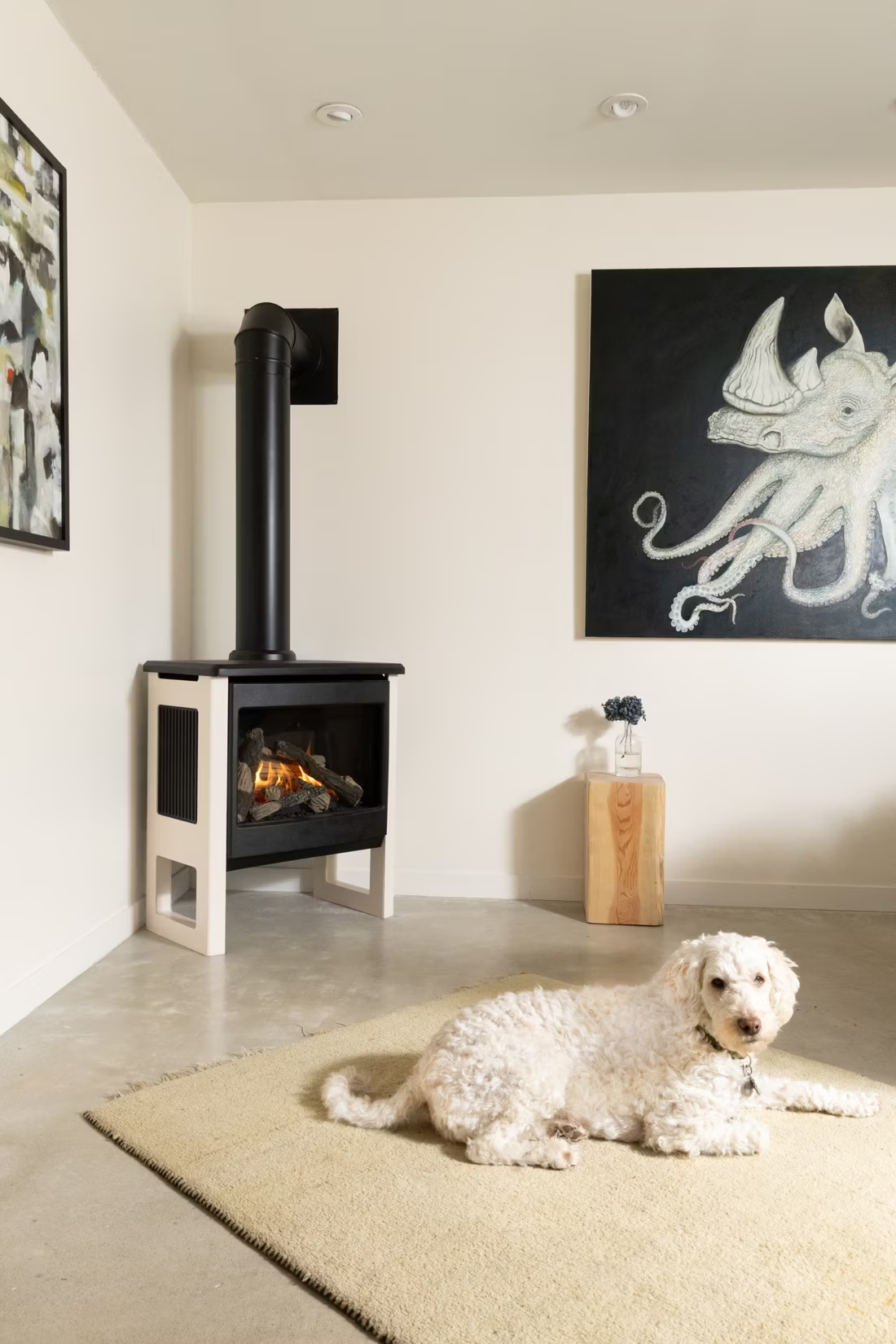
A gas fireplace is a fully built-in unit framed into a wall—the typical choice for newer subdivisions around Gainesville like Tioga or Jonesville where there's no existing masonry fireplace. A gas insert drops into an existing wood-burning fireplace opening, which suits the older homes near downtown and the university area. A gas stove is a freestanding cabinet-style unit that sits on the floor and vents like a fireplace but doesn't require a fireplace opening at all—a good fit for a room that never had a hearth. Which one makes sense usually comes down to whether you're starting from an empty wall or an existing chimney.
Do I need a permit to install a gas fireplace in Gainesville?
Yes. Inside city limits, the City of Gainesville Building Department requires a permit for the appliance installation, and the gas line work itself has to be pulled by a licensed gas contractor—that's true whether you're on GRU natural gas or propane. Outside city limits, the Alachua County Building Department handles the same review. Most established hearth dealers coordinate the mechanical permit, the gas line inspection, and the venting sign-off as one package, so you're not left juggling separate trades and separate inspections.
Should I get a vented or vent-free gas fireplace in Florida's humidity?
Vented, direct-vent units are the better call in Gainesville. Vent-free (unvented) gas fireplaces release combustion byproducts—including water vapor—directly into the room, and Florida's already-humid air doesn't need the extra moisture load. Florida code permits vent-free units under specific room-size and ventilation rules, but most local dealers steer homeowners toward direct-vent models instead, since they pull combustion air from outside and exhaust it back outside through a sealed pipe. You get a real flame and real heat without adding to indoor humidity or condensation risk.
How often should my gas fireplace be serviced?
Plan on an annual inspection, ideally before the first cold snap of the season in late fall. A technician checks the burner, pilot assembly, gas connections, and venting, and cleans the glass—a straightforward visit that typically runs $150 to $250. Because Gainesville units see lighter, more occasional use than a fireplace in a colder climate, some homeowners stretch this to every other year, but annual service still catches worn igniters or gasket issues before they turn into a no-heat call on the one night you actually need it.
Gas vs. wood—does wood even make sense in Gainesville?
Not really, and that's fine. With only about 1,139 heating degree days a year and winter lows averaging in the low 40s, Gainesville simply doesn't have the sustained cold that makes a wood stove practical the way it would in, say, Bozeman, MT. Oak and pine are common locally as landscape and building lumber, not as a stocked firewood supply chain, and storing cordwood in Florida's humidity is an invitation for termites and rot. A handful of older homes keep a decorative wood-burning fireplace for occasional use, but for anyone installing new, gas delivers the ambiance and the occasional-cold-snap heat without the maintenance wood would demand in this climate.
What's the difference between an insert and a zero-clearance fireplace?
An insert is a fireplace that slides into a pre-existing wood-burning fireplace—if you don't have one, there's nothing to insert it into. A zero-clearance fireplace is built into a framed wall, which makes it the answer for remodels and new construction. Simple test: existing masonry fireplace means insert; blank or framed wall means zero-clearance.
Is my gas fireplace wasting gas?
If it was installed more than 15 years ago, probably. Older gas fireplaces keep a standing pilot light burning all the time, and that little flame can cost a couple hundred dollars a year. Newer models use pilot-on-demand ignition—the pilot lights only when you use the fireplace and goes out when you turn it off.
How much should I budget for a fireplace?
For an average home—covering the fireplace, the vent pipe, and basic installation—a budget between $3,900 and $5,500 gives you a lot of options across wood, gas, and pellet. By the time you add finish work, gas line, and electrical, the average complete installation lands between $5,000 and $12,000 all-in. In a remodel or new build, a good rule is to put about 2.5% of the total project cost toward the fireplace.
Does a fireplace add value to my home?
On average, a fireplace adds back to the home about the same amount you spent installing it. Add the monthly savings from heating the rooms you actually use instead of the whole house—often hundreds of dollars a year—and the value case is strong before you even count what a fire does for how your family uses the room.
Nearby Dealers
Hearth shops serving Gainesville and the surrounding area.
Find your gas fireplace in Gainesville.
Tell us a bit about your home and whether you're on GRU natural gas or propane, and we'll match you with a trusted local dealer and send over a free Project Guide & Parts List—the exact parts, including the vent kit, for your Gainesville gas fireplace project.
Find Your Fireplace →