
Keep Your Family Warm and Safe—No Matter What
Fort Pierce averages just 404 heating degree days a year and winter lows around 53°F, so wood isn't heating anyone's home here. But if you want a real wood fire for the look, the ritual, or the rare cold snap, we'll connect you with a local dealer who'll tell you straight whether it makes sense for your house.
Every Project Starts From One of These Five Situations
A subtropical coast doesn't need wood heat—but some homeowners still want it anyway.
Fort Pierce sits at 19 feet of elevation on Florida's Treasure Coast, in climate zone 2A, where the AC runs far more months than any furnace ever would. Compare that to a place like Duluth, Minnesota, which racks up more than 9,000 heating degree days a year—Fort Pierce logs about 404. Winter lows here average 53°F, and a hard freeze is a rare, newsworthy event rather than a January Tuesday. In practical terms, that means wood stoves and wood-burning inserts sold as a primary or supplemental heat source almost never make sense in St. Lucie County.
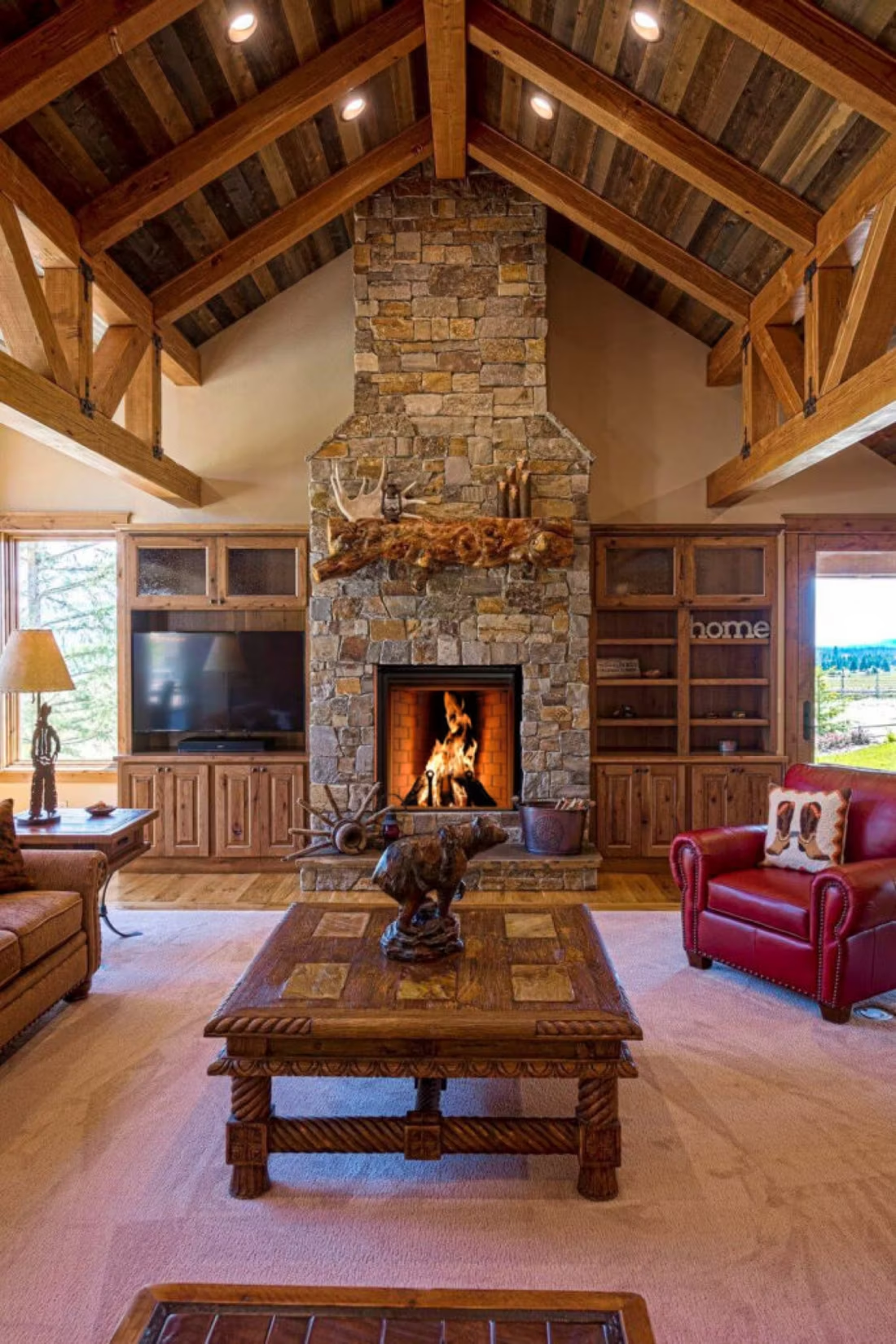
That said, a small number of Fort Pierce homeowners still install or maintain a wood-burning fireplace—usually for the ambiance of a real fire on the handful of nights a year it dips into the 40s, to preserve a masonry fireplace that came with an older riverfront or Indian River Drive home, or because they split time with a colder-climate property and want the same experience here. Local wood, when it's available, tends to come from oak, mahogany, and pine—often from storm-felled trees and land-clearing after hurricane season rather than a commercial firewood industry. If wood is what you want, a local hearth dealer can tell you honestly whether your home and roofline support it, or whether a gas or electric fireplace will get you closer to what you're actually after.
Three steps. No salesperson until you're ready.
Tell us about your project
Your zip code, your situation, and the fuel you're leaning toward—or let the answers point you to one.
See what's actually available
The brands dealers within 100 miles genuinely carry—real options, never a catalog mirage.
Get your dealer & Project Guide
A trusted local dealer, plus the free Project Guide & Parts List that names every component of the job.
Frequently Asked Questions
Does it actually make sense to install a wood stove in Fort Pierce?
For heat, rarely. With only about 404 heating degree days a year and winter lows averaging 53°F, a wood stove will spend most of its life unused—nothing like a stove in Duluth or Fargo that's expected to run daily from November through March. Where it does make sense is aesthetics: a wood-burning fireplace or small stove in a great room, sunroom, or lanai-adjacent space that gets lit a handful of evenings a year when a cold front pushes through. If you're weighing wood purely as a heat source for a Fort Pierce home, gas or electric will almost always serve you better day to day.
How much does a wood fireplace or stove installation cost in Fort Pierce?
Because so few Fort Pierce homes install wood-burning appliances, there isn't a deep local market competing on price the way there is in a place like Buffalo or Bozeman. Expect costs to sit in the same general range as anywhere in the country—roughly $4,000 to $8,000 for a freestanding stove with insulated Class A pipe, more if you're building a full masonry chimney through a barrel-tile or metal roof. Roof penetrations matter more here than elsewhere, since most Fort Pierce homes are built to hurricane-rated roofing standards, and flashing a chimney into that assembly correctly adds labor a generic online calculator won't capture. Get a firm, in-home quote from a local dealer before committing.
What wood species are actually available locally if I install a wood-burning fireplace?
Oak, mahogany, and pine are the species you'll most often find around Fort Pierce, but they typically come from tree removal, land clearing, and post-hurricane cleanup rather than a dedicated firewood industry—St. Lucie County doesn't have the national forest land or commercial cordwood lots you'd find out West. Live oak burns hot and dense and is the closest thing to a premium local hardwood; slash pine is common but burns faster and sootier; ornamental mahogany shows up occasionally from landscaping removals. Most homeowners here source wood informally through tree services or neighbors rather than a regular delivery service.
Do I need a permit for a wood-burning fireplace or chimney in Fort Pierce?
Yes—any new chimney, masonry fireplace, or wood stove installation requires a building permit through the City of Fort Pierce Building Department, or the St. Lucie County Building Division if your address falls outside city limits. Because wood-burning installs are uncommon here, it's worth confirming your contractor has actually pulled this type of permit before, since roof penetration and clearance-to-combustible rules for a hurricane-zone roof assembly are different from what an installer used to standard shingle roofs might expect.
Are there air quality restrictions on wood burning in Fort Pierce?
No—St. Lucie County has no wood smoke air quality concerns on record, no non-attainment status, and no seasonal burn curtailment periods like the winter inversion advisories you'd see in a mountain basin such as Klamath Falls, Oregon. If you do install a wood-burning fireplace, you won't be dealing with the yellow/red curtailment scheduling that governs wood burning in parts of the West. That said, courtesy toward close-set neighbors still matters in Fort Pierce's denser residential zip codes like 34950 and 34982.
I have an old masonry fireplace in my Fort Pierce home—can I still use it?
Many older homes near downtown Fort Pierce and along the Indian River Drive corridor were built with a wood-burning masonry fireplace, even though it was rarely, if ever, needed for heat. If yours hasn't been inspected in years, have a certified chimney sweep check the flue liner, damper, and mortar joints before lighting a fire—Florida's humidity is hard on unused masonry and mortar over decades. Once it's cleared, there's no reason not to use it on the occasional cool December or January evening; just budget for an inspection rather than assuming it's ready to go.
Why don't more Fort Pierce homes have wood heat, compared to colder parts of the country?
It comes down to heating demand. A place like Burlington, Vermont or Fargo, North Dakota needs several tons of heat delivered to a home over a long winter, and wood is a cheap, storm-resilient way to do that. Fort Pierce needs almost none—404 heating degree days a year is a rounding error next to those cities' totals in the thousands. Add in year-round humidity that's hard on stored firewood and masonry, and wood heat simply never developed the infrastructure—dealers, firewood suppliers, chimney sweeps—that it has in colder climates. What you will find plenty of in Fort Pierce is gas and electric fireplace installers, since those fuels fit the climate and the housing stock much better.
Should I get a wood, gas, or electric fireplace for my Fort Pierce home?
For nearly all Fort Pierce homeowners, gas or electric is the more practical choice. A gas fireplace gives you instant flame and real heat output for the rare cold snap without the ash, smoke, or wood storage that Florida's humidity makes a hassle. An electric fireplace is even simpler—no venting, no fuel storage, and it runs on power from either Florida Power & Light or Fort Pierce Utilities Authority depending on your address, at residential rates around 13 to 14 cents per kWh. Wood is worth pursuing only if you specifically want the experience of a real wood fire, have (or want to preserve) an existing masonry fireplace, or are drawn to it for reasons beyond heat.
Where can I get firewood in Fort Pierce if I do install a wood-burning fireplace?
There's no large-scale commercial firewood industry in St. Lucie County the way there is near national forest land out West, so most Fort Pierce homeowners source wood informally—through local tree services after storm cleanup, land-clearing operations, or occasional roadside sellers advertising oak or pine by the truckload or rick. Prices vary widely since there's no established per-cord market rate locally; expect to negotiate directly rather than find a standard delivery service. Given how infrequently a fireplace gets used here, most owners buy small quantities as needed rather than stocking a winter's supply.
What's the difference between an insert and a zero-clearance fireplace?
An insert is a fireplace that slides into a pre-existing wood-burning fireplace—if you don't have one, there's nothing to insert it into. A zero-clearance fireplace is built into a framed wall, which makes it the answer for remodels and new construction. Simple test: existing masonry fireplace means insert; blank or framed wall means zero-clearance.
Why won't my new wood stove get going like my old one?
New wood stoves are 70%+ efficient, so far less heat goes up the flue—which also means less draft to get a fire established. The rule: build a genuinely hot fire for about 45 minutes before you choke it down. Skip that and you get smoke in the room, creosote in the chimney, and a fire that never takes off. Most performance complaints trace straight back to this.
Can a fireplace actually lower my heating bill?
Yes—by creating a comfort zone. A furnace heats every square foot of the house just to warm the one room you're in; a gas fireplace on low burns roughly a sixth of the gas a typical furnace does. Set the furnace around 55–60 degrees as a baseline, then heat the rooms your family actually uses. Families who heat this way commonly save $20–$60 a month.
How much should I budget for a fireplace?
For an average home—covering the fireplace, the vent pipe, and basic installation—a budget between $3,900 and $5,500 gives you a lot of options across wood, gas, and pellet. By the time you add finish work, gas line, and electrical, the average complete installation lands between $5,000 and $12,000 all-in. In a remodel or new build, a good rule is to put about 2.5% of the total project cost toward the fireplace.
Nearby Dealers
Hearth shops serving Fort Pierce and the surrounding area.
Find your wood fireplace in Fort Pierce.
Tell us about your home and what you're after, and we'll match you with a trusted local dealer who'll give you a straight answer on whether wood fits—plus a free Project Guide & Parts List with the exact parts, venting, and recommended installer for your Fort Pierce project.
Find Your Fireplace →