
Find the right fireplace for St. Lucie County's mild winters.
Gas and electric fireplaces are the practical choices across St. Lucie County—from Port St. Lucie to Fort Pierce. Find a trusted local dealer and the right unit for a climate where heating a home is rarely the goal.
Every Project Starts From One of These Five Situations
Ambiance-first heating in St. Lucie County, Florida.
St. Lucie County sits in climate zone 2A with an average winter low of 57°F and one of the shortest, mildest heating seasons in the country—compare that to Duluth, Minnesota, which has a heating season more than fifty times as demanding in a typical winter, and you'll see why a fireplace here is almost never doing the work of a furnace. Gas fireplaces are the standard choice for homeowners who want real flame and warmth on the handful of nights each year that dip into the 40s. Electric fireplaces are equally common—no venting, no gas line, and no combustion byproducts to manage in Florida's humidity. Wood and pellet appliances are effectively off the table: the heating demand isn't there, and running a wood stove or pellet unit through a St. Lucie County summer means months of unused equipment sitting in a humid, termite-prone climate where oak and pine framing already take a beating.
What you'll find on this hub: hearth retailers, service technicians, and fuel suppliers serving every community in the county—Port St. Lucie, Fort Pierce, St. Lucie West, Lakewood Park, White City, and Indian River Estates. Pick gas or electric below to see local dealers, typical installation costs, and the units that make sense for a subtropical home. This is the starting point whether you're finishing a lanai-adjacent great room or adding ambiance to a Port St. Lucie living room.
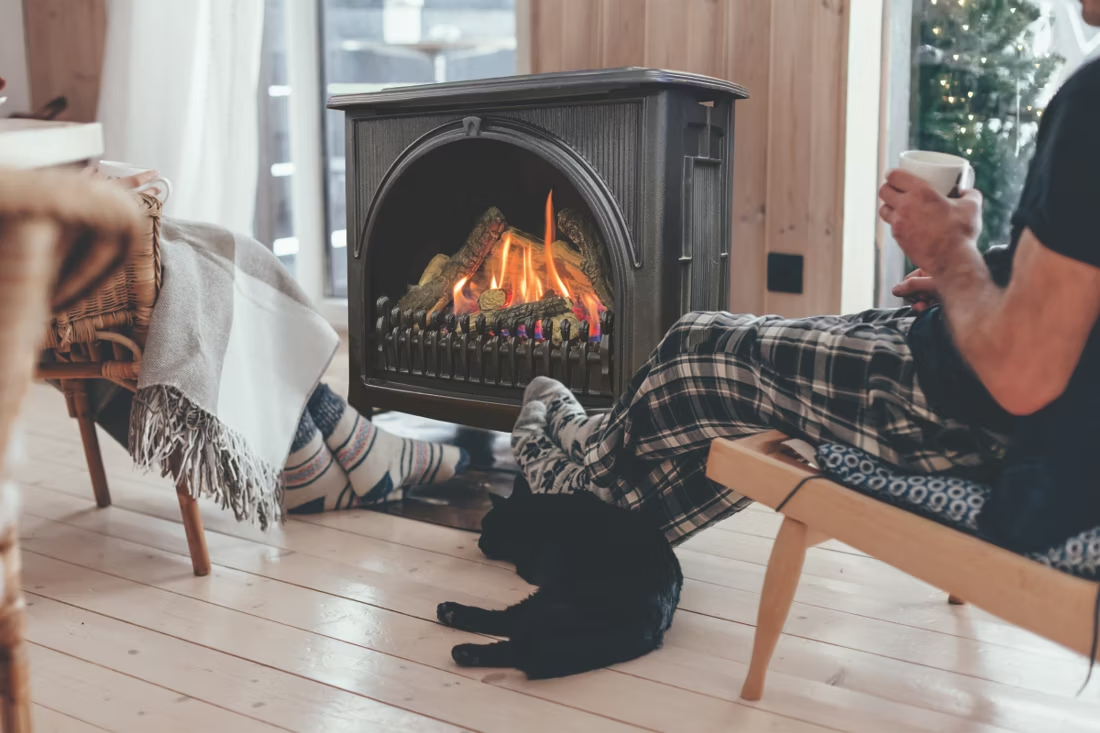
Four fuels. One honest answer for St. Lucie County.
Three steps. No salesperson until you're ready.
Tell us about your project
Your zip code, your situation, and the fuel you're leaning toward—or let the answers point you to one.
See what's actually available
The brands dealers within 100 miles genuinely carry—real options, never a catalog mirage.
Get your dealer & Project Guide
A trusted local dealer, plus the free Project Guide & Parts List that names every component of the job.
Frequently Asked Questions
Which fuel works best in St. Lucie County?
Gas and electric, almost exclusively. With one of the shortest, mildest heating seasons in the country and an average winter low of 57°F, St. Lucie County homes don't need a primary heat source—a fireplace here is about ambiance, resale appeal, and the occasional cold front. Gas fireplaces (propane in most inland areas, natural gas where available) give you real flame without smoke or ash. Electric fireplaces are just as popular—no venting, no gas line, and they install cleanly into a Port St. Lucie or Fort Pierce great room in an afternoon. Wood stoves and pellet stoves are not applicable here in any practical sense; a handful of owners keep a decorative wood-burning fireplace for occasional use, but nobody in this county is heating a home with cordwood or pellets.
Do I need a permit to install a gas or electric fireplace in St. Lucie County?
Yes, in most cases. Gas fireplace and gas insert installations require a building permit plus a licensed gas contractor for the line work, whether you're on propane or natural gas—this is handled through the St. Lucie County Building Division for unincorporated areas, or the applicable city permitting office if you're inside Port St. Lucie or Fort Pierce city limits. Electric fireplaces are generally permit-free for plug-in units, but built-in or hardwired installations that involve a new electrical circuit do require an electrical permit. Most local hearth retailers pull these permits as part of the installation quote, so you're rarely doing the paperwork yourself.
Is a wood-burning fireplace practical in St. Lucie County?
Generally, no—and it's worth being honest about that upfront. St. Lucie County's oak, mahogany, and pine are available locally, but the climate simply doesn't call for wood heat: with a 57°F average winter low, a wood stove would sit unused for eleven months of the year in a humid environment that's hard on stored firewood and hard on chimney masonry. A small number of homeowners keep an existing wood-burning fireplace for ambiance on the rare cold night, and older homes built before central AC sometimes still have one, but new wood stove or insert installations are uncommon and most local retailers don't stock wood-burning equipment as a primary offering.
What about pellet stoves in St. Lucie County?
Pellet stoves are effectively not applicable to home heating in St. Lucie County for the same reason wood is rare—there's no sustained cold season to justify the appliance. Regional pellet brands like Lignetics, Hamer Pellet Fuel, and Greenway Renewable Energy do have distribution reaching Florida, but that supply is almost entirely feeding outdoor pellet grills and smokers rather than indoor pellet stoves. If you're looking for a pellet-fueled heating appliance specifically, it's not a market segment local hearth retailers here are built to serve.
Can one local retailer handle both gas and electric fireplace installation?
Yes—this is the norm in St. Lucie County, not the exception. Because wood and pellet demand is minimal, most hearth retailers serving Port St. Lucie and Fort Pierce carry both gas and electric lines and can walk you through both in the same showroom visit. That's useful if you're deciding between a gas fireplace's real flame and heat output versus an electric unit's simpler install and lower upfront cost—a good local dealer will ask about your room, your budget, and whether you have gas service available before steering you either direction.
What's the typical cost range for gas and electric fireplace installation in St. Lucie County?
Gas fireplace, insert, or stove installation typically runs $4,000–$10,000, with the wide range driven by whether propane line work or new gas service is needed versus converting an existing hookup. Electric fireplaces are considerably less—$200–$3,000 for the unit itself, plus $400–$1,200 in labor for anything beyond a plug-and-play wall-mount, such as a built-in with a new circuit. Because natural gas infrastructure is limited in parts of inland St. Lucie County, propane tank setup or conversion can add to the gas-side cost. See the county + fuel pages above for retailer-specific pricing.
Can I install a fireplace myself?
If you're putting a fire in your house on purpose, it's best to work with an expert. Unless you're genuinely experienced in framing, gas line, vent pipe, and the national code on clearances to combustibles, have a professional do it—and ideally the same company that sells you the fireplace, so warranty, service, and liability all live under one roof.
Can a fireplace actually lower my heating bill?
Yes—by creating a comfort zone. A furnace heats every square foot of the house just to warm the one room you're in; a gas fireplace on low burns roughly a sixth of the gas a typical furnace does. Set the furnace around 55–60 degrees as a baseline, then heat the rooms your family actually uses. Families who heat this way commonly save $20–$60 a month.
What is an in-home preview and do I need one?
It's a visit where a hearth professional measures your space, confirms the model you picked actually works in your home, and walks the specs—framing, gas line, venting, finish work—before anything is ordered. Some details you just can't know until you see the house. Never make a down payment without one; it's the single most-skipped step that burns buyers.
Wood, gas, pellet, or electric—how do I choose?
Match the fuel to your life, not the other way around. Wood: lowest fuel cost and total power-outage independence, but you're hauling and stacking. Gas: press a button, set a thermostat, no maintenance to speak of. Pellet: wood economics with automatic feeding, in exchange for weekly cleaning and a need for electricity. Electric: plugs in anywhere with honest supplemental heat. Nobody regrets the fuel that fits how they actually live.
Stove and Fireplace Dealers in St. Lucie County
Listings include WhyFire partner dealers, dealers we have verified as authorized for the brands we recommend, and established local businesses that carry hearth products. Every listing shows which one it is. The ones marked Preferred run on WhyFire's software, so they can show you real pricing and book your appointment right here. No manufacturer pays for placement. How we verify dealers →
Jtc Florida Homes
The Backyard Life
Ferrell Gas
Como Oil And Propane
Brandster
C And C Diversified
Brandt's Appliance Service Inc
Find your fireplace in St. Lucie County.
Get matched with a trusted local dealer and a free Project Guide & Parts List—a plan for your gas or electric fireplace project in St. Lucie County, with the exact parts and the local dealer we recommend.
Find Your Fireplace →