
Pellet Stoves in Fort Pierce: A Niche Choice, Done Right.
With winters that rarely dip below the 50s, pellet heat isn't standard equipment on the Treasure Coast—but for the homeowners who genuinely want one, we'll connect you with a local dealer who knows how to install it right.
Every Project Starts From One of These Five Situations
A Coastal Climate That Rarely Needs a Stove.
Fort Pierce sits at just 19 feet above sea level on Florida's Treasure Coast, in climate zone 2A, with a winter heating season so mild it barely registers and a typical January low around 53°F. Compare that to Duluth, Minnesota, where winters are long and brutally cold and pellet stoves run daily from October through April—Fort Pierce simply doesn't generate the kind of sustained cold that makes a pellet stove a practical primary or secondary heat source for most households here.
That said, a small number of local homeowners do install pellet stoves or inserts—usually transplants from colder states who want the look and ritual of the stove they had up north, owners with a second property in a cold-weather climate, or people drawn to the ambiance for the handful of nights each winter when a cold front pushes lows into the upper 30s. Worth knowing before you commit: pellet stoves depend on an electric auger and blower to run, so they don't double as backup heat during a hurricane-season power outage the way a wood stove would, and any metal stove installed this close to the Atlantic needs a maintenance routine to manage salt-air corrosion. If a pellet stove still makes sense for your situation, I can connect you with a local dealer who has actually installed them in coastal St. Lucie County conditions—not just sold one off a shelf.
Three steps. No salesperson until you're ready.
Tell us about your project
Your zip code, your situation, and the fuel you're leaning toward—or let the answers point you to one.
See what's actually available
The brands dealers within 100 miles genuinely carry—real options, never a catalog mirage.
Get your dealer & Project Guide
A trusted local dealer, plus the free Project Guide & Parts List that names every component of the job.
Frequently Asked Questions
Does a pellet stove actually make sense in Fort Pierce's climate?
For most homes, no—not as a primary heat source. Fort Pierce has one of the mildest, shortest winter heating needs in the country, and the typical winter low sits around 53°F. A pellet stove sized for even a small cold-climate home would run only a handful of nights a season here. Where it does make sense is as a supplemental, ambiance-driven feature—something to fire up during a rare Arctic outbreak that pushes lows into the 30s, or for homeowners who simply want the look and feel of the stove they had before moving to Florida.
Who actually installs pellet stoves in Fort Pierce?
The buyers we see interest from are typically northern transplants and retirees who want a familiar heat source in their new Treasure Coast home, owners who split time between Fort Pierce and a colder-climate property, and homeowners who like the visual warmth of a stove for the occasional December or January cold snap. It's a real but small market—not the standard heating equipment it would be in a place like Bismarck, ND.
What does a pellet stove installation cost in Fort Pierce?
Because demand is low along the Treasure Coast, fewer local dealers stock and install pellet units regularly compared to a cold-climate market, so pricing isn't as standardized here as it would be somewhere like Burlington, VT. Nationally, a pellet stove installation with venting typically runs $3,500 to $7,000 depending on the unit and whether you need a new vent run through an exterior wall. In Fort Pierce, expect to get a firm, in-home quote rather than a ballpark—a trusted local dealer will also factor in coastal-grade venting components given the salt-air exposure.
Where can I buy heating pellets in Fort Pierce?
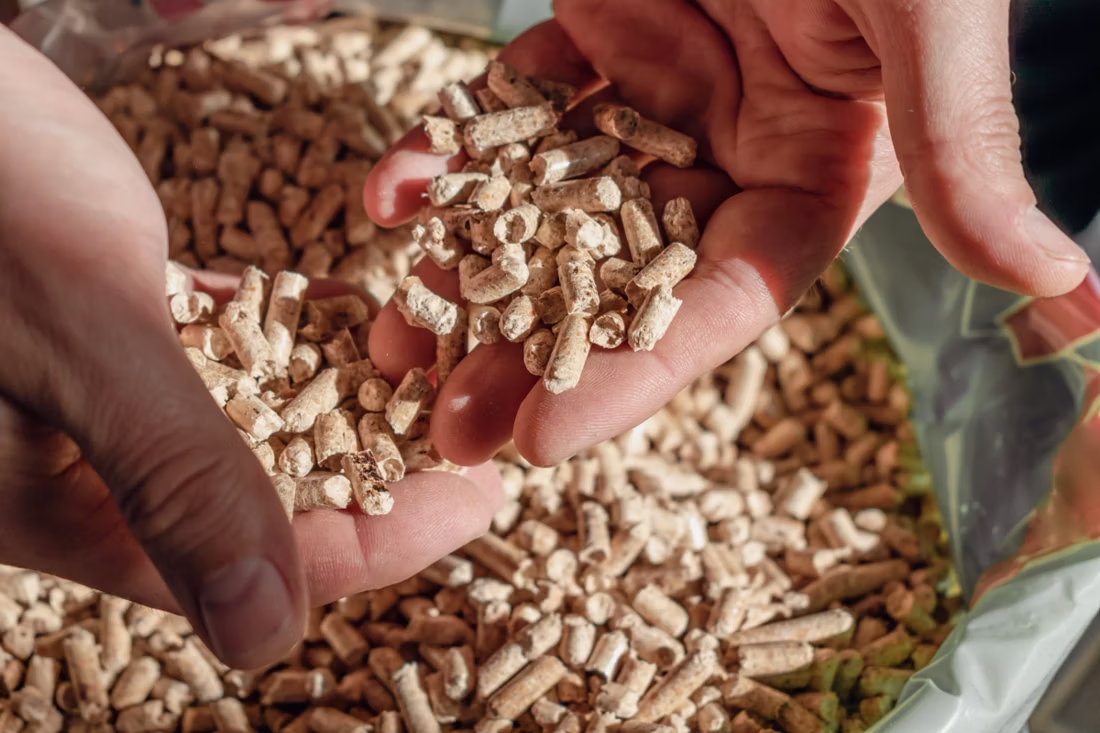
Regional brands like Lignetics, Hamer Pellet Fuel, and Greenway Renewable Energy distribute in the area, but be aware that most bagged pellets sold locally are cut for grills and smokers—a big category on the Treasure Coast—rather than the hardwood heating-grade pellets a stove needs. If you install a pellet stove here, plan to special-order heating pellets by the pallet through a distributor rather than expecting shelf stock at every hardware store.
Will a pellet stove keep my house warm during a hurricane power outage?
No, and this is the single biggest tradeoff to understand before installing one in a hurricane zone. Pellet stoves need electricity to run the auger that feeds fuel and the blower that circulates heat—no power, no fire, regardless of how many bags of pellets you have on hand. If backup heat and light during outages from Florida Power & Light or Fort Pierce Utilities Authority is a real priority, a wood-burning appliance or a battery/generator setup sized to run the stove's electronics is a better match than pellet alone.
Do I need a permit to install a pellet stove in Fort Pierce?
Yes—new hearth appliance installations go through the City of Fort Pierce Building Department or the St. Lucie County Building Department depending on your address, and the work must meet Florida Building Code requirements, including wind-rated venting terminations given the coastal wind exposure here. Because pellet installs are uncommon locally, it's worth confirming your installer has pulled this specific type of permit before, rather than assuming every hearth contractor has.
Should I get a pellet stove or a gas fireplace instead?
For most Fort Pierce homeowners chasing occasional-use ambiance rather than serious heat, a gas fireplace is the more common and more practical choice. Gas fuel is standard here, installation is simpler since there's no hopper to fill or ash to manage, and many units run on propane if natural gas isn't available at your address. Pellet still wins if you specifically want the look and sound of a live wood-pellet flame or you're replicating a stove from a previous home up north—but if convenience and low maintenance matter more, gas is worth a look first.
What size pellet stove do I need in a Fort Pierce home?
Smaller than you'd think. Given the minimal heating load—a fraction of what a place like Madison, WI sees over its long, cold winters—even an entry-level pellet stove rated for 1,000 to 1,200 square feet will comfortably handle a whole living area on the rare nights it's needed. There's little reason to size up for whole-home heating capacity the way a cold-climate buyer would.
Would an electric fireplace be a better fit than a pellet stove here?
For many Fort Pierce homeowners, yes. Electric fireplaces and inserts need no venting, no fuel storage, and no auger or hopper maintenance, and they sidestep the salt-air corrosion concerns that come with any metal stove installed near the Atlantic. With residential electric rates around $0.137/kWh through Florida Power & Light or roughly $0.126/kWh through Fort Pierce Utilities Authority, running an electric unit occasionally for ambiance costs very little. If your goal is the visual of a fire rather than genuine heating capacity, electric is usually the simpler, lower-maintenance choice.
Why is a fireplace insert so efficient?
An insert does two things: it seals the chimney completely, so you stop losing air you already paid to heat, and it radiates warmth into the room through the firebox and glass. Most add a heat-exchange fan that pulls cool room air underneath, wraps it around the hot firebox, and pushes it back out warm. Your home is more efficient before you've even lit the first fire.
How often does a pellet stove need cleaning?
A clean pellet stove is a happy pellet stove. Plan on cleaning the burn pot about once a week when you're burning regularly—ash and clinkers gum up the air holes just like a pellet barbecue. Most pellet stove problems trace back to skipped cleaning that nobody explained up front. Some designs make it easy with a trapdoor burn pot: pull a lever and the gunk drops into the ash pan.
Can a fireplace actually lower my heating bill?
Yes—by creating a comfort zone. A furnace heats every square foot of the house just to warm the one room you're in; a gas fireplace on low burns roughly a sixth of the gas a typical furnace does. Set the furnace around 55–60 degrees as a baseline, then heat the rooms your family actually uses. Families who heat this way commonly save $20–$60 a month.
Does a fireplace add value to my home?
On average, a fireplace adds back to the home about the same amount you spent installing it. Add the monthly savings from heating the rooms you actually use instead of the whole house—often hundreds of dollars a year—and the value case is strong before you even count what a fire does for how your family uses the room.
Nearby Dealers
Hearth shops serving Fort Pierce and the surrounding area.
Pellet Brands Stocked Around Fort Pierce
Manufacturers will point you to the nearest stocking dealer.
See what's realistic for a pellet stove in Fort Pierce.
Tell us about your home and how you'd actually use it, and we'll match you with a trusted local dealer plus a free Project Guide & Parts List—a straight answer on whether pellet makes sense for you, and the exact parts and vent kit if it does.
Find Your Fireplace →