
A Pellet Stove in Estero? Let's Talk Honestly.
With 268 heating degree days a year and winter lows averaging 54°F, Estero rarely needs a full-time heat appliance. We'll tell you the truth about pellet stoves here—and what actually makes sense instead.
Every Project Starts From One of These Five Situations
Estero's climate doesn't call for a full-time heat source.
Estero sits at 15 feet of elevation on Florida's Gulf Coast in climate zone 2A, where the average winter low is 54°F and the whole heating season adds up to just 268 heating degree days. Compare that to a place like Duluth, Minnesota, which logs roughly 9,800 heating degree days a year, and it's clear why pellet stoves—built around long, steady burns to fight sustained cold—simply aren't part of how most Estero homes are built or heated. Lee County homes are built for air conditioning, hurricane resistance, and humidity control, not cordwood or pellet storage.
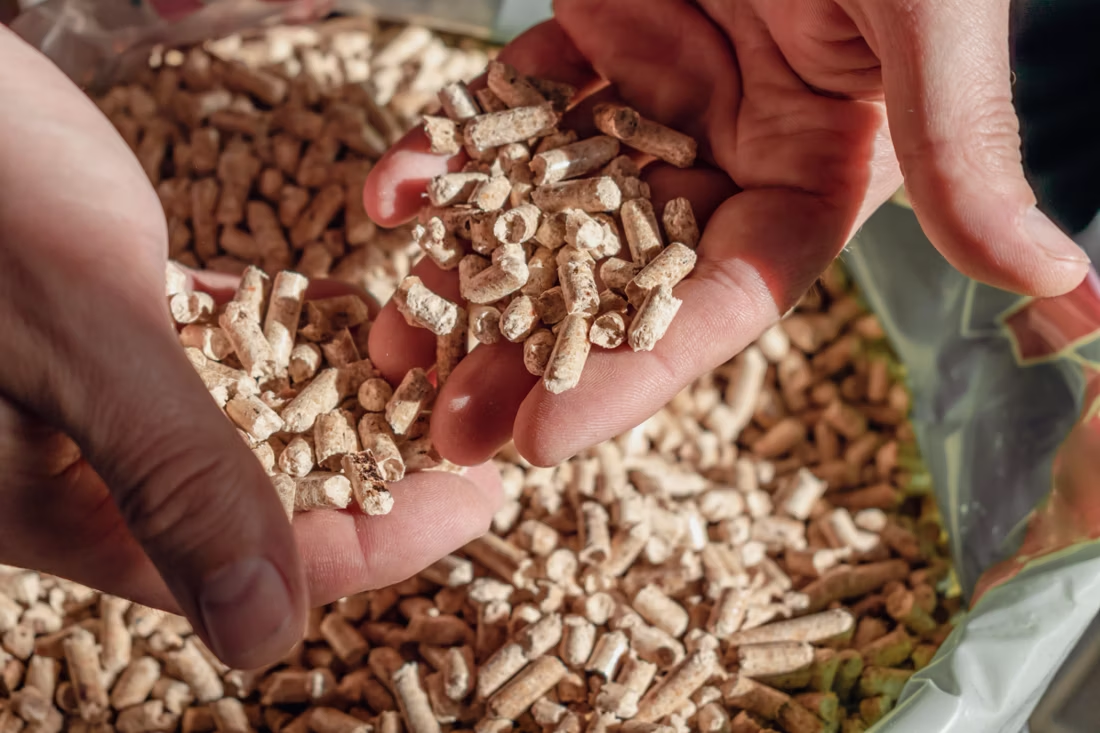
That said, we do occasionally hear from Estero homeowners about pellet stoves—usually transplants from colder states who miss the look and feel of one, owners of vacation homes who split time between Estero and a northern property, or people wanting a decorative accent for the rare January cold snap that dips into the 30s and worries the citrus growers up the road. If that's you, the honest complications are worth knowing up front: Gulf Coast humidity degrades bagged pellets fast unless they're kept in a sealed, climate-controlled space, and because demand is so low, none of the regional brands stocked in Florida—Lignetics, Hamer Pellet Fuel, Greenway Renewable Energy—are typically carried on local shelves in Estero; most owners order by the pallet. For nearly everyone else, a gas or electric fireplace fits the climate, the building stock, and Florida Power & Light's grid far better.
Three steps. No salesperson until you're ready.
Tell us about your project
Your zip code, your situation, and the fuel you're leaning toward—or let the answers point you to one.
See what's actually available
The brands dealers within 100 miles genuinely carry—real options, never a catalog mirage.
Get your dealer & Project Guide
A trusted local dealer, plus the free Project Guide & Parts List that names every component of the job.
Frequently Asked Questions
Are pellet stoves actually installed in Estero homes?
Rarely, and we think it's important to say that plainly. With only 268 heating degree days a year and an average winter low of 54°F, most Estero homes never need supplemental heat, let alone a dedicated pellet-burning appliance. The handful of installs we see tend to be homeowners with a personal connection to colder climates, or people wanting the look of a hearth appliance for a few cool evenings a year. If you're set on one, a trusted local dealer can still help—but it's worth going in knowing you're outside the mainstream use case.
What do most Estero homeowners install instead of a pellet stove?
Electric fireplaces and inserts are by far the most common choice for Estero homes wanting hearth ambiance without a real heating need—they plug into existing household wiring, run on Florida Power & Light service at roughly 13.7 cents per kWh, and involve no venting, no fuel storage, and no combustion byproducts. Gas fireplaces (usually propane, since natural gas service is limited in parts of Lee County) are the second most common option, particularly in homes that already have a propane tank for a pool heater or outdoor kitchen. Both handle Estero's rare cold snaps just fine without the upkeep a pellet appliance demands in a humid climate.
If I still want a pellet stove, what should I know about installing one in a Florida home?
The appliance itself installs the same way it would anywhere—through-wall or through-roof venting, code-required clearances, and a 120V outlet for the auger, igniter, and blower. The part that trips people up in Estero is pellet storage: Gulf Coast humidity runs 70-90% for much of the year, and bagged pellets left in a garage or lanai will absorb moisture, swell, and lose BTU output fast. Anyone going this route needs a sealed, dehumidified storage space, not just a stack of bags against the wall like you'd get away with in a drier climate.
Will a pellet stove work during a hurricane-season power outage?
No, and this is worth knowing before you commit. Pellet stoves depend on electricity to run the auger, igniter, and combustion blower, so when the grid goes down—as it did across Lee County for weeks after Hurricane Ian in 2022—a pellet stove goes down with it, unless you're running a whole-home generator. If backup heat during storm season is part of your reasoning for wanting a hearth appliance at all, a vented propane fireplace with a standing pilot is a far more realistic choice for Estero, since it can run without any electrical input.
Where can I even buy pellets in Estero?
Local demand is thin enough that most Lee County hearth and hardware retailers don't stock bagged pellets year-round. Regional brands like Lignetics, Hamer Pellet Fuel, and Greenway Renewable Energy do serve Florida, but Estero owners typically order by the pallet through a dealer or farm-supply outlet rather than picking up a few bags at a time. Budget for delivery and a dry, sealed storage setup—buying in bulk only pays off if the pellets stay dry between deliveries.
Do I need a permit to install a pellet stove insert in Estero?
Yes—any appliance that penetrates an exterior wall or roof for venting requires a permit through the Village of Estero's building department, and the installation has to meet Florida Building Code wind-load and wall-penetration standards, since Lee County sits in an active hurricane corridor. A licensed local installer will pull this permit as part of the job. Given how few pellet installs happen in the area, it's worth confirming upfront that whoever you hire has actually handled one before, rather than assuming every hearth contractor has the experience.
Does Florida's humidity really affect pellet performance that much?
Yes. Wood pellets are compressed sawdust held together by natural lignin, and they're engineered to a specific moisture content for consistent BTU output. In a climate running near-constant 70-90% relative humidity like Estero's, pellets exposed to open air will absorb moisture, swell, and start to crumble within days—which means dirtier burns, more ash, and reduced heat. Anyone running a pellet stove here needs airtight totes or a climate-controlled storage room, not the open bins or garage stacking that works fine in a drier northern climate.
Pellet stove vs. electric fireplace for occasional ambiance—which makes more sense in Estero?
For the vast majority of Estero homes, electric wins outright. There's no venting, no combustion, no pellet storage headache, and no fuel to buy—just an appliance running on Florida Power & Light service at about 13.7 cents per kWh, which for occasional evening use costs pennies. A pellet stove offers a more authentic flame and radiant heat, but given Estero's 268 annual heating degree days, most owners find they use it only a handful of nights a year, which makes the humidity and fuel-storage tradeoffs hard to justify for most households.
If pellet stoves are so uncommon here, why does Find My Fireplace even cover them for Estero?
Because a small number of homeowners do have a genuine reason to want one—a second home up north, a personal attachment to wood heat, or a specific aesthetic—and they deserve an honest answer rather than being pushed toward a sale that doesn't fit their climate. Our job is matching you with a trusted local dealer who will tell you the same thing we're telling you here, and if you decide to move forward anyway, or land on gas or electric instead, we'll still get you a free Project Guide & Parts List built around what actually works in your Estero home.
Why is a fireplace insert so efficient?
An insert does two things: it seals the chimney completely, so you stop losing air you already paid to heat, and it radiates warmth into the room through the firebox and glass. Most add a heat-exchange fan that pulls cool room air underneath, wraps it around the hot firebox, and pushes it back out warm. Your home is more efficient before you've even lit the first fire.
What does it take to replace an existing fireplace?
Fireplaces are like icebergs—bigger behind the wall than in front of it. Replacement means removing the surrounding tile or stone (the finish material laps onto the fireplace face), pulling the old unit, setting the new one in the same enclosure, and re-finishing the wall. A hearth professional can determine what's behind your wall without demolition during an in-home preview.
What is an in-home preview and do I need one?
It's a visit where a hearth professional measures your space, confirms the model you picked actually works in your home, and walks the specs—framing, gas line, venting, finish work—before anything is ordered. Some details you just can't know until you see the house. Never make a down payment without one; it's the single most-skipped step that burns buyers.
How much should I budget for a fireplace?
For an average home—covering the fireplace, the vent pipe, and basic installation—a budget between $3,900 and $5,500 gives you a lot of options across wood, gas, and pellet. By the time you add finish work, gas line, and electrical, the average complete installation lands between $5,000 and $12,000 all-in. In a remodel or new build, a good rule is to put about 2.5% of the total project cost toward the fireplace.
Nearby Dealers
Hearth shops serving Estero and the surrounding area.
Pellet Brands Stocked Around Estero
Manufacturers will point you to the nearest stocking dealer.
Find your pellet heat option in Estero.
Tell us about your home and your reasons for considering pellet heat, and we'll connect you with a local dealer who can give you a straight answer—plus a free Project Guide & Parts List for whichever hearth option, pellet, gas, or electric, actually fits your Estero home.
Find Your Fireplace →