
A Gas Fireplace Built for Ambiance, Not Arctic Cold.
Real flame for Estero great rooms and lanais, propane-powered where natural gas mains don't reach. Find the right unit and connect with a trusted local dealer.
Every Project Starts From One of These Five Situations
Fire as a feature, not a furnace.
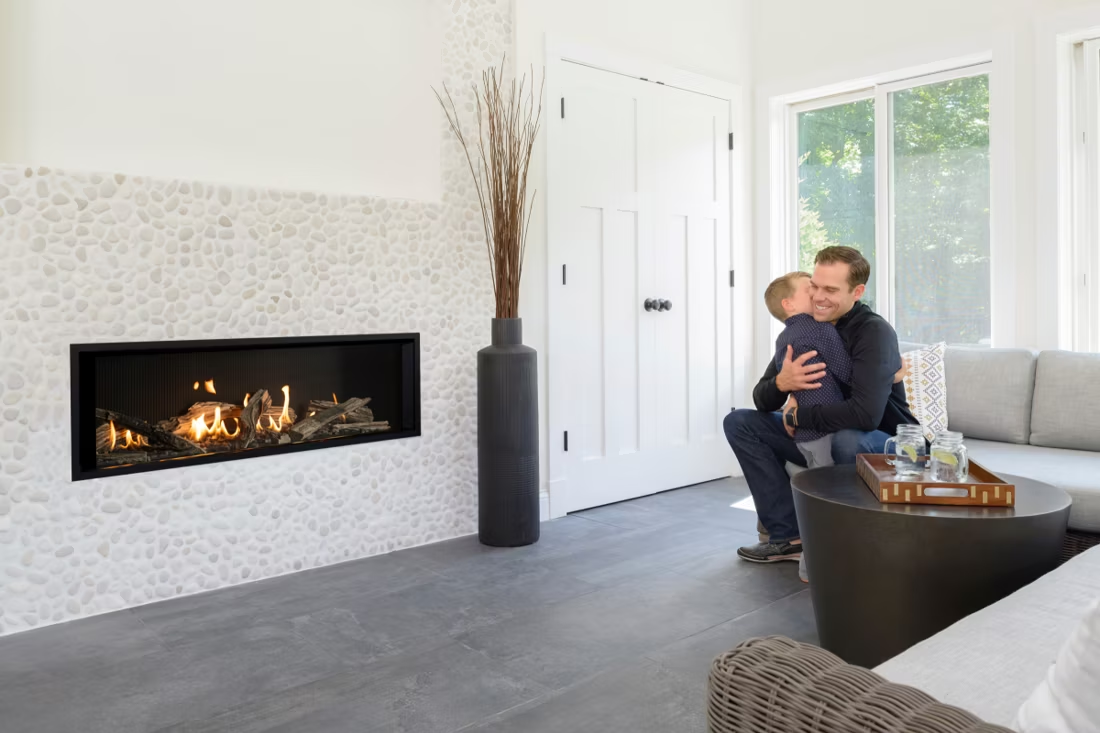
Estero sits at just 15 feet of elevation on Florida's Gulf Coast, where the average winter low hovers around 54 degrees and the whole area sees only a light, brief dusting of chilly days each year—a fraction of what a Duluth, MN homeowner burns through in a single November cold snap. Nobody in Estero is heating a home with a fireplace. What they're doing is building a great room around one: a linear gas fireplace behind the sectional in a home in The Brooks or Grandezza, a fire feature on the lanai next to the pool, or a mantel that gives a Miromar Lakes living room the finished look a builder-grade wall never had.
Because unincorporated Lee County has limited natural gas main coverage, most gas fireplaces installed in Estero run on propane rather than piped natural gas—a tank is set on the property, or the fireplace ties into a line already serving a range or water heater. That's a different install than you'd see in a natural-gas city, and it's exactly the kind of detail a local propane-experienced installer gets right the first time: correct orifice sizing, tank placement, and line pressure for whichever unit you choose.
Three steps. No salesperson until you're ready.
Tell us about your project
Your zip code, your situation, and the fuel you're leaning toward—or let the answers point you to one.
See what's actually available
The brands dealers within 100 miles genuinely carry—real options, never a catalog mirage.
Get your dealer & Project Guide
A trusted local dealer, plus the free Project Guide & Parts List that names every component of the job.
Frequently Asked Questions
How much does a gas fireplace installation cost in Estero?
Most gas fireplace installations in Estero run $3,500 to $9,500, with the spread driven by whether you're adding a built-in unit to new construction, retrofitting a great room wall, or running a line to a fire feature on the lanai. Because most Estero homes were built without a masonry fireplace to convert, the bulk of local installs are new builder-style linear or traditional gas fireplaces set into framed walls, which means an installer is pricing framing, venting, and gas line work together rather than dropping an insert into an existing opening. If you don't already have a propane tank on the property, add $600 to $1,500 for tank setup.
Is natural gas available in Estero, or do I need propane?
Most of Estero and the surrounding unincorporated parts of Lee County don't have natural gas mains running to residential lots, so propane is the standard fuel for gas fireplaces here. If you already have a propane tank for your range, water heater, or pool heater, an installer can often tie into that existing line. If not, you'll need a tank—above-ground or buried—sized to handle the fireplace along with anything else running on propane. Florida Power & Light serves electricity throughout Estero, but they aren't a gas provider, which is part of why propane, not piped natural gas, dominates the Southwest Florida hearth market.
Do I need a permit to install a gas fireplace in Estero?
Yes. New gas fireplace installations in Estero fall under Lee County's building permit process, and any propane line work has to be done by a licensed gas contractor—it isn't a DIY-and-self-permit job. A local hearth dealer who regularly installs in Lee County will typically pull the permit and coordinate the gas contractor as part of the project, which is one less thing for you to manage.
Will my gas fireplace work during a power outage?
This matters more in Estero than in most places—Southwest Florida carries real hurricane risk, and Hurricane Ian knocked out power across Lee County for days in 2022. Most gas fireplaces with IPI (intermittent pilot ignition) run on battery backup that keeps the unit lighting on demand even with the grid down, as long as fresh batteries are in the unit. Valor fireplaces go a step further—their pilot generates its own electricity through the thermocouple, so there's no battery to remember at all. For a storm-prone area like Estero, that's worth asking your local dealer about.
What's the difference between a gas fireplace, gas insert, and gas stove?
A gas fireplace is a fully built-in unit set into a framed wall—the standard choice in Estero, since most homes here were built without a masonry fireplace to retrofit. A gas insert is made to slide into an existing masonry firebox, which is common in older northern homes but rare in Lee County's newer housing stock. A gas stove is a freestanding cabinet-style unit that sits on the floor. For most Estero homeowners adding a fireplace to a great room, lanai, or new build, a built-in gas fireplace is the natural fit.
Are vent-free (ventless) gas fireplaces allowed in Estero?
Florida permits vent-free gas fireplaces and log sets under state mechanical code, subject to minimum room size and an oxygen depletion sensor on the unit. That said, many of Estero's gated communities and condo associations—think The Brooks, Grandezza, or the high-rises along the Estero corridor—restrict or prohibit open-flame vent-free appliances in their design guidelines, so it's worth checking your HOA documents before falling in love with a specific unit. Direct-vent, sealed-combustion fireplaces are allowed everywhere and are what most local dealers install by default.
Why would anyone install a gas fireplace in a warm climate like Estero?
Heat is rarely the reason. With winter lows averaging 54 degrees and only a light, brief dusting of chilly days each year, an Estero gas fireplace is doing design work, not furnace work—it anchors a great room, finishes off a lanai fire feature next to the pool, or gives a builder-spec living room the kind of focal point that shows well at resale. A lot of buyers here are transplants from colder states who miss the look and feel of a real fire even if they never needed one for warmth, and a direct-vent gas unit gives them that without smoke, ash, or a chimney to maintain in a humid climate.
How often does a gas fireplace need to be serviced in Estero?
Plan on an annual inspection, same as anywhere—but Estero's salt air and year-round humidity are harder on metal components, gaskets, and ignition electronics than a drier inland climate, so a yearly check is worth keeping on the calendar rather than skipping. A technician will test the burner, pilot or IPI system, gas connections, and venting, and look for corrosion around the firebox. Local service techs who work coastal Southwest Florida homes regularly see this kind of wear and know what to check first.
Gas vs. electric fireplace—which makes more sense in Estero?
Gas gives you a real flame, and with Estero's mild climate that's the whole appeal—ambiance rather than heat output. Electric fireplaces, run through Florida Power & Light at roughly 13.7 cents per kWh, need no gas line or venting at all, which makes them the simpler retrofit in condos, HOA units, or homes where running a propane line isn't practical. Electric units also sidestep any HOA rules written around open flame. If you want the visual and crackle of real fire on the lanai or in a great room and don't mind coordinating propane, gas wins; if simplicity and flexibility matter more, electric is often the easier install.
Why is my open fireplace making my house colder?
Open fireplaces suck—literally. As the fire burns, it consumes air your furnace already paid to heat and pulls it out through the chimney, so the house is actually colder after the fire goes out than before you lit it. An insert fixes this: it seals the chimney, puts fixed glass across the front, and turns that hole in your house into a real heat source.
Can I put a TV above my fireplace?
Yes—with an asterisk. Fireplaces are hot and TVs don't like heat. Either put a mantel between them to deflect rising warmth, or choose a fireplace with heat-management technology that creates a cool zone on the wall above—the wall stays around 125 degrees, barely warm, while the room still gets full heat. If you like clean lines and don't want a mantel, heat management is the answer.
Can a fireplace actually lower my heating bill?
Yes—by creating a comfort zone. A furnace heats every square foot of the house just to warm the one room you're in; a gas fireplace on low burns roughly a sixth of the gas a typical furnace does. Set the furnace around 55–60 degrees as a baseline, then heat the rooms your family actually uses. Families who heat this way commonly save $20–$60 a month.
Does a fireplace add value to my home?
On average, a fireplace adds back to the home about the same amount you spent installing it. Add the monthly savings from heating the rooms you actually use instead of the whole house—often hundreds of dollars a year—and the value case is strong before you even count what a fire does for how your family uses the room.
Nearby Dealers
Hearth shops serving Estero and the surrounding area.
Find your gas fireplace in Estero.
Tell us about your Estero home and we'll match you with a trusted local dealer and send a free Project Guide & Parts List—the exact parts, including the vent kit, for your gas fireplace project.
Find Your Fireplace →