
Fireplaces built for Southwest Florida living.
Fireplace resources for every city in Lee County—from Fort Myers to Sanibel to Bonita Springs. Get matched with a trusted local dealer who knows what actually works in a 252-heating-degree-day climate.
Every Project Starts From One of These Five Situations
Subtropical comfort along the Caloosahatchee.
Lee County sits in climate zone 2A on Florida's Gulf Coast, where the average winter low hovers around 54°F and the county logs just 252 heating degree days a year—a rounding error compared to the 8,000-plus HDD winters Duluth, MN logs, or the 7,000-plus HDD seasons Bozeman, MT sees every year. Native oak, mahogany, and slash pine grow throughout the county, but almost none of it goes into a woodstove: with a heating season that amounts to a handful of cool nights each January and February, wood and pellet appliances have little functional role here. What Lee County homeowners actually install are gas fireplaces for ambiance and occasional real warmth, and electric units for supplemental heat, design statements, and backup comfort when a cold front rolls through Fort Myers, Cape Coral, or Bonita Springs.
This hub covers the whole county—hearth retailers, service technicians, and fuel suppliers serving Fort Myers, Cape Coral, Bonita Springs, Sanibel, Estero, Lehigh Acres, North Fort Myers, and the barrier islands. Gas and electric are the standard fuel types you'll find here; a small number of retailers also carry wood stoves for buyers who want the aesthetic or a genuine backup heat source during hurricane-season power outages, and pellet stock (from brands like Lignetics and Greenway Renewable Energy) tends to show up at feed and farm-supply stores rather than dedicated hearth shops. Pick your fuel below to see local dealers, typical installed costs, and the permitting details for your city.
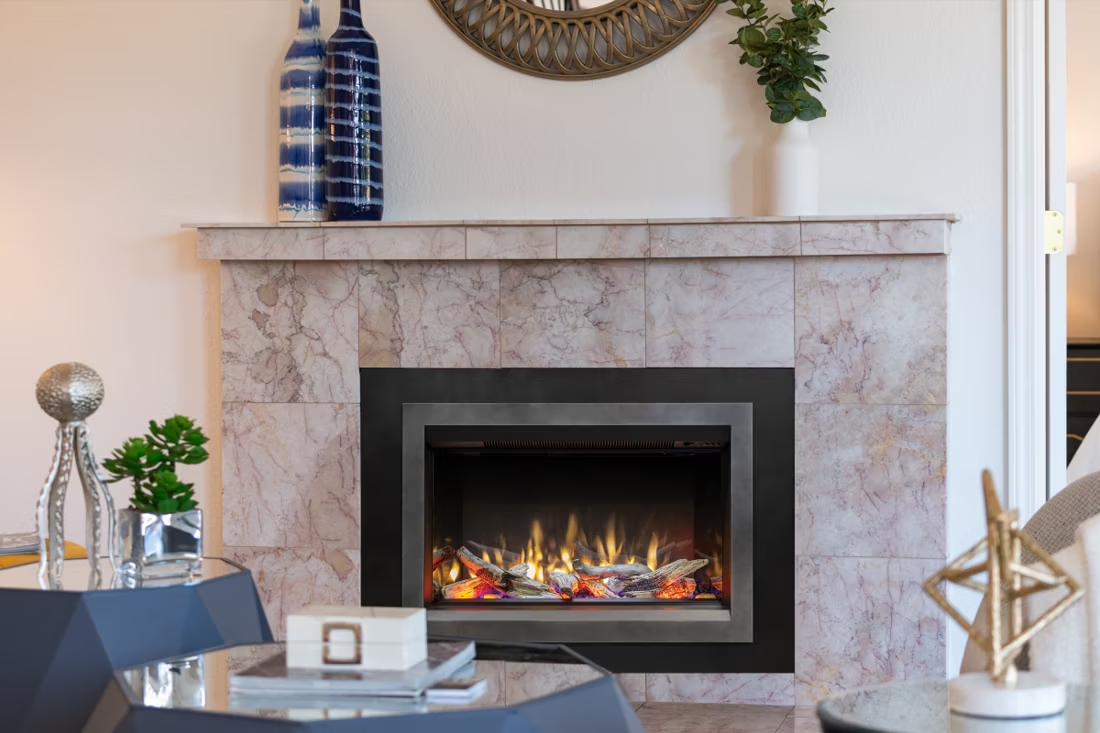
Four fuels. One honest answer for Lee County.
Three steps. No salesperson until you're ready.
Tell us about your project
Your zip code, your situation, and the fuel you're leaning toward—or let the answers point you to one.
See what's actually available
The brands dealers within 100 miles genuinely carry—real options, never a catalog mirage.
Get your dealer & Project Guide
A trusted local dealer, plus the free Project Guide & Parts List that names every component of the job.
Frequently Asked Questions
Which fuel works best in Lee County?
For most homeowners, it's gas or electric—not because one is universally superior, but because Lee County's climate makes wood and pellet appliances impractical for anyone chasing efficient home heating. With winter lows averaging 54°F and only 252 heating degree days a year, there's rarely a sustained cold spell that justifies a wood-burning system or the fuel storage it requires. Gas fireplaces (natural gas where it's run, propane elsewhere) give instant ambiance and real warmth on the occasional 40-degree January night in Fort Myers or Cape Coral. Electric fireplaces are the low-commitment option—no venting, no gas line, popular in condos on Sanibel or newer builds in Estero where owners want the look without any functional heating load. A small number of homeowners still install wood stoves, usually for aesthetic reasons, a vacation-cabin feel, or as a genuine backup heat and cook source during hurricane-season outages—but it's the exception, not the rule.
Do I need a permit to install a fireplace in Lee County?
Yes, in nearly every case. Gas fireplace and gas insert installations require a building permit plus a separate gas permit for the line work, issued through your local jurisdiction—Lee County Building Department for unincorporated areas, or the City of Fort Myers, City of Cape Coral, City of Bonita Springs, City of Sanibel, or Village of Estero building department if you're inside city limits. Electric fireplaces that involve new circuits or built-in hardwiring also need an electrical permit; simple plug-in units typically don't. If you go the rare wood-stove or pellet-stove route, expect a mechanical permit and a closer inspection of the venting, since these installs are uncommon enough locally that inspectors tend to look carefully. Most local retailers handle the permit paperwork as part of the installation quote.
Are there air quality restrictions on wood burning in Lee County?
No—Lee County has no wood-burning curtailment program, non-attainment designation, or inversion advisories like you'd find in mountain-basin counties out West. That's largely because there's almost nothing to restrict: with heating demand this low, very few households burn wood regularly enough to create a local air quality issue. The more practical concern for the handful of wood stove owners here isn't smoke management, it's humidity and pest control for stored firewood—oak and pine cordwood left outdoors in Southwest Florida's climate can mold or attract termites faster than it would in a drier, colder state.
Can one local hearth retailer handle both gas and electric installations?
Most can, yes. The hearth dealers serving Fort Myers, Cape Coral, and the surrounding cities typically stock both gas and electric lines, since those are the two fuel types with real local demand. Fewer retailers carry wood or pellet stoves—if you specifically want one of those, expect a smaller selection and possibly a special order, since inventory doesn't move fast enough here to justify dedicated wood/pellet showroom space. If you're comparing gas against electric for a specific room, a multi-fuel dealer can walk you through the real trade-offs: gas gives you actual radiant heat and a live flame but needs venting and gas supply, while electric is simpler to install and cheaper upfront but functions more as a design feature than a heat source in this climate.
Does hurricane season affect which fireplace fuel makes sense in Lee County?
It's worth factoring in. Electric fireplaces go dark the moment the grid does, which matters in a county that sees regular tropical storm and hurricane activity and, some years, multi-day outages. A propane fireplace with a standing pilot or battery-powered ignition can keep running on stored fuel when LCEC or FPL service is down, giving you both heat and a place to warm food. It's also one of the few practical arguments for wood heat in a 252-HDD county—a properly vented wood stove works with zero electricity and zero gas line, which is part of why a small number of Sanibel, Pine Island, and rural Lee County homeowners keep one installed even though they'll use it only a handful of nights a year.
What's the typical cost range for fireplace installation across fuel types in Lee County?
Gas fireplace, insert, or stove: roughly $3,500–$8,500 installed, with the low end for a direct-vent unit tying into existing gas service and the high end for new gas line runs or masonry conversions. Electric fireplace: $200–$3,000 for the unit itself, plus $300–$1,200 in labor for anything beyond a plug-and-play wall unit—most electric installs in Lee County fall toward that lower labor range since there's no venting to run. Wood or pellet stove: expect $5,000–$10,000 if you can find a local installer, since these are specialty jobs here rather than routine work—pricing runs higher than in wood-heavy states because fewer contractors do them regularly and parts sometimes have to be special-ordered rather than pulled off a local shelf.
Wood, gas, pellet, or electric—how do I choose?
Match the fuel to your life, not the other way around. Wood: lowest fuel cost and total power-outage independence, but you're hauling and stacking. Gas: press a button, set a thermostat, no maintenance to speak of. Pellet: wood economics with automatic feeding, in exchange for weekly cleaning and a need for electricity. Electric: plugs in anywhere with honest supplemental heat. Nobody regrets the fuel that fits how they actually live.
Does a fireplace add value to my home?
On average, a fireplace adds back to the home about the same amount you spent installing it. Add the monthly savings from heating the rooms you actually use instead of the whole house—often hundreds of dollars a year—and the value case is strong before you even count what a fire does for how your family uses the room.
Should the dealer who sells my fireplace also install it?
Ideally, yes. A fireplace project involves vent pipe, gas line, electrical, and often tile or stone. Hire three or four separate trades and you own the liability and the game of telephone between them. One company selling and installing means one accountable party, start to finish—ask about factory training, on-time completion records, and what happens if an inspection fails.
How much should I budget for a fireplace?
For an average home—covering the fireplace, the vent pipe, and basic installation—a budget between $3,900 and $5,500 gives you a lot of options across wood, gas, and pellet. By the time you add finish work, gas line, and electrical, the average complete installation lands between $5,000 and $12,000 all-in. In a remodel or new build, a good rule is to put about 2.5% of the total project cost toward the fireplace.
Stove and Fireplace Dealers in Lee County
Listings include WhyFire partner dealers, dealers we have verified as authorized for the brands we recommend, and established local businesses that carry hearth products. Every listing shows which one it is. The ones marked Preferred run on WhyFire's software, so they can show you real pricing and book your appointment right here. No manufacturer pays for placement. How we verify dealers →
South Florida Gas Co Inc
Accent Fireplace & Accessories
The Outdoor Kitchen Place
Southern Coast Fireplace Showroom (By Appointment)
Carter Grant General Contractor Inc
Smoky Stone Outdoor Kitchens - Naples
Find your fireplace in Lee County.
Tell us your fuel and city, and we'll match you with a trusted local dealer plus a free Project Guide & Parts List—the exact parts, vent kit, and installer recommendation for your Lee County project.
Find Your Fireplace →