
Comfortable heat for Dixie County's short, mild winters.
With winter lows averaging around 40°F and only a light winter heating load each year, Dixie County doesn't need a furnace-grade wood stove—it needs a clean, low-maintenance pellet unit for the occasional cold snap along the Suwannee. Find the right size, and connect with a trusted local dealer.
Every Project Starts From One of These Five Situations
A supplemental heat source built for Gulf Coast winters.
Dixie County is rural Big Bend Florida—timberland, tupelo swamp, and the Suwannee River running through it, with a population just over 2,500 spread across Cross City, Old Town, and Horseshoe Beach. Climate zone 2A means the county's real heating challenge is a handful of nights each winter that dip toward or below freezing, not the sustained cold of a place like Duluth or Fargo. Compare Dixie's short, mild winter heating season to a northern climate with a heating season more than five times as long, and it's clear that heat here is a comfort layer, not a survival system—but on those late-December and January nights when temperatures drop into the 30s, a pellet stove earns its keep fast.
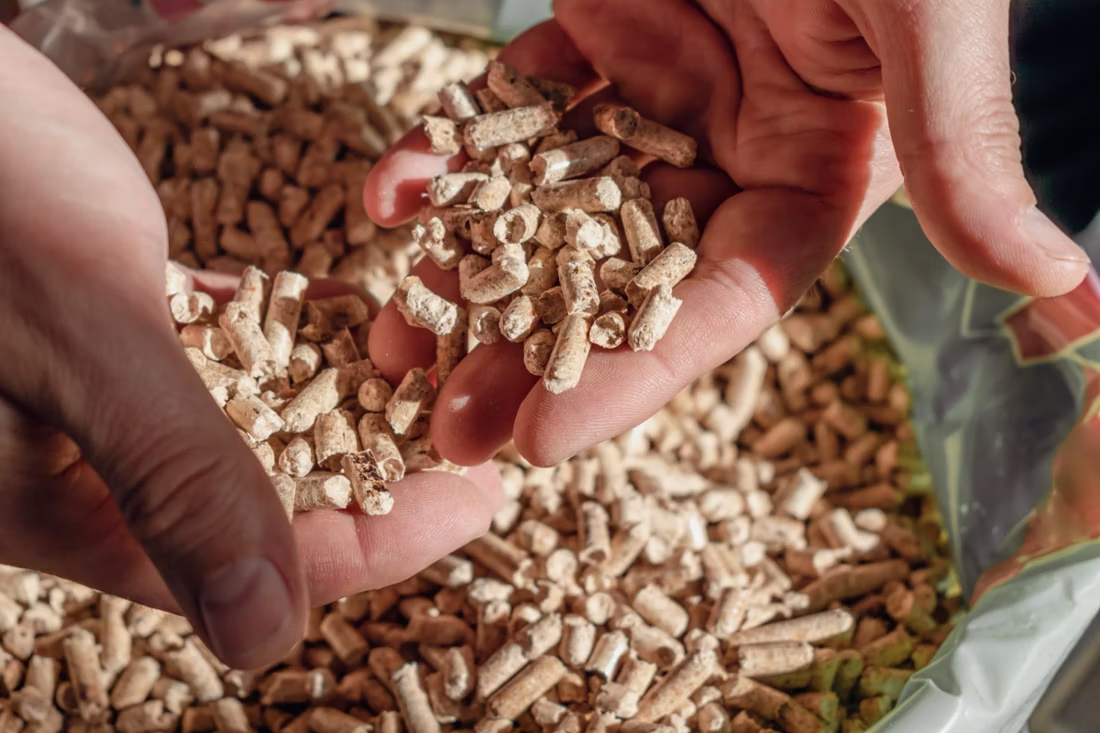
Most Dixie County homes are heated primarily by electric heat pumps, so a pellet stove or insert is typically installed as a supplemental unit—something to take the chill off a living room or a hunting camp near the river without running the central system all night. Pellets themselves are easy to source in this part of the state through regional suppliers like Lignetics, Hamer Pellet Fuel, and Greenway Renewable Energy, though because Dixie County itself has limited retail presence, most homeowners buy by the pallet from a dealer in Chiefland, Perry, or Lake City and store it locally. A pellet stove also skips the chimney and firewood handling that come with wood heat—a real advantage given how much of the county's timberland is working pine and oak forest rather than a source of split, seasoned cordwood at the ready.
Three steps. No salesperson until you're ready.
Tell us about your project
Your zip code, your situation, and the fuel you're leaning toward—or let the answers point you to one.
See what's actually available
The brands dealers within 100 miles genuinely carry—real options, never a catalog mirage.
Get your dealer & Project Guide
A trusted local dealer, plus the free Project Guide & Parts List that names every component of the job.
Frequently Asked Questions
How much does a pellet stove installation cost in Dixie County?
Pellet stove and insert installations in most of Florida run in the range of $3,000 to $6,000, with the low end covering a freestanding stove vented through an existing wall and the high end covering an insert that requires liner work in an old masonry fireplace. Because Dixie County has so few dealers of its own, expect a modest travel charge if your installer is coming from Chiefland, Perry, or Lake City. New construction or homes without any existing venting will run higher once wall penetration and exterior termination are factored in. A local installer will give you a firm number after seeing the space in person.
What size pellet stove do I actually need in a climate this mild?
Smaller than you'd think. With winter lows averaging around 40°F and only occasional dips into the 20s and 30s, most Dixie County homes do fine with a smaller-capacity pellet stove rated for a single large room or open living area rather than a whole-house unit sized for northern winters. Oversizing is a common mistake here—a stove built to heat 2,000 square feet in International Falls will run at a low, inefficient smolder most nights in Cross City. Tell your dealer you're looking for supplemental heat for cool snaps, not a primary furnace replacement, and they'll size accordingly.
Where can I find a pellet stove dealer near Dixie County?
Because Dixie County's population is under 3,000, you won't find a hearth showroom in Cross City or Old Town—most homeowners work with dealers based in neighboring Levy, Taylor, or Columbia counties who service Dixie as part of their regular route. Ask specifically whether the dealer stocks Lignetics, Hamer Pellet Fuel, or Greenway Renewable Energy pellets locally, since availability varies by supplier and by season. A dealer who regularly installs in rural Big Bend counties will also know how to handle the humidity and pest issues that come with pellet storage in this climate.
Will my pellet stove work during a hurricane-related power outage?
Not without backup power. Pellet stoves rely on an electric auger to feed fuel and a blower to circulate heat, so a standard unit goes dead the moment the grid does—a real consideration in a Gulf-exposed county like Dixie where tropical storms and hurricanes routinely knock out power for days. If backup heat during outages matters to you, plan on pairing the stove with a generator, or ask your dealer about a battery-backup option sized for a pellet stove's electrical draw. Homeowners who want heat that works with zero electricity typically choose a wood stove instead, even in a climate this mild.
Pellet stove vs. wood stove—which makes more sense in Dixie County?
Given the county's abundant pine and oak timberland, wood is genuinely cheap and easy to source locally, and it keeps working through the power outages that come with hurricane season. Pellets cost more per BTU but offer a cleaner, lower-maintenance burn with no splitting, stacking, or ash the size of a wood fire—appealing for a second home, a camp near the river, or anyone who wants supplemental heat without the labor. For a county with such a short, mild heating season, the convenience trade-off of pellets often wins out for full-time residents, while wood remains popular at hunting camps and river cabins where reliability during outages matters more than convenience.
Do I even need a permanent heat source in a climate this warm?
Most Dixie County homes rely on electric heat pumps for the handful of genuinely cold nights each winter, and a pellet stove is best thought of as a supplemental comfort upgrade rather than a necessity. That said, with a modest winter heating load concentrated into December through February, there are real stretches where a pellet stove in the main living area will run daily and noticeably cut the heat pump's workload. It's a reasonable investment for comfort and lower winter electric bills, just not one driven by survival-level cold the way it would be in a northern climate.
How much maintenance does a pellet stove need?
Less than a wood stove, but not none. Plan on emptying the ash pan every few days during regular use, cleaning the burn pot and glass weekly, and having the unit professionally serviced once a year—typically before the start of the cool season in Dixie County, which is a shorter window than most of the country. Annual service usually includes cleaning the exhaust venting and checking the auger motor and blower, both of which see more strain in Florida's humidity than they would in a drier climate.
How should I store pellets in Dixie County's humidity?
Humidity is the real enemy here, more than it would be for a pellet stove owner in a drier climate. Wood pellets absorb moisture readily and will swell and crumble if stored in a damp garage or an uninsulated shed near the Suwannee's floodplain. Keep bags sealed, stack them off the concrete floor on a pallet, and store them in the most climate-controlled space available—an interior closet or conditioned garage works far better than an outbuilding in this part of Florida. Buying in smaller quantities more often, rather than a full season's supply up front, also helps in a climate this humid.
Are there rebates or tax credits available for pellet stove installs?
Many pellet stoves with a thermal efficiency of 75% or higher qualify for the federal biomass stove tax credit, which currently covers 30% of the equipment and installation cost up to $2,000—a program worth checking on since it applies to installs in Dixie County the same as anywhere else in the country. Florida doesn't add a separate state rebate on top of that for pellet appliances, so the federal credit is typically the main incentive available. Ask your dealer for the manufacturer's efficiency documentation, which you'll need when filing.
What's the difference between an insert and a zero-clearance fireplace?
An insert is a fireplace that slides into a pre-existing wood-burning fireplace—if you don't have one, there's nothing to insert it into. A zero-clearance fireplace is built into a framed wall, which makes it the answer for remodels and new construction. Simple test: existing masonry fireplace means insert; blank or framed wall means zero-clearance.
How often does a pellet stove need cleaning?
A clean pellet stove is a happy pellet stove. Plan on cleaning the burn pot about once a week when you're burning regularly—ash and clinkers gum up the air holes just like a pellet barbecue. Most pellet stove problems trace back to skipped cleaning that nobody explained up front. Some designs make it easy with a trapdoor burn pot: pull a lever and the gunk drops into the ash pan.
Can a fireplace actually lower my heating bill?
Yes—by creating a comfort zone. A furnace heats every square foot of the house just to warm the one room you're in; a gas fireplace on low burns roughly a sixth of the gas a typical furnace does. Set the furnace around 55–60 degrees as a baseline, then heat the rooms your family actually uses. Families who heat this way commonly save $20–$60 a month.
Does a fireplace add value to my home?
On average, a fireplace adds back to the home about the same amount you spent installing it. Add the monthly savings from heating the rooms you actually use instead of the whole house—often hundreds of dollars a year—and the value case is strong before you even count what a fire does for how your family uses the room.
Pellet Brands Stocked Around Dixie County
Manufacturers will point you to the nearest stocking dealer.
Find your pellet stove in Dixie County.
Tell us about your home and how you plan to use the heat, and we'll match you with a trusted local dealer and put together a free Project Guide & Parts List—sized right for Dixie County's mild winters, with the vent kit and parts you'll actually need.
Find Your Fireplace →