
Wood, Gas, Pellet, and Electric Heat for Dixie County, Florida.
From Cross City to Horseshoe Beach and Old Town, Dixie County's mild Gulf Coast winters still call for real heat—during cold fronts, hurricane-season outages, and everyday ambiance. Find the right fuel and connect with a trusted local hearth retailer.
Every Project Starts From One of These Five Situations
Mild Gulf Coast winters, real heating needs.
Dixie County is one of Florida's least populated counties—just over 2,500 residents spread across the Big Bend region along the Suwannee River and the Gulf of Mexico. Climate zone 2A here means winters are short and mild: the average winter low sits around 40°F, and the county logs only about 1,372 heating degree days a year, a fraction of what a place like Duluth, Minnesota sees in a single month of January. But mild doesn't mean irrelevant. Panhandle cold fronts can push overnight lows into the 20s for a night or two, and hurricane season brings extended power outages that leave homes without electric heat entirely. Local oak, pine, and even mahogany are common in wood stacks—as much for backup heat and ambiance as for genuine cold-weather necessity.
What you'll find on this hub: hearth retailers, service technicians, and fuel suppliers serving every community in the county—from the county seat of Cross City to Old Town, Suwannee, Jena, and the coastal community of Horseshoe Beach. Pick your fuel below to drill into specifics—local dealers, installation costs, recommended units, and the resources that match your project. Whether you're outfitting a riverfront cabin or adding hurricane-season backup heat to a Cross City home, this is the starting point.
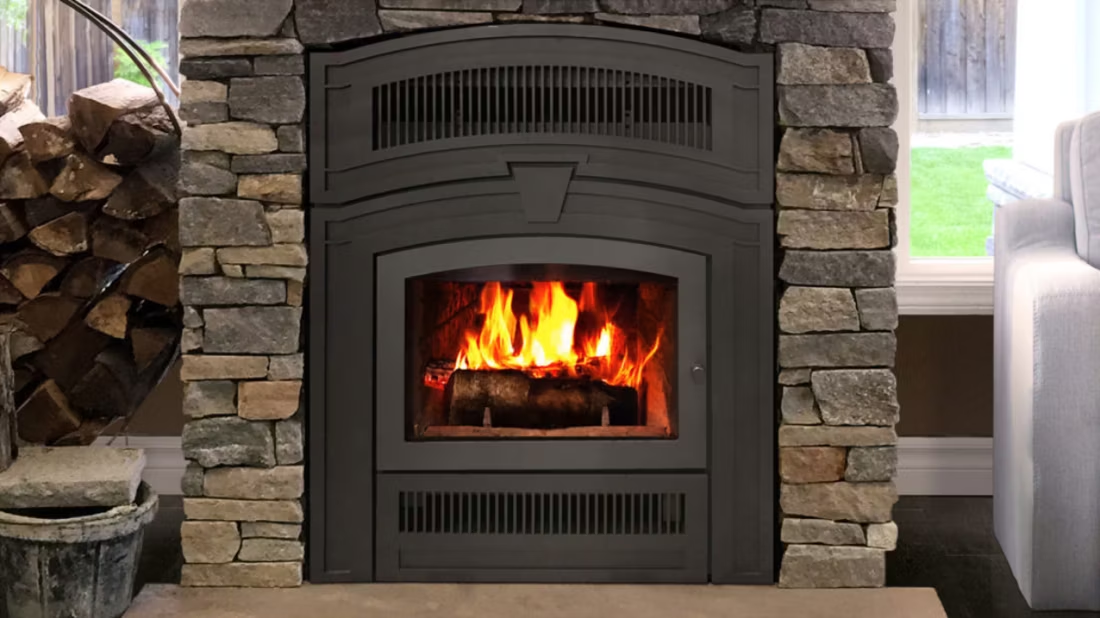
Four fuels. One honest answer for Dixie County.
Three steps. No salesperson until you're ready.
Tell us about your project
Your zip code, your situation, and the fuel you're leaning toward—or let the answers point you to one.
See what's actually available
The brands dealers within 100 miles genuinely carry—real options, never a catalog mirage.
Get your dealer & Project Guide
A trusted local dealer, plus the free Project Guide & Parts List that names every component of the job.
Frequently Asked Questions
Which fuel works best in Dixie County?
It depends more on how you'll use it than on raw heating need, since Dixie County only logs about 1,372 heating degree days a year. Wood remains popular for ambiance and hurricane-season backup—local oak and pine burn well, and a wood stove keeps working when the power is out for days after a storm. Gas is the low-maintenance choice for most homes here; since the county has little natural gas infrastructure, that typically means propane, delivered and stored on-site, giving instant heat without relying on the grid. Pellet stoves are a solid middle ground—regional supply from Lignetics and Hamer Pellet Fuel keeps fuel accessible, though pellet stoves do need electricity to run their auger and blower, which matters during outages. Electric fireplaces are the easiest add for warmth and ambiance in a home that already has reliable power, but they're not a hurricane-season backup. Many Dixie County homeowners end up with a wood or propane unit as backup heat plus an electric fireplace for everyday ambiance.
Do I need a permit to install a fireplace in Dixie County?
In most cases, yes. New wood stoves, wood inserts, gas fireplaces, gas inserts, gas stoves, and pellet stoves typically require a building permit through the Dixie County Building Department, and any propane line work needs to be handled by a licensed gas or propane technician as part of that process. Electric fireplaces usually skip the permit process unless you're doing a built-in installation that requires new wiring or a dedicated circuit. Given Dixie County's coastal exposure, installers also need to account for wind-load and moisture requirements on chimney and venting penetrations through the roof or wall. Most local hearth retailers handle the permitting as part of the installation, so you generally don't have to navigate it solo.
How does hurricane season affect fireplace and heating choices in Dixie County?
It's a bigger factor here than winter cold. Dixie County sits directly on the Gulf Coast, and extended power outages after tropical storms and hurricanes are common—sometimes lasting a week or more. That's a major reason wood stoves and propane fireplaces stay popular even in a climate with only 1,372 heating degree days: they keep working when the grid doesn't. Pellet stoves need power to run their auger and blower, so they're less useful as a storm-outage backup unless paired with a generator. If you're choosing a unit with hurricane resilience in mind, ask your local dealer about units rated to run without electricity and about proper storage for firewood or pellets in Dixie County's humid, storm-prone climate.
Can one local hearth retailer handle all four fuel types?
Given Dixie County's small population, most local and regional hearth retailers focus on two or three fuel types rather than all four—commonly wood and propane-fed gas units, since those two cover both ambiance and storm-outage backup. Pellet stove selection is more limited locally, though the regional pellet supply from Lignetics, Hamer Pellet Fuel, and Greenway Renewable Energy means fuel is easy to source even if the stove itself comes from a dealer in Gainesville or Lake City. Electric fireplaces are widely available since they don't require specialized installation expertise. If you're cross-shopping fuels, ask your retailer directly what they stock versus what they can special-order—in a rural county like this, that distinction matters.
How does service work in a rural county like Dixie?
Most technicians serving Dixie County travel in from larger service areas—Gainesville, Lake City, or the Tallahassee region—since the county's population of roughly 2,500 doesn't support many technicians based locally. Expect a modest travel fee for service calls, especially in Horseshoe Beach or other outlying coastal communities. Because the heating season here is short, scheduling annual service in late summer or early fall—before cold fronts start moving through—is easier than trying to book a technician during a rare cold snap in January. If you rely on wood or propane heat as hurricane-season backup, get chimney sweeping and equipment checks done before storm season starts, not after.
What's the typical cost range for fireplace installation across all fuel types in Dixie County?
Costs run somewhat lower here than in cold-climate markets, since venting and chimney work tends to be simpler without the deep-freeze engineering needs of Northern installs. Wood stove or insert installation: roughly $3,500–$7,500 for a typical install. Propane fireplace, insert, or stove: roughly $4,000–$9,000, with cost driven mostly by propane line routing rather than venting complexity. Pellet stove or insert: roughly $4,000–$6,500. Electric fireplace: $200–$2,500 for the unit itself, plus $300–$1,000 in labor for anything beyond a plug-and-play installation. For specific pricing tied to local retailers, see the county + fuel pages above.
Can I install a fireplace myself?
If you're putting a fire in your house on purpose, it's best to work with an expert. Unless you're genuinely experienced in framing, gas line, vent pipe, and the national code on clearances to combustibles, have a professional do it—and ideally the same company that sells you the fireplace, so warranty, service, and liability all live under one roof.
How much should I budget for a fireplace?
For an average home—covering the fireplace, the vent pipe, and basic installation—a budget between $3,900 and $5,500 gives you a lot of options across wood, gas, and pellet. By the time you add finish work, gas line, and electrical, the average complete installation lands between $5,000 and $12,000 all-in. In a remodel or new build, a good rule is to put about 2.5% of the total project cost toward the fireplace.
What is an in-home preview and do I need one?
It's a visit where a hearth professional measures your space, confirms the model you picked actually works in your home, and walks the specs—framing, gas line, venting, finish work—before anything is ordered. Some details you just can't know until you see the house. Never make a down payment without one; it's the single most-skipped step that burns buyers.
Does a fireplace add value to my home?
On average, a fireplace adds back to the home about the same amount you spent installing it. Add the monthly savings from heating the rooms you actually use instead of the whole house—often hundreds of dollars a year—and the value case is strong before you even count what a fire does for how your family uses the room.
Stove and Fireplace Dealers in Dixie County
Listings include WhyFire partner dealers, dealers we have verified as authorized for the brands we recommend, and established local businesses that carry hearth products. Every listing shows which one it is. The ones marked Preferred run on WhyFire's software, so they can show you real pricing and book your appointment right here. No manufacturer pays for placement. How we verify dealers →
Bush Home Service
Anderson Gas Services Inc
Blossman Gas
Asp Pools
Southern Quality Propane
Akins LLC
All Star Garage Doors
Owens Propane
Allweather Insulation
Premier Gas & Grills
Find your fireplace in Dixie County.
Pick your fuel below and we'll match you with a trusted local dealer and send you a free Project Guide & Parts List—the exact parts, vent kit, and recommended dealer for your Dixie County home.
Find Your Fireplace →