
Warmth on demand for Dixie County's mild winters.
From Cross City to Old Town and out to Horseshoe Beach, Dixie County winters rarely demand much more than a few weeks of supplemental heat. Electric fireplaces deliver that heat and the ambiance of a fire with no chimney, no gas line, and no venting to plan around.
Every Project Starts From One of These Five Situations
Simple heat for occasional cold snaps.
Dixie County sits in Florida's Big Bend, straddling the Suwannee River and stretching out toward the Gulf across roughly 700 square miles with only about 2,524 residents spread among Cross City, Old Town, and the fishing village of Horseshoe Beach. This is climate zone 2A—hot and humid most of the year, with an average winter low around 40°F and just 1,372 heating degree days. For comparison, a place like Duluth, MN racks up more than five times that many HDD in a single season. Dixie County homes simply don't need a heating system built to survive a hard freeze; they need something that takes the edge off a January cold front for a few weeks.
Natural gas infrastructure is scarce in a county this rural, and most homes run on electric service from Duke Energy Florida or Tri-County Electric Cooperative, with propane as the common backup for water heaters and ranges. That makes electric fireplaces a natural fit—plug-in units need nothing more than a standard outlet, and even a hardwired wall unit or mantel insert skips the chimney, the flue, and the annual sweep that wood and gas installs require. For the mix of site-built and manufactured homes common throughout the county, that simplicity matters: no masonry to tie into, no roof penetration, and heat output sized for supplemental use rather than carrying a whole house through a Big Bend winter.
Three steps. No salesperson until you're ready.
Tell us about your project
Your zip code, your situation, and the fuel you're leaning toward—or let the answers point you to one.
See what's actually available
The brands dealers within 100 miles genuinely carry—real options, never a catalog mirage.
Get your dealer & Project Guide
A trusted local dealer, plus the free Project Guide & Parts List that names every component of the job.
Frequently Asked Questions
How much does an electric fireplace installation cost in Dixie County?
A freestanding or mantel-style electric fireplace that plugs into a standard 120V outlet typically runs $300 to $1,000 for the unit itself, with no real installation cost beyond mounting. A built-in wall unit or insert that needs a dedicated circuit—common when homeowners want it recessed into a wall or existing fireplace opening—runs closer to $600 to $2,000 once you include an electrician's time to run a new line. Costs edge toward the higher end for older Dixie County homes with fuse panels or limited electrical capacity, which sometimes need panel work before a dedicated circuit can be added.
What size electric fireplace do I need for my home?
Because Dixie County's heating season is short—just 1,372 heating degree days—most homeowners here are choosing an electric fireplace for ambiance and supplemental warmth in a single room rather than whole-home heat. A unit rated for 400 to 1,000 square feet with 5,000 to 10,000 BTU of heat output covers a living room or den comfortably during a cold front. Larger built-in units exist, but for the mild winters typical here, sizing up rarely pays off. Most local retailers and electricians can walk through room size and layout with you before you buy.
Where can I find electric fireplace dealers near me in Dixie County?
Dixie County's retail footprint is small, so many homeowners either work with a local electrician who also handles fireplace mounting or drive to hearth retailers in Gainesville or Chiefland for a wider selection of models. For plug-in units, big-box and appliance stores in the surrounding area carry a decent range, but if you want a built-in or wall-recessed unit wired into a dedicated circuit, you'll want a licensed electrician involved regardless of where the unit was purchased. A trusted local pro also knows which models handle Florida's humidity well over the long run.
What's the difference between an electric fireplace, insert, and mantel?
A freestanding electric fireplace is a self-contained unit—plug it in, set it against a wall, and it's operational, no modification needed. An electric insert is designed to slide into an existing fireplace opening, which is useful for the smaller number of Dixie County homes with an old wood-burning masonry fireplace that's no longer used—the insert covers the opening and runs on a standard outlet or dedicated circuit. A mantel package pairs an electric firebox with a surrounding mantel and is typically wall-mounted or built into cabinetry. For most homes here without an existing fireplace, a mantel unit or simple wall-mount is the most common choice.
Do I need a permit to install an electric fireplace in Dixie County?
A plug-in freestanding unit needs no permit—it's no different than plugging in any other appliance. If you're adding a dedicated 120V or 240V circuit for a built-in or wall-recessed unit, that electrical work falls under the Dixie County Building Department's permitting process, and it should be pulled by a licensed electrician. Skipping the permit on new wiring isn't worth the risk in a county where insurance carriers already scrutinize older housing stock closely.
What's the best electric fireplace for Dixie County's climate?
Since actual heating demand is light here, look for a unit with a flame-only mode that runs without the heater—useful on the many evenings when you want the look of a fire but the heat itself would be unwelcome in Big Bend humidity. When a cold front does roll through and lows drop toward 40°F, an adjustable thermostat lets you dial in modest heat rather than running a fixed high setting. Most mid-range models from major electric fireplace manufacturers cover both needs well; the main decision is really cabinet style and size for your room.
How much maintenance does an electric fireplace need?
Very little compared to wood or gas. There's no chimney to sweep and no annual safety inspection required. Maintenance is mostly dusting the unit, occasionally cleaning the glass front, and replacing LED elements if they eventually dim—usually years down the road. For coastal Dixie County homes near Horseshoe Beach, it's worth wiping down vents periodically since salt-air humidity can accelerate dust buildup on internal fans.
How much does it cost to run an electric fireplace in Dixie County?
Running costs depend on your electric rate and how often you use the heat setting versus flame-only mode. A typical 1,500-watt heater running a few hours on a cold evening adds a modest amount to a Duke Energy Florida or Tri-County Electric Cooperative bill—nowhere near what heating an entire home with central electric resistance heat would cost. Because Dixie County's heating season is so short, most homeowners find the electric fireplace itself barely moves the needle on their annual utility costs.
Electric vs. propane or wood—which is right for my home?
Propane remains the go-to for homeowners who want a real heat source that works during power outages, which matter in a hurricane-exposed county like this one. Wood is still used by some rural households—oak, pine, and mahogany are all locally available—for the same reason plus the tradition of a real fire. Electric wins on simplicity: no fuel to store, no venting, no permit hassle for a plug-in unit, and it's the easiest option for a second home, a rental, or a room where running gas or a flue isn't practical. Given how mild Dixie County winters actually are, many homeowners find electric covers their real heating need just fine, with propane or wood reserved as backup for storm season.
Can I put a TV above my fireplace?
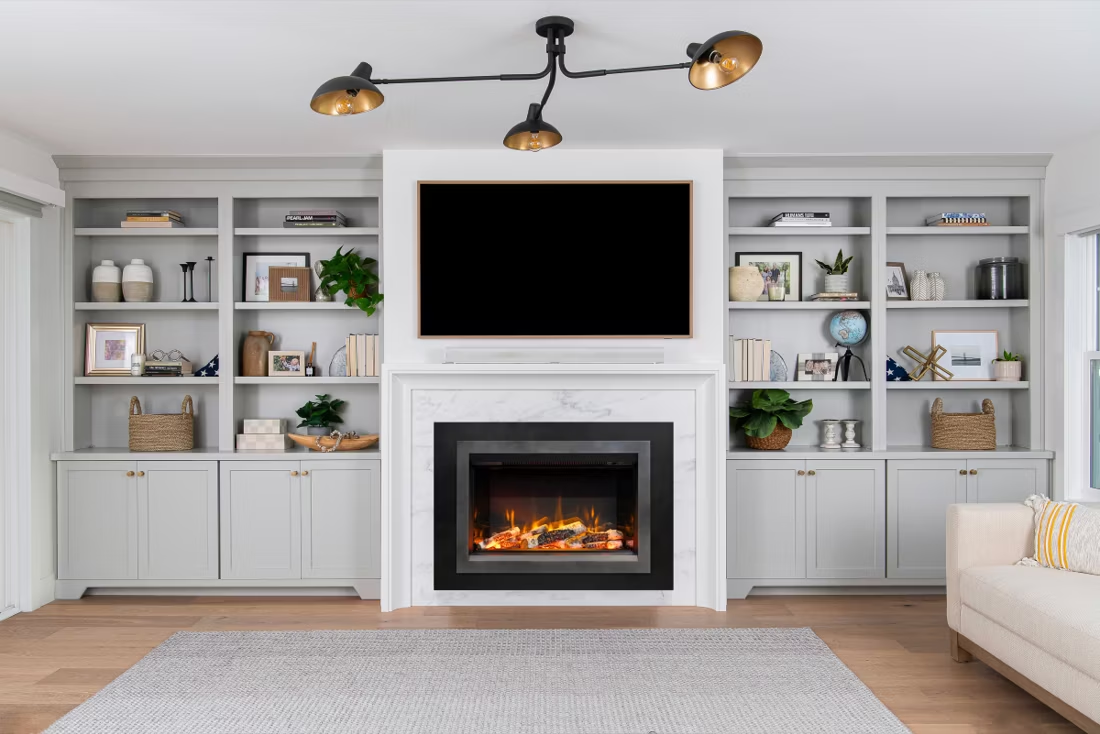
Yes—with an asterisk. Fireplaces are hot and TVs don't like heat. Either put a mantel between them to deflect rising warmth, or choose a fireplace with heat-management technology that creates a cool zone on the wall above—the wall stays around 125 degrees, barely warm, while the room still gets full heat. If you like clean lines and don't want a mantel, heat management is the answer.
Do electric fireplaces actually produce heat?
Yes—most put out around 4,800–5,000 BTUs from a standard outlet, which comfortably warms a bedroom, office, or den as a comfort-zone heater. What they won't do is carry a whole house the way wood, gas, or pellet can. Think of electric as ambiance-first with honest supplemental heat: flames on with no heat in July, flames plus warmth in January.
Does a fireplace add value to my home?
On average, a fireplace adds back to the home about the same amount you spent installing it. Add the monthly savings from heating the rooms you actually use instead of the whole house—often hundreds of dollars a year—and the value case is strong before you even count what a fire does for how your family uses the room.
What is an in-home preview and do I need one?
It's a visit where a hearth professional measures your space, confirms the model you picked actually works in your home, and walks the specs—framing, gas line, venting, finish work—before anything is ordered. Some details you just can't know until you see the house. Never make a down payment without one; it's the single most-skipped step that burns buyers.
Find your electric fireplace in Dixie County.
Tell us a bit about your home and we'll put together a free Project Guide & Parts List for your Dixie County electric fireplace project—the right unit, the exact parts, and a trusted local dealer to install it.
Find Your Fireplace →