
Pellet stoves are rare in DeSoto County, but not unheard of.
With winter lows averaging 47°F and only a handful of genuinely cold nights a year, most DeSoto County homes never need a supplemental heat source. But a small number of homeowners—snowbirds with property up north, rural residents wanting freeze-night backup, manufactured home owners who like the look of a real flame—still ask about pellet stoves. Here's an honest look at when it fits.
Every Project Starts From One of These Five Situations
DeSoto County's climate leaves little room for pellet heat.
DeSoto County sits in climate zone 2A around Arcadia and the Peace River, with a heating season so short it barely qualifies as one—just a handful of cold nights a year, compared to a long, hard winter in a place like Duluth, MN. Winter lows average 47°F, and the coldest nights rarely threaten single digits above zero the way they do farther north. Oak, mahogany, and pine all grow well here, but almost none of it ends up in a firebox—wood heat, like pellet heat, just doesn't have a job to do in a county where furnace-grade cold is a once-or-twice-a-winter event, not a season.
That said, DeSoto County isn't entirely without pellet-fuel presence—brands like Lignetics, Hamer Pellet Fuel, and Greenway Renewable Energy do move product through regional distributors, largely serving customers with property elsewhere, agricultural uses, or the occasional cold-snap installation tied to citrus-freeze concerns along the Peace River. If you're one of the exceptions—a manufactured home where you want real flame without gas line work, or a rural property that wants backup heat for the rare freeze night—a local dealer can still size and install a pellet unit correctly. For most DeSoto County homeowners chasing ambiance or occasional warmth, though, gas or electric fireplace options tend to fit the climate and the budget better.
Three steps. No salesperson until you're ready.
Tell us about your project
Your zip code, your situation, and the fuel you're leaning toward—or let the answers point you to one.
See what's actually available
The brands dealers within 100 miles genuinely carry—real options, never a catalog mirage.
Get your dealer & Project Guide
A trusted local dealer, plus the free Project Guide & Parts List that names every component of the job.
Frequently Asked Questions
Is a pellet stove actually worth installing in DeSoto County?
For most homes, no—not as a primary heat source. With only a handful of genuinely cold nights a year and winter lows averaging 47°F, DeSoto County simply doesn't generate enough cold-weather demand to justify the appliance cost, the pellet storage, and the venting work. Where it can make sense is narrower: a rural property near the Peace River that wants backup heat for the occasional hard freeze that threatens citrus and livestock, a manufactured home where a real flame is wanted without running new gas line, or a household that already owns a second property up north and wants matching equipment. If none of those describe your situation, a gas or electric fireplace will almost always serve you better here.
What's a better alternative to a pellet stove for occasional cold nights in DeSoto County?
Most DeSoto County homeowners land on a gas fireplace or a good electric insert instead. Propane-fed gas units light instantly, need no fuel storage, and handle the rare cold front just as well as a pellet stove would—without the hopper, the auger maintenance, or year-round pellet storage for a handful of nights of actual use. Electric fireplaces go a step further: no venting, no combustion, and installation costs that run a fraction of a solid-fuel appliance. Both options also do a better job of the ambiance most local buyers are actually after.
Will a pellet stove work during a power outage after a storm?
No—and this matters in DeSoto County given hurricane exposure. Pellet stoves rely on an electric auger to feed fuel and a blower to distribute heat, so when Peace River Electric Cooperative or your utility loses power, the stove stops working entirely unless you have a generator running. If backup heat during an outage is your actual goal, a wood-burning appliance would work without power—but wood heat is essentially not used in this climate either. For most DeSoto County households, a battery-backed gas fireplace is the more realistic outage-ready option.
How much does a pellet stove installation cost in DeSoto County?
Because pellet installs are uncommon locally, pricing isn't as standardized as it is for gas or electric units. When a local dealer does install one—typically for a manufactured home or a rural freeze-backup setup—expect the appliance, venting, and hearth pad work to run somewhere in the $3,500 to $6,500 range, similar to national averages for a freestanding unit. Costs move up if a hearth pad has to be added for code clearance or if the vent run is longer than a standard through-wall setup.
Where can I buy pellets in or near DeSoto County?
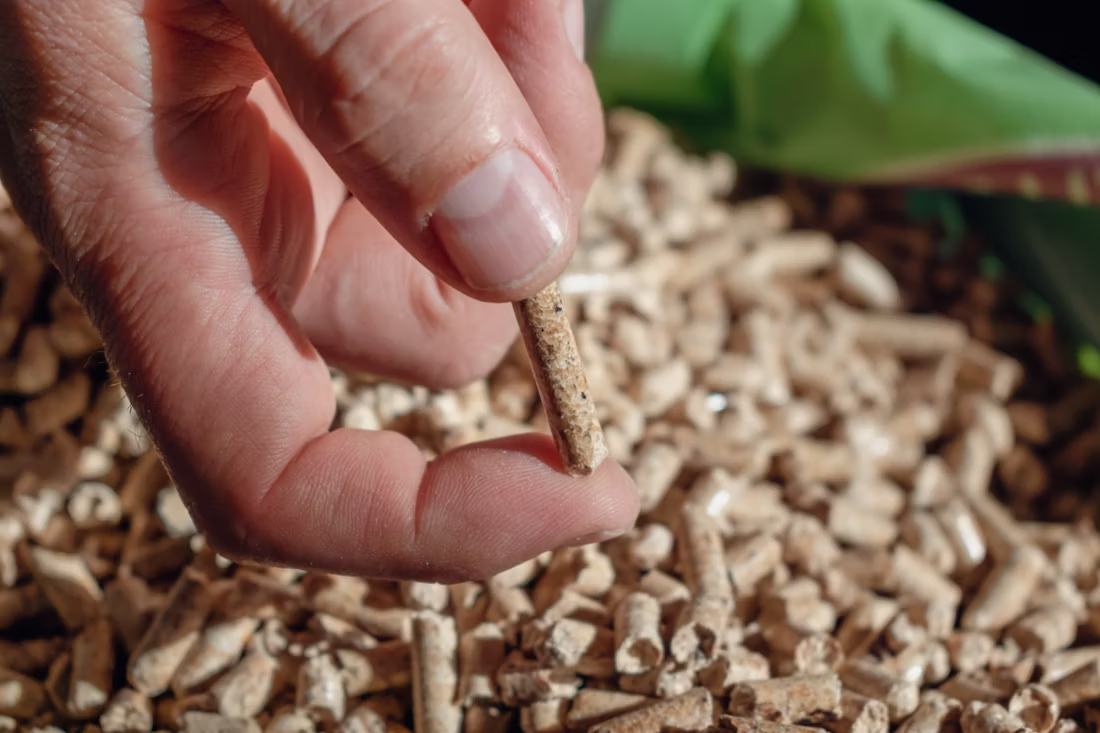
Pellet fuel isn't stocked as a staple locally the way it would be in a colder climate, but regional distributors carrying Lignetics, Hamer Pellet Fuel, and Greenway Renewable Energy do supply the wider central Florida area, and a trusted local dealer can point you to the nearest reliable source or arrange bulk delivery. Because turnover is low, it's worth confirming freshness and storage conditions before buying—pellets that have absorbed humidity in Florida's climate won't burn cleanly.
Do I need a permit to install a pellet stove in DeSoto County?
Yes—a pellet stove installation still requires a building permit through the DeSoto County Building Division, the same as it would for a gas or electric appliance, since it involves venting through an exterior wall or roof and sometimes new electrical circuits for the auger and blower. A local, licensed installer will typically pull the permit as part of the job. Given how infrequently pellet installs happen in the county, it's worth confirming your installer has handled one before rather than assuming general hearth experience covers it.
What size pellet stove do I need for a DeSoto County home?
Sizing here is almost the opposite problem from a cold-climate install—most DeSoto County homes only need a small unit, if any, since the appliance will run occasionally rather than through a real heating season. A small stove rated for a single room is typically plenty, even for a modest manufactured home, because the goal is supplemental warmth on the handful of nights it dips into the 30s, not sustained whole-home heat. Oversizing is a common mistake in this climate—a stove sized for a Minnesota winter will run far too hot and too often for occasional Florida use.
Pellet vs. gas vs. electric—which fits DeSoto County best?
For the vast majority of DeSoto County homes, gas or electric wins. Gas fireplaces (typically propane, since natural gas service is limited outside Arcadia's core) give instant, adjustable heat and a real flame with none of the fuel storage or auger maintenance a pellet stove requires. Electric fireplaces skip combustion and venting altogether, which keeps installation costs low and works in almost any room, including manufactured housing. Pellet only pulls ahead in the narrow case where someone specifically wants the pellet-burning experience, has fuel storage space, and doesn't mind that it goes dark in a power outage—a real consideration during hurricane season.
Is a pellet stove a good fit for a manufactured or mobile home in DeSoto County?
It can be, with the right unit and a properly rated hearth pad and clearance setup—this is actually one of the more common reasons a DeSoto County homeowner asks about pellet heat. A local dealer will confirm the floor and wall materials meet manufacturer clearance requirements and that the electrical circuit can support the auger and blower. Given how rarely this combination comes up locally, it's worth working with an installer who has specific experience with manufactured-home hearth installs rather than a general contractor.
Why is a fireplace insert so efficient?
An insert does two things: it seals the chimney completely, so you stop losing air you already paid to heat, and it radiates warmth into the room through the firebox and glass. Most add a heat-exchange fan that pulls cool room air underneath, wraps it around the hot firebox, and pushes it back out warm. Your home is more efficient before you've even lit the first fire.
What do I measure to size a fireplace insert?
Four numbers tell you what fits: the front width, the front height, the back width, and the overall depth of your existing fireplace opening. Grab a tape measure, jot those down, and snap a photo of the wall—those two things do more to move your project forward than anything else you can do today.
Can I install a fireplace myself?
If you're putting a fire in your house on purpose, it's best to work with an expert. Unless you're genuinely experienced in framing, gas line, vent pipe, and the national code on clearances to combustibles, have a professional do it—and ideally the same company that sells you the fireplace, so warranty, service, and liability all live under one roof.
What is an in-home preview and do I need one?
It's a visit where a hearth professional measures your space, confirms the model you picked actually works in your home, and walks the specs—framing, gas line, venting, finish work—before anything is ordered. Some details you just can't know until you see the house. Never make a down payment without one; it's the single most-skipped step that burns buyers.
Pellet Brands Stocked Around DeSoto County
Manufacturers will point you to the nearest stocking dealer.
Find your pellet stove in DeSoto County.
Pellet heat is a niche fit in DeSoto County's mild climate, but if your situation calls for it—a manufactured home, a rural freeze backup, or matching a property elsewhere—we'll match you with a local dealer who genuinely knows the install, and send you a free Project Guide & Parts List with the exact parts, including the vent kit, for your project.
Find Your Fireplace →