
Find the right fireplace for DeSoto County's mild winters.
Fireplace resources for Arcadia and every community in DeSoto County—from cattle ranches along the Peace River to citrus groves near Nocatee. Find the right unit and connect with a trusted local hearth retailer.
Every Project Starts From One of These Five Situations
Mild winters, real comfort needs—DeSoto County, Florida.
DeSoto County sits in climate zone 2A on Florida's Peace River, where winter lows average around 47°F and the county's winter heating load is only a fraction of what a cold-climate city like Duluth, Minnesota racks up in a single hard month. Nights occasionally dip into the 30s during a cold front, and homes here still want warmth on those evenings, but the heating season is short and mild by any national measure. Oak, mahogany, and pine grow throughout the county's ranchland and hammocks, but with heating demand this low, wood isn't the practical choice it is farther north—it shows up mostly in decorative or occasional-use installations rather than as a primary heat source.
What you'll find on this hub: hearth retailers, service technicians, and fuel suppliers serving DeSoto County's communities—Arcadia, the county seat, along with Nocatee, Fort Ogden, and the ranch country stretching toward the Peace River. Pick your fuel below to drill into specifics—local dealers, installation costs, recommended units, and the resources that match your project. For most DeSoto County homes, that means gas or electric; we'll be upfront below about where wood and pellet fit, and where they don't.
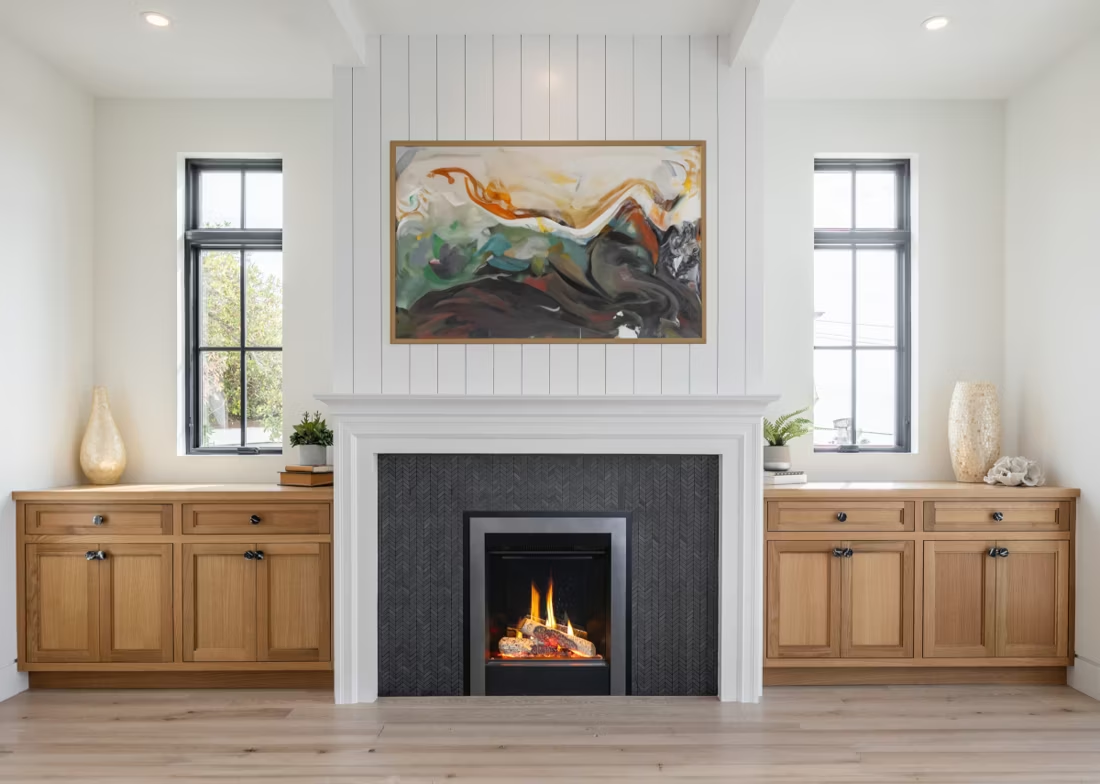
Four fuels. One honest answer for DeSoto County.
Three steps. No salesperson until you're ready.
Tell us about your project
Your zip code, your situation, and the fuel you're leaning toward—or let the answers point you to one.
See what's actually available
The brands dealers within 100 miles genuinely carry—real options, never a catalog mirage.
Get your dealer & Project Guide
A trusted local dealer, plus the free Project Guide & Parts List that names every component of the job.
Frequently Asked Questions
Which fuel works best in DeSoto County?
For most homes here, it's gas or electric. DeSoto County's climate is mild—winter lows average around 47°F and the winter heating season is short and light, so the long, punishing burns that justify a wood stove in a place like International Falls, Minnesota just aren't part of the picture here. Gas fireplaces (mostly propane, since natural gas lines are limited outside Arcadia) give instant, controllable warmth on the occasional cold front without any fuel storage or chimney maintenance. Electric fireplaces work well for supplemental warmth in a bedroom or den and for the ambiance many homeowners want even when heat isn't strictly needed. Wood and pellet stoves are technically available if you want one—some ranch homes and hunting cabins do install a wood stove for backup heat or aesthetic—but they're the exception, not the rule, in DeSoto County.
Do I need a permit to install a fireplace in DeSoto County?
In most cases, yes. Gas fireplace, insert, or stove installations require a building permit through the DeSoto County Building Department, plus a gas line permit and licensed gas-fitter for the propane or natural gas connection. Electric fireplaces generally don't require a permit unless you're doing a built-in installation with new wiring or a dedicated circuit, in which case an electrical permit applies. If you're one of the county's rare wood-stove installs, that also requires a permit and a stove that meets current EPA emissions standards. Most local hearth retailers handle the permitting as part of the installation, so you typically won't need to file it yourself.
Is wood-burning uncommon in DeSoto County, and why?
Yes—wood stoves and wood-burning fireplaces are uncommon here, and that's a direct result of the climate, not availability. With winter lows averaging 47°F and only a short, mild heating season each year, there's rarely a cold stretch long enough to justify the cost, chimney maintenance, and firewood supply that a wood stove requires. Oak, mahogany, and pine are all plentiful in the county's hammocks and ranchland, so fuel isn't the barrier—demand is. The wood installations that do happen tend to be decorative fireplaces, occasional-use setups on ranch properties, or units installed for a specific aesthetic rather than as anyone's primary heat source.
What about pellet stoves—are they used in DeSoto County?
Rarely, and for the same reason as wood. Pellet stoves are built for sustained, cold-climate heating loads, and DeSoto County's mild winters don't generate that kind of demand. The regional pellet brands you'll see on shelves here—Lignetics, Hamer Pellet Fuel, Greenway Renewable Energy—are typically stocked for grilling and outdoor cooking use, not home heating pellet stoves. If you specifically want a pellet appliance for a hunting camp or as a secondary heat source, a local retailer can special-order one, but don't expect the wide pellet-stove selection you'd find in a cold-climate market.
Can one local retailer handle both gas and electric fireplaces in DeSoto County?
Yes, most hearth retailers serving DeSoto County stock both gas and electric lines, since those are the two fuels that actually fit the local climate. A dealer carrying both can walk you through the trade-offs—gas for instant, thermostat-controlled heat on cold fronts, electric for plug-in simplicity or a built-in look without any venting. If you're weighing the two, ask to see working displays of each; the difference in flame realism and heat output is easier to judge in person than from a spec sheet.
What's the typical cost range for gas and electric fireplace installation in DeSoto County?
Gas fireplace, insert, or stove installation typically runs $4,000–$9,000, with propane conversions on the lower end if a tank and line are already in place, and full new gas-line work pushing toward the higher end. Electric fireplaces run $200–$2,500 for the unit itself, plus $300–$1,000 in labor for anything beyond a plug-and-play wall unit—built-ins with new circuits or recessed installs land at the higher end. Because wood and pellet installs are rare here, most local pricing data reflects gas and electric projects; see the county + fuel pages above for retailer-specific figures.
Can a fireplace actually lower my heating bill?
Yes—by creating a comfort zone. A furnace heats every square foot of the house just to warm the one room you're in; a gas fireplace on low burns roughly a sixth of the gas a typical furnace does. Set the furnace around 55–60 degrees as a baseline, then heat the rooms your family actually uses. Families who heat this way commonly save $20–$60 a month.
Can I install a fireplace myself?
If you're putting a fire in your house on purpose, it's best to work with an expert. Unless you're genuinely experienced in framing, gas line, vent pipe, and the national code on clearances to combustibles, have a professional do it—and ideally the same company that sells you the fireplace, so warranty, service, and liability all live under one roof.
Wood, gas, pellet, or electric—how do I choose?
Match the fuel to your life, not the other way around. Wood: lowest fuel cost and total power-outage independence, but you're hauling and stacking. Gas: press a button, set a thermostat, no maintenance to speak of. Pellet: wood economics with automatic feeding, in exchange for weekly cleaning and a need for electricity. Electric: plugs in anywhere with honest supplemental heat. Nobody regrets the fuel that fits how they actually live.
How much should I budget for a fireplace?
For an average home—covering the fireplace, the vent pipe, and basic installation—a budget between $3,900 and $5,500 gives you a lot of options across wood, gas, and pellet. By the time you add finish work, gas line, and electrical, the average complete installation lands between $5,000 and $12,000 all-in. In a remodel or new build, a good rule is to put about 2.5% of the total project cost toward the fireplace.
Stove and Fireplace Dealers in DeSoto County
Listings include WhyFire partner dealers, dealers we have verified as authorized for the brands we recommend, and established local businesses that carry hearth products. Every listing shows which one it is. The ones marked Preferred run on WhyFire's software, so they can show you real pricing and book your appointment right here. No manufacturer pays for placement. How we verify dealers →
Accent Fireplace & Accessories
Calkins Lp Gas Co
Indigo Pool Patio Bbq
American Grill And Hearth
Aquatech Pools Gc
G&c Outdoor Kitchens, LLC
South Florida Gas Co Inc
Find your fireplace in DeSoto County.
Pick gas or electric below to see installation costs, recommended units, and get matched with a local dealer—plus a free Project Guide & Parts List for your DeSoto County project.
Find Your Fireplace →