
Pellet Heat in a City That Rarely Needs It.
With a 64-degree average winter low and almost no heating season, Coral Gables is not pellet-stove country. Here's the honest picture—and what most local homeowners choose instead.
Every Project Starts From One of These Five Situations
This city just doesn't need pellet heat.
Coral Gables sits at 9 feet of elevation on Biscayne Bay in climate zone 1A, where the average winter low is 64°F and the city logs about 79 heating degree days a year. Compare that to a place like International Falls, MN, which racks up over 10,000 heating degree days most winters—Coral Gables gets roughly 1% of that heating demand. Pellet stoves are built to burn for hours at a stretch and push serious BTUs into a room; that's simply not a problem most Coral Gables homes have.
That doesn't mean nobody installs one. A small number of Coral Gables homeowners add a pellet stove or insert for the look of a live fire in a Mediterranean Revival living room, for the rare January cold snap when temperatures dip into the 40s, or because they split time between a Coral Gables home and a colder second property. If that's you, it's worth going in with clear eyes: pellet appliances need through-wall or through-roof venting that has to clear Miami-Dade's High-Velocity Hurricane Zone code, and the auger and blower run on electricity from Florida Power & Light—meaning the stove goes dark in the same hurricane-driven outages when you might otherwise want backup heat. For most homeowners here, a gas or electric fireplace ends up being the better-fitting choice, and we'll say so plainly if that's what your home calls for.
Three steps. No salesperson until you're ready.
Tell us about your project
Your zip code, your situation, and the fuel you're leaning toward—or let the answers point you to one.
See what's actually available
The brands dealers within 100 miles genuinely carry—real options, never a catalog mirage.
Get your dealer & Project Guide
A trusted local dealer, plus the free Project Guide & Parts List that names every component of the job.
Frequently Asked Questions
Are pellet stoves actually practical in Coral Gables?
Practical in the sense of meaningful heating value, generally no. With only 79 heating degree days a year and a winter low that averages 64°F, most Coral Gables homes never have a sustained need for supplemental heat, let alone a stove designed to run for hours a day through a real winter. Pellet stoves are engineered for climates like Minnesota or Vermont, where feeding a hopper and running an auger for months at a time pays off in fuel savings. Here, a pellet stove is more of a design and ambiance choice than a heating necessity—and we'll tell you that directly rather than push a product that doesn't fit your climate.
So why would anyone install a pellet stove in Coral Gables at all?
The homeowners we hear from usually fall into one of three groups: people who want the look and glow of a real, low-maintenance fire in a Mediterranean Revival or Spanish-style living room; people who remember one of Miami-Dade's rare hard freezes—the 2010 and 2018 cold snaps both pushed overnight lows into the 30s and 40s across the county—and want a hedge against the next one; and second-home owners who are used to pellet heat at a colder property up north and want the same appliance and fuel routine at home. All three are legitimate reasons, but none of them are about heating load in the way a pellet stove buyer in a place like Duluth, MN would think about it.
What does a pellet stove installation cost in Coral Gables?
Because pellet installs are uncommon this far south, there isn't a deep well of local pricing history the way there is for gas fireplace conversions. In markets where pellet stoves are the norm, a full install—stove, hearth pad, and through-wall pellet venting—typically runs in the $4,000–$7,500 range nationally. Coral Gables jobs tend to land on the lower end of that since most installs here are retrofits into an existing room rather than new masonry work, but expect your dealer to walk the site first: Miami-Dade's High-Velocity Hurricane Zone code requires any exterior wall penetration, including pellet vent terminations, to carry Notice of Acceptance (NOA) documentation, which can add a step most installers in colder states never deal with.
What's the difference between a pellet stove and a pellet insert?
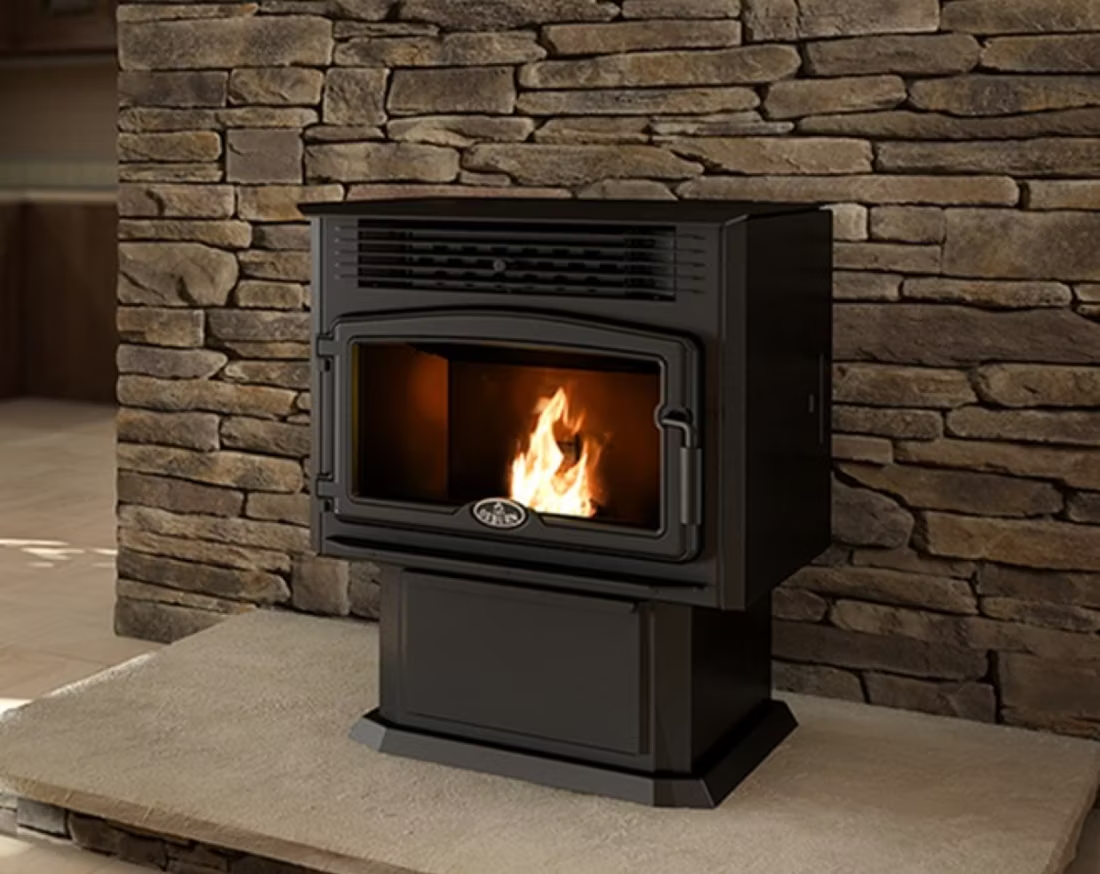
A pellet stove is a freestanding appliance that sits on its own hearth pad and vents through a wall or the roof—it can go almost anywhere with the right clearances. A pellet insert is built to slide into an existing masonry fireplace opening, which matters less in Coral Gables than it would in an older Northeast or Midwest city, since true wood-burning masonry fireplaces are far less common in South Florida homes to begin with. If your Coral Gables home does have an existing fireplace opening you want to repurpose, an insert can work; otherwise a freestanding stove or a zero-clearance unit is usually the simpler retrofit.
Would a pellet stove help during a hurricane power outage?
No, and this is the point most people miss. Pellet stoves rely on an electric auger to feed fuel and an electric blower to distribute heat—cut the power from Florida Power & Light during a hurricane, and the stove stops working within minutes unless it's wired to a generator or battery backup. If backup heat or ambiance during outages is actually your goal, a wood-burning option or a battery-friendly gas fireplace with a standing pilot will serve you far better than pellet, which is one more reason pellet is a niche fit here rather than a go-to recommendation.
What should I consider instead of a pellet stove in Coral Gables?
Most Coral Gables homeowners looking for a fireplace end up in gas or electric. A direct-vent gas fireplace or insert gives you instant flame and real ambiance without hauling fuel, and propane or natural gas service is readily available across Miami-Dade for homes that want it. An electric fireplace is the simplest option of all—no venting, no gas line, no combustion byproducts, just a standard outlet—which makes it popular in condos and townhomes throughout the 33134 and 33146 zip codes where exterior venting is harder to add. At roughly 13.7 cents per kWh through FPL, running an electric unit for ambiance a few evenings a month costs very little.
Can I even buy pellets locally in Coral Gables if I do install a stove?
You can, though supply is thinner than it would be further north. Brands like Lignetics, Hamer Pellet Fuel, and Greenway Renewable Energy distribute through the Southeast and show up at larger hearth retailers and some home improvement stores in the Miami area, but don't expect the pallet-stacked pellet aisle you'd see in a cold-climate hardware store. Most Coral Gables pellet owners either order a season's supply in bulk ahead of time or buy a few bags at a time as needed, since demand—and therefore in-store turnover—is low.
Do I need a permit to install a pellet stove in Coral Gables?
Yes. Any new solid-fuel appliance install goes through Miami-Dade's building permitting process, and because Coral Gables falls inside the High-Velocity Hurricane Zone, any vent pipe that penetrates an exterior wall or roof needs Notice of Acceptance (NOA) documentation showing it meets wind-load and water-intrusion standards. This is a step that pellet installers based in most other states simply don't encounter, which is part of why we only match Coral Gables homeowners with dealers who already know the local code—a generic out-of-area installer can get tripped up here.
Pellet vs. gas vs. electric—which fireplace actually fits a Coral Gables home?
Given the climate, gas and electric do the heavy lifting here. Gas gives you real flame, instant on-off, and works whether you're in a house with a yard for a propane tank or a home already tied into natural gas service—and it holds up fine through Miami's humidity and salt air with proper venting. Electric is the lowest-friction option: no venting, no fuel deliveries, and a monthly operating cost that's negligible at FPL's residential rate. Pellet still has a place if you specifically want the look of a real wood fire and are willing to deal with electric dependency and hurricane-code venting—but for most Coral Gables homeowners, it's the third choice rather than the first.
Why is my open fireplace making my house colder?
Open fireplaces suck—literally. As the fire burns, it consumes air your furnace already paid to heat and pulls it out through the chimney, so the house is actually colder after the fire goes out than before you lit it. An insert fixes this: it seals the chimney, puts fixed glass across the front, and turns that hole in your house into a real heat source.
What's the difference between an insert and a zero-clearance fireplace?
An insert is a fireplace that slides into a pre-existing wood-burning fireplace—if you don't have one, there's nothing to insert it into. A zero-clearance fireplace is built into a framed wall, which makes it the answer for remodels and new construction. Simple test: existing masonry fireplace means insert; blank or framed wall means zero-clearance.
How much should I budget for a fireplace?
For an average home—covering the fireplace, the vent pipe, and basic installation—a budget between $3,900 and $5,500 gives you a lot of options across wood, gas, and pellet. By the time you add finish work, gas line, and electrical, the average complete installation lands between $5,000 and $12,000 all-in. In a remodel or new build, a good rule is to put about 2.5% of the total project cost toward the fireplace.
What is an in-home preview and do I need one?
It's a visit where a hearth professional measures your space, confirms the model you picked actually works in your home, and walks the specs—framing, gas line, venting, finish work—before anything is ordered. Some details you just can't know until you see the house. Never make a down payment without one; it's the single most-skipped step that burns buyers.
Nearby Dealers
Hearth shops serving Coral Gables and the surrounding area.
Pellet Brands Stocked Around Coral Gables
Manufacturers will point you to the nearest stocking dealer.
Get the honest answer for your Coral Gables home.
Tell us about your space and we'll put together a free Project Guide & Parts List—whether that ends up being a pellet stove, or the gas or electric option that actually fits Coral Gables' climate—and match you with a trusted local dealer who can install it correctly.
Find Your Fireplace →