
Gas fireplace warmth for Coral Gables' grand rooms and loggias.
With barely any real winter chill to speak of, a gas fireplace here is about architecture and ambiance more than survival heat—and the right one still earns its keep on the coldest January nights.
Every Project Starts From One of These Five Situations
A fireplace built for architecture, not arctic nights.
Coral Gables sits at 9 feet of elevation in climate zone 1A, with winter lows averaging 64°F and barely any heating needed all year—essentially none. Wood stoves and pellet appliances have no real footing here, which is part of why gas has become the default fireplace fuel in George Merrick's Mediterranean Revival city. A gas fireplace fits naturally into the coffered-ceiling living rooms, loggias, and courtyards that define Coral Gables architecture, and it lights instantly on the handful of nights each January when a cold front drops temperatures into the 30s and 40s.
Natural gas service through Peoples Gas System reaches parts of Coral Gables and greater Miami-Dade, though coverage varies block by block—plenty of homes here run on propane instead, with a tank tucked behind landscaping. Either fuel works for a direct-vent fireplace. Given Coral Gables' year-round outdoor living culture, we also see a lot of interest in gas fire features for lanais and pool decks, not just indoor units. For homeowners who'd rather skip combustion and venting altogether, Florida Power & Light's grid also supports electric fireplaces as a no-heat-output, flame-effect alternative.
Three steps. No salesperson until you're ready.
Tell us about your project
Your zip code, your situation, and the fuel you're leaning toward—or let the answers point you to one.
See what's actually available
The brands dealers within 100 miles genuinely carry—real options, never a catalog mirage.
Get your dealer & Project Guide
A trusted local dealer, plus the free Project Guide & Parts List that names every component of the job.
Frequently Asked Questions
How much does a gas fireplace installation cost in Coral Gables?
An indoor direct-vent gas fireplace or insert in Coral Gables typically runs $3,500 to $9,000, depending on the unit, whether it's going into an existing masonry opening, and how far the gas line has to travel through a finished wall or ceiling. Outdoor gas fireplaces and built-in fire features for a lanai or pool deck—popular given how much time Coral Gables homeowners spend outside—usually run higher, often $5,000 to $15,000 once masonry surrounds, gas line extension, and coastal-rated materials are factored in. A local dealer will confirm firm numbers after seeing your gas service and the space.
Should I use natural gas or propane for my fireplace?
It depends on your address. Peoples Gas System serves natural gas to parts of Coral Gables and Miami-Dade County, but coverage is uneven—some blocks have a line at the street, others don't. If natural gas isn't available at your home, propane is the standard fallback, supplied from a tank sized to your fireplace's BTU load. Most fireplace models sold by local dealers can be configured for either fuel; the installer simply sets the correct orifice and regulator. If you already run a gas range, water heater, or pool heater on propane, adding a fireplace to that system is usually the simpler path.
Do I need a permit to install a gas fireplace in Coral Gables?
Yes. New gas fireplace installations require a building permit and a gas permit, typically pulled through the City of Coral Gables Development Services Department (Miami-Dade County handles unincorporated pockets within the zip codes around the city). Because Coral Gables falls within Miami-Dade's High-Velocity Hurricane Zone, exterior venting terminations and any outdoor gas fire feature also need to meet wind-load and impact requirements—not a standard concern in most of the country, but a real one here. A reputable local installer handles this paperwork as part of the job rather than leaving it to the homeowner.
Will my gas fireplace still work if the power goes out?
In most cases, yes—and in Coral Gables that matters more than it might elsewhere. Hurricane season regularly brings multi-day outages to Miami-Dade, and a gas fireplace with intermittent pilot ignition (IPI) runs on a small battery backup that keeps the unit lighting on demand even with the grid down. Valor fireplaces go a step further, generating their own current through the pilot's thermocouple so there's no battery to remember at all. An electric fireplace, by contrast, is entirely dependent on FPL service and goes dark the moment the power does—worth weighing if you're deciding between the two.
Gas fireplace, insert, or gas stove—what's the difference?
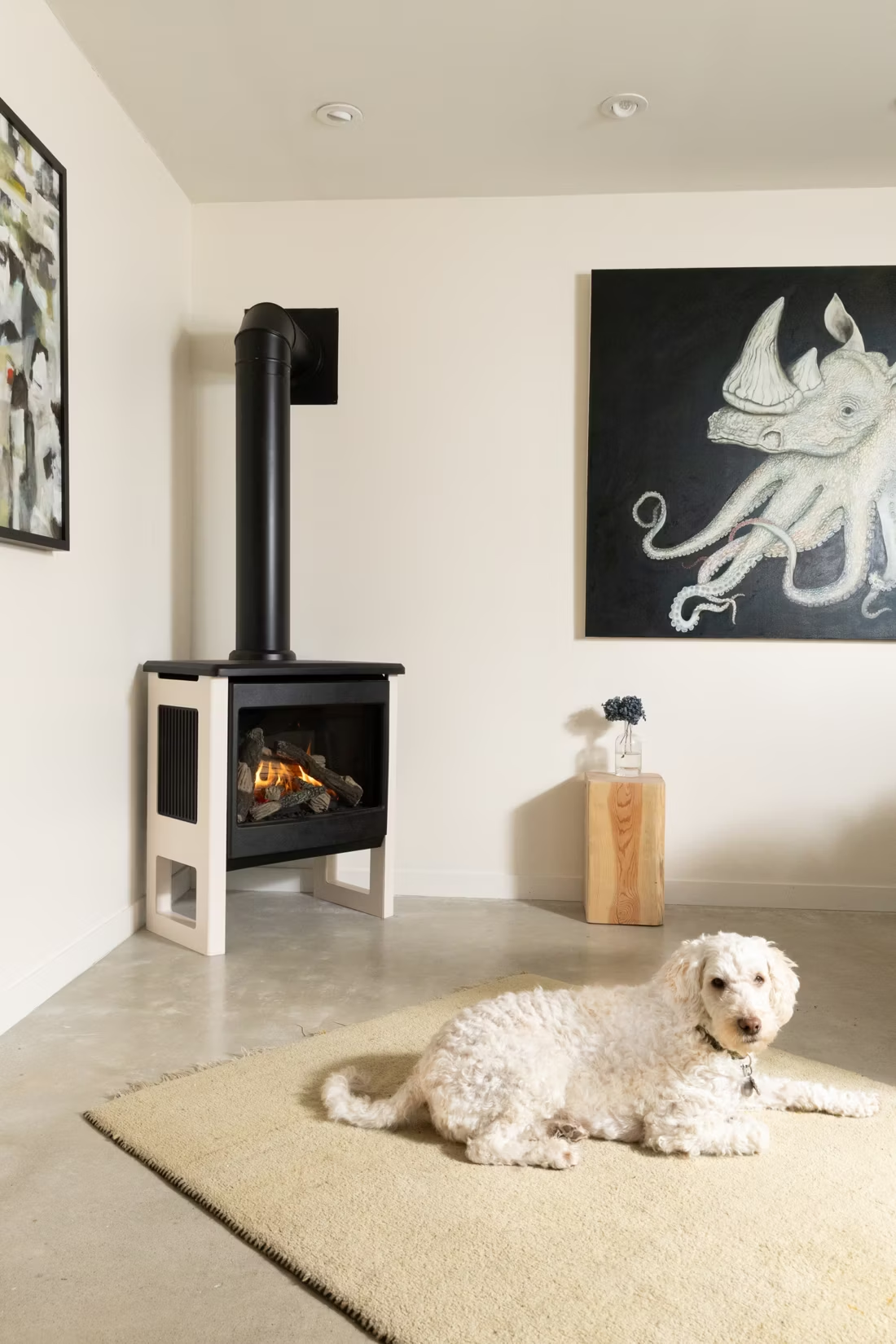
A gas fireplace is a fully built-in unit framed into a wall—common in new construction and in the great rooms typical of Coral Gables' larger Mediterranean Revival homes. A gas insert drops into an existing masonry firebox and uses the same opening, which suits older Gables bungalows and 1920s-era houses that already have a fireplace shell but no real heat source. Freestanding gas stoves are unusual here; with heating needs this low, most homeowners choose a linear or traditional-front built-in for the visual statement rather than a stove for warmth.
Should I choose a vented or vent-free gas fireplace?
Vented (direct-vent) units draw combustion air from outside and exhaust it back outside through a sealed pipe—they're the standard recommendation almost everywhere, including Coral Gables. Vent-free units burn directly into the room, and while they're technically legal in Florida with proper room-sizing and oxygen-depletion sensors, they also release water vapor into a climate that already runs at high humidity most of the year. That combination isn't ideal in South Florida homes. Local dealers here overwhelmingly install direct-vent fireplaces for that reason, and it also keeps you clear of any HVHZ venting scrutiny at final inspection.
How often does a gas fireplace need to be serviced in Coral Gables?
Plan on an annual inspection, typically $150 to $250, where a technician checks the burner, pilot assembly, gas connections, and venting, and cleans the glass. Proximity to Biscayne Bay adds a wrinkle most inland markets don't deal with: salt-laden air can accelerate corrosion on exterior venting caps and outdoor fire feature components, so coastal installations sometimes need cap replacement sooner than the appliance itself would suggest. If your fireplace sits near an open lanai or pool deck, mention that to your service tech so they check the vent termination closely.
Can I add a gas fire feature to my pool deck or lanai instead of an indoor fireplace?
Absolutely, and it's one of the more popular projects for Coral Gables homeowners given how much of the year is spent outside. Options range from a simple gas fire pit or fire bowl on a paver patio to a full masonry fireplace built into an outdoor kitchen or loggia wall. These run on either a dedicated propane tank or an extension of your home's natural gas line, and because they're outdoors, HVHZ wind-rating requirements apply to any structural surround. A local dealer can size the feature to your space and confirm what your gas service can support.
Gas fireplace or electric fireplace—which makes more sense for a Coral Gables home?
With winter lows averaging 64°F, neither option is doing meaningful heating work most of the year, so the choice comes down to look and feel. Gas gives you a real flame, genuine heat output for the occasional cold front, and backup operation during hurricane-season outages if you choose an IPI model. Electric fireplaces run on Florida Power & Light service at roughly 13.7 cents per kWh, install for a fraction of the cost with no gas line or venting required, and are the simpler retrofit for a condo or an interior wall with no flue access. For a primary living room centerpiece in a Coral Gables home, gas remains the more common choice; for a bedroom, den, or rental unit, electric often wins on cost and simplicity.
Is my gas fireplace wasting gas?
If it was installed more than 15 years ago, probably. Older gas fireplaces keep a standing pilot light burning all the time, and that little flame can cost a couple hundred dollars a year. Newer models use pilot-on-demand ignition—the pilot lights only when you use the fireplace and goes out when you turn it off.
Why is my open fireplace making my house colder?
Open fireplaces suck—literally. As the fire burns, it consumes air your furnace already paid to heat and pulls it out through the chimney, so the house is actually colder after the fire goes out than before you lit it. An insert fixes this: it seals the chimney, puts fixed glass across the front, and turns that hole in your house into a real heat source.
Can I install a fireplace myself?
If you're putting a fire in your house on purpose, it's best to work with an expert. Unless you're genuinely experienced in framing, gas line, vent pipe, and the national code on clearances to combustibles, have a professional do it—and ideally the same company that sells you the fireplace, so warranty, service, and liability all live under one roof.
What is an in-home preview and do I need one?
It's a visit where a hearth professional measures your space, confirms the model you picked actually works in your home, and walks the specs—framing, gas line, venting, finish work—before anything is ordered. Some details you just can't know until you see the house. Never make a down payment without one; it's the single most-skipped step that burns buyers.
Nearby Dealers
Hearth shops serving Coral Gables and the surrounding area.
Find your gas fireplace in Coral Gables.
Tell us about your home and we'll put together a free Project Guide & Parts List—the right gas fireplace or fire feature, the exact venting components it needs, and a trusted local Coral Gables dealer to install it.
Find Your Fireplace →