
Ambiance-first gas fireplaces for Broward County.
With barely any real heating need over the year, Broward County homes don't need a furnace substitute—they want a real flame for the rare cool evening and year-round curb appeal. Get matched with a trusted local dealer who installs it right.
Every Project Starts From One of These Five Situations
Heat isn't really the point here.
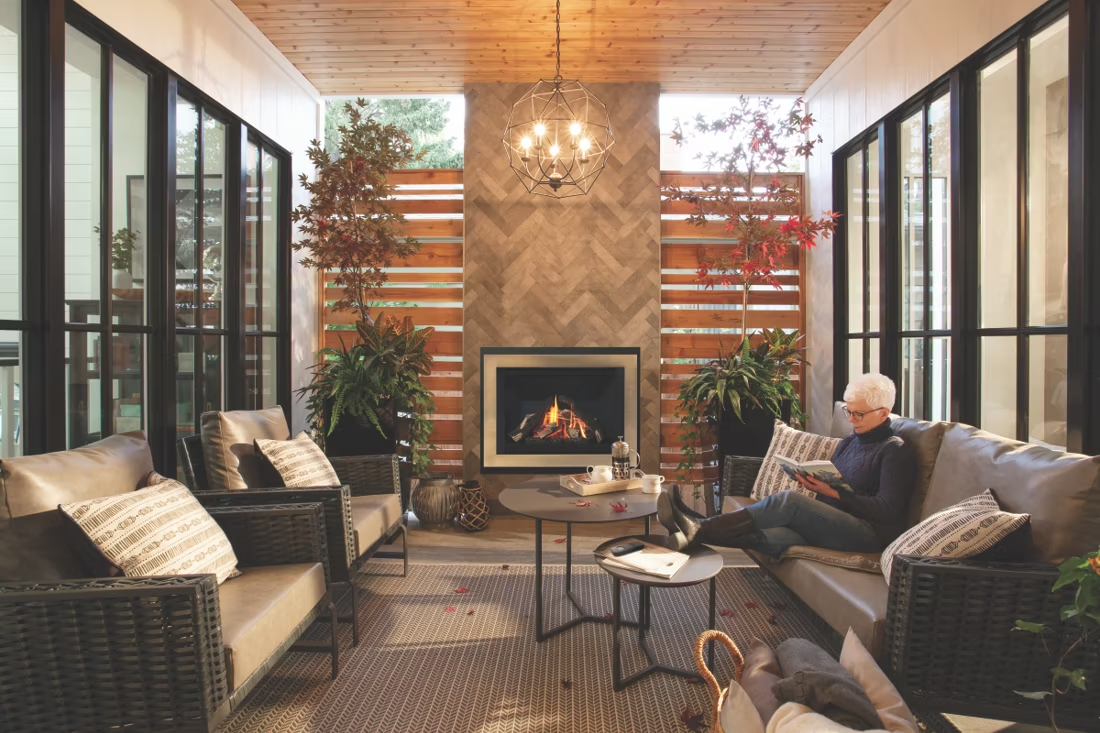
Broward County sits in climate zone 1A with an average winter low around 60°F and barely any real heating need over the year—for comparison, a place like Duluth, MN has a brutally long, deep heating season. Nobody in Fort Lauderdale, Pembroke Pines, or Coral Springs is buying a gas fireplace to survive the winter. They're buying one for the look: a clean linear flame in a great room, a focal point for a lanai remodel, or a feature wall that makes a condo or new-construction home feel finished. That's a completely legitimate reason to install one, and it changes what actually matters in the buying decision.
Because heat load is a non-issue here, the conversation in Broward County is almost entirely about venting, aesthetics, and gas source. Most of the county runs on propane rather than piped natural gas outside of a handful of served pockets, so your installer will confirm your fuel source early. Vent-free units get more consideration in this market than in cold-climate regions since there's no real heating demand to satisfy—but direct-vent units remain the safer, more broadly permitted choice for indoor air quality. A local dealer who knows Broward's condo associations, HOA fire-rating rules, and county permitting can steer you to the right configuration without over-buying BTUs you'll never need.
Three steps. No salesperson until you're ready.
Tell us about your project
Your zip code, your situation, and the fuel you're leaning toward—or let the answers point you to one.
See what's actually available
The brands dealers within 100 miles genuinely carry—real options, never a catalog mirage.
Get your dealer & Project Guide
A trusted local dealer, plus the free Project Guide & Parts List that names every component of the job.
Frequently Asked Questions
How much does a gas fireplace installation cost in Broward County?
Most gas fireplace and insert installations in Broward County run in the range typical for South Florida remodels—expect the low end if you're adding a vent-free or direct-vent unit into an existing wall cavity with gas already stubbed in, and the higher end if you need new gas line runs, a propane tank set, or custom masonry work for a linear feature wall. Condo and townhome installs in cities like Fort Lauderdale or Hollywood often carry added cost for HOA-required fire-rated framing or venting through shared walls. A local dealer will give you a firm number after seeing the space.
Do I need natural gas, or is propane the standard here?
Propane is the more common fuel source across most of Broward County—piped natural gas service is limited to specific pockets rather than county-wide coverage the way it is in older Northeast metros. If your home already runs on propane for a range or water heater, adding a fireplace is a simple tie-in. If you're starting from scratch, your installer will help you decide between a new propane tank and checking whether natural gas is actually available at your address before you commit to either fuel path.
Will my gas fireplace work during a power outage?
Most modern gas fireplaces will, which matters in Broward County given hurricane season. Units with IPI (intermittent pilot ignition) run on AA battery backup that kicks in automatically when the power drops, so the fireplace still lights on demand. Valor fireplaces go a step further—they generate their own electricity through the pilot's thermocouple, so there's no battery to remember or replace. For a county that regularly rides out tropical storm power loss, that's a meaningful difference worth asking your local dealer about.
What's the difference between vented and vent-free gas fireplaces?
Vented (direct-vent or B-vent) units draw combustion air from outside and exhaust gases back outside through a sealed system—they're the more universally code-compliant option and don't affect indoor air quality. Vent-free units burn directly into the room without external venting, which appeals in Broward County precisely because there's so little heating demand to worry about and no chimney or exterior vent run required, especially useful in condos and townhomes with limited exterior wall access. Vent-free units are legal in Florida but come with strict room-sizing and oxygen-depletion-sensor requirements. Your local dealer can walk you through both given your specific space and HOA rules.
What's the difference between a gas fireplace, insert, and gas stove?
A gas fireplace is a built-in unit framed into a wall—the default choice for new construction and full remodels across Broward's newer housing stock. A gas insert drops into an existing masonry fireplace opening, which is common in older homes in cities like Hollywood or Plantation that still have a wood-style firebox nobody's ever burned wood in. A gas stove is a freestanding cabinet-style unit, less common in South Florida's design aesthetic but occasionally used for a specific look. Most Broward homeowners with an existing firebox opt for an insert; those building or renovating without one usually go built-in.
Do I need a permit to install a gas fireplace in Broward County?
Yes—Broward County and its incorporated cities (Fort Lauderdale, Hollywood, Pembroke Pines, Coral Springs, and others each with their own building department) require both a building permit and gas line permit for new installations. Condo and HOA properties frequently layer on their own approval process for anything touching a shared wall or exterior venting. Most established local dealers handle the permitting and gas-fitter coordination as part of the install, which is one of the real advantages of working with a trusted installer instead of a big-box purchase.
How often should my gas fireplace be serviced?
An annual inspection is still worth doing even in a low-use climate like Broward County's—a technician checks the burner, pilot assembly, gas connections, and venting, and cleans the glass. Because most Broward units get lit occasionally for ambiance rather than daily heating through a real winter, wear is lower than in cold-climate markets, but South Florida's humidity can still affect components over time, so skipping service isn't a great idea just because the unit sees light use.
Are wood or pellet fireplaces ever installed in Broward County?
Rarely, and for good reason—with barely any real heating need over the year and winter lows averaging around 60°F, there's essentially no heating need that wood or pellets would solve here. A small number of Broward homeowners still install wood-burning fireplaces for the visual and ambiance of a real fire, sometimes using local oak or mahogany, but it's a design choice rather than a heating one, and pellet stoves are close to nonexistent in this market. If you're set on a real wood flame despite the climate, a local dealer can tell you honestly whether it makes sense for your specific home.
Gas vs. electric—which is right for my Broward County home?
In a climate with almost no heating demand, this comes down to look and flexibility more than performance. Gas gives you a real flame, a more authentic glow, and works during power outages with the right ignition system—a real consideration during hurricane season. Electric fireplaces install almost anywhere with no gas line or venting at all, cost far less upfront, and are popular in condos and rentals across Broward where gas isn't practical or permitted. If you want a genuine flame for a great room or lanai, gas usually wins; if you want a simple plug-in feature for a bedroom or secondary space, electric is the easier path.
Why is a fireplace insert so efficient?
An insert does two things: it seals the chimney completely, so you stop losing air you already paid to heat, and it radiates warmth into the room through the firebox and glass. Most add a heat-exchange fan that pulls cool room air underneath, wraps it around the hot firebox, and pushes it back out warm. Your home is more efficient before you've even lit the first fire.
What do I measure to size a fireplace insert?
Four numbers tell you what fits: the front width, the front height, the back width, and the overall depth of your existing fireplace opening. Grab a tape measure, jot those down, and snap a photo of the wall—those two things do more to move your project forward than anything else you can do today.
What is an in-home preview and do I need one?
It's a visit where a hearth professional measures your space, confirms the model you picked actually works in your home, and walks the specs—framing, gas line, venting, finish work—before anything is ordered. Some details you just can't know until you see the house. Never make a down payment without one; it's the single most-skipped step that burns buyers.
Does a fireplace add value to my home?
On average, a fireplace adds back to the home about the same amount you spent installing it. Add the monthly savings from heating the rooms you actually use instead of the whole house—often hundreds of dollars a year—and the value case is strong before you even count what a fire does for how your family uses the room.
Stove and Fireplace Dealers in Broward County
Listings include WhyFire partner dealers, dealers we have verified as authorized for the brands we recommend, and established local businesses that carry hearth products. Every listing shows which one it is. The ones marked Preferred run on WhyFire's software, so they can show you real pricing and book your appointment right here. No manufacturer pays for placement. How we verify dealers →
The Kitchenworks
Brandel Masonry
Lifestyle Barn LLC
A&S Reclaimed Wood
Atlantic Purchasing
Outdoor Kitchen & Grill
Impel America Appliance
Get your Broward County gas fireplace project guide.
Tell us about your home and we'll match you with a trusted local Broward County dealer and send a free Project Guide & Parts List—the right unit, venting approach, and gas source for your space.
Find Your Fireplace →