
Gas fireplaces for Southwest Ranches—built for ambiance, not survival heat.
With such a mild, short winter, nobody in Southwest Ranches needs a fireplace to survive winter. A gas fireplace here is a design statement and a hurricane-season backup—find the right one and get matched with a trusted local dealer.
Every Project Starts From One of These Five Situations
A fireplace for ambiance, entertaining, and cool December nights.
Southwest Ranches sits at 7 feet of elevation in western Broward County, in climate zone 1A, where the average winter low hovers around 59°F and the town's overall winter heating need is barely more than a handful of chilly nights a year—a fraction of what a place like Duluth, MN sees in a single cold week. Nobody here is installing a gas fireplace to keep pipes from freezing. On the large equestrian estates and custom homes that define this town, a gas fireplace is almost always a centerpiece for a great room or outdoor living space with high ceilings—something to look good on the handful of genuinely chilly evenings each winter and to anchor a room the rest of the year.
Southwest Ranches doesn't have municipal natural gas service running to most of its large, rural-feel lots, so propane is the standard fuel for gas fireplaces here—typically supplied by a tank installed on the property rather than a utility line. Florida Power & Light serves the town's electric needs at a residential rate around 13.7 cents per kWh, which matters if you're weighing a gas unit against an electric fireplace for a lanai or media room. Wood-burning and pellet appliances, by contrast, see almost no real demand in Southwest Ranches—the region has no heating need to justify them and South Florida's humidity makes indoor firewood storage a headache, so decorative wood fireplaces are rare and mostly found in a handful of older estate homes.
Three steps. No salesperson until you're ready.
Tell us about your project
Your zip code, your situation, and the fuel you're leaning toward—or let the answers point you to one.
See what's actually available
The brands dealers within 100 miles genuinely carry—real options, never a catalog mirage.
Get your dealer & Project Guide
A trusted local dealer, plus the free Project Guide & Parts List that names every component of the job.
Frequently Asked Questions
How much does a gas fireplace installation cost in Southwest Ranches?
Most gas fireplace installations in Southwest Ranches run in the $3,500 to $9,000 range. A direct-vent gas insert or built-in unit installed near an existing propane tank on the property sits toward the lower end. Costs climb when a new propane tank installation is needed, when the fireplace is going into a great room with cathedral ceilings that require longer venting runs, or when the unit is a large linear model built into custom cabinetry—common asks on the town's bigger equestrian properties. A local dealer will give you a firm number after seeing the room and your existing propane setup, if any.
Do I need natural gas, or does Southwest Ranches use propane?
Propane. Southwest Ranches is a low-density, rural-character town, and most of its lots aren't reached by a municipal natural gas main. The standard setup is a propane tank on the property—buried or screened near the house—feeding the fireplace along with, in many homes, the range or a whole-home generator. If you're building new or doing a major remodel, your dealer will coordinate with a propane supplier on tank sizing; if you already have a tank for another appliance, adding a fireplace line is usually straightforward.
Do I need a permit to install a gas fireplace in Southwest Ranches?
Yes. The Town of Southwest Ranches requires a building permit and a separate gas permit for new gas fireplace installations, reviewed under the Florida Building Code with Broward County amendments. Because propane line work has to be done by a licensed gas contractor, most homeowners let their hearth dealer pull and manage the permits as part of the install rather than dealing with the town's permitting process directly—it keeps the gas work, venting, and inspection sign-off under one contractor.
Will my gas fireplace still work if the power goes out?
This matters more in Southwest Ranches than the mild climate might suggest, because hurricane season brings multi-day outages, not cold snaps. Gas fireplaces with intermittent pilot ignition (IPI) run on a small battery backup and will light on demand even with the grid down—just keep fresh batteries in the unit going into storm season. Valor fireplaces take a different approach: their pilot assembly generates its own electricity through the thermocouple, so the fireplace never depends on batteries at all. For a town where FPL outages can stretch on after a storm, that's a real point worth asking your dealer about.
Should I get a built-in gas fireplace, an insert, or a freestanding stove?
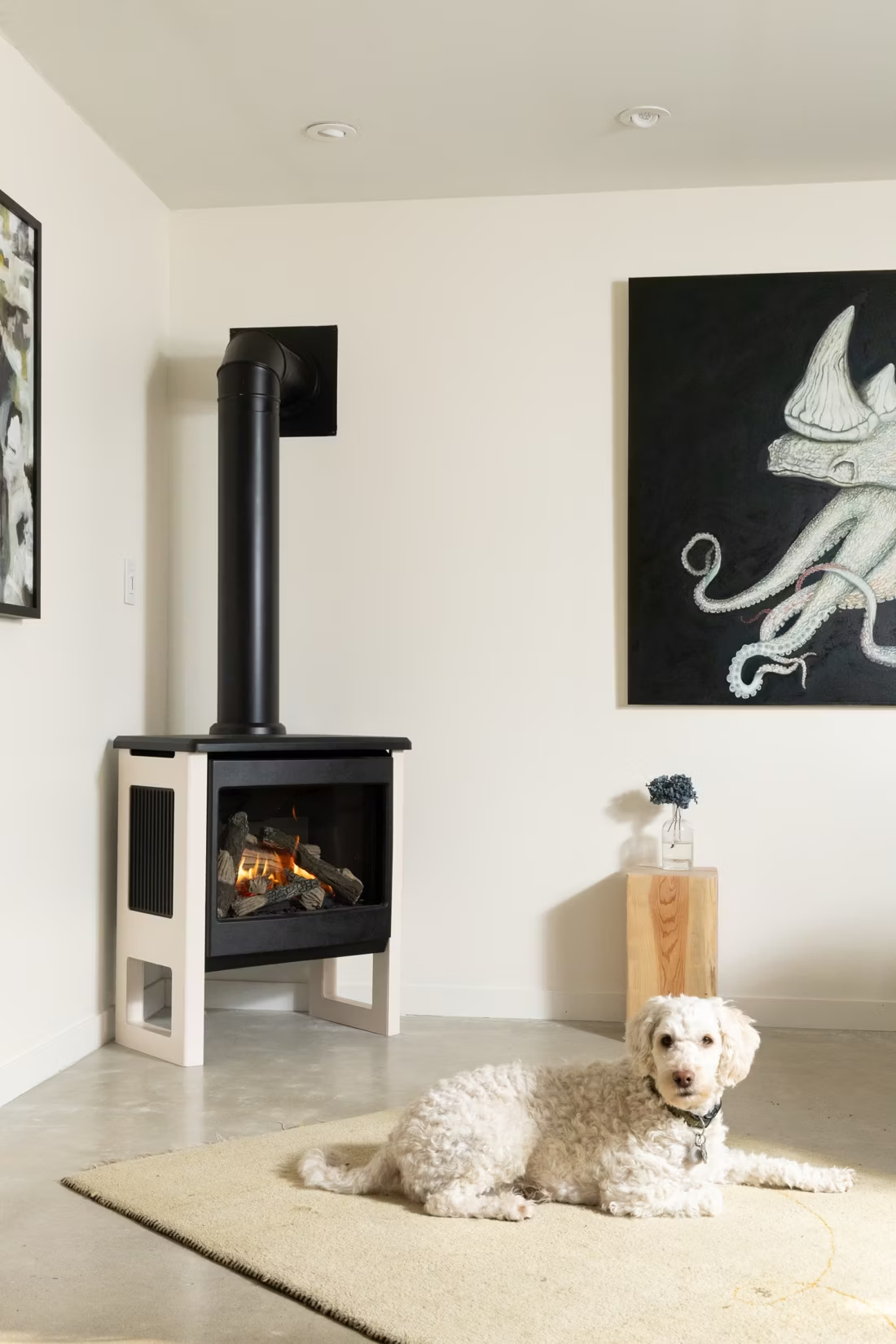
For Southwest Ranches, the vast majority of installs are built-in direct-vent gas fireplaces or linear gas units framed into a great room wall—a natural fit for the large, high-ceilinged rooms common on the town's estate lots. Gas inserts matter mainly for homes with an existing masonry fireplace that's currently just decorative; the insert seals up the old firebox and uses the chimney as a vent chase. Freestanding gas stoves are the least common choice here since they read more rustic-cabin than the equestrian-estate aesthetic most homeowners are going for, but they're an option for a den, guest cottage, or barn office.
Vented or vent-free—which makes sense in South Florida's humidity?
Vented, direct-vent gas fireplaces are the clear recommendation for Southwest Ranches. Vent-free units burn fuel directly into the room and release water vapor along with combustion byproducts—in a climate this humid, that added moisture load is the last thing your HVAC system and interior finishes need. Direct-vent units draw combustion air from outside and exhaust it back outside through a sealed system, so they don't add humidity or affect indoor air quality. Florida permits vent-free units under strict room-sizing and ventilation rules, but almost every dealer serving this area installs direct-vent as the default for exactly the humidity reason above.
How often does a gas fireplace need to be serviced here?
Plan on an annual inspection, ideally before the cooler months when you'll actually use the fireplace. A technician checks the burner, pilot or IPI components, venting, and gas connections, and cleans the glass. South Florida's year-round humidity and salt-laden air can accelerate corrosion on venting and hardware faster than it would in a dry climate, so it's worth flagging any pitting or discoloration to your technician even if the unit is only lit occasionally. Most local service visits run $150 to $250.
Gas fireplace or electric fireplace—which fits a Southwest Ranches home better?
Since heat output is rarely the deciding factor here, the choice usually comes down to look and installation complexity. A gas fireplace gives you a real flame, a stronger sense of ambiance, and (with the right ignition system) a genuine hurricane-season backup, but it needs a propane line and venting. An electric fireplace needs no venting or gas at all, plugs into a standard outlet, and runs on Florida Power & Light service at roughly 13.7 cents per kWh—a fraction of what heating that same space would cost in a colder climate, though electric units don't provide real backup heat during an extended outage. For a media room, guest suite, or lanai where you mainly want the visual, electric is often the simpler and cheaper install. For a main great room that's meant to anchor the house, gas is usually worth the extra work.
Why don't more Southwest Ranches homes have wood-burning fireplaces?
With such a mild winter overall and winter lows averaging 59°F, there's no real heating case for wood in Southwest Ranches, so it's mostly absent from new construction and remodels. The oak, mahogany, and pine that grow in the area are more relevant to the town's tree canopy and equestrian landscaping than to firewood supply, and storing cordwood in South Florida's humidity invites pests and mold. Where a wood-burning fireplace does show up, it's typically a legacy feature in an older estate home kept for looks rather than heat—most owners eventually convert it to a gas insert for a cleaner, lower-maintenance flame.
What's the difference between an insert and a zero-clearance fireplace?
An insert is a fireplace that slides into a pre-existing wood-burning fireplace—if you don't have one, there's nothing to insert it into. A zero-clearance fireplace is built into a framed wall, which makes it the answer for remodels and new construction. Simple test: existing masonry fireplace means insert; blank or framed wall means zero-clearance.
Why is a fireplace insert so efficient?
An insert does two things: it seals the chimney completely, so you stop losing air you already paid to heat, and it radiates warmth into the room through the firebox and glass. Most add a heat-exchange fan that pulls cool room air underneath, wraps it around the hot firebox, and pushes it back out warm. Your home is more efficient before you've even lit the first fire.
How much should I budget for a fireplace?
For an average home—covering the fireplace, the vent pipe, and basic installation—a budget between $3,900 and $5,500 gives you a lot of options across wood, gas, and pellet. By the time you add finish work, gas line, and electrical, the average complete installation lands between $5,000 and $12,000 all-in. In a remodel or new build, a good rule is to put about 2.5% of the total project cost toward the fireplace.
Can I install a fireplace myself?
If you're putting a fire in your house on purpose, it's best to work with an expert. Unless you're genuinely experienced in framing, gas line, vent pipe, and the national code on clearances to combustibles, have a professional do it—and ideally the same company that sells you the fireplace, so warranty, service, and liability all live under one roof.
Nearby Dealers
Hearth shops serving Southwest Ranches and the surrounding area. Every listing shows whether it is a WhyFire partner, a dealer we have verified as authorized for the brands we recommend, or a local business carrying hearth products. No manufacturer pays for placement. How we verify dealers →
Lifestyle Barn LLC
The Kitchenworks
Impel America Appliance
One Space Solution LLC
Brandel Masonry
Home Gas
A&S Reclaimed Wood
Find your gas fireplace in Southwest Ranches.
Tell us about your home and your propane setup, and we'll match you with a trusted local dealer and send over a free Project Guide & Parts List—the exact parts, including the vent kit, for your Southwest Ranches gas fireplace project.
Find Your Fireplace →