
Ambiance and Real Heat for Barrier-Island Living.
A gas fireplace here is less about survival heat and more about design, resale value, and the occasional January cold snap. Find the right unit and connect with a trusted local dealer.
Every Project Starts From One of These Five Situations
Built for ambiance, not survival heat.
Hillsboro Beach sits at 15 feet of elevation on a narrow barrier island in Broward County, with an average winter low around 60 degrees and only a tiny sliver of a heating season each year. Compare that to a place like Duluth, Minnesota, which faces a long, brutal winter heating season, and it's clear this isn't a wood-stove or pellet-stove market—both are essentially not applicable here. Gas, though, still has a real place in the roughly 2,225 homes on this island, just for different reasons than it does up north.
Because no natural gas utility currently serves this stretch of the barrier island, most gas fireplace installations in Hillsboro Beach run on propane, typically from a buried or pad-mounted tank sized by a local propane supplier. Florida Power & Light is the only utility listed for the town, which tells you this is an all-electric grid with propane filling the gas role for appliances. A well-chosen gas fireplace or linear fire feature still earns its keep: it's a design centerpiece in oceanfront living rooms, it provides genuine comfort on the handful of nights a year when cold fronts push lows into the 40s, and—with the right ignition system—it can supply heat and light during the power outages that come with hurricane season on this coast.
Three steps. No salesperson until you're ready.
Tell us about your project
Your zip code, your situation, and the fuel you're leaning toward—or let the answers point you to one.
See what's actually available
The brands dealers within 100 miles genuinely carry—real options, never a catalog mirage.
Get your dealer & Project Guide
A trusted local dealer, plus the free Project Guide & Parts List that names every component of the job.
Frequently Asked Questions
How much does a gas fireplace installation cost in Hillsboro Beach?
Most gas fireplace and linear fire feature installations in Hillsboro Beach run roughly $4,000 to $10,000, with the range driven mainly by whether you already have a propane tank on site, the length of gas line run needed, and whether the unit is a simple insert or a full linear design built into a wall. Because there's no natural gas main serving the island, homes without an existing propane tank typically need to budget an additional cost for tank installation and setup through a local propane supplier—that's the single biggest swing factor here compared to natural-gas markets.
Do I need natural gas, or does everyone use propane here?
Propane is the standard fuel for gas fireplaces in Hillsboro Beach. No natural gas utility currently reaches this part of the barrier island—Florida Power & Light is the only utility serving the town, and it's electric only. That means your installer will spec the fireplace for propane, coordinate a tank (buried, pad-mounted, or a smaller portable cylinder for lower-demand units), and set the regulator and orifices accordingly. If you're moving from a mainland home with natural gas, this is the biggest adjustment: propane costs more per BTU, but for the modest run-time a decorative or occasional-use fireplace sees here, it's rarely a significant expense.
What permits do I need to install a gas fireplace in Hillsboro Beach?
Installations require a building permit and a gas permit, coordinated through the Town of Hillsboro Beach Building Department in conjunction with Broward County code requirements. Because the town sits along the Coastal Construction Control Line, any work touching the structure—including venting penetrations through an exterior wall—gets reviewed against Florida Building Code wind-load and coastal construction standards, which is stricter than inland jurisdictions. Most established hearth dealers who work this stretch of coastline handle the permitting and inspection scheduling as part of the installation, which is worth asking about upfront given the added coastal review.
Will a gas fireplace still work if the power goes out during a storm?
It can, provided you choose the right ignition system—and this matters more in Hillsboro Beach than in most markets given how directly this stretch of Broward County coast sees hurricane-season outages. Units with IPI (intermittent pilot ignition) run on a battery backup that kicks in automatically when grid power drops, so the fireplace still lights on demand. Valor's gas fireplaces go a step further: the pilot's thermocouple generates its own electricity, so there's no battery to remember or replace. For an oceanfront home that might lose power for days after a named storm, that self-powering detail is worth asking your local dealer about directly.
Gas fireplace, insert, or gas stove—what fits an island home like this?
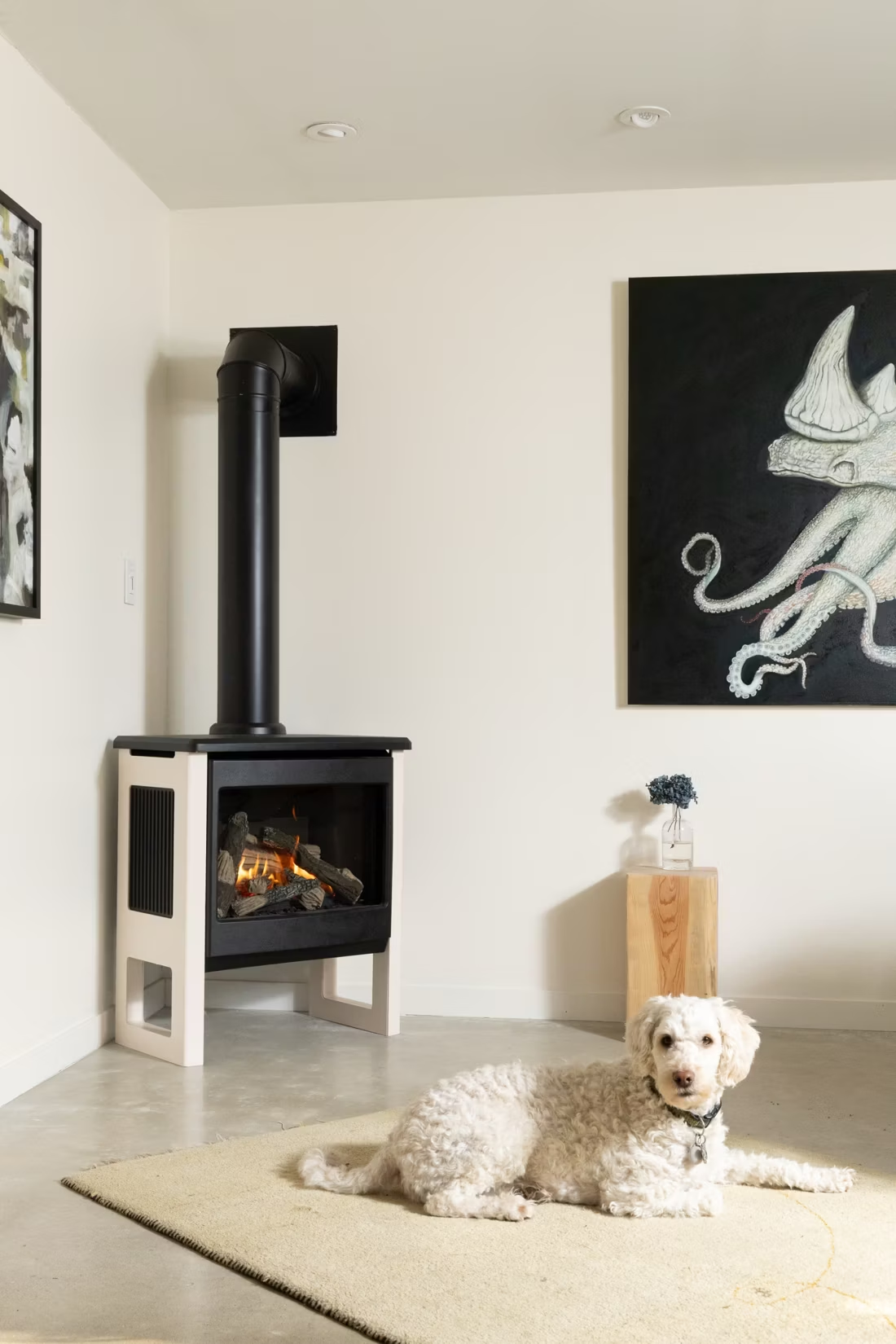
A gas fireplace is a fully built-in unit, often specified as a modern linear design in the newer and renovated oceanfront homes along this stretch of coast. A gas insert fits into an existing masonry firebox, useful if your home has an older wood-burning fireplace you'd rather not maintain. A gas stove is a freestanding cabinet-style unit, less common in this market's contemporary coastal builds. Given how few Hillsboro Beach homes were built around a traditional wood fireplace, most new installations here are built-in linear gas fireplaces chosen primarily for their look, with heat output as a secondary feature.
Should I choose a vented or vent-free gas fireplace?
Vent-free units are legal in Florida within specific room-size and ventilation limits, but for a coastal home in Hillsboro Beach, direct-vent (sealed, vented to the outside) is the stronger choice. Direct-vent systems expel combustion byproducts and moisture outside rather than into the living space—a real consideration in a salt-air, high-humidity environment where excess indoor moisture accelerates corrosion on metal fixtures and hardware. Direct-vent units are also more forgiving in tightly sealed, air-conditioned coastal homes where indoor air quality and dehumidification are already doing a lot of work.
How often should a gas fireplace be serviced in a place like Hillsboro Beach?
An annual inspection is the baseline for any gas appliance, but homes directly on the water here often benefit from checking components more frequently—salt air accelerates corrosion on burner assemblies, venting caps, and exterior terminations faster than it would a few miles inland. A technician should check the pilot and ignition system, gas connections, and the condition of the outside vent termination, which takes the brunt of salt exposure. Budget roughly $150–$250 for a standard annual visit, and mention the oceanfront location so the technician pays extra attention to hardware that shows early salt corrosion.
What size gas fireplace do I actually need here?
Less than you'd think. With only a tiny sliver of a heating season each year and winter lows averaging 60 degrees, a Hillsboro Beach gas fireplace is rarely asked to heat a whole room the way it would in a northern climate—it's covering a handful of cool evenings and cold-front nights when temperatures dip into the 40s. Most homeowners here are better served by a smaller-to-midsize direct-vent unit chosen for its flame presentation and linear design rather than maximum BTU output. A local dealer can help you avoid over-buying heat capacity you'll almost never use.
Gas or electric fireplace—which makes more sense for a home like mine?
Both are genuinely viable in Hillsboro Beach, and the choice comes down to what you want the fireplace to do. Electric fireplaces need no gas line, no propane tank, and no venting—a real advantage in condo units or homes where running a gas line is impractical, and at Florida Power & Light's residential rate of about 13.7 cents per kWh, running one occasionally costs very little. Gas fireplaces cost more upfront, particularly with a propane tank to install, but deliver a real flame and genuine heat output, plus the option of storm-outage operation with a battery-backed or self-powering ignition system. For a primary living space or a design centerpiece, gas tends to win here; for a bedroom, guest suite, or secondary space, electric is often the simpler and cheaper answer.
What's the difference between an insert and a zero-clearance fireplace?
An insert is a fireplace that slides into a pre-existing wood-burning fireplace—if you don't have one, there's nothing to insert it into. A zero-clearance fireplace is built into a framed wall, which makes it the answer for remodels and new construction. Simple test: existing masonry fireplace means insert; blank or framed wall means zero-clearance.
Can I put a TV above my fireplace?
Yes—with an asterisk. Fireplaces are hot and TVs don't like heat. Either put a mantel between them to deflect rising warmth, or choose a fireplace with heat-management technology that creates a cool zone on the wall above—the wall stays around 125 degrees, barely warm, while the room still gets full heat. If you like clean lines and don't want a mantel, heat management is the answer.
What is an in-home preview and do I need one?
It's a visit where a hearth professional measures your space, confirms the model you picked actually works in your home, and walks the specs—framing, gas line, venting, finish work—before anything is ordered. Some details you just can't know until you see the house. Never make a down payment without one; it's the single most-skipped step that burns buyers.
Can a fireplace actually lower my heating bill?
Yes—by creating a comfort zone. A furnace heats every square foot of the house just to warm the one room you're in; a gas fireplace on low burns roughly a sixth of the gas a typical furnace does. Set the furnace around 55–60 degrees as a baseline, then heat the rooms your family actually uses. Families who heat this way commonly save $20–$60 a month.
Nearby Dealers
Hearth shops serving Hillsboro Beach and the surrounding area. Every listing shows whether it is a WhyFire partner, a dealer we have verified as authorized for the brands we recommend, or a local business carrying hearth products. No manufacturer pays for placement. How we verify dealers →
A&S Reclaimed Wood
Brandel Masonry
The Kitchenworks
Atlantic Purchasing
Outdoor Kitchen & Grill
Pro Masonry And Fireplace
Lifestyle Barn LLC
Find your gas fireplace in Hillsboro Beach.
Tell us about your home and we'll put together a free Project Guide & Parts List—the right gas fireplace, the propane and venting plan, and a match with a trusted local dealer who installs on this stretch of coast.
Find Your Fireplace →