
Pellet Heat Is Rare in Apollo Beach—Here's Why That's Okay.
With 498 heating degree days and winter lows averaging 51°F, most Apollo Beach homes never need a primary heat source. But a small number of homeowners still want the ambiance or the backup—and we can connect you with a dealer who handles it right.
Every Project Starts From One of These Five Situations
A subtropical coast that rarely needs supplemental heat.
Apollo Beach sits at 8 feet of elevation on Tampa Bay, in climate zone 2A, where winter lows average 51°F and the entire heating season adds up to about 498 heating degree days—for comparison, a place like Duluth, MN racks up over 9,000. Most years, the closest thing to a cold snap here is a few nights in the 30s tied to a strong cold front pushing down from the Panhandle. That's real weather, but it's not the kind of sustained cold that makes a wood or pellet stove a practical primary heat source.
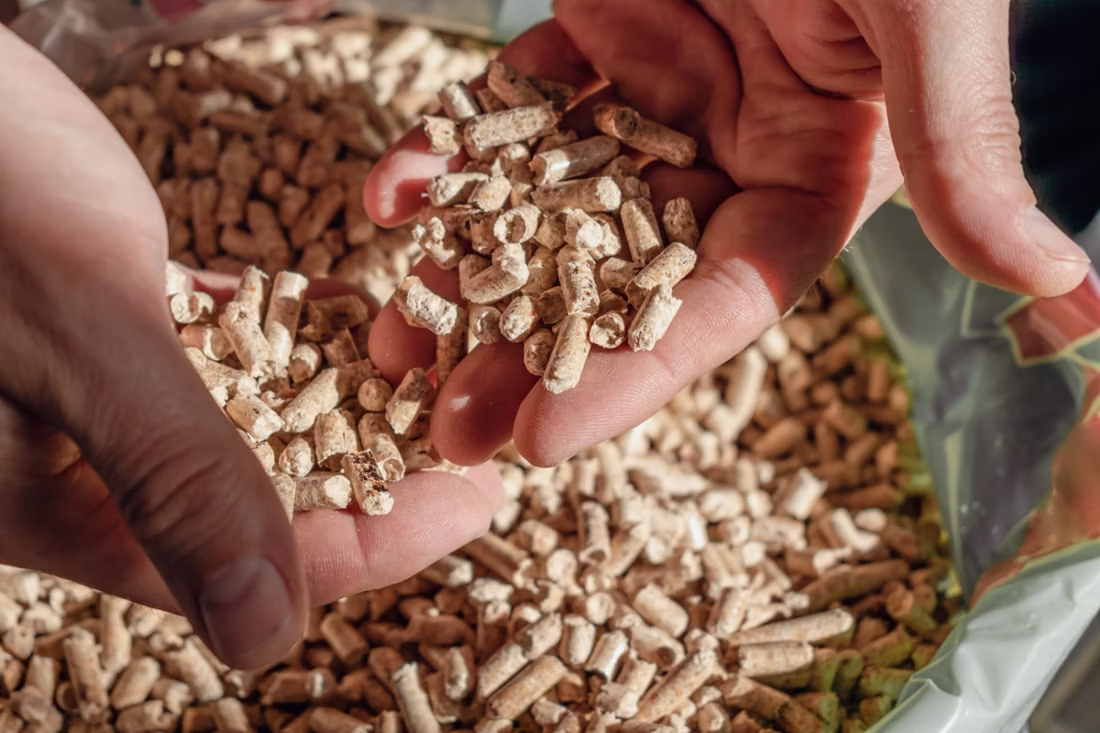
That said, pellet appliances aren't unheard of in Hillsborough County. A handful of Apollo Beach homeowners install a pellet insert or freestanding stove for ambiance in a lanai or Florida room, as a conversation piece in a waterfront home, or because they split time between here and a colder property up north and already know the fuel. Regional pellet brands like Lignetics, Hamer Pellet Fuel, and Greenway Renewable Energy do reach Central Florida, mostly through farm-supply and hardware retailers that also stock grilling pellets—heating-grade pellet demand is thin enough that most dealers treat it as a specialty order rather than a stocked commodity.
Three steps. No salesperson until you're ready.
Tell us about your project
Your zip code, your situation, and the fuel you're leaning toward—or let the answers point you to one.
See what's actually available
The brands dealers within 100 miles genuinely carry—real options, never a catalog mirage.
Get your dealer & Project Guide
A trusted local dealer, plus the free Project Guide & Parts List that names every component of the job.
Frequently Asked Questions
Does it make sense to install a pellet stove in Apollo Beach?
For most homes here, no—not as a primary heat source. With winter lows averaging 51°F and only about 498 heating degree days a year, a pellet stove would sit unused most of the winter and run only a handful of nights when a cold front pushes through. Where it does make sense: a Florida room or lanai that gets genuinely chilly on those few nights, a waterfront home where the owner wants the visual of a real flame, or a household that already owns pellet equipment from a second home up north. If your goal is warmth for a home that's cold most of the winter, gas or electric heat will serve you better and cost less to install in this climate.
What does a pellet stove installation cost in Apollo Beach?
Because so few homes in Hillsborough County install pellet appliances, there isn't the kind of well-established local pricing you'd find in a colder market. As a general planning range, a pellet stove or insert with basic venting typically runs $3,000 to $6,000 nationally, and that holds roughly true here—but expect the final number to depend heavily on whether your installer needs to run new venting through a block or stucco wall, which is more involved than venting through wood-frame construction. Get a firm, in-home quote from a local dealer rather than relying on a national average.
Where can I buy heating pellets near Apollo Beach?
Heating pellets aren't a big-box staple in this part of Florida the way they are in the Midwest or Northeast—demand is too low for most Tampa-area retailers to stock pallets year-round. Brands like Lignetics and Hamer Pellet Fuel distribute into Central Florida through farm-supply stores and some hardware retailers, but you'll often need to special-order a season's supply in advance or buy through a dealer that also sells the stove. Greenway Renewable Energy is another regional source worth asking your installer about. Because pellets are humidity-sensitive, plan for dry, sealed storage—Tampa Bay's year-round humidity will turn exposed pellets to sawdust faster than you'd expect.
Do I need a permit to install a pellet stove in Apollo Beach?
Yes—any new fuel-burning appliance and its venting typically requires a building permit through the Hillsborough County Building Services Division, since Apollo Beach is unincorporated and falls under county jurisdiction rather than a separate city building department. Because pellet installs are uncommon here, it's worth confirming with your installer that they've pulled a similar permit before; an installer who regularly works in gas and electric fireplaces but rarely in pellet units should still know the venting clearance and permit process, but it's a fair question to ask upfront.
Will a pellet stove work during a hurricane power outage?
No—this is the single biggest practical drawback for Apollo Beach specifically. Pellet stoves rely on an electric auger to feed fuel and a blower to circulate heat, so they shut down the moment the power does, right along with everything else in the house. In a market where Tampa Electric and Duke Energy Florida customers can lose power for days after a hurricane, a pellet stove offers no backup heating value the way a wood stove or vent-free propane unit can. If emergency backup heat matters to you, that's a real consideration to raise with a local dealer before you choose pellet over another fuel.
Pellet vs. gas—which makes more sense for an Apollo Beach home?
Gas is the more practical choice for nearly every Apollo Beach home. Natural gas and propane fireplaces are common in this part of Hillsborough County, work instantly at the flip of a switch, and—with the right ignition system—can still operate during a power outage, which matters here during hurricane season. Pellet appliances require electricity to run and a fuel supply chain (pellets) that isn't well established locally. The main reason to choose pellet over gas in this climate is aesthetic preference or an existing familiarity with pellet equipment; on pure practicality for Tampa Bay living, gas wins.
What do people actually use pellet stoves for in a climate like this?
In Apollo Beach, pellet stoves are almost always a secondary or ambiance appliance rather than a primary heat source. Common uses include heating an insulated Florida room or lanai on the handful of nights each winter that dip into the 30s or 40s, adding a real-flame focal point to a waterfront living room, or serving a household that splits time between here and a northern property where they already burn pellets. It's a smaller, more specialized use case than in a place with real winters, and a good local dealer will be upfront with you about that rather than overselling the heating value.
How should I store pellets in a humid coastal climate like Apollo Beach's?
Tampa Bay's humidity is the main local challenge for pellet fuel, more than anything related to cold. Pellets are compressed sawdust, and once they absorb ambient moisture they swell, crumble, and lose their ability to burn cleanly. Store bags in a sealed container, off a concrete garage floor, and ideally in an air-conditioned or dehumidified space rather than an open shed or lanai. Because Apollo Beach dealers sell pellets in smaller volumes than Northern retailers, buying only what you'll burn in a season—rather than stockpiling—also helps avoid moisture problems.
Pellet vs. wood—does either make sense here?
Both are unusual choices in Apollo Beach for the same reason: with only about 498 heating degree days a year, there's very little sustained cold to burn against. Wood has the edge of working without electricity, which matters more here given hurricane outages, and local species like oak and pine are available regionally even though there's no real firewood culture in this part of Florida. Pellet burns cleaner and is easier to load and control, but it depends entirely on grid power. If you want a fuel-burning appliance mainly for looks and occasional cold-front nights, wood is the more resilient option; if convenience matters more than storm-readiness, pellet is fine as a secondary unit.
Why is a fireplace insert so efficient?
An insert does two things: it seals the chimney completely, so you stop losing air you already paid to heat, and it radiates warmth into the room through the firebox and glass. Most add a heat-exchange fan that pulls cool room air underneath, wraps it around the hot firebox, and pushes it back out warm. Your home is more efficient before you've even lit the first fire.
How often does a pellet stove need cleaning?
A clean pellet stove is a happy pellet stove. Plan on cleaning the burn pot about once a week when you're burning regularly—ash and clinkers gum up the air holes just like a pellet barbecue. Most pellet stove problems trace back to skipped cleaning that nobody explained up front. Some designs make it easy with a trapdoor burn pot: pull a lever and the gunk drops into the ash pan.
How much should I budget for a fireplace?
For an average home—covering the fireplace, the vent pipe, and basic installation—a budget between $3,900 and $5,500 gives you a lot of options across wood, gas, and pellet. By the time you add finish work, gas line, and electrical, the average complete installation lands between $5,000 and $12,000 all-in. In a remodel or new build, a good rule is to put about 2.5% of the total project cost toward the fireplace.
Should the dealer who sells my fireplace also install it?
Ideally, yes. A fireplace project involves vent pipe, gas line, electrical, and often tile or stone. Hire three or four separate trades and you own the liability and the game of telephone between them. One company selling and installing means one accountable party, start to finish—ask about factory training, on-time completion records, and what happens if an inspection fails.
Nearby Dealers
Hearth shops serving Apollo Beach and the surrounding area.
Pellet Brands Stocked Around Apollo Beach
Manufacturers will point you to the nearest stocking dealer.
See if a pellet stove fits your Apollo Beach home.
Tell us about your space and how you'd use it, and we'll match you with a trusted local dealer and send over a free Project Guide & Parts List—an honest plan for a pellet installation in Apollo Beach, including the vent kit and what it'll actually take given our climate.
Find Your Fireplace →