
Gas fireplace warmth, built for Apollo Beach's mild winters.
Ambiance on cool evenings along Tampa Bay, real heat during the occasional cold front. Find the right gas fireplace or insert and connect with a trusted local dealer.
Every Project Starts From One of These Five Situations
Ambiance first, warmth when you need it.
Apollo Beach sits at 8 feet above sea level on the eastern shore of Tampa Bay, in climate zone 2A—one of the mildest heating climates in the continental U.S. With an average winter low around 51°F and one of the lightest winter heating loads in the country, this isn't a place where anyone burns wood or pellets to survive January. Wood stoves and pellet stoves are essentially absent here; the handful that exist are decorative leftovers from homeowners who moved from colder states. Gas, on the other hand, is a legitimate and popular choice—not for survival heat, but for the ambiance of a real flame on the two or three genuinely cold fronts that blow through each winter, and for the everyday appeal of a fireplace in a waterfront great room.
One local wrinkle: Apollo Beach's canal-front neighborhoods and newer developments weren't built out with natural gas mains the way older Tampa neighborhoods were. Tampa Electric and Duke Energy Florida handle electric service here, but a dedicated natural gas utility isn't part of the picture for most of the community—which means a large share of local gas fireplace installations run on propane, fed by a buried or above-ground tank rather than a municipal line. A trusted local dealer will know which streets have gas mains nearby and which need a propane setup, and will size the tank and regulator accordingly.
Three steps. No salesperson until you're ready.
Tell us about your project
Your zip code, your situation, and the fuel you're leaning toward—or let the answers point you to one.
See what's actually available
The brands dealers within 100 miles genuinely carry—real options, never a catalog mirage.
Get your dealer & Project Guide
A trusted local dealer, plus the free Project Guide & Parts List that names every component of the job.
Frequently Asked Questions
How much does a gas fireplace installation cost in Apollo Beach?
Most gas fireplace or insert installations in Apollo Beach run $3,500 to $8,500, with the low end covering a direct-vent insert where gas service (natural or propane) already reaches the room, and the higher end covering a new built-in unit with fresh gas line runs, venting through an exterior wall, and framing. Homes that need a new propane tank set and buried line run higher still, often adding $1,500 to $3,000 to the project. Because so many Apollo Beach homes rely on propane rather than a municipal gas main, get a firm quote from a local dealer who has already worked in your specific neighborhood—tank placement and line runs vary a lot block to block.
Should I use propane or natural gas for my fireplace?
In most of Apollo Beach, the decision is made for you: natural gas mains don't reach many of the newer canal-front and waterfront developments, so propane is the default fuel for gas fireplaces here. If your home already has a propane tank feeding a range, water heater, or pool heater, adding a fireplace to that line is usually straightforward. If you're starting from scratch, a local propane supplier will set a tank (buried tanks are popular here for keeping yards clear) and your fireplace installer coordinates the line run from there. Natural gas is available in some of the older, more inland parts of Hillsborough County, but don't assume it reaches your street—confirm before you shop for a unit.
Do I need a permit to install a gas fireplace in Apollo Beach?
Yes. Apollo Beach is unincorporated, so permitting runs through Hillsborough County's Building & Construction Services Center rather than a city office. A gas fireplace installation typically needs both a building permit and a mechanical/gas permit, and any new propane line work requires sign-off from a licensed gas contractor. Most local hearth dealers pull these permits as part of the installation and schedule the required inspections, so you're not chasing down county paperwork yourself.
Will my gas fireplace still work if the power goes out?
This matters more in Apollo Beach than in most places, given hurricane season runs June through November and Tampa Bay's waterfront exposure means outages can stretch for days after a storm. Gas fireplaces with intermittent pilot ignition (IPI) include a small battery backup that fires the unit even with the power out—as long as those batteries are fresh. Valor fireplaces skip batteries entirely, generating their own current off the pilot's thermocouple, so they'll light on demand no matter how long the power's been out. For a coastal community where storm season is a real annual event, that's a detail worth asking your local dealer about.
Gas fireplace, gas insert, or gas stove—which fits an Apollo Beach home?
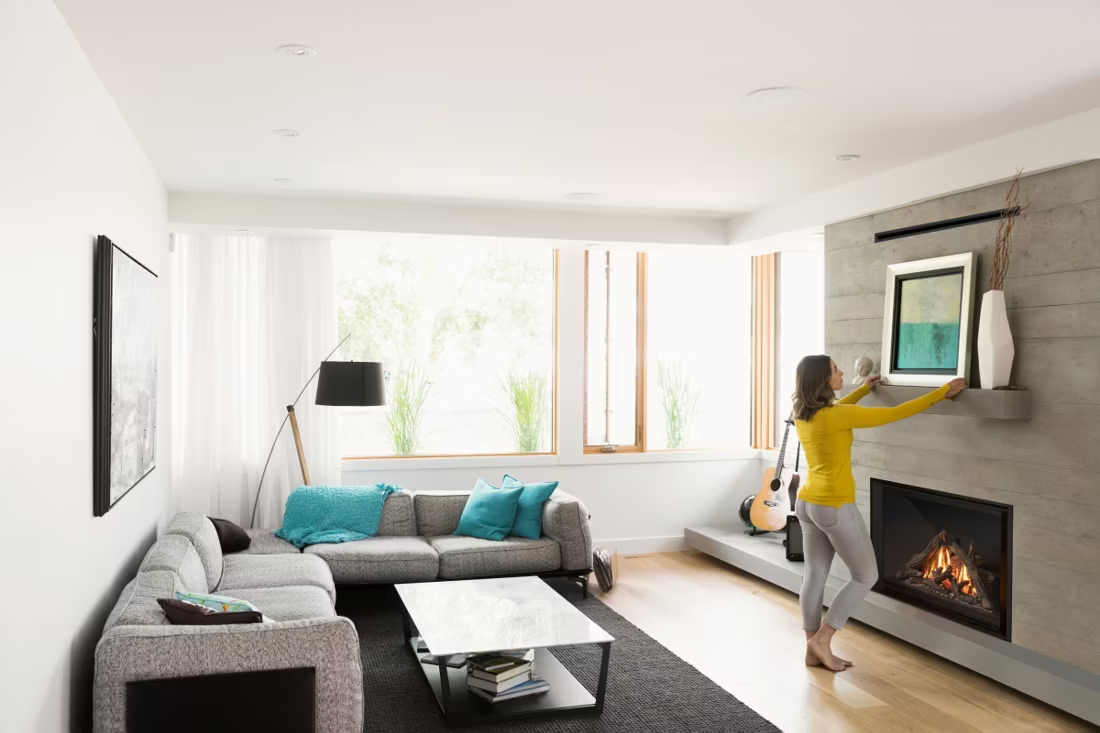
Most Apollo Beach construction is fairly new—canal-front and community-built homes from the 2000s and later—and few have an existing wood-burning masonry fireplace to convert. That means most local installs are new built-in gas fireplaces framed into a great room wall, which suits the open floor plans common in this area. A gas insert only makes sense if you're one of the minority of homes with an older masonry fireplace already in place. Freestanding gas stoves are less common here but occasionally chosen for a lanai or Florida room where a more casual look fits the space.
Vented or vent-free—which should I choose near Tampa Bay?
Vented, direct-vent gas fireplaces are the standard recommendation for Apollo Beach, and it's not just a general best practice—it's a local one. The salt air and humidity here are hard on unvented metal components over time, and a sealed, direct-vent system with proper venting materials holds up far better against corrosion than a vent-free unit venting combustion byproducts into a humid living space. Vent-free units are legal in Florida but come with room-sizing restrictions and aren't a great fit for this climate. Ask your local dealer about stainless steel venting components specifically—they're worth the small upcharge this close to the water.
How often does a gas fireplace need to be serviced in Apollo Beach?
Plan on an annual inspection, ideally before hurricane season ramps up in June, since that's when you're most likely to actually need the fireplace running on battery backup during an outage. A technician checks the burner, pilot assembly, gas connections, and venting, and this is also when they'll catch any early salt-air corrosion on exterior vent caps or connectors—a more relevant issue here than it would be inland. Local service providers typically charge $150 to $250 for a standard inspection and cleaning.
Does a fireplace even make sense in a climate this mild?
It's a fair question—with one of the lightest winter heating loads in the country and winter lows averaging 51°F, nobody in Apollo Beach is heating their home with a fireplace the way a family in Bozeman, Montana might. But 'makes sense' here means something different: a gas fireplace adds real, usable warmth on the handful of nights each winter when a cold front pushes lows into the 30s or 40s, and it adds year-round ambiance and resale value in the great rooms and lanais that define Tampa Bay living. Wood and pellet stoves genuinely don't fit this climate—you won't find local dealers pushing them. Gas and electric fireplaces are the honest, popular choices here.
Gas vs. electric fireplace—which is the better fit here?
Electric fireplaces are a legitimate option in Apollo Beach and worth considering alongside gas—they need no venting or gas line, install in an afternoon, and run on power from Tampa Electric or Duke Energy Florida (residential rates run roughly 14.7 to 16.6 cents per kWh depending on your provider). They produce ambiance and modest supplemental heat but nothing close to a real flame's radiant warmth. Gas costs more upfront, especially if propane line work is involved, but delivers a genuine fire and works during power outages—a real consideration during storm season. For a primary living space where you want the look and feel of a real fireplace, gas is usually the better long-term choice; for a bedroom, den, or rental property, electric is often the more practical one.
Can I put a TV above my fireplace?
Yes—with an asterisk. Fireplaces are hot and TVs don't like heat. Either put a mantel between them to deflect rising warmth, or choose a fireplace with heat-management technology that creates a cool zone on the wall above—the wall stays around 125 degrees, barely warm, while the room still gets full heat. If you like clean lines and don't want a mantel, heat management is the answer.
Is my gas fireplace wasting gas?
If it was installed more than 15 years ago, probably. Older gas fireplaces keep a standing pilot light burning all the time, and that little flame can cost a couple hundred dollars a year. Newer models use pilot-on-demand ignition—the pilot lights only when you use the fireplace and goes out when you turn it off.
How much should I budget for a fireplace?
For an average home—covering the fireplace, the vent pipe, and basic installation—a budget between $3,900 and $5,500 gives you a lot of options across wood, gas, and pellet. By the time you add finish work, gas line, and electrical, the average complete installation lands between $5,000 and $12,000 all-in. In a remodel or new build, a good rule is to put about 2.5% of the total project cost toward the fireplace.
Does a fireplace add value to my home?
On average, a fireplace adds back to the home about the same amount you spent installing it. Add the monthly savings from heating the rooms you actually use instead of the whole house—often hundreds of dollars a year—and the value case is strong before you even count what a fire does for how your family uses the room.
Nearby Dealers
Hearth shops serving Apollo Beach and the surrounding area.
Find your gas fireplace in Apollo Beach.
Tell us about your home and whether you're on propane or natural gas, and we'll match you with a trusted local dealer and a free Project Guide & Parts List for your Apollo Beach gas fireplace project.
Find Your Fireplace →