
Ambiance First, Heat When You Actually Need It.
No chimney, no gas line, no venting—just a real-looking flame built for Tampa Bay's mild winters. Find the right unit and connect with a trusted local dealer.
Every Project Starts From One of These Five Situations
Built for warm-weather comfort, not cold-climate survival.
Apollo Beach sits at 8 feet above sea level on Tampa Bay, with an average winter low around 51°F and just a light dusting of chilly nights each year—compare that to a place like Duluth, MN, which can rack up more cold-weather heating need in a single January than Apollo Beach sees all winter. Nobody here is heating a house through a hard freeze; the appeal of an electric unit is the look of real flame, zero-clearance installation, and a bit of genuine warmth on the handful of nights each year that dip into the 40s.
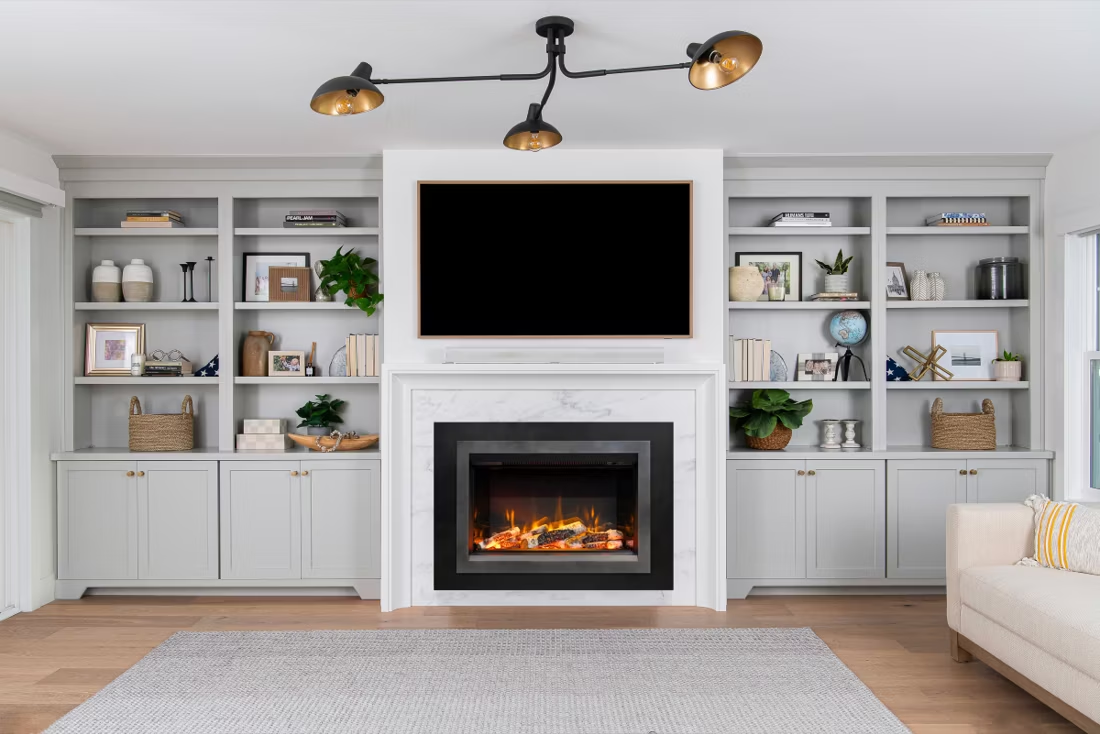
Most Apollo Beach homes are CBS (concrete block stucco) construction without an existing chimney, which is exactly where electric fireplaces shine—a linear wall-mount or built-in unit drops into a wall cavity or existing niche with no venting, no gas line, and no masonry work. Electric service in the area is split between Tampa Electric Company (TECO) and Duke Energy Florida, running 14.67¢ and 16.63¢ per kWh respectively, so your operating cost depends on which utility serves your street. Just keep in mind that during hurricane season, an electric fireplace is only as reliable as the grid—it won't function as backup heat during an outage, though given how rarely this area needs supplemental heat, that's a minor tradeoff for most homeowners.
Three steps. No salesperson until you're ready.
Tell us about your project
Your zip code, your situation, and the fuel you're leaning toward—or let the answers point you to one.
See what's actually available
The brands dealers within 100 miles genuinely carry—real options, never a catalog mirage.
Get your dealer & Project Guide
A trusted local dealer, plus the free Project Guide & Parts List that names every component of the job.
Frequently Asked Questions
How much does an electric fireplace installation cost in Apollo Beach?
Plug-in freestanding units run $200 to $800 and need nothing more than a standard 120V outlet. Wall-mount linear models, which are the most popular choice for Apollo Beach's CBS homes, typically run $600 to $2,000 installed, including basic electrical work. Fully recessed built-ins that require framing, a dedicated circuit, and finish work by a licensed electrician land in the $1,500 to $4,000 range. Because there's no venting, chimney, or gas line to run, electric installs are consistently the least expensive fireplace category—a big reason they're common in Apollo Beach's newer waterfront developments and condos.
Will an electric fireplace actually heat my room, or is it just for looks?
Both, depending on the unit and the setting. Most electric fireplaces include a 1,500-watt heater rated for roughly 400 square feet, which is plenty of supplemental heat for the occasional cold snap in Apollo Beach. You can also run the flame effect with the heater off, which is what most local buyers do most of the year—Tampa Bay's average winter low of 51°F rarely calls for real heat output. Look for a unit with a built-in thermostat so it cycles the heater on and off automatically rather than running full blast the whole time.
Do I need a permit to install an electric fireplace in Apollo Beach?
A simple plug-in unit that draws from an existing outlet needs no permit at all. A hardwired built-in or recessed unit on a dedicated circuit does require an electrical permit through Hillsborough County Development Services, since Apollo Beach is unincorporated and falls under county jurisdiction rather than a city building department. Most licensed electricians pull this permit as part of the install, so it's rarely something the homeowner has to handle directly.
How much does it cost to run an electric fireplace given local utility rates?
It depends on whether TECO or Duke Energy Florida serves your address—check a recent bill to confirm, since Hillsborough County is split between the two. Running a 1,500-watt heater at full output costs roughly 22 cents per hour on TECO's 14.67¢ rate, or about 25 cents per hour on Duke Energy Florida's 16.63¢ rate. Running the flame effect alone with the heater switched off costs a few cents an hour at most, since the LED lighting draws only 30 to 100 watts depending on the model.
What style of electric fireplace works best in an Apollo Beach home?
Linear wall-mount units are the most common choice locally, since they read as a modern focal wall feature without requiring the mantel-and-hearth footprint of a traditional fireplace—a natural fit for the open floor plans in Apollo Beach's newer construction. Recessed built-ins work well when there's wall depth to frame into. If your home is older and has an existing wood-burning masonry fireplace that's no longer used, an electric insert can drop into that opening and give you flame effect and occasional heat without touching the chimney. Given the coastal humidity and salt air, look for units with corrosion-resistant hardware, especially if the fireplace will sit near an exterior wall or a screened lanai.
Electric vs. gas—which is right for my Apollo Beach home?
Gas fireplaces in this area typically run on propane rather than piped natural gas, since utility gas service is limited in Apollo Beach, which means a tank installation and gas line work in addition to the unit itself. Electric skips all of that—no tank, no line, no venting—and installs in a fraction of the time and cost. Gas does deliver more realistic flame height and works during a power outage, which matters more in hurricane-prone areas than it might elsewhere. For a home where the fireplace is mostly about ambiance and occasional supplemental warmth, electric is usually the simpler, cheaper choice. For homeowners who want a fireplace that still functions when the power's out, gas is worth the added cost.
Will my electric fireplace work during a hurricane season power outage?
No—electric fireplaces run entirely on grid power, so if TECO or Duke Energy Florida is out after a storm, the fireplace is out too, along with everything else in the house. This is worth knowing going into the decision, especially in a coastal Hillsborough County community where outages can stretch for days after a major storm. Since Apollo Beach rarely needs a fireplace for actual survival heat, most homeowners accept this tradeoff for the lower cost and simpler installation. If backup heat during outages is a priority, a propane gas unit or a generator-backed circuit for your electric fireplace are the two workarounds to discuss with a local dealer.
What electrical work does a built-in electric fireplace require?
Most built-in and recessed electric fireplaces need their own dedicated 120V, 15- or 20-amp circuit run from the panel, rather than sharing a circuit with other outlets—this prevents the heater from tripping a breaker shared with other loads. A licensed electrician typically handles this as part of the installation, along with any in-wall wiring needed to reach the unit's location. Simple plug-in freestanding units skip this step entirely and just need an existing outlet nearby.
How much maintenance does an electric fireplace need?
Very little compared to wood or gas—there's no chimney to sweep, no gas lines to inspect, and no ash or soot to manage. Maintenance is mostly dusting the unit and vents periodically and replacing LED lights on the rare occasion they burn out, which for most models is a many-years-out event given how efficient LED components are. In Apollo Beach's coastal, humid environment, it's worth periodically checking that vents and internal components stay dry and free of salt-air corrosion, particularly for units installed near exterior walls or outdoor-adjacent living spaces.
Can I put a TV above my fireplace?
Yes—with an asterisk. Fireplaces are hot and TVs don't like heat. Either put a mantel between them to deflect rising warmth, or choose a fireplace with heat-management technology that creates a cool zone on the wall above—the wall stays around 125 degrees, barely warm, while the room still gets full heat. If you like clean lines and don't want a mantel, heat management is the answer.
Do electric fireplaces actually produce heat?
Yes—most put out around 4,800–5,000 BTUs from a standard outlet, which comfortably warms a bedroom, office, or den as a comfort-zone heater. What they won't do is carry a whole house the way wood, gas, or pellet can. Think of electric as ambiance-first with honest supplemental heat: flames on with no heat in July, flames plus warmth in January.
Can a fireplace actually lower my heating bill?
Yes—by creating a comfort zone. A furnace heats every square foot of the house just to warm the one room you're in; a gas fireplace on low burns roughly a sixth of the gas a typical furnace does. Set the furnace around 55–60 degrees as a baseline, then heat the rooms your family actually uses. Families who heat this way commonly save $20–$60 a month.
How much should I budget for a fireplace?
For an average home—covering the fireplace, the vent pipe, and basic installation—a budget between $3,900 and $5,500 gives you a lot of options across wood, gas, and pellet. By the time you add finish work, gas line, and electrical, the average complete installation lands between $5,000 and $12,000 all-in. In a remodel or new build, a good rule is to put about 2.5% of the total project cost toward the fireplace.
Nearby Dealers
Hearth shops serving Apollo Beach and the surrounding area.
Electric Service in Apollo Beach
An electric fireplace's heater draws about 1,500 watts—pennies per hour at local rates.
Tampa Electric Co
Duke Energy Florida, LLC
Find your electric fireplace in Apollo Beach.
Tell us a bit about your home and we'll put together a free Project Guide & Parts List for your Apollo Beach project, matched to a trusted local dealer who can install it right.
Find Your Fireplace →