
Find dependable pellet heat for the Northwest Hills' long winters.
With 6,840 heating degree days and winter lows averaging 15°F across the Litchfield hill towns, pellet heat offers thermostat-like convenience without a woodpile. Find the right stove or insert and connect with a trusted local dealer.
Every Project Starts From One of These Five Situations
Convenient, clean heat for one of New England's coldest corners.
The Northwest Hills stretch across the northwestern corner of Litchfield County, from Torrington and Winsted up through Norfolk, Canaan, Salisbury, Cornwall, and Kent—hill towns that climb toward Bear Mountain, at 2,316 feet the highest natural point in Connecticut. Norfolk, often nicknamed the 'icebox of Connecticut' for its colder-than-average nights, regularly posts some of the lowest temperatures in the state. With 6,840 heating degree days a year, this region runs a heating load comparable to Burlington, Vermont—a serious cold-climate demand that most of coastal Connecticut never sees.
Natural gas infrastructure is limited to a handful of the region's larger downtowns, so most rural households in the Northwest Hills rely on propane, heating oil, or wood-based heat. Pellet stoves have become a popular middle path: they deliver steady, thermostatically controlled heat without splitting or stacking cordwood, and they draw on the same hardwood forests—oak, maple, birch, ash—that make this part of Connecticut good wood country in the first place, since hardwood sawdust from regional sawmills is exactly what gets pressed into pellets from brands like Lignetics, New England Wood Pellet, and Maine Woods Pellet Co. With no non-attainment designations or winter inversion concerns in this county, there's no local burn-curtailment pressure to work around either.
Three steps. No salesperson until you're ready.
Tell us about your project
Your zip code, your situation, and the fuel you're leaning toward—or let the answers point you to one.
See what's actually available
The brands dealers within 100 miles genuinely carry—real options, never a catalog mirage.
Get your dealer & Project Guide
A trusted local dealer, plus the free Project Guide & Parts List that names every component of the job.
Frequently Asked Questions
How much does a pellet stove installation cost in the Northwest Hills?
A typical pellet stove or insert installation in the Northwest Hills runs roughly $3,000 to $6,500, depending on the unit, whether it's a freestanding stove or an insert going into an existing masonry fireplace, and the venting path through an exterior wall. Homes without an existing fireplace opening usually land toward the higher end once wall penetration and hearth pad work are factored in. Because pellet venting is simpler than a masonry chimney—most units vent horizontally through 3-inch or 4-inch PVC or stainless pipe—installs are generally faster and less disruptive than a wood stove project, even in older Litchfield County farmhouses with add-on additions and irregular wall framing.
What size pellet stove do I need for my home in the Northwest Hills?
Sizing depends on square footage, insulation, and ceiling height, but the region's cold-climate load pushes sizing up compared to milder parts of Connecticut. A stove rated for 40,000 to 50,000 BTU typically handles 1,500 to 2,000 square feet in a reasonably insulated home in Torrington or Winsted, but homes at higher elevation—Norfolk, Cornwall, parts of Salisbury near Bear Mountain—often need to size up given the colder overnight lows and more exposed sites. Older uninsulated farmhouses common throughout the hill towns also benefit from sizing toward the larger end of the range. A local dealer will walk the space and size it properly rather than guessing off square footage alone.
Where can I buy pellets locally in the Northwest Hills?
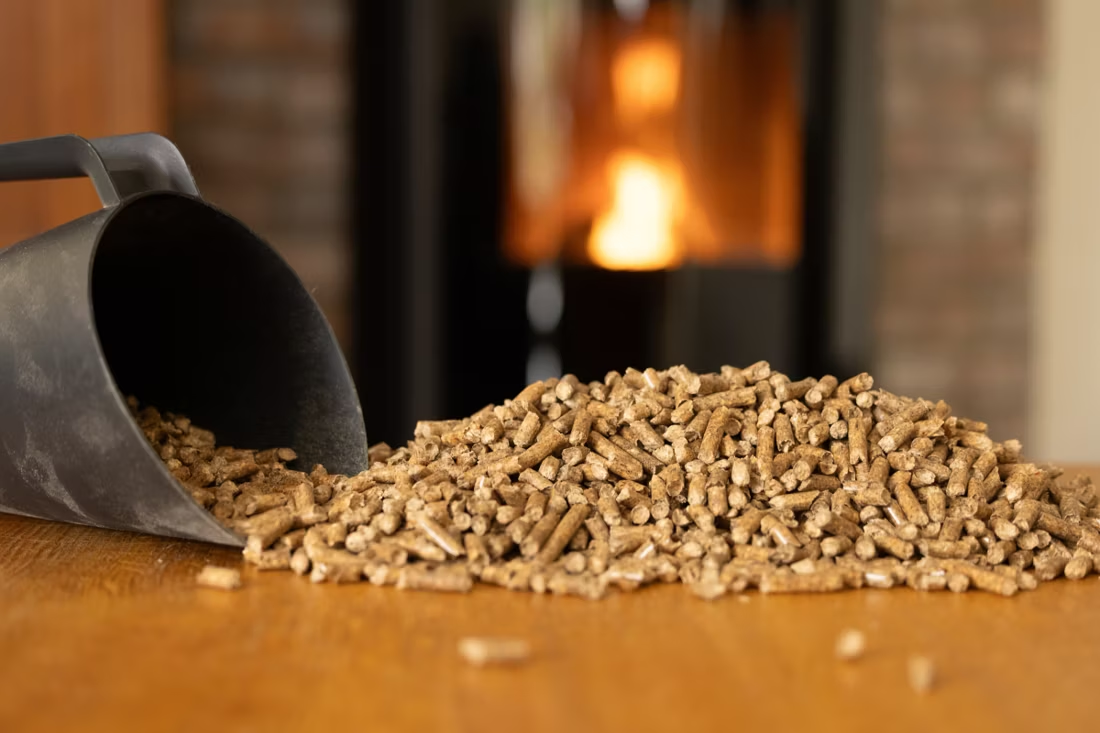
Regional hardwood pellet brands including Lignetics, New England Wood Pellet, and Maine Woods Pellet Co are widely stocked at hearth retailers and farm supply stores throughout Litchfield County, typically running $280 to $380 per ton depending on brand and whether you buy by the bag or by the pallet. Buying a season's supply—most homes burn 2 to 4 tons per winter given the area's 6,840 heating degree days—before the fall rush tends to get better pricing than mid-January restocking. Dry, covered storage matters here too; Northwest Hills winters bring real snow load, and pellets that absorb moisture will jam an auger fast.
Do I need a permit to install a pellet stove in the Northwest Hills?
Yes—but Connecticut doesn't have functioning county governments, so permits are issued town by town rather than through a single Northwest Hills or Litchfield County office. Torrington, Winsted, Norfolk, Salisbury, Kent, Cornwall, and the other hill towns each run their own building department, and each requires a permit for a new pellet stove or insert installation, including inspection of the venting termination point. Since there are no non-attainment or winter inversion restrictions in this part of Connecticut, pellet stoves here don't face any seasonal burn curtailment—though EPA-certified pellet units are exempt from that kind of restriction almost everywhere anyway. Most installers who work regularly across these small towns already know each office's specific requirements.
What's the difference between a pellet stove and a pellet insert?
A pellet stove is a freestanding unit that sits on a hearth pad and vents through a nearby wall—it can go almost anywhere with a clear path to the outside. A pellet insert is built to slide into an existing masonry fireplace opening, turning a drafty wood-burning fireplace into a sealed, thermostatically controlled heat source while still using the existing masonry as a shell. For the many older homes throughout Norfolk, Cornwall, and Kent with existing wood fireplaces, an insert is often the simpler retrofit. Homes without an existing fireplace opening, or newer construction, are usually better matched to a freestanding stove.
What's the best pellet stove for the Northwest Hills' climate?
Given the region's 6,840 heating degree days and winter lows averaging 15°F, look for a stove with a larger hopper capacity—40 to 60 pounds—so you're not refilling every few hours during a cold snap, plus a heat output in the 40,000 to 50,000 BTU range for whole-room or whole-floor heating in the colder hill towns. Models with a variable-speed auger and combustion blower give more consistent output across long, steady-burn nights than basic fixed-rate units. One tradeoff worth knowing: pellet stoves need electricity to run the auger, hopper feed, and blower, so during the ice storms that periodically knock out power across the Northwest Hills, a pellet stove alone won't provide backup heat unless it's paired with a battery backup or generator.
How often does a pellet stove need to be cleaned and serviced?
Most manufacturers recommend a full cleaning—ash pan, burn pot, auger, and exhaust venting—every 40 to 80 hours of burn time, which for a home in the Northwest Hills running the stove most of the winter often means a light cleaning every couple of weeks and a full professional service once a year, typically before the season starts. The exhaust vent termination should also be checked periodically for ash buildup, especially given the wind exposure common at higher elevations like Norfolk and Cornwall. Skipping regular ash pan cleaning is the most common cause of poor burns and error shutdowns on modern units.
How much pellet fuel storage space do I need for a Northwest Hills winter?
A typical home burning a pellet stove as primary or significant supplemental heat through the region's long season—often October through April given the 6,840 heating degree day load—uses roughly 2 to 4 tons of pellets, and each ton takes up about the space of a large refrigerator when stacked in 40-pound bags. Dry, covered, off-the-ground storage is important here; the Northwest Hills see real snow accumulation and damp basement conditions common to older Litchfield County farmhouses, and pellets that pick up moisture swell and jam feed systems. A garage, mudroom, or dry basement corner works for most households; buying a season's supply early avoids scrambling for stock mid-winter.
Pellet stove vs. wood stove—which is right for my Northwest Hills home?
Wood stoves burn cordwood cut from the oak, maple, birch, and ash that fill the region's forests, run without electricity, and provide real backup heat during the ice storms and power outages that periodically hit this part of Litchfield County. Pellet stoves trade that off-grid resilience for convenience—load the hopper, set the thermostat, and get consistent, low-maintenance heat with far less ash and no splitting or stacking. For a primary residence in town where reliable Eversource power is a safe bet and convenience matters more than backup capability, pellet is often the better fit. For rural properties or anyone wanting heat that works when the power doesn't, wood remains the more resilient choice—and plenty of Northwest Hills households end up with one of each.
What does it take to replace an existing fireplace?
Fireplaces are like icebergs—bigger behind the wall than in front of it. Replacement means removing the surrounding tile or stone (the finish material laps onto the fireplace face), pulling the old unit, setting the new one in the same enclosure, and re-finishing the wall. A hearth professional can determine what's behind your wall without demolition during an in-home preview.
Why is a fireplace insert so efficient?
An insert does two things: it seals the chimney completely, so you stop losing air you already paid to heat, and it radiates warmth into the room through the firebox and glass. Most add a heat-exchange fan that pulls cool room air underneath, wraps it around the hot firebox, and pushes it back out warm. Your home is more efficient before you've even lit the first fire.
Does a fireplace add value to my home?
On average, a fireplace adds back to the home about the same amount you spent installing it. Add the monthly savings from heating the rooms you actually use instead of the whole house—often hundreds of dollars a year—and the value case is strong before you even count what a fire does for how your family uses the room.
Can I install a fireplace myself?
If you're putting a fire in your house on purpose, it's best to work with an expert. Unless you're genuinely experienced in framing, gas line, vent pipe, and the national code on clearances to combustibles, have a professional do it—and ideally the same company that sells you the fireplace, so warranty, service, and liability all live under one roof.
Stove and Fireplace Dealers in Northwest Hills County
Pellet Brands Stocked Around Northwest Hills County
Manufacturers will point you to the nearest stocking dealer.
Find your pellet stove in the Northwest Hills.
Tell us a bit about your home and we'll put together a free Project Guide & Parts List—the right pellet stove or insert, the exact parts including venting, and a trusted local dealer to install it.
Find Your Fireplace →