
Heat that keeps up with a Northwest Hills winter.
Wood, gas, pellet, and electric fireplace resources for every hill town in Connecticut's Northwest Hills—from Torrington and Winsted to Norfolk, Kent, and Salisbury. Find the right unit and connect with a trusted local hearth retailer.
Every Project Starts From One of These Five Situations
Cold, hilly, and firewood country.
The Northwest Hills sit in the northwest corner of Connecticut, a landscape of ridgelines, river valleys, and small hill towns—Norfolk, Kent, Salisbury, Cornwall, Winsted, Litchfield, Torrington, New Milford, and Canaan among them. With winters comparable to Burlington, Vermont and an average winter low near 15°F, the region runs colder than most of southern New England—closer to Burlington than to the Connecticut coastline sixty miles south. Norfolk itself is regularly the coldest reporting station in the state on a given winter morning. The hardwood forests covering these hills—oak, maple, birch, ash—have supplied firewood to local households for generations, and a well-seasoned cord of oak or maple remains one of the most reliable heat sources in a region where the heating season routinely runs from October through April.
This hub pulls together hearth retailers, service technicians, and fuel suppliers serving every town in the Northwest Hills. Many of these hill towns—Norfolk, Kent, Salisbury, and Cornwall among them—have limited or no natural gas infrastructure, so propane fills the role natural gas plays in denser parts of the state; more centrally located towns like Torrington and New Milford have broader gas coverage. Pick your fuel below to see local dealers, installation costs, and recommended units for your specific project—whether that's a farmhouse outside Norfolk or a lake house near Bantam.
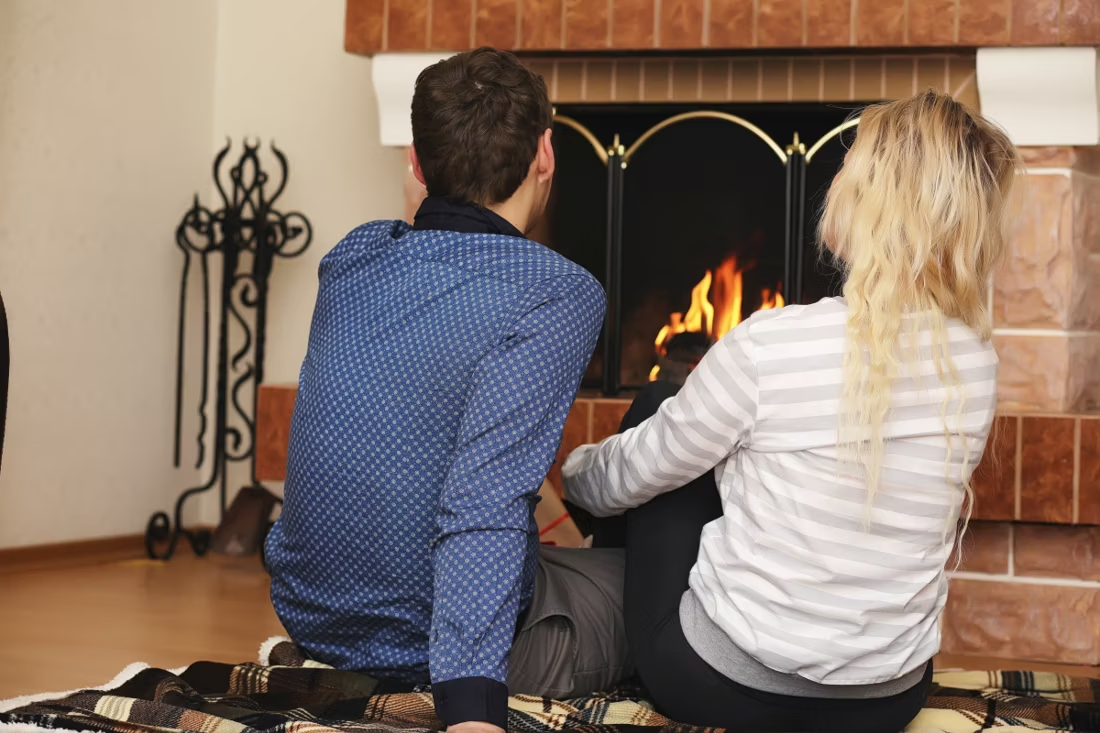
Four fuels. One honest answer for Northwest Hills County.
Wood
81 models available near Northwest Hills County.
Find your wood stove →Gas
365 models available near Northwest Hills County.
Find your gas fireplace →Pellet
See what's available near Northwest Hills County.
Find your pellet stove →Electric
11 models available near Northwest Hills County.
Find your electric fireplace →Three steps. No salesperson until you're ready.
Tell us about your project
Your zip code, your situation, and the fuel you're leaning toward—or let the answers point you to one.
See what's actually available
The brands dealers within 100 miles genuinely carry—real options, never a catalog mirage.
Get your dealer & Project Guide
A trusted local dealer, plus the free Project Guide & Parts List that names every component of the job.
Frequently Asked Questions
Which fuel works best for a home in the Northwest Hills?
It depends on the home and the town. Wood remains the backbone fuel across the Northwest Hills—oak, maple, birch, and ash are all abundant locally, and a well-run wood stove or insert handles winters as cold as Burlington, Vermont without much trouble. Gas is the convenience option, but coverage is uneven: Torrington and New Milford have natural gas lines in the more built-up areas, while hill towns like Norfolk, Kent, Salisbury, and Cornwall rely on propane instead, which still delivers the same instant-heat, no-maintenance appeal. Pellet stoves are a strong middle ground—New England Wood Pellet and Maine Woods Pellet Co both supply the region, so fuel isn't hard to find, and pellet stoves skip the splitting-and-stacking labor of cordwood. Electric fireplaces work well as a supplemental heat source or for ambiance in rooms that don't need a full heating solution, but with average winter lows around 15°F, electric alone isn't typically the primary heat source in this climate. Many Northwest Hills homes end up running two fuels—wood or pellet for the bulk of the season, propane or electric to cover shoulder-season mornings.
Do I need a permit to install a fireplace or stove in the Northwest Hills?
Yes, in nearly every Northwest Hills town. Connecticut requires a building permit for new wood stoves, wood inserts, gas fireplaces, gas inserts, gas stoves, and pellet stoves, and each town in the region—Torrington, Winsted, Litchfield, Kent, Salisbury, Norfolk, and the rest—issues its own permits through its local building department rather than a single county office. Installations must meet NFPA 211 clearance-to-combustible requirements, and propane or natural gas hookups require a licensed gas fitter in addition to the building permit. Electric fireplaces are usually exempt unless the installation involves new wiring or a dedicated circuit. Most local hearth retailers pull the permit as part of the installation, so homeowners typically don't have to navigate town hall directly—but it's worth confirming before work starts, since inspection requirements can vary slightly from one hill town to the next.
Are there wood-burning restrictions in the Northwest Hills?
Not in the way you'd see in a smoke-prone western valley—the Northwest Hills don't have winter inversion or wildfire-smoke concerns, and there are no wood-burning curtailment days here. That said, good practice still matters: oak in particular needs a full one to two years of seasoning before it burns clean and efficient, and burning green or unseasoned wood is the single biggest cause of creosote buildup and chimney fires in this region. If you're sourcing firewood locally, ask suppliers how long it's been split and stacked—properly seasoned oak, maple, birch, or ash will make a noticeable difference in both heat output and chimney safety.
Can one hearth retailer in the Northwest Hills handle wood, gas, pellet, and electric?
Some can, but it varies by shop. A handful of larger dealers based in Torrington and New Milford carry all four fuel types, which makes them a good stop if you're still deciding between, say, a wood insert and a pellet stove. Smaller shops closer to the hill towns—Norfolk, Kent, Salisbury, Cornwall—tend to specialize, often focusing on wood and pellet given the propane-heavy, natural-gas-light infrastructure out that way. A supplier that sells firewood or bagged pellets isn't necessarily a hearth retailer that installs equipment—worth confirming which role you need before you call. If you want to compare fuel types side by side, a multi-fuel dealer with working showroom displays is the more efficient stop.
How does hearth service work in the more remote parts of the Northwest Hills?
Most chimney sweeps and hearth technicians serving the region are based around Torrington or Litchfield and travel out to the more rural towns—Norfolk, Kent, Cornwall, Salisbury, and the smaller communities along the Housatonic and Naugatuck valleys. Expect a modest travel charge for the farthest towns, and expect appointment calendars to fill up fast in September and October as everyone tries to get their chimney swept or gas unit inspected before the first cold snap. Booking early—ideally by late summer—is the difference between a routine fall appointment and a scramble in November once overnight lows start dropping toward that 15°F average.
What does fireplace installation typically cost across fuel types in the Northwest Hills?
Costs run higher here than in much of the country, in line with Connecticut's general cost of living. Wood stove or insert installation: roughly $5,000–$10,000 for a typical job, more if new chimney lining or masonry work is involved. Gas fireplace, insert, or stove: roughly $5,000–$12,000, with propane hookups in the outlying hill towns sometimes adding to that range compared to towns with existing natural gas service. Pellet stove or insert: roughly $5,000–$8,500 installed. Electric fireplace: $300–$3,500 for the unit itself, plus $500–$1,500 in labor for anything beyond a simple plug-in installation. The county + fuel pages above break these numbers down further with local retailer pricing.
Does a fireplace add value to my home?
On average, a fireplace adds back to the home about the same amount you spent installing it. Add the monthly savings from heating the rooms you actually use instead of the whole house—often hundreds of dollars a year—and the value case is strong before you even count what a fire does for how your family uses the room.
How much should I budget for a fireplace?
For an average home—covering the fireplace, the vent pipe, and basic installation—a budget between $3,900 and $5,500 gives you a lot of options across wood, gas, and pellet. By the time you add finish work, gas line, and electrical, the average complete installation lands between $5,000 and $12,000 all-in. In a remodel or new build, a good rule is to put about 2.5% of the total project cost toward the fireplace.
Wood, gas, pellet, or electric—how do I choose?
Match the fuel to your life, not the other way around. Wood: lowest fuel cost and total power-outage independence, but you're hauling and stacking. Gas: press a button, set a thermostat, no maintenance to speak of. Pellet: wood economics with automatic feeding, in exchange for weekly cleaning and a need for electricity. Electric: plugs in anywhere with honest supplemental heat. Nobody regrets the fuel that fits how they actually live.
Should the dealer who sells my fireplace also install it?
Ideally, yes. A fireplace project involves vent pipe, gas line, electrical, and often tile or stone. Hire three or four separate trades and you own the liability and the game of telephone between them. One company selling and installing means one accountable party, start to finish—ask about factory training, on-time completion records, and what happens if an inspection fails.
Stove and Fireplace Dealers in Northwest Hills County
Listings include WhyFire partner dealers, dealers we have verified as authorized for the brands we recommend, and established local businesses that carry hearth products. Every listing shows which one it is. The ones marked Preferred run on WhyFire's software, so they can show you real pricing and book your appointment right here. No manufacturer pays for placement. How we verify dealers →
Neighborhood Chimney Service
Hocon Gas Of Torrington
Fire House Stoves & Spas
Dean's Stove Shop
Four Seasons Fire & Hearth
Millerton Nursery
Hocon Gas
Find your fireplace in the Northwest Hills.
Pick your fuel below and I'll match you with a trusted local dealer and send along a free Project Guide & Parts List—a plan for your project with the exact parts, including the vent kit, and the local pro who can install it.
Find Your Fireplace →