
Keep Your Family Warm and Safe—No Matter What
Wood-burning fireplaces face real restrictions inside the Denver Metro nonattainment zone. Here's what's permitted, what isn't, and how to find a local dealer who knows the difference.
Every Project Starts From One of These Five Situations
Wood burning here is real, but tightly regulated.
Wheat Ridge sits at 5,348 feet in Jefferson County, just west of Denver, with winter lows averaging 17°F and a long, cold winter season—a cold-season profile not far off from Helena, Montana. But unlike a mountain town outside the metro corridor, Wheat Ridge falls inside the Denver Metro/North Front Range nonattainment area for ozone and fine particulate matter, and that changes the wood heat picture considerably. Colorado's Regulation No. 4 prohibits installing new wood-burning fireplaces in new construction anywhere in this zone, and the Regional Air Quality Council issues high pollution advisories during winter inversions—which settle into the South Platte valley with some regularity—asking or requiring residents to hold off on burning.
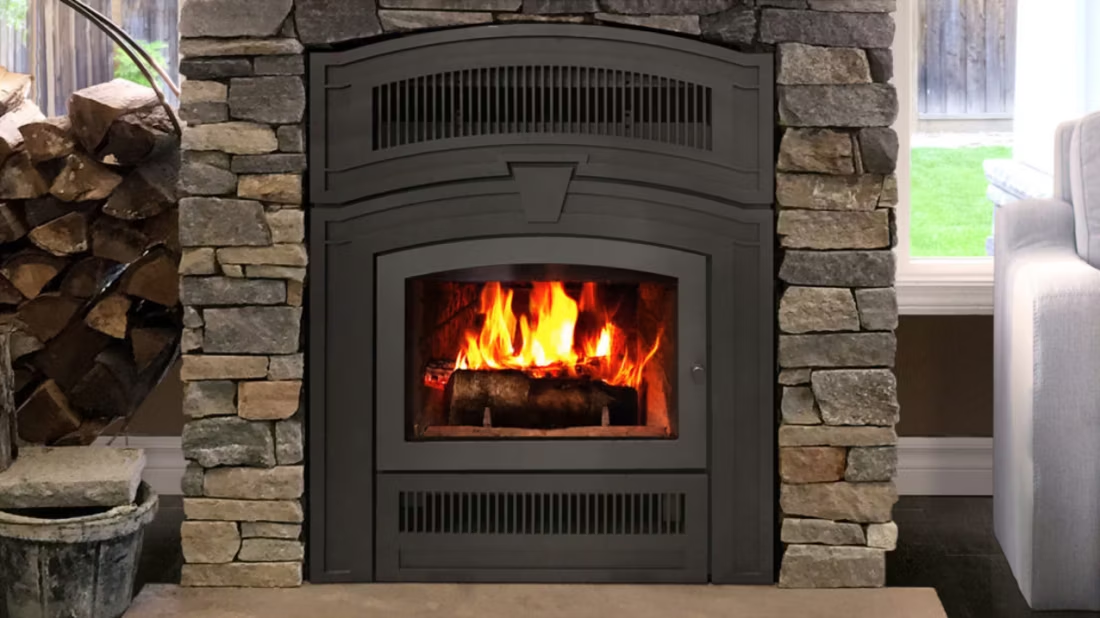
That's why we flag wood as a rare fit here rather than a standard recommendation, on par with gas or electric. Most new installs across Wheat Ridge and greater Jefferson County are gas or electric, and the City of Wheat Ridge Building Division will generally only permit a wood-burning appliance as a replacement for an existing unit—swapping an old, uncertified fireplace or stove for a current EPA-certified model—not a brand-new installation from scratch. Homes with older masonry fireplaces built before these rules tightened are the main candidates for a wood insert upgrade, and a smaller number of homeowners still value wood as backup heat during outages, even with Public Service Co. of Colorado's electric service running dependably at 15.05 cents per kWh across most of the city.
Firewood Cutting Permits Near Wheat Ridge
Three steps. No salesperson until you're ready.
Tell us about your project
Your zip code, your situation, and the fuel you're leaning toward—or let the answers point you to one.
See what's actually available
The brands dealers within 100 miles genuinely carry—real options, never a catalog mirage.
Get your dealer & Project Guide
A trusted local dealer, plus the free Project Guide & Parts List that names every component of the job.
Frequently Asked Questions
Can I install a brand-new wood-burning fireplace in Wheat Ridge?
Generally, no. Colorado's Regulation No. 4 bans new wood-burning fireplace installations in new construction throughout the Denver Metro/North Front Range nonattainment area, which includes all of Wheat Ridge and Jefferson County. What's permitted is replacing an existing, older wood stove or fireplace with a current EPA-certified unit. If you're building an addition or a new home, plan on gas or electric instead—both carry standard relevance here and don't run into this restriction.
Why is wood heat flagged as rare in Wheat Ridge when it's common elsewhere in Colorado?
It comes down to geography and air quality classification. Wheat Ridge sits inside the Denver Metro nonattainment zone for ozone and PM2.5, where winter inversions trap smoke low over the valley for days at a time. Mountain towns like Steamboat Springs or Durango sit outside that nonattainment boundary and don't face the same installation restrictions, so wood remains a mainstream heating choice there. In Wheat Ridge, the combination of Regulation No. 4 and routine high pollution advisories pushes most new hearth projects toward gas or electric.
What are 'high pollution advisories' and how do they affect burning a wood stove I already have?
The Regional Air Quality Council issues these advisories on days when a winter inversion traps pollutants over the Denver metro area—it happens roughly a dozen or more times each winter. On voluntary advisory days, residents are asked to skip wood burning; on mandatory no-burn days, it's enforced, though EPA-certified stoves are sometimes treated differently than older, uncertified units. If you have an existing wood stove or insert, check the RAQC's daily burn status before lighting a fire during winter months.
Can I replace my old wood stove with a new one?
Yes—replacing an existing wood-burning fireplace or stove with a new EPA-certified unit is the main path that's actually open to Wheat Ridge homeowners, and it still requires a building permit through the City of Wheat Ridge or Jefferson County depending on your address. Because wood is a less common request here, pricing isn't as standardized as it is for gas, but local installers typically run $4,000 to $7,500 for a certified insert or freestanding replacement, depending on chimney condition and whether a liner is needed.
What size or type of wood stove works best for a Wheat Ridge home?
Sizing follows the same logic as anywhere in this climate zone—square footage, insulation, and ceiling height drive the decision, with most Wheat Ridge homes falling into the medium range (1,000–2,000 sq ft of primary heated space). Because these are almost always replacement installs, a non-catalytic model from Pacific Energy or Lopi is a common, code-compliant choice for a straightforward chimney swap. A local dealer familiar with Jefferson County permitting can size the unit and confirm it clears both clearance and emissions requirements in one visit.
Where can I get firewood or cut my own near Wheat Ridge?
The Arapaho-Roosevelt National Forest issues personal-use cutting permits for $5 to $20 per cord during the May-to-October season, and it's the closest public land source for Wheat Ridge residents. Common species available include ponderosa pine, aspen, pinyon, and juniper—pinyon and juniper burn hot and are popular for their aromatic smoke, though juniper produces more resin buildup and needs more frequent chimney attention. Several Front Range firewood suppliers also deliver seasoned cordwood into Jefferson County if cutting your own isn't practical.
Do I need a permit just to burn wood in a fireplace I already have?
No permit is required to burn wood in an existing, legally installed fireplace or stove—the permitting requirement applies to installation and replacement, not day-to-day use. That said, you're still expected to follow RAQC high pollution advisories during winter inversions, which can mean voluntarily or mandatorily holding off on burning even in a unit you already own and use regularly.
If wood isn't a great fit, what should I look at instead?
Gas and electric fireplaces both carry standard relevance in Wheat Ridge and don't run into Regulation No. 4's new-construction restrictions. A direct-vent gas fireplace or insert delivers instant, consistent heat without an air-quality advisory affecting whether you can use it that day, and Public Service Co. of Colorado serves natural gas throughout most of the city. Electric fireplaces are a lower-cost option for supplemental or ambiance-focused installs, especially in rooms without existing venting.
Wood insert vs. gas insert—which makes more sense for an existing Wheat Ridge fireplace?
If you already have a masonry fireplace and simply want to upgrade what's there, a certified wood insert keeps the self-sufficiency of wood heat and works during power outages, but it's subject to advisory-day burn restrictions and needs a Jefferson County or City of Wheat Ridge permit as a replacement unit. A gas insert sidesteps the air-quality advisory question entirely, runs on the same natural gas or propane line as your other appliances, and turns on with a switch. For most Wheat Ridge homeowners weighing convenience against the regulatory reality here, gas is usually the simpler long-term answer—but a wood insert remains a legitimate choice for anyone replacing an aging, uncertified fireplace.
Why is a fireplace insert so efficient?
An insert does two things: it seals the chimney completely, so you stop losing air you already paid to heat, and it radiates warmth into the room through the firebox and glass. Most add a heat-exchange fan that pulls cool room air underneath, wraps it around the hot firebox, and pushes it back out warm. Your home is more efficient before you've even lit the first fire.
What's the difference between an insert and a zero-clearance fireplace?
An insert is a fireplace that slides into a pre-existing wood-burning fireplace—if you don't have one, there's nothing to insert it into. A zero-clearance fireplace is built into a framed wall, which makes it the answer for remodels and new construction. Simple test: existing masonry fireplace means insert; blank or framed wall means zero-clearance.
Does a fireplace add value to my home?
On average, a fireplace adds back to the home about the same amount you spent installing it. Add the monthly savings from heating the rooms you actually use instead of the whole house—often hundreds of dollars a year—and the value case is strong before you even count what a fire does for how your family uses the room.
Can a fireplace actually lower my heating bill?
Yes—by creating a comfort zone. A furnace heats every square foot of the house just to warm the one room you're in; a gas fireplace on low burns roughly a sixth of the gas a typical furnace does. Set the furnace around 55–60 degrees as a baseline, then heat the rooms your family actually uses. Families who heat this way commonly save $20–$60 a month.
Nearby Dealers
Hearth shops serving Wheat Ridge and the surrounding area. Every listing shows whether it is a WhyFire partner, a dealer we have verified as authorized for the brands we recommend, or a local business carrying hearth products. No manufacturer pays for placement. How we verify dealers →
Spa Brokers
Spa Brokers
Distinctive Mantel Designs
Aria Custom Design
Outdoor Kitchen Dist. Inc
Proud Souls Barbecue & Provisions
Rio Grande Co.
Fireplace And Grill Experts - Service Only
Spa Brokers V
Spa Brokers (Corporate)
Spa Brokers
Spa Brokers Iii
Find out what's possible for wood heat in Wheat Ridge.
Tell us about your home and any existing fireplace, and we'll match you with a trusted local dealer who understands Regulation No. 4 and Jefferson County permitting—plus a free Project Guide & Parts List for your specific replacement or insert project.
Find Your Fireplace →